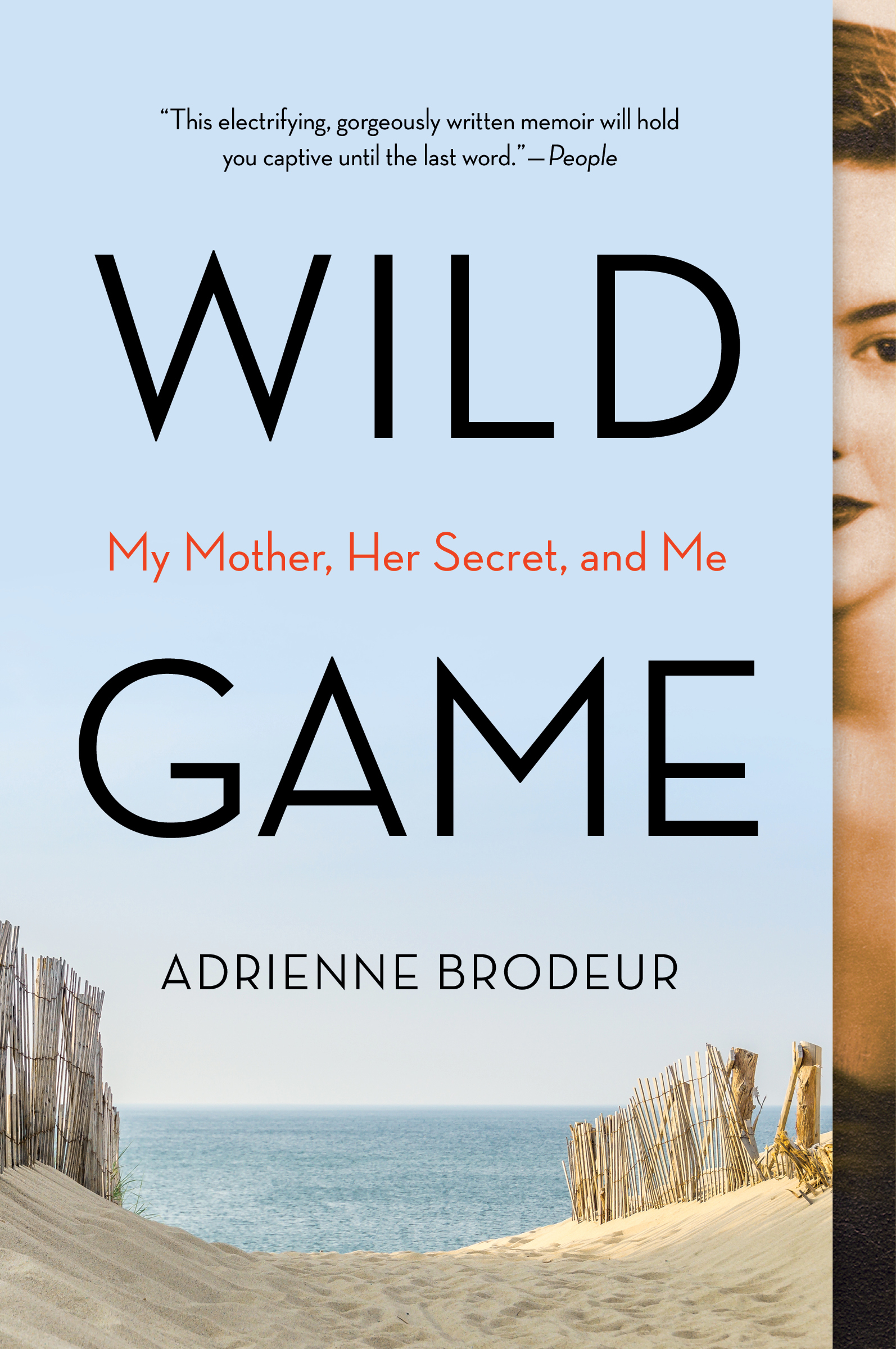
Adrienne Brodeur is a celebrated American author and editor known for her deeply evocative memoir Wild Game: My Mother, Her Lover, and Me and her acclaimed debut novel Little Monsters. Her work frequently explores the complexities of family secrets, the psychological toll of deception, and the atmospheric landscapes of Cape Cod.
Since her breakthrough as a memoirist in 2019, Adrienne Brodeur has cemented her status as a vital voice in contemporary American literature. As we look at her body of work in 2026, her bibliography represents a sophisticated bridge between the raw vulnerability of personal history and the structural precision of literary fiction. Brodeur’s career is unique because it was forged in the world of high-stakes editing and literary curation long before she became a household name for her own prose.
Her journey from founding a renowned literary magazine to leading one of the country's most prestigious writing programs has informed a writing style that is both economical and emotionally resonant. For readers seeking narratives that dissect the "unspoken" within family units, Brodeur’s books offer a masterclass in tension and atmospheric storytelling.
The Literary Foundation: From Editor to Author
Before Adrienne Brodeur was an acclaimed author, she was a titan in the world of literary editing. In 1997, she co-founded the literary magazine Zoetrope: All-Story with filmmaker Francis Ford Coppola. The magazine quickly became a powerhouse, winning numerous National Magazine Awards for Fiction and providing a platform for both established and emerging writers. This period of her career was crucial; it allowed her to sharpen her sense of narrative structure, pacing, and thematic development.
Following her tenure at Zoetrope, Brodeur served as an editor at Houghton Mifflin Harcourt, where she worked with some of the most respected names in literature. Her deep understanding of what makes a story "work" is evident in her own writing. She doesn't just tell a story; she constructs an experience. In 2013, she became the Executive Director of Aspen Words, a program of the Aspen Institute. Under her leadership, the organization launched the Aspen Words Literary Prize, further solidifying her influence on the modern literary landscape.
This background is essential for readers to understand because Brodeur does not write with the tentative steps of a novice. Her books are the product of decades spent immersed in the mechanics of great fiction and non-fiction. When you open an Adrienne Brodeur book, you are engaging with the work of someone who understands the weight of every word.
Wild Game: My Mother, Her Lover, and Me (2019)
The release of Wild Game: My Mother, Her Lover, and Me in 2019 was a transformative moment for Brodeur. The memoir became an instant bestseller and was named one of the best books of the year by The New York Times, NPR, and The Washington Post.
The Core Premise
The memoir recounts a startling and ethically complex period of Brodeur's life. At the age of fourteen, Adrienne’s mother, Malabar, wakes her up to confess that she has just been kissed by Ben Souther, the best friend of Adrienne’s stepfather, Charles. Instead of keeping the secret or distancing herself, Adrienne becomes her mother’s primary confidante and accomplice in a decades-long affair.
The title, Wild Game, refers to the elaborate meals—often involving hunted meat—that Malabar and Ben would share, using Adrienne as a "beard" to facilitate their clandestine meetings. The book is not merely a chronicle of an affair; it is an interrogation of the boundaries between parent and child and the psychological grooming that occurs when a parent treats a child as a peer or a tool for their own desires.
Themes of Betrayal and Complicity
The brilliance of Wild Game lies in Brodeur’s willingness to examine her own role in the deception. She does not position herself as a pure victim, though she clearly was a child manipulated by a charismatic and narcissistic mother. Instead, she explores the "high" of being her mother's favorite and the devastating realization that this favoritism was contingent on her silence and cooperation.
Brodeur uses the rugged, beautiful backdrop of Cape Cod to mirror the internal storms of her characters. The setting—specifically the town of Orleans—is rendered with a sensory richness that makes the environment feel like a participant in the family's secrets.
Impact and Adaptation
The memoir’s success was driven by its "stranger than fiction" plot and Brodeur’s elegant, cool-headed prose. In an era of "tell-all" memoirs, Wild Game stood out for its maturity and lack of sensationalism. The film rights were optioned by major studios, reflecting the cinematic quality of the narrative. Even years after its publication, it remains a staple for book clubs due to the difficult moral questions it raises about loyalty, truth, and the long-term impact of family dysfunction.
Little Monsters (2023): The Transition to Fiction
After the monumental success of her memoir, readers were eager to see if Brodeur could translate her gift for psychological depth into fiction. Little Monsters, published in 2023, answered that question with a resounding yes. While the book is a work of fiction, it explores many of the same geographic and emotional territories as Wild Game.
Plot and Setting
Set on Cape Cod in the summer of 2016, Little Monsters follows the Gardner family as they prepare for the 70th birthday of the patriarch, Adam Gardner. Adam is a brilliant but bipolar oceanographer who believes he has made a groundbreaking discovery about the songs of humpback whales.
The story is told through multiple perspectives:
- Adam: The aging scientist struggling with his mental health and his legacy.
- Ken: Adam’s son, a high-powered real estate developer with political ambitions.
- Abby: Adam’s daughter, a talented artist who feels overshadowed by the men in her family.
As the birthday celebration approaches, long-buried tensions surface, and a secret involving the siblings' deceased mother threatens to dismantle the family’s fragile peace.
Examining the "Monster" Within
The title Little Monsters refers to the small, often unintentional ways we hurt the people we love. Brodeur examines the hierarchies within families—how one child becomes the "successful" one while another is the "difficult" one, and how these labels persist well into adulthood.
The novel is also a meditation on the Atlantic Ocean. Brodeur utilizes Adam’s profession to weave in fascinating details about marine biology and whale communication, using the vast, unknowable depths of the sea as a metaphor for the human psyche. The 2016 setting adds a layer of cultural tension, as the characters navigate a shifting political landscape that mirrors their own internal divisions.
Critical Reception
Critics praised Little Monsters for its intricate plotting and its nuanced depiction of mental illness. Unlike many family dramas that rely on explosive confrontations, Brodeur’s fiction is more interested in the quiet, corrosive nature of secrets. The novel proved that Brodeur is as skilled at creating complex fictional characters as she is at deconstructing real-life ones.
Edited Works and Anthologies
While Wild Game and Little Monsters are her primary solo efforts, Adrienne Brodeur’s contributions to literature include several significant edited volumes. These works reflect her interests in human relationships and the art of the short story.
- Love Me, Hate Me, Whatever: My Summer in Postcards (2003): This unique collection highlights Brodeur’s interest in the ways people communicate through brief, often coded messages.
- The 21st-Century Mother's Guide to Sex and Sensuality (2005): Co-edited with Julia McKinnell, this anthology explored the shifting identities of women balancing motherhood and sexuality, a theme that would later reappear in the character of Malabar in Wild Game.
- Best American Short Stories (Series Involvement): Through her work with Zoetrope, she was instrumental in bringing numerous short stories to the public eye that eventually found their way into the Best American series.
Adrienne Brodeur's Writing Style and Methodology
What sets Adrienne Brodeur apart from other contemporary writers is her "editor’s eye." Every chapter in her books serves a purpose. There is a notable lack of "filler," a rare quality in a literary market often dominated by sprawling, 500-page novels.
Lyrical but Disciplined
Brodeur’s prose is often described as lyrical and sensory. She has a particular talent for describing food, weather, and the physical sensations of a landscape. However, this lyricism is always disciplined. She uses beauty to draw the reader into situations that are often uncomfortable or morally murky.
The Cape Cod Aesthetic
The geography of Cape Cod is central to Brodeur’s identity as a writer. To her, the Cape is not just a vacation destination; it is a place of rugged survival, isolation, and intense natural beauty. She captures the duality of the Cape—the "off-season" loneliness versus the "in-season" chaos—better than almost any other writer of her generation.
Psychological Realism
Brodeur excels at "psychological realism." She doesn't need high-concept plots or supernatural elements to create stakes. The stakes are always the survival of a relationship or the preservation of a character’s sanity. She understands that for most people, the greatest dramas of their lives happen around the dinner table or in the quiet realization that a parent is not who they thought they were.
Comparative Bibliography: Adrienne Brodeur Books at a Glance
The following table provides a quick reference for readers looking to explore her major publications.
| Title | Year | Genre | Primary Theme | Key Setting |
|---|---|---|---|---|
| Wild Game | 2019 | Memoir | Maternal betrayal and complicity | Cape Cod / New York |
| Little Monsters | 2023 | Fiction | Family secrets and mental health | Cape Cod (Orleans) |
| Love Me, Hate Me... | 2003 | Anthology | Brief communications / Postcards | Various |
| The 21st-Century Mother's Guide | 2005 | Non-Fiction/Anthology | Motherhood and identity | Various |
Why Read Adrienne Brodeur in 2026?
In 2026, the cultural conversation often feels fragmented. Readers are increasingly drawn to books that offer a sense of grounding and deep emotional intelligence. Adrienne Brodeur’s work provides exactly that. Whether she is writing about her own life or the lives of the Gardner family, she touches on universal truths:
- The desire to be seen and loved by our parents.
- The difficulty of breaking generational cycles of trauma.
- The healing power of the natural world.
Her books are especially recommended for readers of authors like Dani Shapiro, Jeannette Walls, and Ann Patchett. If you appreciate memoirs that read like thrillers or fiction that feels as real as a memoir, Brodeur is an essential author for your library.
Frequently Asked Questions
Is "Wild Game" being made into a movie?
As of 2026, several production entities have explored the adaptation of Wild Game. The memoir’s cinematic structure—complete with lavish dinner parties, secret meetings in the woods, and intense emotional confrontations—makes it an ideal candidate for film or a limited streaming series. While development timelines in Hollywood can be long, the book remains a highly sought-after property for adaptation.
Should I read "Wild Game" before "Little Monsters"?
There is no narrative requirement to read them in a specific order, as one is a memoir and the other is fiction. However, reading Wild Game first can enhance your appreciation of Little Monsters. Seeing the real-life themes of Cape Cod secrets and complicated father/mother figures in her memoir allows you to see how Brodeur artfully "recycles" and reimagines those emotions in her fictional world.
Is "Little Monsters" based on a true story?
While Little Monsters is a work of fiction, Adrienne Brodeur has acknowledged in interviews that her fiction is informed by her life. The setting of Cape Cod is deeply personal to her, and her understanding of family dynamics and secrets—which she explored in her memoir—certainly informs the struggles of the Gardner family. However, the specific characters and the plot involving the humpback whale research are entirely fictional.
What is Adrienne Brodeur's role at Aspen Words?
Adrienne Brodeur is the Executive Director of Aspen Words, a literary arts program under the Aspen Institute. In this role, she oversees writing workshops, residencies, and the Aspen Words Literary Prize, which is a $35,000 award given annually to a work of fiction that addresses a vital contemporary issue. Her work there highlights her commitment to the broader literary community beyond her own writing.
Where can I find book club discussion guides for her books?
Most major retailers and the publisher’s website (Houghton Mifflin Harcourt/Mariner Books) offer comprehensive reading group guides for both Wild Game and Little Monsters. These guides typically focus on the ethical dilemmas presented in the books, such as the morality of keeping a parent's secret or the impact of mental illness on adult siblings.
Final Recommendation
If you are new to Adrienne Brodeur’s work, the best starting point is Wild Game: My Mother, Her Lover, and Me. It serves as a perfect introduction to her voice, her obsessions, and her extraordinary ability to turn a personal "scandal" into a profound meditation on the human condition. Once you have experienced the tension of her memoir, move on to Little Monsters to see how she expands those themes into a broader, multi-perspective fictional narrative. Adrienne Brodeur is a writer who demands your full attention, and in return, she provides a reading experience that is as intellectually stimulating as it is emotionally satisfying.