Account-based advertising (ABA) in enterprise marketing is a high-precision digital strategy that delivers paid media messages exclusively to the decision-makers and influencers within specific, high-value target accounts. By 2026, this approach has evolved from simple display retargeting into a sophisticated, AI-driven orchestration layer that synchronizes personalized content across programmatic, social, and connected TV channels to accelerate complex B2B sales cycles.
The Evolution of Account-Based Advertising in the Enterprise
In the current 2026 landscape, enterprise marketing has moved decisively away from "spray and pray" lead generation. The primary challenge for enterprise organizations—characterized by long sales cycles and buying committees of 10 to 20 stakeholders—is maintaining relevance throughout a journey that can last 12 to 18 months. Account-based advertising solves this by ensuring that your brand remains visible to the right people, even when they are not actively searching for your solution.
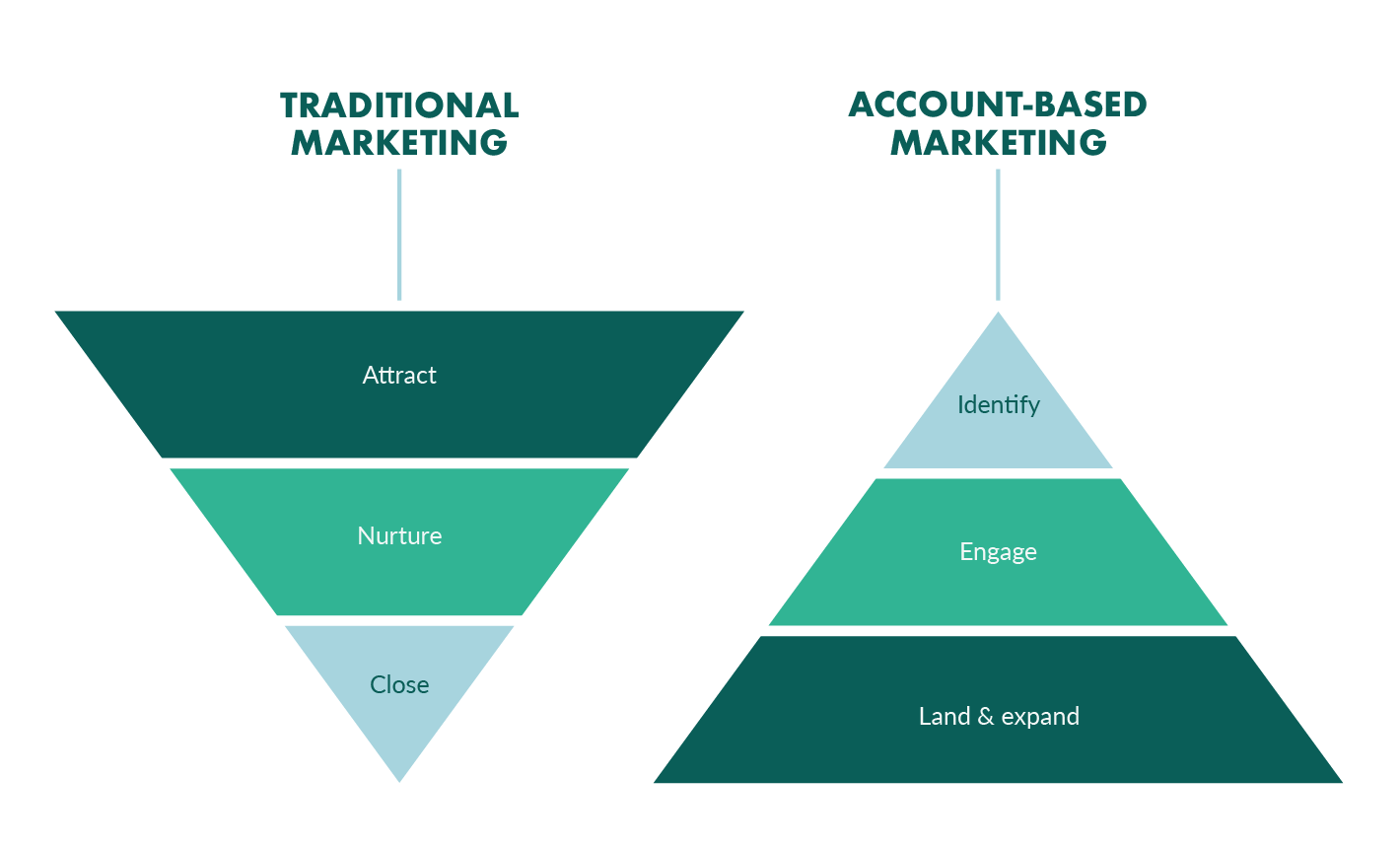
Unlike traditional B2B advertising, which targets personas or job titles across a broad industry, ABA uses firmographic data, intent signals, and account-level identification to narrow the audience. This prevents budget waste on non-target companies and allows for much higher "bid density" on the accounts that actually matter to the sales team. In 2026, the core of this strategy relies on the integration of First-Party Data Clean Rooms and sophisticated identity resolution to reach stakeholders across multiple devices without relying on deprecated third-party cookies.
Core Prerequisites for Enterprise ABA Success
Before launching an account-based advertising campaign at the enterprise level, several foundational elements must be in place. Failure to align these often leads to fragmented messaging and poor Return on Ad Spend (ROAS).
Unified Account Selection (The TAL)
The Target Account List (TAL) is the backbone of ABA. In 2026, top-tier enterprises use predictive modeling to segment their TAL into tiers:
- Tier 1 (One-to-One): Top 10–50 accounts receiving bespoke creative.
- Tier 2 (One-to-Few): 50–500 accounts grouped by industry or specific pain points.
- Tier 3 (One-to-Many): 500+ accounts targeted via intent-based clusters.
The Technical Stack Integration
Successful ABA requires a bidirectional flow of data between the Demand Side Platform (DSP), the Customer Data Platform (CDP), and the CRM (such as Salesforce or Microsoft Dynamics 365). This ensures that if a salesperson marks an account as "Closed-Won," the advertising automatically shifts from "Awareness" to "Expansion" or stops entirely to save budget.
Identity Resolution and IP Mapping
In an enterprise environment, targeting individuals by email alone is insufficient. ABA platforms in 2026 utilize sophisticated IP mapping and device graphing to identify when a user is browsing from a corporate network or a remote location associated with a target company. This allows for "account-level" air cover, reaching the CFO, the CTO, and the end-users simultaneously.
Orchestrating Multi-Channel ABA Campaigns
Enterprise buyers do not live on a single platform. A robust ABA strategy in 2026 must be omnichannel, creating a "surround sound" effect for the target account.
Programmatic Display and Native
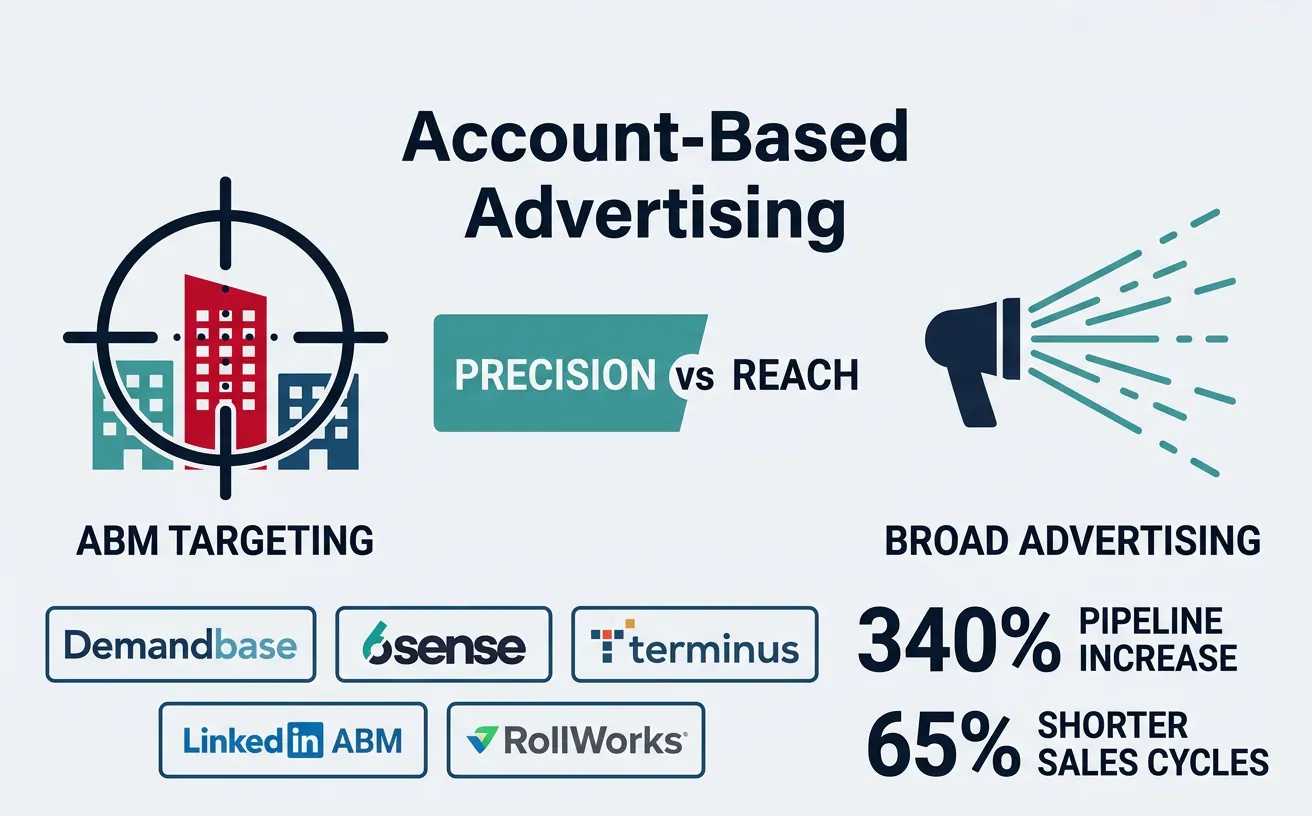
Programmatic advertising remains the workhorse of ABA due to its massive reach and low Cost Per Mille (CPM). By using B2B-specific DSPs like Demandbase or 6sense, marketers can bid exclusively on impressions served to employees of specific Fortune 500 companies. Native advertising—ads that match the look and feel of the publication—is particularly effective for promoting long-form thought leadership and white papers to technical evaluators.
Paid Social (LinkedIn and Beyond)
LinkedIn continues to be a dominant force for enterprise ABA because of its first-party professional data. However, in 2026, enterprises are increasingly moving toward "List-Based Matching" on platforms like Meta and Reddit. By uploading hashed email lists of target account stakeholders, marketers can reach executives during their personal time, reinforcing brand familiarity in a less formal environment.
Connected TV (CTV) and Digital Out-of-Home (DOOH)
A major shift in 2026 is the use of CTV for account-based plays. Large enterprises now run targeted TV spots that are only delivered to households or offices associated with their top 100 target accounts. Similarly, DOOH (Digital Out-of-Home) allows for ads to be placed on digital billboards or office elevator screens specifically located near a target account’s headquarters.
Comparing Enterprise Advertising Channels
| Channel | Primary Use Case | Target Precision | Relative Cost | Measurement Focus |
|---|---|---|---|---|
| Executive engagement & recruiting | Very High | High | Engagement & Clicks | |
| Programmatic | Scaled awareness & air cover | High | Low/Medium | Account Reach |
| Connected TV | High-impact brand storytelling | Medium/High | Very High | Brand Lift |
| Native Ads | Thought leadership & education | High | Medium | Time on Page |
| Search (SEM) | Capturing active intent | Medium | High | Conversion / Demo Request |
Strategic Creative Personalization
In the enterprise space, generic ads are ignored. In 2026, Dynamic Creative Optimization (DCO) allows marketers to automatically inject the target company’s name, industry, or specific pain point into the ad copy.
For example, a cybersecurity firm targeting a major bank might serve an ad that says, "How [Bank Name] Can Prevent Ransomware in 2026." This level of personalization significantly increases Click-Through Rates (CTR) and signals to the prospect that the vendor understands their specific business context. However, marketers must balance personalization with privacy; over-personalization can lead to the "creepiness factor," which can damage brand reputation in a sensitive enterprise environment.
Measuring ABA Impact: Beyond the Click
One of the most significant mistakes in enterprise ABA is applying traditional lead-gen metrics to an account-centric model. Since the goal is to influence a group rather than capture a single lead, measurement must shift to Account Intelligence.
Account Engagement Score
This is a composite metric that tracks how many individuals from a target company are interacting with ads and the website. If the engagement score for a Tier 1 account spikes, it serves as a "Marketing Qualified Account" (MQA) signal for the sales team to reach out.
Pipeline Velocity and Lift
The true value of ABA in 2026 is measured by its impact on the sales cycle. Organizations track whether accounts exposed to advertising move through the funnel faster than those that were not. According to research from Gartner, targeted advertising can increase pipeline velocity by up to 25% by reducing the "education gap" during the sales process.
Win Rate and Deal Size
Enterprise ABA is often a "quality over quantity" play. Success is defined by higher win rates on target accounts and larger initial contract values (ACV) because the buyer was more effectively pre-sold on the total value proposition before the first sales call.
Overcoming Common Implementation Challenges
Transitioning to a full-scale ABA model is not without hurdles. In 2026, the most prominent challenges include:
- Data Silos: Marketing and Sales must agree on the target account list. If Sales is calling on accounts that Marketing is not advertising to, the synergy is lost.
- Privacy Compliance: With the proliferation of global privacy laws (GDPR, CCPA/CPRA, and newer 2025/2026 regulations), ABA must be executed using privacy-safe methods. This requires working with vendors who prioritize SOC2 Type II compliance and non-PII (Personally Identifiable Information) targeting methods.
- Creative Fatigue: Because the target audience is so small (often just a few thousand people), ads can quickly become repetitive. Marketers must refresh creative every 4–6 weeks to maintain engagement.
Future-Proofing ABA with AI and Predictive Analytics
As we look toward the remainder of 2026 and beyond, AI is shifting from a tool for automation to a tool for autonomous strategy. Predictive AI now analyzes millions of signals—job postings, financial reports, and anonymous web traffic—to tell marketers when to increase ad spend on a specific account before that account even knows they are in the market for a solution.
This "predictive advertising" model ensures that enterprise marketers are not just reacting to demand, but actively shaping it. By the time a prospect performs a Google search, the ABA-driven brand should already be the "incumbent" in their mind.
FAQ
How does account-based advertising differ from standard retargeting?
Standard retargeting follows an individual user who has already visited your website. Account-based advertising is proactive; it reaches stakeholders at a target company even if they have never heard of your brand or visited your site. ABA uses firmographic data to identify the audience, whereas retargeting uses past behavior.
What is a realistic budget for enterprise ABA in 2026?
Enterprise budgets vary wildly, but a common benchmark is to allocate $2,000 to $5,000 per month per Tier 1 account for high-touch "One-to-One" campaigns. For broader "One-to-Many" campaigns, a minimum monthly spend of $10,000 is typically required to achieve enough frequency and reach to move the needle on account awareness.
Can ABA work for companies with shorter sales cycles?
While ABA is optimized for complex, multi-stakeholder enterprise deals, it can work for shorter cycles if the Average Selling Price (ASP) is high enough to justify the cost per acquisition. If your deal size is under $10,000, traditional demand generation is usually more cost-effective than a dedicated ABA strategy.
Is IP-based targeting still reliable in a remote-work world?
Yes, but it has evolved. In 2026, ABA platforms use "Hybrid Identity Resolution," which combines corporate IP data with secondary signals like hashed emails and mobile device IDs. This allows the system to recognize that a VP of Engineering working from a home network in the suburbs is still part of the target account's buying committee.
How do we prevent our ads from appearing on low-quality websites?
Enterprise ABA requires strict brand safety protocols. Marketers should use Inclusion Lists (Allow-lists) rather than Exclusion Lists, ensuring ads only appear on vetted, high-authority business and news publications. Additionally, utilizing Private Marketplace (PMP) deals gives more control over the specific environments where your ads are served.
What is the role of the "buying committee" in ABA creative?
The buying committee refers to the different roles involved in a purchase (e.g., IT, Finance, Users, Executives). A successful ABA strategy serves different ads to different members of the committee. The CFO might see ads about ROI and TCO (Total Cost of Ownership), while the end-user sees ads about ease of use and specific product features.
Practical Recommendation for Next Actions
To successfully implement or scale account-based advertising in 2026, start by auditing your current CRM data for accuracy. Clean data is the fuel for ABA; if your account records are outdated, your ad spend will be misdirected. Once the data is refined, select a pilot group of 50 high-priority accounts and run a 90-day multi-channel campaign. Focus your initial measurement not on leads, but on "Account Lift"—the increase in engagement from those specific companies compared to a control group. This data will provide the internal proof of concept needed to secure a larger enterprise budget for full-scale orchestration.