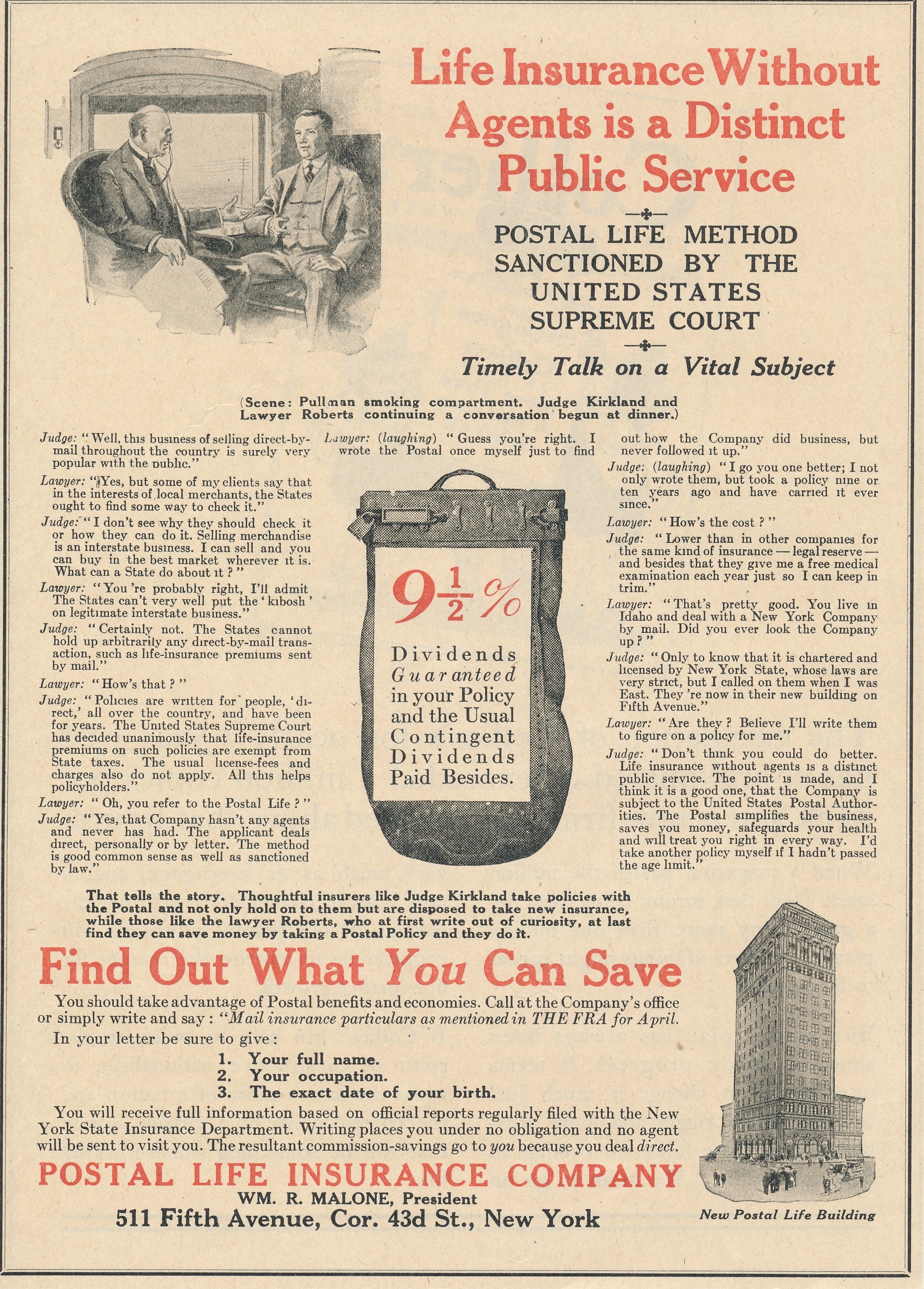
The advertisements frequently heard on 770 AM radio regarding "770 accounts" or "wealth preservation secrets" typically refer to high-early-cash-value Whole Life Insurance policies structured for Infinite Banking. These are not government-sponsored bank accounts but private insurance contracts utilizing IRS Section 7702 guidelines to provide tax-advantaged growth, liquidity through policy loans, and a permanent death benefit.
For years, listeners of talk radio—particularly on stations like WABC 770 AM in New York—have been inundated with advertisements promising a "secret" financial vehicle used by the wealthy and the presidents of the past. These ads often use the term "770 account" or "770 wealth strategy." In the 2026 financial landscape, these strategies remain a cornerstone of conservative financial planning for some, while remaining a source of intense confusion for others. The "770" nomenclature is often a marketing play on both the radio station frequency and IRS Section 7702, which dictates how life insurance is taxed. To navigate these offers, one must strip away the marketing jargon and understand the underlying insurance mechanics, the actual tax laws involved, and the realistic expectations for growth and liquidity.
What Exactly Is the "770 Account" Featured on Talk Radio?
The term "770 account" is not an official financial or banking designation. Instead, it is a proprietary marketing term used by various financial groups to describe a specific way of structuring a dividend-paying Whole Life Insurance policy. The primary goal of this structure is to maximize the "cash value" of the policy as quickly as possible, rather than maximizing the death benefit.
In 2026, the strategy continues to rely on the "Infinite Banking Concept" (IBC) or "Bank on Yourself" philosophy. When an advertiser on 770 AM speaks about this account, they are discussing a policy issued by a mutual insurance company. Unlike stock-held companies, mutual companies are owned by the policyholders, who may receive dividends based on the company's profitability. By adding "Paid-Up Additions" (PUA) riders to the policy, the owner can "overfund" the contract up to the legal limit defined by the IRS. This creates a pool of capital that grows at a guaranteed rate plus potential dividends, all while remaining accessible via policy loans.
The confusion arises because the advertisements often frame this as a "bank account alternative." While it offers some banking-like features—such as liquidity and a place to store capital—it is fundamentally a legal contract with a life insurance carrier. It requires medical underwriting, has specific premium requirements, and is governed by state insurance commissioners and federal tax law.
Common Misconceptions Found in 770 AM Advertisements
Radio advertisements are brief by nature, often leading to oversimplified claims that can be easily misinterpreted. Listeners frequently walk away with several core misconceptions that can lead to frustration if they enter into a contract without full disclosure.
Misconception 1: It Is a "Secret" Government-Backed Account
Many ads suggest that the 770 account is a "secret" or a "loophole" hidden within the tax code. In reality, IRS Section 7702 has been public record since the mid-1980s. It defines what constitutes a life insurance contract for federal tax purposes. If a policy meets these requirements, the cash value grows tax-deferred, and the death benefit is generally income-tax-free. There is nothing "secret" about it; it is standard tax law used by millions of Americans. The "770" branding is simply a clever way to link the radio station’s identity with the IRS code section.
Misconception 2: High Returns with Zero Risk
Advertisers often compare the 770 account to the stock market, highlighting its "guaranteed" nature. While it is true that Whole Life Insurance policies from reputable mutual carriers offer a guaranteed minimum interest rate and are not subject to market volatility, the "returns" are rarely as high as an aggressive stock portfolio over the long term. In the 2026 interest rate environment, the internal rate of return (IRR) on the cash value of these policies typically ranges between 3% and 5% after expenses. It is a volatility-dampening tool, not a high-growth investment.
Misconception 3: Immediate Liquidity of All Deposited Funds
A significant misconception is that you can put $50,000 into a 770 account and immediately take $50,000 out. Because these are insurance products, there are "front-end" costs, including commissions, administrative fees, and the cost of the death benefit. Even in a "high-early-cash-value" structure, a policyholder might only have access to 70% to 85% of their first-year premium. It usually takes 5 to 10 years for the cash value to "break even" with the total premiums paid.
Misconception 4: It Replaces the Need for Traditional Banking
While the strategy is called "Infinite Banking," it does not eliminate the need for a traditional bank. You still need a checking account for daily transactions and a place to receive direct deposits. The 770 strategy is a way to manage capital and finance large purchases (like cars or real estate) using policy loans rather than traditional bank financing, but it is an adjunct to, not a complete replacement for, the banking system.
The Technical Reality: Section 7702 and Policy Structure
To understand why these ads are so prevalent, one must understand the technical shift that occurred with the updates to Section 7702. In recent years, and continuing into 2026, the IRS updated the "Internal Revenue Code Section 7702" to reflect lower interest rate environments. This update allowed insurance companies to put more cash into policies without them being classified as "Modified Endowment Contracts" (MECs).
A MEC is a policy that has been funded too quickly, causing it to lose its favorable tax status. When a policy becomes a MEC, loans are taxed as ordinary income and may be subject to a 10% penalty if the owner is under age 59½. The 770 AM ads focus on policies that are meticulously designed to stay just under the MEC line, maximizing tax-free access to cash.
The structure usually involves:
- Base Premium: A small portion of the payment that pays for the core death benefit.
- Paid-Up Additions (PUA) Rider: The majority of the payment, which goes directly toward increasing the cash value and the death benefit simultaneously.
- Term Insurance Rider: Often used in the early years to increase the total death benefit, which in turn raises the "MEC limit," allowing the policyholder to dump in more cash legally.
Advantages and Realistic Benefits of the Strategy
Despite the marketing hyperbole, the financial vehicle described in 770 AM ads does offer legitimate benefits for specific types of savers. As of 2026, the following advantages remain the primary drivers for those who utilize these policies:
- Tax-Deferred Growth: The cash value grows without being subject to annual capital gains or income taxes.
- Tax-Free Access: Through the use of policy loans, owners can access their capital without triggering a taxable event, provided the policy remains in force until the insured's death.
- Non-Correlation: The value of the account does not drop when the S&P 500 or Nasdaq crashes. This provides a "buffer asset" that can be used during market downturns.
- Asset Protection: In many states, the cash value and death benefit of a life insurance policy are protected from creditors and lawsuits, making it an attractive "fortress" for business owners and professionals.
- Unstructured Loan Repayment: Unlike a bank loan, policy loans do not have a fixed repayment schedule. If the policyholder hits a rough patch, they can choose to skip loan repayments, though interest will accrue and be added to the loan balance.
The Risks and Hidden Costs Omitted in Radio Ads
The primary danger of the 770 AM advertisements is what they don't say. These products are complex and carry significant long-term commitments.
The Cost of Insurance (COI)
Every dollar you put into a 770 account must first pay for the actual insurance component. As the insured ages, the "at-risk" portion for the insurance company changes, and while Whole Life premiums are level, the internal costs are still there. If you don't need the death benefit, the cost of the insurance acts as a "drag" on your investment returns compared to a pure taxable brokerage account.
Loan Interest
When you "borrow your own money," you are actually borrowing from the insurance company's general fund, using your cash value as collateral. The insurance company charges interest on this loan. In 2026, loan rates typically hover between 4% and 6%. While your cash value continues to earn dividends even while a loan is outstanding (in "non-direct recognition" companies), the interest you pay to the company can eventually erode the policy if not managed properly.
Surrender Charges and Early Lapses
If you decide after three years that you don't like the 770 account and want to close it, you may face surrender charges. Furthermore, because you likely paid more in premiums than you have in available cash value during those early years, you will take a loss. If a policy "lapses" with an outstanding loan that exceeds the basis, you could be hit with a massive, unexpected tax bill.
Comparing the "770 Account" to Traditional Vehicles (2026 Data)
To help visualize where this strategy fits, the following table compares the 770-style Whole Life policy against other common financial vehicles based on 2026 projections.
| Feature | 770-Style Whole Life | Traditional 401(k) | High-Yield Savings (HYSA) |
|---|---|---|---|
| Market Risk | None (Guaranteed Floor) | High (Market Dependent) | None (Variable Rate) |
| Tax Treatment | Tax-Deferred / Tax-Free Loans | Tax-Deferred / Taxed at Withdrawal | Taxed Annually |
| Liquidity | High (After 5-7 Years) | Restricted (Age 59.5) | Very High |
| Contribution Limits | High (Based on MEC Limits) | Federal Annual Limits | Unlimited |
| Creditor Protection | High (State Dependent) | High (ERISA Protected) | Low |
| Required Payments | Yes (Ongoing Premiums) | No (Discretionary) | No (Discretionary) |
How to Verify a 770 AM Insurance Offer
If you have heard an advertisement on 770 AM and are considering a policy, follow these verification steps to ensure you are not being misled by marketing fluff.
- Request a Full Illustration: Ask for the "Basic Illustration" which shows the guaranteed and non-guaranteed values for every year until age 120. Look specifically at the "Cash Surrender Value" in years 1 through 10.
- Check the Company Rating: Ensure the carrier is an "A" rated company or higher by agencies like A.M. Best or Standard & Poor's.
- Identify the Loan Type: Ask if the company uses "Direct Recognition" or "Non-Direct Recognition." In non-direct recognition, the company pays the same dividend on your cash value regardless of whether you have an outstanding loan—this is generally preferred for the Infinite Banking strategy.
- Confirm the MEC Limit: Ask the agent to show you the "7-Pay Test" results. This confirms the policy is structured to remain tax-free under Section 7702.
- Vet the Agent: Check the agent’s standing with the National Association of Insurance Commissioners (NAIC). Ensure they have experience specifically in high-early-cash-value structures, as most traditional agents do not build policies this way.
Frequently Asked Questions
Is the 770 account a scam?
No, it is not a scam, but the marketing can be deceptive. It is a legitimate Whole Life Insurance policy structured for cash growth. The "scam" aspect usually refers to agents who over-promise returns or fail to disclose the high costs and lack of early liquidity. When properly designed by a reputable specialist, it is a valid financial tool.
Why do they call it a "770 account" on the radio?
The name is a marketing tactic. It combines the branding of the 770 AM radio frequency with the IRS Section 7702 tax code. This creates a sense of "insider knowledge" and makes the product sound like a unique bank account rather than what it actually is: life insurance.
Can I really "be my own bank"?
The "Infinite Banking" concept allows you to use your policy's cash value as collateral for loans, which you then pay back to the policy (or the company) instead of a traditional lender. While this mimics banking functions, you are still operating within the constraints of an insurance contract. You are "banking" in the sense that you control the flow of your capital.
Do I have to pay taxes on the money I take out?
If you take a withdrawal (surrender of gains), you pay taxes on any amount above the total premiums paid (your basis). However, if you take a policy loan, it is not considered income by the IRS and is therefore tax-free, as long as the policy stays active.
What happens if I stop paying the premiums?
This is a significant risk. If you stop paying premiums before the policy is "self-sustaining" (usually through dividends or a reduced paid-up option), the policy could lapse. If it lapses while you have an outstanding loan, all of that loan could become taxable income immediately.
Practical Recommendations
If you are intrigued by the 770 AM advertisements, approach them as a supplemental strategy rather than a primary one. For most people, maxing out a Roth IRA or a 401(k) with a company match should come first. The 770 strategy is most effective for individuals in high tax brackets who have already exhausted traditional retirement accounts and are looking for a place to store "lazy capital" where it can remain liquid and protected.
Before signing any contract, insist on a "break-even analysis." If the agent cannot show you a policy that breaks even (where cash value equals total premiums paid) by year 7 or 8 at the latest, the policy is likely structured more for the agent's commission than for your "banking" needs. Always seek a second opinion from a fee-only fiduciary financial advisor who does not earn commissions on the sale of insurance products to get an unbiased view of how the strategy fits your specific 2026 financial goals.