The landscape of avionics data bus technology is currently defined by a unique tension between legacy reliability and the demands of high-speed digital transformation. As of 2026, ARINC 429 implementation is evolving through the adoption of high-speed Ethernet gateways, advanced cybersecurity protocols, software-defined testing environments, miniaturized hardware for Urban Air Mobility (UAM), and enhanced data integrity for autonomous flight systems. These shifts ensure that this decades-old "workhorse" protocol remains a critical component within modern, integrated modular avionics (IMA) architectures.
The Endurance of a Legacy Standard
For over four decades, ARINC 429 has served as the backbone of commercial aircraft communication. Developed by Aeronautical Radio, Inc., it specifies the air transport industry’s standard for a two-wire, point-to-point serial data bus. Despite the emergence of significantly faster protocols like ARINC 664 (AFDX) and various Ethernet-based derivatives, ARINC 429 remains ubiquitous. Its simplicity—utilizing a single transmitter and up to 20 receivers per bus—offers a level of deterministic reliability that newer, more complex systems struggle to replicate at a similar cost and weight for simple data tasks.
However, "simplicity" is no longer enough in 2026. The complexity of modern airframes, the rise of electric vertical takeoff and landing (eVTOL) vehicles, and the increasing threat of cyber-interference have forced a modernization of how ARINC 429 is implemented. The following five changes represent the most significant shifts in how engineers, integrators, and maintenance crews interact with this standard.
1. Integration with High-Speed Hybrid Architectures via Gateways
In 2026, the most prominent change in ARINC 429 implementation is its transition from a standalone system to a "leaf node" in a larger, hybrid network. Modern aircraft no longer rely solely on one protocol; instead, they use high-speed backbones like AFDX or 10GbE (10-Gigabit Ethernet) to move massive amounts of data across the airframe, while retaining ARINC 429 for specialized Line Replaceable Units (LRUs) such as flight control sensors, landing gear indicators, and fuel management systems.
The implementation challenge has shifted toward Protocol Conversion and Gateway Management. Engineers are now designing sophisticated data concentrators that map ARINC 429 labels—the 8-bit identifiers that define data types like altitude or airspeed—directly into Ethernet packets. This mapping must occur with microsecond latency to maintain the deterministic nature of the original signal.
Furthermore, these gateways must handle the "impedance mismatch" between the 100 kbps (High Speed) or 12.5 kbps (Low Speed) rates of ARINC 429 and the gigabit speeds of the backbone. This requires advanced buffering techniques and priority-based scheduling to ensure that critical 429 data is not "lost in the noise" of high-volume cabin entertainment or weather radar data sharing the same physical fiber-optic or copper backplane.
2. Hardening Cybersecurity for Simplex Communication
Traditionally, ARINC 429 was considered inherently "secure" because it is a simplex, point-to-point bus. A transmitter sends data, and receivers listen; there is no handshake, no addressing system, and no way for a receiver to "talk back" or corrupt the transmitter over the same wire. However, in the connected cockpit of 2026, the "air-gap" safety net has evaporated.
Because ARINC 429 data is now frequently aggregated into gateways that are connected to the aircraft’s external communications (SATCOM, Wi-Fi, and EFB tablets), the implementation of 429 systems now requires Data Integrity Verification Layers. Modern implementations utilize "Shadow Monitoring" or "Bus Guardians." These are secondary hardware or software logic layers that analyze the incoming 429 stream for anomalies—such as impossible rate-of-change values in altitude or parity errors—that might indicate a compromised sensor or a "Man-in-the-Middle" attack within the gateway itself.
The focus has shifted from protecting the wire to protecting the Label Data. Implementing ARINC 429 now involves rigorous Signal Integrity (SI) analysis to ensure that electromagnetic interference (EMI) from high-power electric propulsion systems (common in 2026's eVTOL designs) does not induce "bit-flips" that could be misinterpreted as valid flight data.
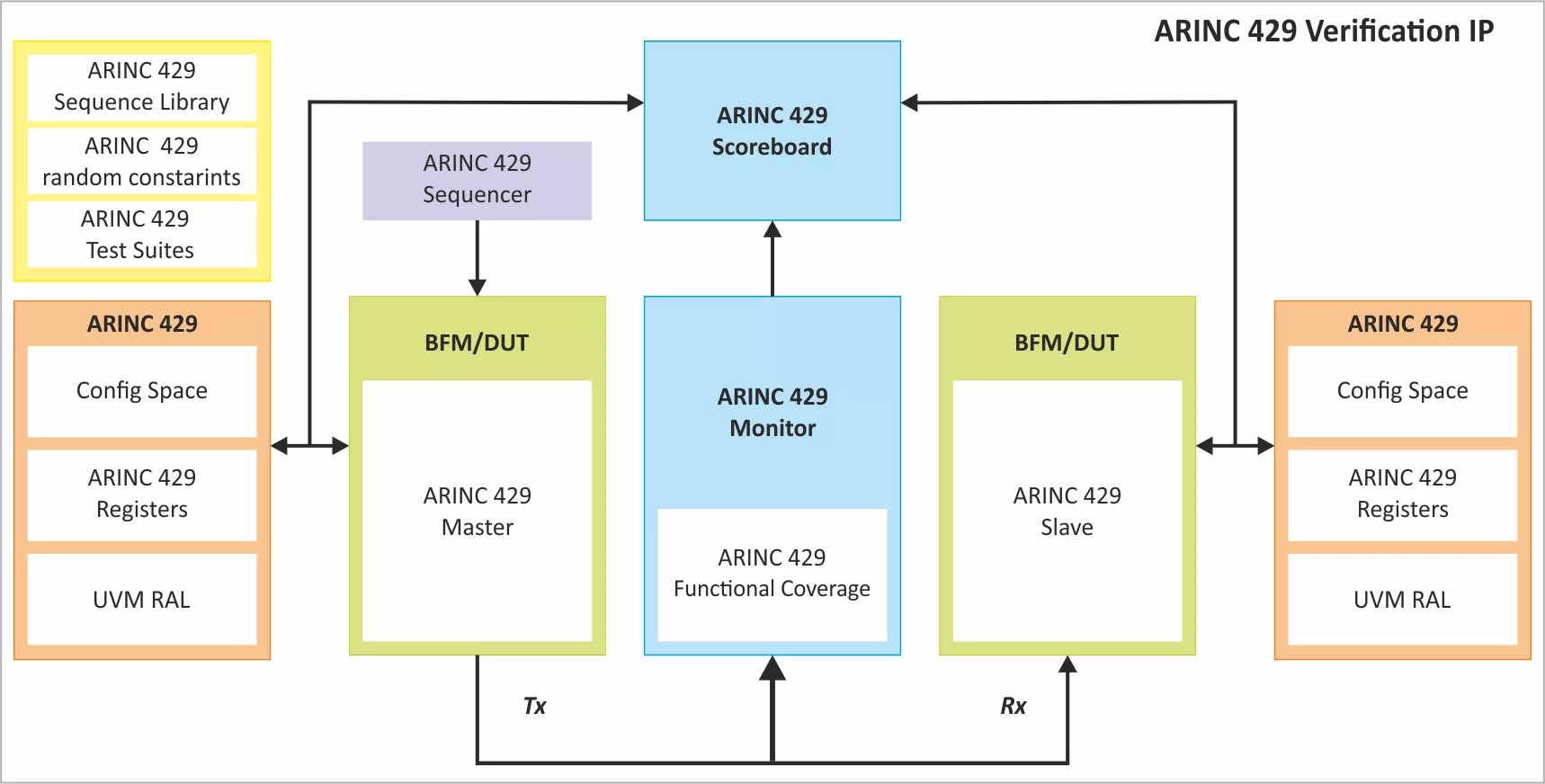
3. Shift Toward Software-Defined Testing and Virtualization
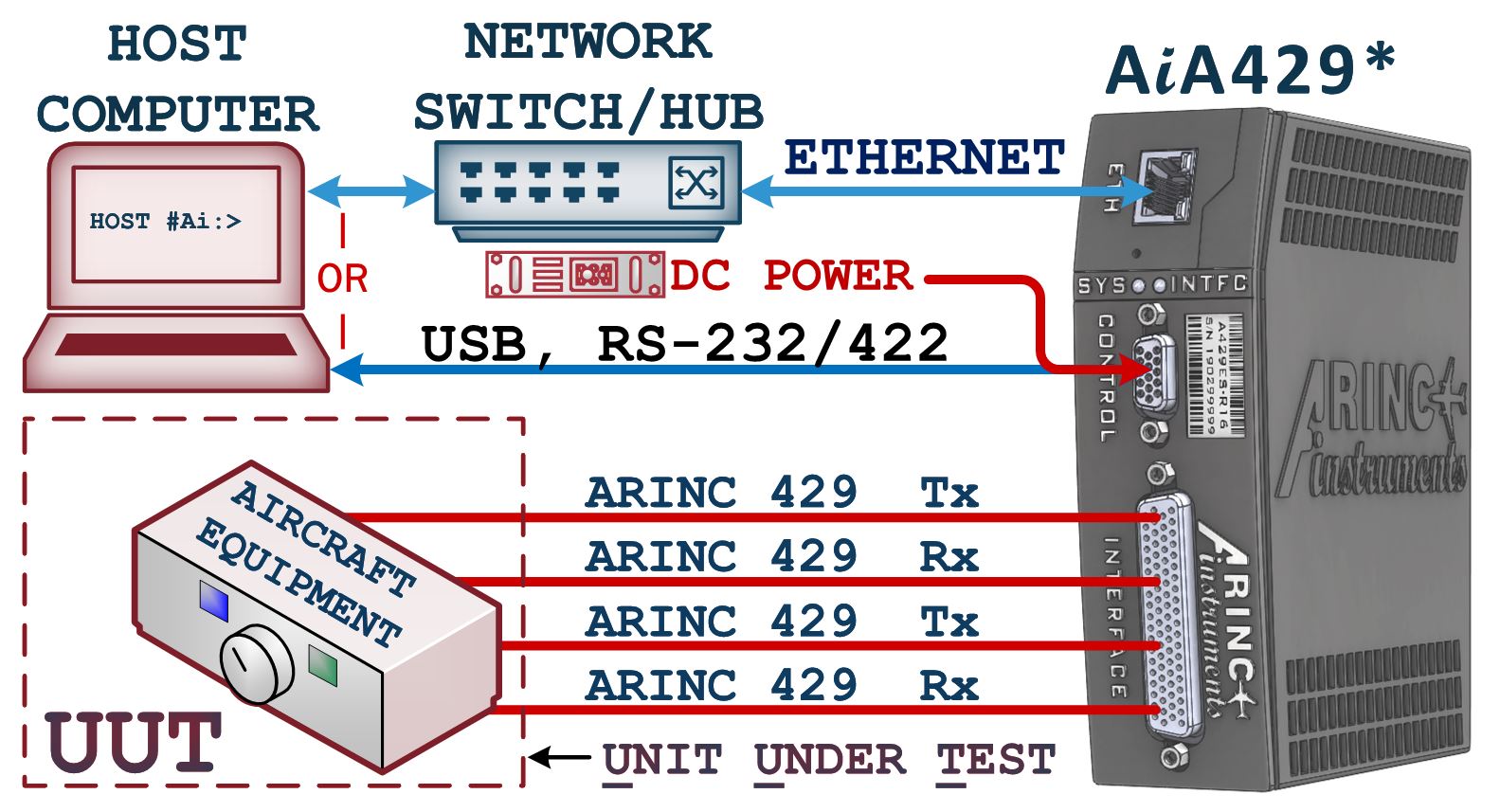
The days of using massive, dedicated hardware "breakout boxes" to test ARINC 429 installations are largely over. In 2026, implementation is heavily supported by Software-Defined Instrumentation. Companies are moving toward PXIe (PCI eXtensions for Instrumentation) and PCIe-based cards that can be reconfigured via software to simulate dozens of ARINC 429 channels simultaneously.
This change is driven by the need for "Digital Twins" in aircraft development. Before a single wire is pulled through a fuselage, the entire ARINC 429 network is virtualized. This allows engineers to:
- Simulate Faults: Injecting specific parity errors or timing jitter into the bus to see how the Flight Management System (FMS) reacts.
- Load Testing: Testing how receivers behave when the bus is running at its maximum 100 kbps theoretical capacity with zero "null" gaps.
- Automated Regression: Using Python or LabVIEW scripts to verify that a firmware update on a single LRU hasn't negatively impacted the timing of the entire data bus.
This shift means that the implementation of ARINC 429 is now as much a software engineering task as it is an electrical engineering one. The technician on the hangar floor now uses a tablet connected to a modular interface rather than a standalone voltmeter and oscilloscope.
4. Miniaturization for UAM and Autonomous Systems
The explosion of the Urban Air Mobility (UAM) sector—including "air taxis" and cargo drones—has necessitated a radical redesign of ARINC 429 hardware. In a traditional Boeing 737 or Airbus A320, the weight and size of an ARINC 429 transceiver are negligible. In a 500-lb cargo drone, every gram matters.
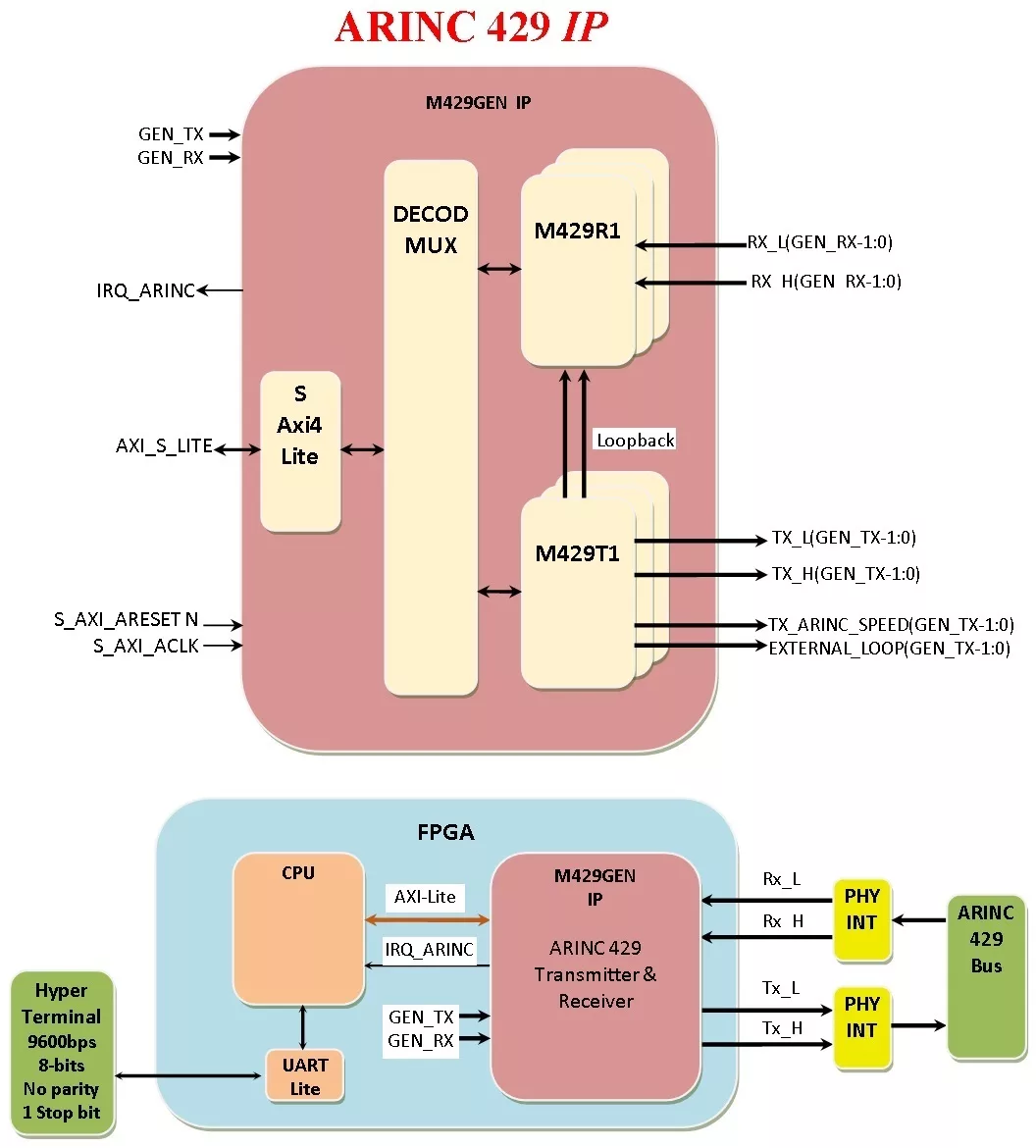
Current implementation trends emphasize System-on-Chip (SoC) Integration. We are seeing the consolidation of the ARINC 429 line driver, receiver, and protocol logic into a single, ultra-small package. These modern ICs (Integrated Circuits) consume significantly less power and generate less heat, which is vital for the passively cooled electronics bays of electric aircraft.
Additionally, these miniaturized implementations are often "dual-protocol." A single chip might handle both ARINC 429 for legacy sensor compatibility and CAN (Controller Area Network) or ARINC 825 for the vehicle's internal battery management system. This "Multi-Protocol Silicon" approach is a departure from the discrete, single-purpose components of the early 2000s, making the physical implementation of the bus more flexible and space-efficient.
5. Enhanced Diagnostics and Predictive Maintenance
The final major change in ARINC 429 implementation is the move from "reactive" to "predictive" maintenance. Historically, an ARINC 429 bus was checked only if a system failure occurred. In 2026, the implementation includes Continuous Bus Health Monitoring.
Modern ARINC 429 controllers are now equipped with diagnostic engines that measure physical layer characteristics in real-time, such as:
- Voltage Levels: Detecting subtle drops in the +/- 5V (differential 10V) signal that might indicate a corroding connector or a fraying wire.
- Rise and Fall Times: Monitoring the slope of the bipolar RZ (Return-to-Zero) waveform. If the "slope" begins to flatten, it suggests capacitive loading issues or aging insulation.
- Bit-Error Rate (BER) Trending: Logging how often parity errors occur on specific labels over hundreds of flight hours to identify a failing transmitter before it reaches a critical state.
By integrating these diagnostics into the implementation phase, airlines and operators can move toward a "Condition-Based Maintenance" model. This reduces AOG (Aircraft on Ground) time, as the system can flag a degrading ARINC 429 link weeks before it actually fails.
Comparison of Avionics Data Standards (2026 Context)
The following table compares ARINC 429 with its primary modern counterparts to illustrate why it remains a specific focus for implementation despite its lower bandwidth.
| Feature | ARINC 429 | ARINC 664 (AFDX) | Ethernet (IEEE 802.3) | CAN (ARINC 825) |
|---|---|---|---|---|
| Topology | Point-to-Point (Simplex) | Switched Star | Switched/Mesh | Multi-Drop Bus |
| Data Rate | 12.5 or 100 kbps | 10/100 Mbps | 1 Gbps+ | Up to 1 Mbps |
| Wiring | Shielded Twisted Pair | Dual Shielded Twisted Pair | 4-Pair Cat6/7 or Fiber | Shielded Twisted Pair |
| Complexity | Very Low | Very High | Medium/High | Low |
| Determinism | High (Inherent) | High (Via Virtual Links) | Low (Needs TSN) | High |
| Primary Use | Sensors, Flight Controls | Core Avionics Backbone | Mission Systems, IFE | Utilities, BMS |
Frequently Asked Questions
Why is ARINC 429 still used in 2026 instead of 100% Ethernet?
The primary reason is Certification and Simplicity. ARINC 429 is a known quantity with a massive library of "proven-in-use" data. For critical but low-bandwidth systems like landing gear position or engine temperature, the overhead of an Ethernet stack—including switches, IP addressing, and complex synchronization—is unnecessary. The deterministic nature of ARINC 429 is "built-in," whereas Ethernet requires complex "Time Sensitive Networking" (TSN) protocols to achieve the same reliability.
Can ARINC 429 support modern security encryption?
Not directly on the bus itself. Because ARINC 429 uses a fixed 32-bit word format (8 bits for the label, 18-19 for data, and 1 for parity), there is no room for a modern encryption header. Security is instead implemented at the Endpoints. The transmitting LRU might sign the data, and the receiving gateway verifies it, or the system relies on physical isolation and robust "Bus Guardian" monitoring to ensure the integrity of the stream.
How do I troubleshoot a "Parity Error" in a 2026 ARINC 429 system?
In 2026, troubleshooting usually begins with a digital analyzer. If a parity error is detected, the technician checks the signal's Eye Diagram. A "closed eye" indicates that the differential voltage is not reaching the required thresholds or that there is significant timing jitter. This is often caused by EMI from new high-frequency electric motors or a breakdown in the shielded twisted-pair cabling.
Is the wiring for ARINC 429 changing?
While the standard calls for shielded twisted pair (78-ohm impedance), modern implementations are using higher-grade shielding and more durable jacket materials (such as PTFE or specialized polymers) to resist the higher temperatures found in modern, tightly packed avionics bays. Some research is also being done into "ARINC 429 over Fiber," though copper remains the standard for the vast majority of applications due to its ruggedness.
What is the role of the "Label" in implementation?
The Label is an 8-bit octal code that tells the receiver what the data represents. For example, Label 203 is typically Barometric Altitude. Implementation requires a strict Data Dictionary or "Equipment ID" (EQID) map. If the transmitter and receiver are not calibrated to the same EQID table, the receiver will ignore the data or, worse, interpret a fuel flow rate as an airspeed value.
Practical Recommendations for Implementation
For engineers and project managers tasked with ARINC 429 implementation in the current environment, the following steps are recommended:
- Prioritize Gateway Integrity: Ensure that any conversion between ARINC 429 and Ethernet uses hardware-level timestamping. This prevents "stale data" from being processed by the flight computer.
- Adopt Software-First Verification: Use simulation environments to model the entire bus load before finalizing the hardware layout. This is especially critical in UAM designs where the electromagnetic environment is highly volatile.
- Implement Differential Monitoring: Do not just monitor for "data presence." Use modern transceivers that provide "Signal Health" outputs to flag degrading physical layer performance.
- Security via Isolation: Even if the bus is simplex, ensure the gateway connecting it to the outside world has a robust, one-way data diode or hardware-based firewall.
- Focus on Shielding and Grounding: As aircraft become more "electric," the risk of ground loops and EMI increases. Rigorous adherence to ARINC 429 grounding standards is more important now than ever before.