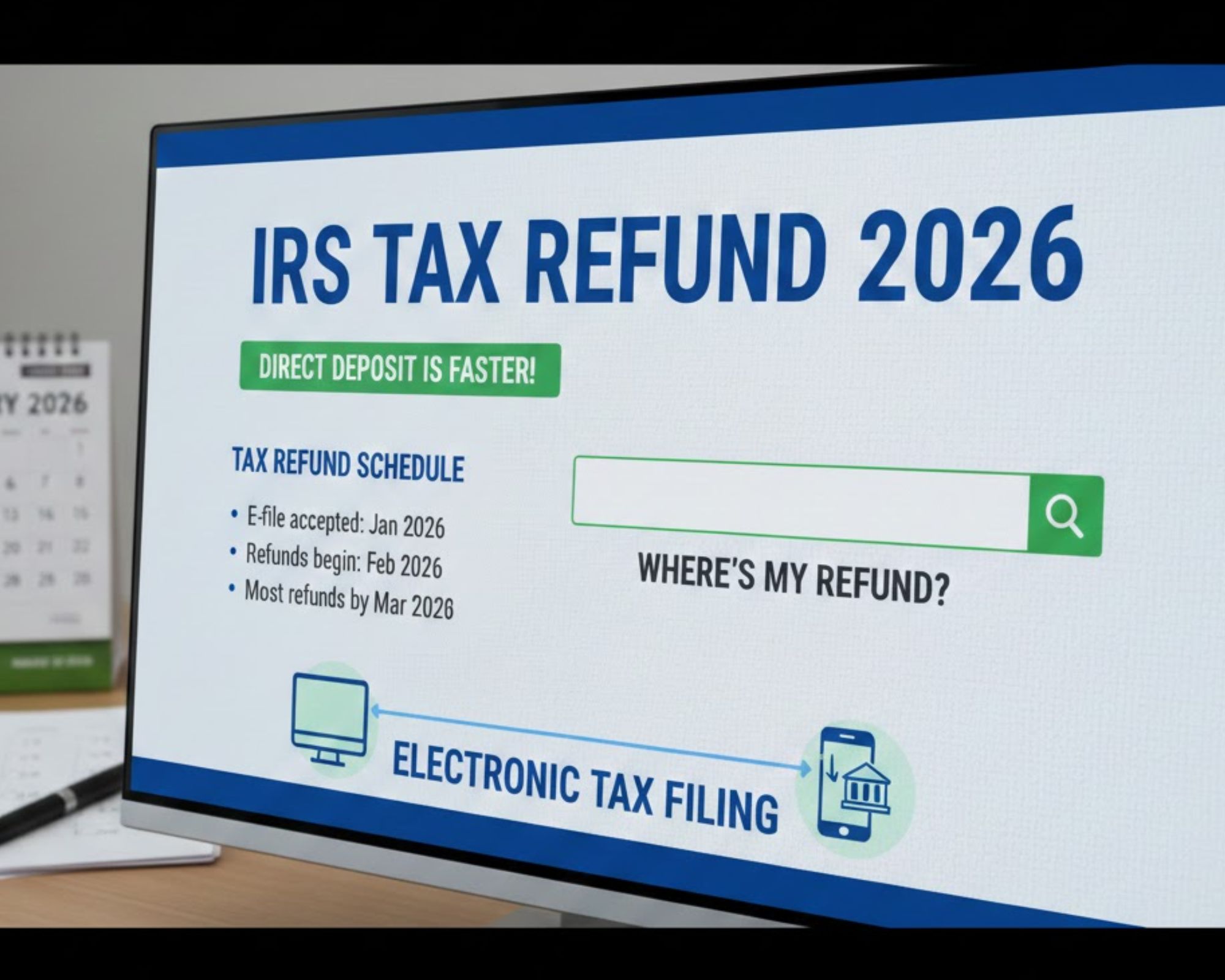
Most taxpayers who file electronically and choose direct deposit receive their federal tax refund within 21 calendar days of the Internal Revenue Service (IRS) accepting their return. However, specific timelines vary based on tax credits claimed, identity verification requirements, and bank processing speeds. Returns claiming certain credits face mandatory legal holds until mid-February.
How IRS Direct Deposit Timelines Work in 2026
The federal tax filing season in 2026 covers individual income tax returns for the 2025 tax year. For taxpayers expecting a financial return, receiving funds via direct deposit remains the fastest and safest method. The IRS processes tens of millions of e-filed returns annually, relying on automated fraud-detection filters and electronic payment processing through the U.S. Department of the Treasury’s Bureau of the Fiscal Service.
Understanding the direct deposit process requires distinguishing between three key milestones:
Return Acceptance: The date the IRS computer system successfully receives and validates the structure of your e-filed return.
Refund Approval: The point at which the IRS finishes processing your line items, verifies eligibility for credits, and clears the payment for release.
Refund Issue / Transfer: The date the Bureau of the Fiscal Service transmits payment instructions via the Automated Clearing House (ACH) network to your financial institution.
Return E-Filed
IRS Acceptance
Processing & Approval
Treasury ACH Transfer
Bank Deposit
While the IRS historically published fixed processing schedules matching specific submission dates to exact deposit dates, the agency discontinued official rigid schedules. Modern processing occurs continuously on rolling daily and weekly cycles, meaning two taxpayers filing on the exact same day may see their deposits hit their bank accounts on different dates depending on automated risk scoring and account posting routines.
Estimated 2026 Direct Deposit Schedule
For an uncomplicated, e-filed return with direct deposit selected and no tax credit holds, the standard turnaround time is 10 to 21 calendar days.
The schedule below provides estimated deposit windows based on standard IRS e-file acceptance dates for returns without errors or statutory holds.
| IRS Return Acceptance Date | Estimated Direct Deposit Window (Standard Return) | Estimated Window for PATH Act Returns (EITC/ACTC) |
|---|---|---|
| Jan 26 – Jan 31, 2026 | Feb 9 – Feb 16, 2026 | Feb 17 – Feb 28, 2026 |
| Feb 1 – Feb 7, 2026 | Feb 16 – Feb 23, 2026 | Feb 20 – Feb 28, 2026 |
| Feb 8 – Feb 14, 2026 | Feb 22 – Mar 2, 2026 | Feb 25 – Mar 6, 2026 |
| Feb 15 – Feb 21, 2026 | Mar 1 – Mar 9, 2026 | Mar 2 – Mar 11, 2026 |
| Feb 22 – Feb 28, 2026 | Mar 8 – Mar 16, 2026 | Mar 8 – Mar 16, 2026 |
| Mar 1 – Mar 15, 2026 | Mar 15 – Mar 30, 2026 | Mar 15 – Mar 30, 2026 |
| Mar 16 – Apr 15, 2026 | 10 to 21 Days from Acceptance | 10 to 21 Days from Acceptance |
Note: Paper-filed tax returns take significantly longer to process—typically 6 to 12 weeks or more—due to manual data-entry requirements.
Key Factors Impacting Your Tax Refund Timeline
Although the 21-day benchmark applies to roughly 90% of e-filed returns, several legal, technical, and financial rules can accelerate or delay your direct deposit.
The PATH Act Mandatory Hold
Under the Protecting Americans from Tax Hikes (PATH) Act, federal law prohibits the IRS from issuing tax refunds before mid-February for any return that claims:
- The Earned Income Tax Credit (EITC)
- The Additional Child Tax Credit (ACTC)
This statutory hold applies to the entire refund amount, not just the portion associated with the credit. The restriction gives the IRS additional time to cross-reference wage data submitted by employers on W-2 forms, preventing fraudulent early claims.
For taxpayers filing early in January who claim the EITC or ACTC, the IRS updates tracking systems in mid-February, with funds usually reaching bank accounts by the final week of February, provided there are no other issues.
- Early Return Filed (Jan)
- IRS Holds Refund under PATH Act
- Hold Lifts (Mid-Feb)
- Deposit Released (Late Feb)
Daily vs. Weekly Processing Accounts
The IRS master file processes tax accounts using two primary scheduling modes:
- Daily Account Processing: Accounts updated continuously Monday through Friday. Taxpayers in daily processing often see status changes on the IRS "Where's My Refund?" tool overnight during the workweek.
- Weekly Account Processing: Accounts updated in batches once per week, typically overnight on Thursdays, with status updates reflected on the tracking portal by Saturday morning.
Your account cycle determines whether your deposit instruction reaches your bank early in the week or on a scheduled Friday settlement date.
Financial Institution and Early Deposit Services
Once the Bureau of the Fiscal Service transmits funds via the ACH network, the timing of access depends on your receiving bank or credit union:
- Traditional Banks: Standard financial institutions usually hold pending ACH transfers for 1 to 2 business days, posting the deposit on the exact settlement date requested by the Treasury (frequently a Friday or Wednesday).
- Neobanks and Fintech Platforms: Many modern online banking services offer "early direct deposit." These platforms credit incoming ACH transfers as soon as they receive the advance payment notification from the Federal Reserve, making funds available up to 2 days earlier than traditional banks.
How to Track Your Direct Deposit Status
Taxpayers can monitor the progress of their refund using official, free tools provided by the federal government.
1. "Where's My Refund?" Tool and IRS2Go App
The official IRS Where's My Refund? online portal and the mobile app IRS2Go are the primary sources for refund tracking. To check your status, you must supply:
- Your Social Security Number (SSN) or Individual Taxpayer Identification Number (ITIN)
- Your filing status (Single, Married Filing Jointly, Head of Household, etc.)
- The exact whole-dollar refund amount reported on your tax return
The tracker updates once daily, usually overnight, and displays three distinct status stages:
Return Received
Refund Approved
Refund Sent
Return Received: The IRS has accepted your return and placed it into the processing queue.
Refund Approved: The IRS has completed processing, verified your numbers, and scheduled a specific deposit date.
Refund Sent: The Treasury has issued payment instructions to your financial institution.
2. IRS Online Account Transcripts
For advanced tracking, taxpayers can create or log into their IRS Online Account using ID.me authentication to review their Tax Account Transcript.
Transcripts provide detailed internal transaction codes that indicate the precise status of your return:
- Code 150 (Tax Return Filed)
- Code 806 (W-2 Withholding)
- Code 846 (Refund Issued)
- Code 150: Tax return filed and processed.
- Code 806: Tax withholding credited to your account.
- Code 570: Account hold placed; processing temporarily paused.
- Code 971: Notice or letter issued explaining an adjustment or requiring identity verification.
- Code 846: Refund Issued. This code signals that your refund has been approved, listing the exact scheduled date the Treasury will transfer the funds.
Common Causes for Direct Deposit Delays
If 21 days pass from the date of IRS return acceptance without a direct deposit, one of several common disruptions may be responsible:
- Refund Delayed (>21 Days)
- Identity Verification Required (Notice 5071C)
- Math Errors or Incorrect Credit Calculations
- Unpaid Federal/State Liabilities (Treasury Offset)
- Incorrect Routing / Account Numbers
- Injured Spouse Claims or Form 8862 Requirements
1. Identity and Refund Verification
To combat identity theft, the IRS automated systems frequently flag returns for identity verification. If selected, processing stops until you complete verification online or by phone using IRS Notice 5071C or 5071C/S.
2. Errors and Adjusted Amounts
If the income or withholding stated on your tax return does not match documents reported by employers (Forms W-2 and 1099), the IRS manual review team must reconcile the discrepancy. The IRS will adjust the final refund amount and send an explanatory letter, delaying payment release.
3. Treasury Offset Program (TOP)
If you owe delinquent debt—such as past-due federal taxes, unpaid state income taxes, defaulted student loans, or child support obligations—the Bureau of the Fiscal Service may reduce or eliminate your tax refund through the Treasury Offset Program.
If an offset occurs, the Treasury sends a written notice detailing the original refund amount, the offset deduction, and the agency receiving the diverted funds.
4. Direct Deposit Information Errors
If you submit an incorrect routing number or account number on your Form 1040:
- Invalid Account/Routing Number: The bank rejects the electronic transfer, and the Treasury automatically converts the refund into a physical paper check mailed to your address of record.
- Valid Number Belonging to Someone Else: If the account details belong to another party, the financial institution may reject the deposit if the name on the account does not match the name on the tax return. If accepted by the wrong account, resolving the issue requires filing IRS Form 3911 (Taxpayer Statement Regarding Refund).
Direct Deposit vs. Paper Check Comparison
Choosing direct deposit over a paper check offers distinct technical and logistical advantages.
| Feature | Direct Deposit | Paper Check |
|---|---|---|
| Standard Turnaround | 10 to 21 Days | 6 to 12 Weeks |
| Delivery Security | Encrypted ACH Transfer | Physical Mail (Risk of Loss/Theft) |
| Split Refunds | Allowed (Up to 3 Accounts via Form 8888) | Single Check Only |
| Funds Availability | Immediate upon posting | Subject to Bank Hold Periods |
| Processing Cost | Free | Free (Potential Check-Cashing Fees) |
Step-by-Step Action Plan for Missing Refunds
If your direct deposit date has passed and the funds are not visible in your account, follow this resolution workflow:
Verify Status
Check Bank Account
Verify Routing/Account No.
Contact IRS/Bank
Check "Where's My Refund?": Confirm whether the system displays the "Refund Sent" indicator alongside a specific issue date.
Review Your Filed Form 1040: Inspect lines 35b and 35d to confirm the routing and account numbers match your bank records exactly.
Contact Your Financial Institution: Inquire whether an incoming ACH credit from "IRS TREAS 310" is pending or rejected due to account name matching requirements.
Wait 5 Days Post-Sent Date: The IRS requires a 5-day waiting period after an electronic transfer date before initiating a payment trace for missing direct deposits.
Initiate an Official Payment Trace: If 5 calendar days have elapsed since the "Refund Sent" date and your bank confirms no funds arrived, call the IRS at 800-829-1040 or submit Form 3911 to request an official investigation.
Frequently Asked Questions
What does "IRS TREAS 310" mean on my bank statement?
"IRS TREAS 310" is the standardized transaction descriptor used for electronic direct deposits issued by the U.S. Department of the Treasury for federal tax refunds. The designation "TAX REF" typically accompanies this label on online banking ledger statements.
Can I split my direct deposit across multiple bank accounts?
Yes. By completing and attaching IRS Form 8888 (Allocation of Refund) to your e-filed tax return, you can split your federal tax refund directly into up to three separate accounts, including checking, savings, or individual retirement accounts (IRAs).
Why is my tax refund lower than the amount I filed for?
A reduced refund typically occurs for two reasons: an IRS automated adjustment due to calculations or missing forms, or a Treasury offset applied to clear unpaid state or federal liabilities. The IRS or Fiscal Service will issue an explanatory letter by mail outlining the exact deductions made.
How late in the day can an IRS direct deposit post to my bank?
ACH transfers process in electronic batches throughout the business day. While many deposits post overnight between 12:00 AM and 6:00 AM local time, financial institutions may receive and credit incoming settlement files as late as 5:00 PM local time.
Does taking a tax preparation refund advance affect my direct deposit?
Yes. If you opt for a Refund Anticipation Loan (RAL) or a refund advance product through tax preparation software, your actual IRS refund is directed to a temporary third-party settlement bank. That bank deducts loan balances and processing fees before transferring the remaining funds to your personal account.
Practical Recommendations
To secure your 2026 direct deposit without delays:
- E-file and Choose Direct Deposit: Combine electronic filing with direct deposit for the standard 10–21 day delivery window.
- Double-Check Account Data: Carefully verify your routing and account numbers prior to submitting Form 1040.
- Monitor Official Channels: Track your processing status using official IRS portals rather than unverified third-party schedule tables.
- Keep Documentation Handy: Store copies of income documentation (W-2s, 1099s) and maintain access to your IRS Online Account to resolve any identity or processing queries quickly.
Disclaimer: Tax laws, processing routines, and regulations are subject to administrative changes. For binding guidance specific to your personal tax situation, consult a Certified Public Accountant (CPA), Enrolled Agent (EA), or qualified tax professional.