In 2023, a U.S. Air Force E-3 (Airman First Class) earned a monthly basic pay ranging from $2,259.90 to $2,551.50, depending on years of service. Combined with non-taxable allowances like the Basic Allowance for Subsistence ($452.89) and the Basic Allowance for Housing, the total compensation package significantly exceeded the base salary, reflecting the 4.6% pay increase implemented that year.
Understanding the E-3 Rank: Airman First Class (A1C)
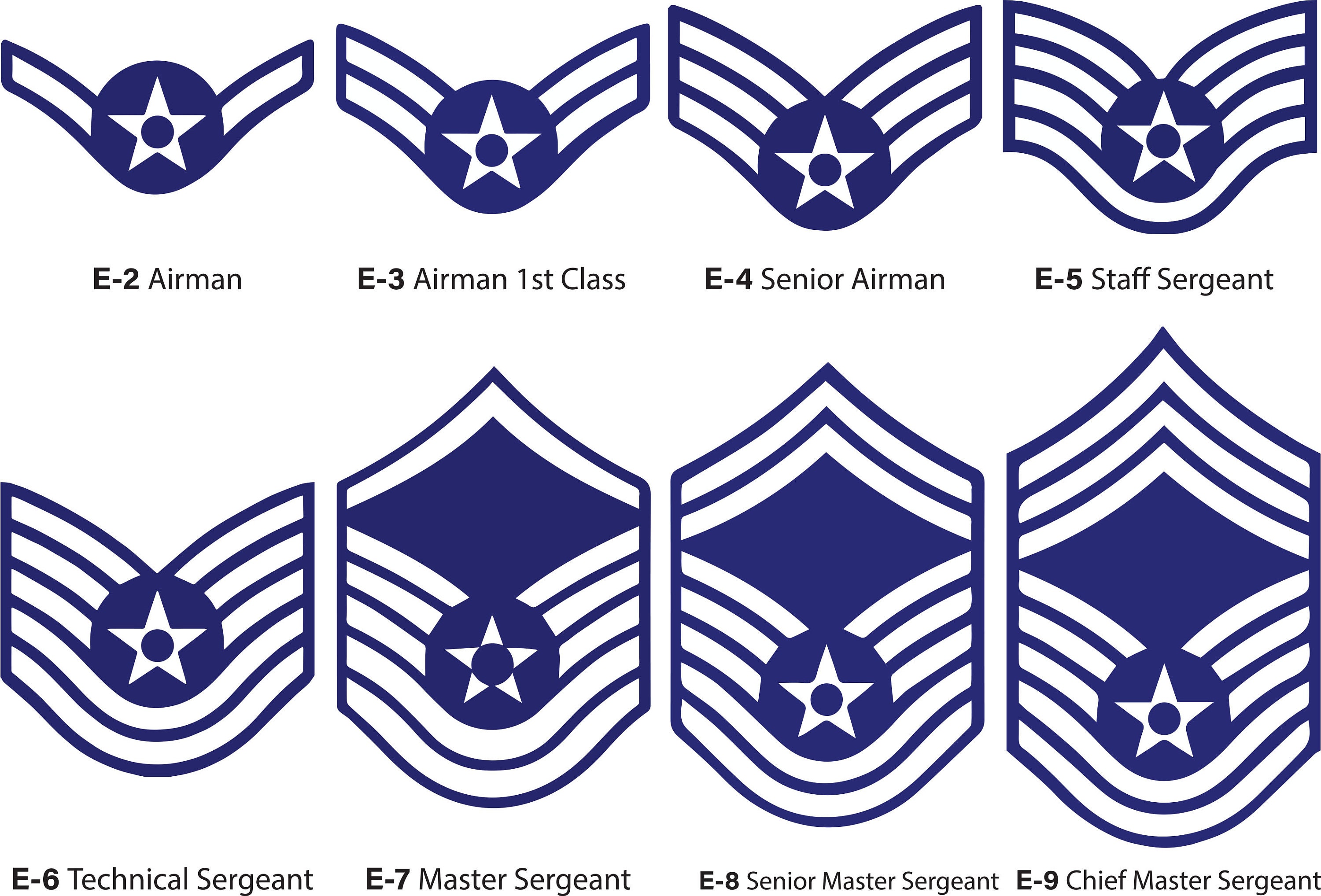
In the United States Air Force, the E-3 rank is designated as Airman First Class (A1C). This is the third enlisted grade in the Air Force hierarchy, positioned above Airman (E-2) and below Senior Airman (E-4). While it is still considered an "entry-level" or junior enlisted rank, the responsibilities and expectations for an A1C are markedly higher than those for an E-1 or E-2.
Most service members reach the E-3 rank through one of two primary paths. The most common route is time-in-grade; an Airman (E-2) is typically promoted to E-3 after ten months of service in the E-2 grade. However, many recruits enter the Air Force as an E-3 immediately upon graduation from Basic Military Training (BMT). This "accelerated" entry is often granted to those who have completed at least 45 college credit hours, participated in Junior ROTC for three or more years, or earned the Eagle Scout or Girl Scout Gold Award.
As of 2026, looking back at the 2023 fiscal year provides a clear picture of how military compensation has evolved to meet economic shifts. The 2023 pay scale was particularly significant because it represented one of the largest annual raises in decades, aimed at helping service members combat the rising cost of living and inflation that peaked in the early 2020s.
2023 Basic Pay Scales for E-3 Personnel
Basic pay is the fundamental component of an Airman's salary. It is determined by two factors: rank and years of service (time in service). In 2023, the federal government authorized a 4.6% increase in basic pay across all branches of the military, including the Air Force. This increase was mandated by the National Defense Authorization Act (NDAA) for Fiscal Year 2023.
For an E-3, the pay structure is relatively flat because most personnel at this rank have fewer than four years of total service. If an A1C remains at that rank for more than three years (which is uncommon due to standard promotion timelines), their pay increases slightly at the two-year and three-year marks.
| Years of Service | Monthly Basic Pay (2023) | Annual Basic Pay (2023) |
|---|---|---|
| Less than 2 years | $2,259.90 | $27,118.80 |
| Over 2 years | $2,403.90 | $28,846.80 |
| Over 3 years | $2,551.50 | $30,618.00 |
It is important to note that basic pay is subject to federal and state income taxes. However, it serves as the baseline upon which all other military benefits and retirement contributions (such as the Thrift Savings Plan) are calculated. For more detailed historical tables, the Defense Finance and Accounting Service (DFAS) maintains official records of all previous pay years.
Basic Allowance for Subsistence (BAS) in 2023
In addition to basic pay, almost all E-3 personnel receive the Basic Allowance for Subsistence (BAS). This allowance is meant to offset the cost of meals for the service member. Unlike basic pay, BAS is a non-taxable benefit, meaning the full amount goes directly into the Airman’s pocket or is used to provide meals.
In 2023, the BAS rate for all enlisted personnel was $452.89 per month.
There is a caveat for junior Airmen: those living in the dormitories (barracks) are typically required to eat at the Dining Facility (DFAC). In these cases, the Air Force "deducts" the cost of meals from the BAS. This is often referred to as "discounted meal rate" or "meal card" status. While the money appears on the Leave and Earnings Statement (LES), it is automatically withheld to cover the cost of the food provided by the installation. Once an E-3 is authorized to live off-base (usually upon promotion to E-4 or after three years of service), they receive the full BAS amount to manage their own grocery and dining expenses.
Basic Allowance for Housing (BAH) and Living Situations
The Basic Allowance for Housing (BAH) is often the largest variable in an E-3's total compensation. BAH is designed to provide uniformed service members accurate and equitable housing compensation based on housing costs in local civilian housing markets.
E-3s Living in Dormitories
The majority of single E-3s live in on-base dormitories. In this scenario, the Airman does not receive a BAH payment; instead, the government provides housing (including utilities) free of charge. This is a significant "invisible" benefit, as it removes the burden of rent, electricity, water, and trash services from the Airman’s financial responsibilities.
E-3s with Dependents or Authorized to Live Off-Base
If an E-3 is married or has legal dependents, they are entitled to BAH regardless of their time in service. The amount of BAH is determined by:
- Rank: E-3.
- Location: The ZIP code of the permanent duty station.
- Dependency Status: Whether they have "with-dependents" or "without-dependents" status.
In 2023, BAH rates varied wildly by location. For example, an E-3 with dependents stationed at Edwards Air Force Base in California received significantly more in housing allowance than an E-3 stationed at Altus Air Force Base in Oklahoma, reflecting the differing costs of local rentals. Because BAH is non-taxable, it essentially provides a "buffer" that makes the military salary more competitive with civilian roles in high-cost-of-living areas.
Special Pays and Incentives for Airmen
While basic pay and allowances form the "core" of the 2023 E-3 Air Force salary, many Airmen qualify for special pays based on their job (Air Force Specialty Code - AFSC), location, or specific duties.
- Hardship Duty Pay (HDP): Paid to Airmen serving in locations where living conditions are substantially below those in the continental United States.
- Hostile Fire / Imminent Danger Pay (HFP/IDP): E-3s deployed to designated combat zones in 2023 received an additional $225 per month.
- Hazardous Duty Incentive Pay (HDIP): This includes "jump pay" for paratroopers or "flight pay" for those in aircrew positions. In 2023, this generally ranged from $150 to $250 per month for junior enlisted members.
- Special Duty Assignment Pay (SDAP): This is reserved for Airmen in extremely demanding or difficult jobs, such as recruiters or certain technical instructors.
- Cost of Living Allowance (COLA): For those stationed in high-cost areas overseas (OCONUS) or certain expensive domestic locations (CONUS COLA), an additional monthly payment is provided to ensure their purchasing power remains stable.
The Impact of Tax Advantages on Enlisted Earnings
One of the most misunderstood aspects of the 2023 E-3 salary is the "tax advantage." Because allowances like BAH and BAS are not taxed, an E-3's "take-home pay" is often equivalent to a civilian salary that is 20-30% higher.
For instance, if an E-3 earns $27,000 in basic pay and receives $15,000 in BAH and $5,400 in BAS, their total annual compensation is $47,400. However, they only pay federal and state income taxes on the $27,000. In the civilian world, a person earning $47,400 would pay taxes on the entire amount.
Furthermore, Airmen serving in a designated combat zone qualify for the Combat Zone Tax Exclusion (CZTE). In 2023, if an E-3 was deployed to a qualifying area, all of their basic pay and special pays earned during that month were 100% exempt from federal income tax. This significantly boosts the financial savings of junior Airmen during deployment cycles.
Total Compensation: The Regular Military Compensation (RMC) Concept
To truly compare an Air Force E-3 salary to a civilian job, one must look at Regular Military Compensation (RMC). RMC is the sum of basic pay, average BAH, BAS, and the tax advantage gained because the allowances are non-taxable.
In 2023, the Department of Defense estimated that the average RMC for an E-3 with no dependents was approximately $45,000 to $52,000 per year, depending on the location of their base. For an E-3 with dependents, this figure could easily exceed $60,000 per year in high-cost areas.
This total does not even include "fringe" benefits such as:
- TRICARE Prime: Full medical and dental coverage with zero premiums for the service member and minimal costs for dependents.
- Tuition Assistance (TA): The Air Force provides up to $4,500 per year for college courses.
- Post-9/11 GI Bill: Earned educational benefits that cover 100% of tuition at public universities plus a housing stipend after serving for a qualifying period.
Comparison with Other Enlisted Ranks (2023)
To provide context for the E-3's position in 2023, it is helpful to look at the ranks immediately above and below.
- E-2 (Airman): The basic pay for an E-2 in 2023 was a flat $2,149.20 per month. Promotion to E-3 resulted in an immediate raise of roughly $110 per month.
- E-4 (Senior Airman): An E-4 with over three years of service earned $2,763.30 per month. The jump from E-3 to E-4 is significant because it often coincides with the "High Year of Tenure" (HYT) considerations and the move out of on-base dormitories, allowing the Airman to collect and manage their own BAH.
The 2023 pay raise was applied equally as a percentage, meaning that while everyone received a 4.6% boost, the dollar-value of the increase was higher for those in senior ranks. However, for an E-3, the increase was vital for maintaining a quality of life amidst the 2022-2023 inflationary period.
Career Progression and Future Earning Potential
The E-3 rank is a stepping stone. In the Air Force, E-3s are expected to complete their five-level (journeyman) training in their respective AFSCs. Once they have achieved the required skill level and met the time-in-grade requirements (typically 36 months of service or 20 months time-in-grade as an E-3), they are eligible for promotion to Senior Airman (E-4).
For those looking toward 2026 and beyond, the financial foundation built as an E-3 is critical. The Air Force encourages junior Airmen to utilize the Blended Retirement System (BRS), which includes a government match of up to 5% of basic pay into the Thrift Savings Plan (TSP). An E-3 who maximized their TSP contributions in 2023 would be seeing the benefits of compound interest by 2026, regardless of whether they chose to stay in the service or transition to the civilian sector.
2023 vs. Subsequent Years (2024-2026 Context)
Since 2023, military pay has continued to climb. In 2024, service members saw a 5.2% increase, and 2025 brought further adjustments to combat specific housing market pressures. By 2026, the basic pay for an E-3 has surpassed the $2,400 mark for even the newest recruits.
However, the 2023 "Salary Overview" remains a benchmark for historical comparison. It was the year the military shifted its focus heavily toward "economic security" for junior enlisted members. This shift resulted in not just pay raises, but also the introduction of the Basic Needs Allowance (BNA) for those very few service members whose total household income fell below 150% of the federal poverty guidelines—a safety net that ensures even an E-3 with a large family is protected from food insecurity.
Frequently Asked Questions
How often do Air Force E-3s get paid?
U.S. Air Force personnel are paid twice a month, typically on the 1st and the 15th. If these dates fall on a weekend or a holiday, payment is usually processed on the business day immediately preceding the date. Airmen view their "net pay" and "entitlements" via the Leave and Earnings Statement (LES) on the MyPay website.
Does an E-3 get a clothing allowance?
Yes. Enlisted members receive an annual Clothing Replacement Allowance (CRA) to maintain their uniforms. In 2023, the standard enlisted clothing allowance was approximately $400 to $600, depending on the member's gender and length of service. This is intended to cover the wear and tear of daily duty uniforms and blues.
Is E-3 pay the same in the Air Force as in the Army or Navy?
Yes. Basic pay is standardized across all branches of the U.S. Armed Forces (Army, Navy, Air Force, Marine Corps, Coast Guard, and Space Force). An E-3 in the Air Force (Airman First Class) earns the same basic pay as a Private First Class (Army), Seaman (Navy), or Lance Corporal (Marine Corps). Only the names of the ranks and the specific criteria for promotion differ.
Can an E-3 receive a signing bonus?
Yes, depending on their AFSC. In 2023, the Air Force offered Initial Enlistment Bonuses (IEB) for "critically manned" career fields such as Special Warfare, Cyber Security, and certain Maintenance roles. These bonuses were separate from the monthly salary and could range from $3,000 to over $40,000, usually paid upon completion of technical training.
What is the 2023 "Family Separation Allowance"?
If an E-3 was deployed or away from their family on temporary duty (TDY) for more than 30 days in 2023, they were entitled to Family Separation Allowance (FSA). This was a flat rate of $250 per month, intended to help the family cover expenses incurred because of the service member's absence.
Next Steps for Airmen and Recruits
For those analyzing the 2023 E-3 salary for personal financial planning or recruitment research, the next logical step is to utilize the official Military Pay Calculator provided by the Department of Defense. This tool allows you to input specific ZIP codes and dependency statuses to see the exact Regular Military Compensation (RMC) for any given year.
Current Airmen should also review their Personal Statement of Military Compensation (PSMC), which provides a comprehensive annual summary of all pay, allowances, and tax advantages. This document is essential for applying for car loans, mortgages, or explaining your total "civilian equivalent" income to outside agencies.