The 2015 Nissan Murano equipped with the 3.5-liter V6 (VQ35DE) engine has an oil capacity of 4.8 quarts (4.5 liters) when changing the oil and replacing the oil filter. Performing an oil change on this third-generation crossover requires specific fluid types, precise measurement tools, and an understanding of the vehicle's underbody shielding to complete correctly.
Understanding the 2015 Nissan Murano Powerplant and Lubrication System
The third-generation Nissan Murano, launched for the 2015 model year, relies exclusively on the legendary 3.5-liter VQ35DE V6 engine. This powerplant features an aluminum block and heads, dual overhead cams (DOHC), and Nissan’s Variable Valve Timing Control System (CVTCS). Because tight machining tolerances and variable valve timing systems depend heavily on clean, properly pressurized fluid, adhering to the exact oil capacity and viscosity specifications is essential for long-term engine longevity and optimal fuel economy.
The lubrication system in the VQ35DE engine is designed to circulate oil efficiently through the main bearings, rod bearings, camshaft journals, and timing chain tensioners. Using incorrect oil capacity—either underfilling or overfilling—can lead to catastrophic mechanical failures. An underfilled engine starves critical components of oil pressure, causing accelerated wear, excessive heat, and potential bearing seizure. Conversely, an overfilled crankcase causes the rotating crankshaft to whip the engine oil into a foam. Aerated oil reduces hydraulic pressure in the variable valve timing system and can force oil past seals and gaskets, leading to external leaks or fouling of the spark plugs.
Verified Specifications: Oil Capacity, Viscosity, and Filter Types
When preparing for an oil change on a 2015 Nissan Murano, reviewing the manufacturer's technical specifications ensures you purchase the correct supplies before draining the old fluid.
Engine Oil Capacity Breakdown
- With Oil Filter Replacement: 4.8 US quarts (4.5 liters)
- Without Oil Filter Replacement: 4.5 US quarts (4.2 liters)
- Dry Engine Fill (Rebuild): 5.5 US quarts (5.2 liters)
Note: It is standard industry practice to always replace the oil filter during an oil change. Therefore, plan to use approximately 4.8 quarts of oil, keeping in mind that you will likely need to purchase a 5-quart jug.
Viscosity and Oil Type Requirements
Nissan specifies 5W-30 viscosity engine oil for the 3.5-liter V6 in the 2015 Murano. For optimal performance and protection across varying operating temperatures, Full Synthetic 5W-30 that meets the standards of API Certification and ILSAC GF-5 (or newer current standards such as ILSAC GF-6) is strongly recommended. Synthetic oils resist thermal breakdown better than conventional oils, providing superior lubrication during cold winter starts and extreme summer heat.
Oil Filter Compatibility
The VQ35DE engine uses a spin-on type oil filter. When shopping for replacement filters, look for standard industry parts such as the Fram PH6607, Purolator PL14610, Wix 51356, or the OEM Nissan Genuine oil filter (part number 15208-65F0E or equivalent updated factory numbers). Using a high-quality filter ensures proper bypass valve operation and filtration efficiency between scheduled maintenance intervals.
Comparative Maintenance Specifications
To summarize the essential service requirements for the 2015 Nissan Murano 3.5L V6 engine, reference the following technical breakdown:
| Maintenance Parameter | Specification / Requirement |
|---|---|
| Engine Type | 3.5L V6 (VQ35DE) |
| Oil Capacity (With Filter) | 4.8 US Quarts (4.5 Liters) |
| Recommended Viscosity | SAE 5W-30 Full Synthetic |
| Oil Certification Standard | API Certified, ILSAC GF-5 or higher |
| Oil Drain Plug Torque | 25 ft-lbs (34 Nm) |
| Oil Filter Torque | Hand-tight plus 3/4 turn (do not over-tighten) |
| Recommended Service Interval | 5,000 to 7,500 miles (depending on driving conditions) |
Step-by-Step Procedure for Changing Oil in a 2015 Nissan Murano
Performing a DIY oil change on a 2015 Nissan Murano requires standard automotive tools, safety gear, and a methodical approach. Because the Murano sits at a standard crossover ride height, safely elevating the front end is usually required to gain access to the oil pan and filter.
Tools and Supplies Needed
- 5 quarts of 5W-30 Full Synthetic Motor Oil
- Replacement Oil Filter
- 14mm socket and ratchet (for the oil drain plug)
- Oil filter wrench (optional, if the old filter is stuck)
- Drain pan and funnel
- Clean shop rags or paper towels
- Floor jack and heavy-duty jack stands (or automotive service ramps)
- Wheel chocks
- Safety glasses and nitrile gloves
Step 1: Secure and Elevate the Vehicle
Park the Murano on a completely flat, level surface. Engage the parking brake firmly. Place wheel chocks behind the rear tires. If using a floor jack, lift the front end securely by the factory-designated jacking points and lower the vehicle onto sturdy jack stands. Never work under a vehicle supported solely by a hydraulic jack.
Step 2: Locate and Remove the Access Panels / Underbody Shield
The 2015 Nissan Murano features aerodynamic plastic splash shields underneath the engine bay. To access the oil drain plug and oil filter, you may need to remove a small access panel or detach portions of the splash shield held in place by plastic push-clips and small bolts. Keep these fasteners in a safe place.
Step 3: Drain the Used Engine Oil
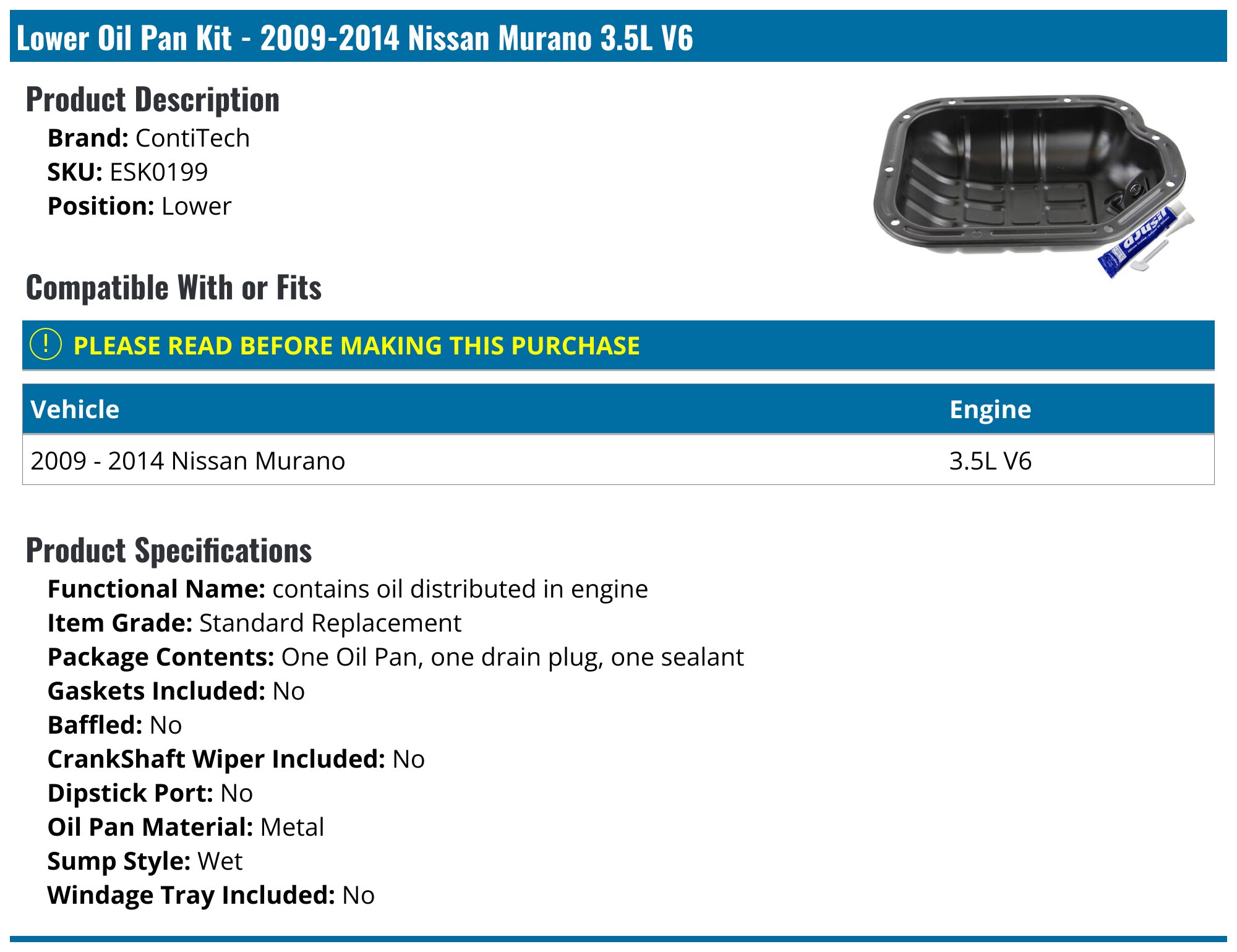
Position your drain pan directly underneath the oil pan drain plug. Using a 14mm socket, loosen the drain plug counterclockwise. Carefully unscrew the plug by hand during the final turns, pushing inward slightly to prevent hot oil from rushing past your fingers prematurely. Allow the oil to drain completely into the pan for 5 to 10 minutes. Inspect the drain plug washer; if it is crushed, copper, or nylon, replace it with a new crush washer to prevent future leaks. Clean the drain plug threads and reinstall it, tightening it to the factory specification of 25 ft-lbs.
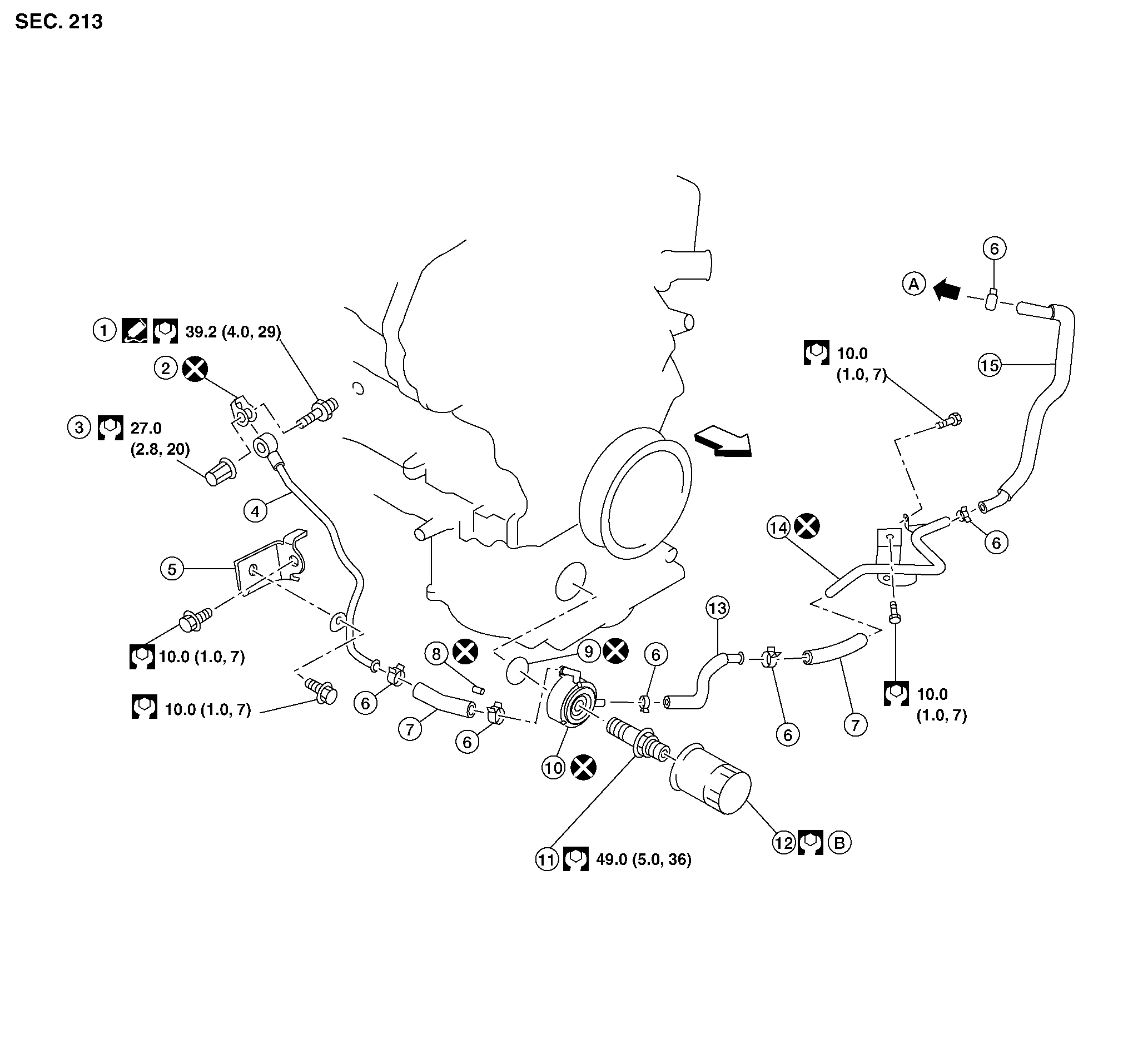
Step 4: Remove and Replace the Oil Filter
Locate the oil filter on the front-lower side of the engine block. Place your drain pan beneath the filter area to catch residual drips. Turn the filter counterclockwise using your hand or an oil filter wrench. Before installing the new filter, use a clean rag to wipe the mounting base clean of old oil and dirt grime. Dip a clean finger into a small amount of fresh engine oil and smear a thin film across the rubber gasket of the new filter. This ensures a proper seal and makes future removal easier. Screw the new filter on clockwise until the gasket contacts the base, then turn it an additional 3/4 to 1 full turn by hand. Do not use a wrench to tighten the filter, as over-tightening can crush the gasket or ruin the mounting threads.
Step 5: Refill with Fresh Engine Oil
Remove the oil filler cap located on top of the valve cover in the engine bay. Insert a clean funnel into the opening. Pour in approximately 4.5 quarts of the 5W-30 full synthetic oil. Reinstall the oil filler cap securely.
Step 6: Verify Oil Level and Check for Leaks
Remove the dipstick, wipe it clean with a rag, reinsert it fully, and pull it out again to check the fluid level. It should read near the top of the crosshatched region (the "H" or full mark). Start the engine and let it idle for 30 to 60 seconds while keeping an eye on the dashboard oil pressure warning light (which should turn off almost immediately). Look underneath the vehicle with a flashlight to verify that there are no leaks coming from the drain plug or the oil filter housing.
Shut off the engine, wait a few minutes for the oil to drain back down into the oil pan, and re-check the dipstick level. Top off the remaining oil slowly until the total volume reaches the 4.8-quart specification. Finally, reinstall any underbody splash shields and lower the vehicle safely back to the ground.
Frequently Asked Questions
Can I use conventional oil in a 2015 Nissan Murano instead of synthetic?
While conventional 5W-30 oil will technically lubricate the engine, Nissan and most modern automotive engineers strongly recommend full synthetic oil. Synthetic oils maintain their viscosity better across extreme temperatures, resist sludge buildup in tight internal passages, and provide superior protection for the variable valve timing system and timing chain components.
What happens if I accidentally overfill the engine oil?
Slightly overfilling the oil by a quarter-quart is usually safe, but overfilling by half a quart or more can cause serious issues. Excess oil causes the crankshaft to whip the fluid into foam. Foamed oil lacks hydraulic stability, leading to noisy valve trains, reduced oil pressure, and potential damage to catalytic converters if oil is pushed past the piston rings into the combustion chambers. If you overfill, drain a small amount from the oil pan until the dipstick reads correctly.
How often should I change the oil in a 2015 Nissan Murano?
For modern full synthetic oils, a service interval of 5,000 to 7,500 miles or every 6 months (whichever comes first) is standard practice. If you frequently drive in severe conditions—such as heavy city stop-and-go traffic, extreme dusty environments, or frequent short trips where the engine never fully reaches operating temperature—opt for the shorter 5,000-mile interval.
Does the 2015 Nissan Murano require a special tool to remove the oil filter?
No special proprietary tools are required. The spin-on filter is easily accessible from underneath the vehicle. A standard band-style or cap-style oil filter wrench can assist if a previous filter was installed too tightly, though proper installation requires only hand-tightening.
Practical Next Actions
After completing your oil change, reset the maintenance reminder on your Murano's instrument cluster or infotainment system so you can track your next service interval accurately. Properly dispose of your used motor oil and old filter by pouring the fluid into a sealed container and taking it to a local auto parts store or municipal recycling center that accepts used automotive fluids. Keeping an accurate maintenance log ensures your 2015 Nissan Murano maintains reliable performance for years to come.