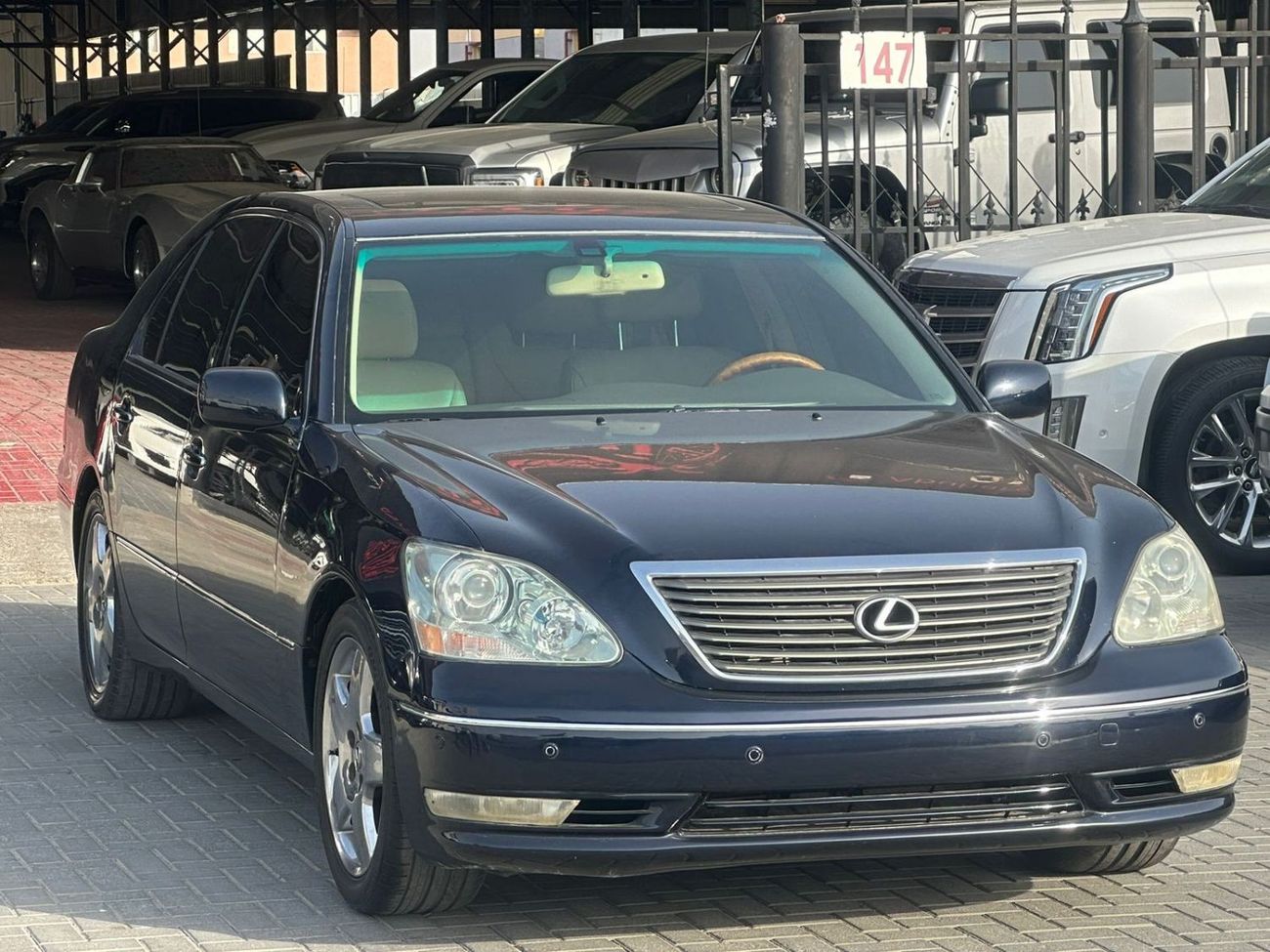
The 2005 Lexus sedan lineup represents a high-water mark for mid-2000s Japanese luxury engineering, combining whisper-quiet cabins, durable powertrains, and timeless exterior styling. Encompassing the entry-level IS, the executive ES, the rear-wheel-drive GS, and the flagship LS, the 2005 model year delivers a diverse range of reliable luxury vehicles that continue to command respect on the used car market.
Identity and Scope of the 2005 Lexus Sedan Lineup
The year 2005 was a pivotal transitional period for Lexus. The brand was systematically refining its design language and engineering philosophy to offer a distinct alternative to established German rivals like BMW, Mercedes-Benz, and Audi. Rather than chasing aggressive track performance, Lexus focused on uncompromising build quality, exceptional ride comfort, mechanical longevity, and intuitive ergonomics.
Purchasing or maintaining a 2005 Lexus sedan today requires understanding that this lineup was engineered during an era of over-building. Toyota’s luxury division utilized thick gauge steels, high-density acoustic glass, premium leather hides, and robust electrical architectures. However, because these vehicles are over two decades old, evaluating a 2005 model demands looking past the badge to examine specific chassis codes, engine configurations, and maintenance histories. The sedan lineup for this model year is divided into four distinct market segments, each tailored to a different driver profile, ranging from compact sport-luxury seekers to chauffeured executives.
The Compact Sport Entry: 2005 Lexus IS 300
As the 2005 model year marked the final chapter of the first-generation Lexus IS 300 (chassis code XE10), this compact sport sedan carries a dedicated enthusiast following. Originally introduced to capture younger buyers who might otherwise purchase a BMW 3 Series, the IS 300 bridges the gap between Japanese tuning culture and refined luxury.
Under the hood sits the legendary 2JZ-GE 3.0-liter inline-six engine, sharing its foundational architecture with the non-turbocharged engine found in the Toyota Supra. This powerplant produces 215 horsepower and 218 lb-ft of torque, sent to the rear wheels via a 5-speed automatic transmission with steering-wheel-mounted shift buttons, or a rare 5-speed manual transmission.
Inside, the IS 300 features a distinct chronograph-style instrument cluster, drilled aluminum pedals, and heavily bolstered sport seats. While rear legroom is notoriously tight and the interior materials feel slightly more utilitarian than its larger stablemates, the driving dynamics are sharp. The double-wishbone front and rear suspension system provides responsive handling, making the 2005 IS 300 a sought-after platform for purists seeking analog steering feel and legendary engine durability.
The Executive Front-Wheel-Drive Standard: 2005 Lexus ES 330
Representing the high-volume backbone of the brand, the 2005 Lexus ES 330 is built upon a front-wheel-drive platform shared closely with the Toyota Camry. However, Lexus heavily insulated the ES 330 to distance it from its mainstream cousin, resulting in a sanctuary of tranquility on the highway.
The ES 330 is powered by a 3.3-liter 3MZ-FE V6 engine generating 225 horsepower and 240 lb-ft of torque, mated to a smooth 5-speed automatic transmission. This powertrain prioritizes seamless, linear power delivery and impressive fuel efficiency over aggressive acceleration. The ride quality is tuned explicitly for plushness, soaking up road imperfections with a soft, compliant suspension setup that isolates occupants from harsh road feedback.
Cabin appointments in the ES 330 lean heavily into traditional luxury. Genuine bird's-eye maple wood trim, automatic climate control, a power moonroof, and optional Mark Levinson audio systems define the interior experience. Rear passenger space is generous, making the ES 330 a favored choice for families and professionals who value effortless commuting over dynamic cornering.
The Performance and Tech Bridge: 2005 Lexus GS 300 and GS 430
The 2005 model year stands as a bridge for the midsize Lexus GS. It was the final year of the second-generation GS (S160) before the striking third-generation "L-finesse" models arrived later in the year. Despite its age, the second-generation GS remains a striking design characterized by its quad-headlight front fascia and athletic stance.
Buyers could choose between two distinct engines:
- GS 300: Powered by a 3.0-liter inline-six (2JZ-GE) producing 220 horsepower.
- GS 430: Powered by a 4.3-liter V8 (3UZ-FE) producing 300 horsepower and 325 lb-ft of torque.
Both engines are paired with a 5-speed automatic transmission driving the rear wheels. The GS series was engineered to offer a firmer, more athletic ride than the ES while retaining superior long-distance cruising comfort. The V8-powered GS 430, in particular, delivers effortless passing power and a refined exhaust note that rivals German V8 sports sedans of the era. The interior features multi-adjustable power front seats, automatic dual-zone climate control, and comprehensive safety instrumentation.
The Flagship Benchmark: 2005 Lexus LS 430
Widely regarded as one of the finest luxury sedans ever built, the 2005 Lexus LS 430 (UCF30) represents the pinnacle of early-2000s automotive engineering. Designed with an obsessive focus on quietness, reliability, and material quality, the LS 430 set global benchmarks that forced European manufacturers to drastically improve their build standards.
The LS 430 relies on a 4.3-liter 3UZ-FE V8 engine producing 290 horsepower and 320 lb-ft of torque, coupled to a silky-smooth 6-speed automatic transmission. This drivetrain moves the heavy chassis with effortless grace, achieving 0 to 60 mph in roughly 6.3 seconds while maintaining cabin noise levels at highway speeds that rival modern electric vehicles.
Interior craftsmanship is the defining attribute of the LS 430. Buyers could select from ultra-luxury packages featuring laminated acoustic glass, power-closing doors, rear-seat massage functions, rear-seat refrigerators, and air suspension systems. Even base models feature supple leather, genuine wood accents, and extensive sound deadening.
Comparative Technical Specifications
To evaluate how the 2005 Lexus sedan lineup meets different driving requirements, the following table compares key specifications across the four primary models:
| Model | Engine Type | Horsepower | Torque (lb-ft) | Drivetrain | Transmission | 0-60 mph (Est.) |
|---|---|---|---|---|---|---|
| IS 300 | 3.0L Inline-6 (2JZ) | 215 | 218 | RWD | 5-Speed Auto / Manual | 6.8 sec |
| ES 330 | 3.3L V6 (3MZ) | 225 | 240 | FWD | 5-Speed Automatic | 7.2 sec |
| GS 300 | 3.0L Inline-6 (2JZ) | 220 | 220 | RWD | 5-Speed Automatic | 7.8 sec |
| GS 430 | 4.3L V8 (3UZ) | 300 | 325 | RWD | 5-Speed Automatic | 5.9 sec |
| LS 430 | 4.3L V8 (3UZ) | 290 | 320 | RWD | 6-Speed Automatic | 6.3 sec |
Common Mechanical Considerations and Maintenance
While 2005 Lexus sedans enjoy a legendary reputation for mechanical bulletproofing, age-related wear requires careful inspection for anyone acquiring or maintaining one today.
Engine and Powertrain Maintenance
Both the 3.0L inline-six (2JZ) and the 4.3L V8 (3UZ) engines utilize timing belts rather than chains. These belts must be replaced every 90,000 miles or 9 years, along with the water pump and tensioners. Neglecting this maintenance schedule risks catastrophic interference damage. Additionally, valve cover gaskets and oil pressure sender units are prone to minor oil seepage as rubber seals harden over time.
Suspension and Steering
The heavier models, particularly the LS 430 and GS series, utilize complex multi-link front and rear suspension setups. Control arm bushings, ball joints, and strut mounts frequently wear out past the 150,000-mile mark, resulting in vague steering feel or clunking over bumps. Furthermore, LS 430 models equipped with the optional air suspension system can experience costly component failures; many owners choose to convert failing air struts to conventional coilover setups for long-term reliability.
Electrical and Interior Electronics
Electrical gremlins are relatively rare for a 2005 luxury vehicle, but certain components warrant checking. Multi-information displays (MID) in the instrument clusters can develop dead pixels, and the tilt-and-telescope steering wheel motors in the LS and GS models can fail if abused. Audio systems, particularly the optional Mark Levinson amplifiers, are susceptible to speaker foam deterioration and capacitor failure, though specialized restoration services exist.
Frequently Asked Questions
Which 2005 Lexus sedan is the most reliable?
The 2005 Lexus ES 330 and LS 430 are widely considered the most reliable models in the lineup. The ES 330 shares mechanical underpinnings with the ultra-durable Toyota Camry, while the LS 430 utilizes an over-engineered V8 powertrain and robust chassis components designed to easily surpass 300,000 miles with proper maintenance.
Are 2005 Lexus sedans expensive to maintain?
Routine maintenance is generally affordable because many mechanical components are shared with Toyota vehicles. However, specialized luxury components—such as air suspension parts for the LS 430, Mark Levinson audio amplifiers, and complex braking systems—can carry high replacement costs if genuine OEM parts are sourced.
Do 2005 Lexus models require premium gasoline?
Yes. The IS 300, GS 300, GS 430, and LS 430 require premium unleaded gasoline (91 octane or higher) to achieve rated performance and prevent engine knock. The ES 330 can operate on regular 87 octane fuel, though premium is recommended for optimal fuel economy and power output.
How does the 2005 Lexus IS 300 compare to modern compact sport sedans?
Compared to modern compact sport sedans, the 2005 IS 300 feels significantly more mechanical and connected. It lacks modern driver-assistance aids, massive touchscreen infotainment systems, and turbocharged torque curves. Instead, it offers a pure, high-revving inline-six soundtrack, hydraulic steering feel, and a mechanical simplicity that modern cars cannot replicate.
What should I check when inspecting a used 2005 Lexus LS 430?
Prioritize verifying the timing belt replacement history, checking for oil leaks around the valve covers and power steering pump, testing all interior electronics (including seat adjustments and navigation systems), and inspecting the suspension bushings and air struts for signs of sagging or fluid leaks.
Final Recommendations for Buyers and Enthusiasts
Selecting the right 2005 Lexus sedan depends entirely on your driving priorities. If you desire uncompromised cruising comfort, unmatched highway quietness, and legendary build quality, the flagship LS 430 remains an exceptional automotive achievement. For those seeking daily practicality with lower operational costs, the front-wheel-drive ES 330 offers a painless entry into classic luxury. Meanwhile, enthusiasts prioritizing rear-wheel-drive dynamics and engine tuning potential should seek out a well-maintained IS 300 or a V8-powered GS 430. Regardless of the model chosen, verifying a comprehensive service history remains the single most critical step in ensuring a rewarding ownership experience.