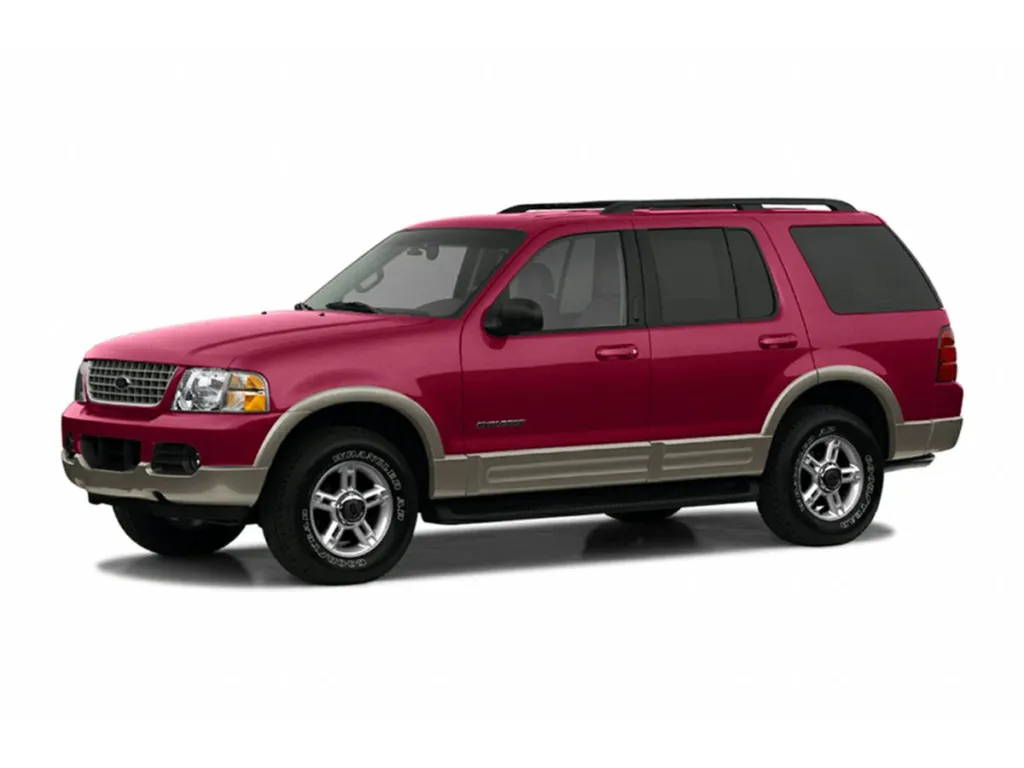
The 2002 Ford Explorer Eddie Bauer Edition represents a pivotal turning point in American automotive history, introducing a completely redesigned, car-like independent rear suspension to the popular mid-size SUV segment while retaining the luxury, two-tone exterior styling, and premium leather interior that defined the Eddie Bauer trim level.
Historical Context and the 2002 Redesign
When Ford launched the completely redesigned third-generation Explorer for the 2002 model year, it marked the first ground-up overhaul of the vehicle since its introduction in 1991. Up until this point, the Ford Explorer shared a traditional truck-based, leaf-spring solid rear axle architecture. While rugged, this older setup often resulted in a truck-like ride quality and handling characteristics that could feel unwieldy for everyday family driving.
The 2002 model year changed this paradigm by introducing an entirely new frame and an Independent Rear Suspension (IRS). This engineering shift was heavily influenced by safety initiatives and consumer demand for a smoother, more refined ride that mirrored passenger cars and crossovers, without entirely sacrificing utility. Positioned near the pinnacle of the lineup, the Eddie Bauer Edition was tailored specifically for buyers seeking upscale comfort, sophisticated aesthetics, and robust towing capability. It bridged the gap between basic utility vehicles and high-end luxury SUVs, cementing its place as a staple of suburban driveways throughout the early 2000s.
Exterior Styling and Distinctive Eddie Bauer Features
The Eddie Bauer branding has long stood for an outdoorsy, rugged luxury aesthetic, and the 2002 Ford Explorer incarnation carried this tradition forward with several unique cosmetic and functional appointments.
Externally, the Eddie Bauer Edition was instantly recognizable by its signature two-tone paint scheme. Lower body cladding, bumpers, and wheel arch flares were finished in a contrasting Arizona Beige or Pueblo Gold color against a variety of rich primary body paints such as Deep Wedgewood Blue, Oxford White, or Black. This color-blocking technique gave the SUV a sophisticated, rugged stance that set it apart from the base XLS and mid-tier XLT trims, as well as the sportier Limited trim.
Additional exterior features included:
- Unique 16-inch machined aluminum wheels
- P245/75R16 all-season tires
- Standard running boards to ease cabin entry
- Privacy glass on the rear doors, quarter panels, and liftgate
- Premium black roof side rails with crossbars for cargo accessories
- Fog lamps integrated into the front bumper fascia
Interior Comfort, Materials, and Technology
Stepping inside the 2002 Ford Explorer Eddie Bauer Edition revealed a cabin designed for long-distance comfort and premium utility. The centerpiece of the interior was the seating arrangement, upholstered in premium two-tone leather featuring embroidered Eddie Bauer logos on the front seatbacks. Both front bucket seats included power adjustments, lumbar support, and heating elements—a significant luxury feature for the era.
The dashboard featured a clean layout accented with simulated wood-grain trim that stretched across the center console and door panels. Rear passengers benefited from generous legroom, courtesy of the vehicle's widened track and extended wheelbase, along with dedicated rear climate and audio controls mounted on the back of the center console.
| Feature Category | 2002 Explorer Eddie Bauer Specification / Detail |
|---|---|
| Seating Capacity | 5 to 7 passengers (depending on optional third-row bench) |
| Upholstery | Two-tone premium leather with contrast stitching and embroidery |
| Audio System | Premium AM/FM stereo with in-dash 6-disc CD changer and Audiophile sound |
| Climate Control | Dual-zone automatic climate control for front passengers |
| Steering Wheel | Leather-wrapped with integrated secondary audio and climate controls |
| Cargo Volume | 81.3 cubic feet with rear seats folded flat |
Powertrain Options and Performance Specifications
Under the hood, the 2002 Ford Explorer Eddie Bauer Edition offered two distinct engine choices, catering to buyers who prioritized either fuel efficiency or heavy-duty towing capacity.
4.0L SOHC V6 Engine
The standard powerplant was a 4.0-liter Single Overhead Cam (SOHC) V6 engine, producing 210 horsepower at 5,100 rpm and 254 lb-ft of torque at 3,700 rpm. This engine utilized a multi-valve design and was mated to a 5-speed automatic transmission (5R55W). It provided adequate acceleration for daily commuting and moderate towing tasks while offering slightly better fuel economy than its V8 sibling.
4.8L/4.6L V8 Engine
For buyers requiring more muscle, Ford offered a 4.6-liter Modular V8 engine. This overhead-cam V8 generated 239 horsepower at 4,750 rpm and a robust 282 lb-ft of torque at 4,000 rpm. Paired with the same 5-speed automatic transmission, the V8 transformed the Explorer into a confident tow vehicle, capable of hauling heavier travel trailers, boats, or utility loads when properly equipped with a Class III/IV towing package.
Drivetrain Configurations
The Eddie Bauer Edition was available in both Rear-Wheel Drive (2WD) and Advanced 4-Wheel Drive configurations. The 4WD system utilized Ford's Control Trac electronic shift-on-the-fly system, featuring modes for Auto (which automatically engaged front wheels when slippage was detected), 4 High, and 4 Low for rugged terrain or deep snow conditions.
Ride, Handling, and Safety Innovations
The implementation of the Independent Rear Suspension transformed the driving dynamics of the 2002 Explorer. Body roll during cornering was significantly reduced compared to older solid-axle designs, and highway cruising felt planted and stable.
Safety was a primary focus for Ford during the development of this generation. The 2002 Explorer featured a hydroformed steel frame designed to absorb and deflect crash energy away from the passenger compartment. Dual-stage front airbags were standard, and side-curtain airbags were available as an option to protect occupants in rollover and side-impact scenarios. Additionally, Anti-lock Braking System (ABS) with Electronic Brake-force Distribution (EBD) came standard across all models.
Common Maintenance Items and Ownership Considerations
As a vehicle from the early 2000s, owning or evaluating a 2002 Ford Explorer Eddie Bauer Edition today requires an understanding of its specific mechanical tendencies and maintenance history.
- Timing Chain Guides (4.0L V6): The 4.0L SOHC V6 engine is known for timing chain guide wear, particularly on the rear cassette. Listen for rattling noises upon startup, which indicate a need for immediate service.
- Transmission Reliability: The 5R55W 5-speed automatic transmission requires regular fluid changes. Neglecting maintenance can lead to solenoid failure or internal wear, resulting in slipping or harsh shifting.
- Suspension Bushings: Because of the complex Independent Rear Suspension setup, rubber bushings and control arms can wear out over time, leading to uneven tire wear or a loose rear-end feel on the highway.
- Blend Door Actuators: The automatic dual-zone climate control system relies on plastic blend door actuators that can strip over time, resulting in stuck temperature controls or air blowing exclusively from the defrost vents.
Frequently Asked Questions
What engines were available in the 2002 Ford Explorer Eddie Bauer Edition?
The 2002 Eddie Bauer Edition came with either a 4.0-liter SOHC V6 engine producing 210 horsepower or an optional 4.6-liter V8 engine producing 239 horsepower. Both engines were paired with a 5-speed automatic transmission and were available in rear-wheel drive or four-wheel drive configurations.
Did the 2002 Ford Explorer Eddie Bauer have a third-row seat?
Yes, the third-row bench seat was available as an option on the 2002 Explorer, increasing total passenger capacity from five to seven occupants. However, many models were ordered with just the standard five-passenger configuration to maximize rear cargo room.
How does the 2002 model differ from the 2001 Ford Explorer?
The 2002 model year represents a complete ground-up redesign. While the 2001 model utilized an older truck-based chassis with a solid rear axle, the 2002 model introduced a brand-new frame, an independent rear suspension, updated exterior styling, and a vastly modernized interior.
What towing capacity does a V8 2002 Explorer Eddie Bauer have?
When properly equipped with the V8 engine and the factory towing package, the 2002 Ford Explorer Eddie Bauer Edition typically features a maximum towing capacity of up to 7,100 pounds, making it suitable for mid-sized campers and boats.
What are the main mechanical issues to watch for on a used 2002 Explorer?
Key areas to inspect include the timing chain guides on the 4.0L V6 engine, the health of the 5-speed automatic transmission, and wear and tear on the independent rear suspension bushings and control arms.
Recommendations for Prospective Buyers and Collectors
For automotive enthusiasts, restorers, or buyers seeking an affordable, comfortable utility vehicle, the 2002 Ford Explorer Eddie Bauer Edition offers a compelling mix of vintage 2000s luxury and utility. When evaluating a used model, prioritize examples with comprehensive service records, verified transmission health, and clean oil change histories. Inspect the leather upholstery for excessive cracking, and test all electrical accessories, including the seat heaters, climate control actuators, and audio system, to ensure complete functionality.