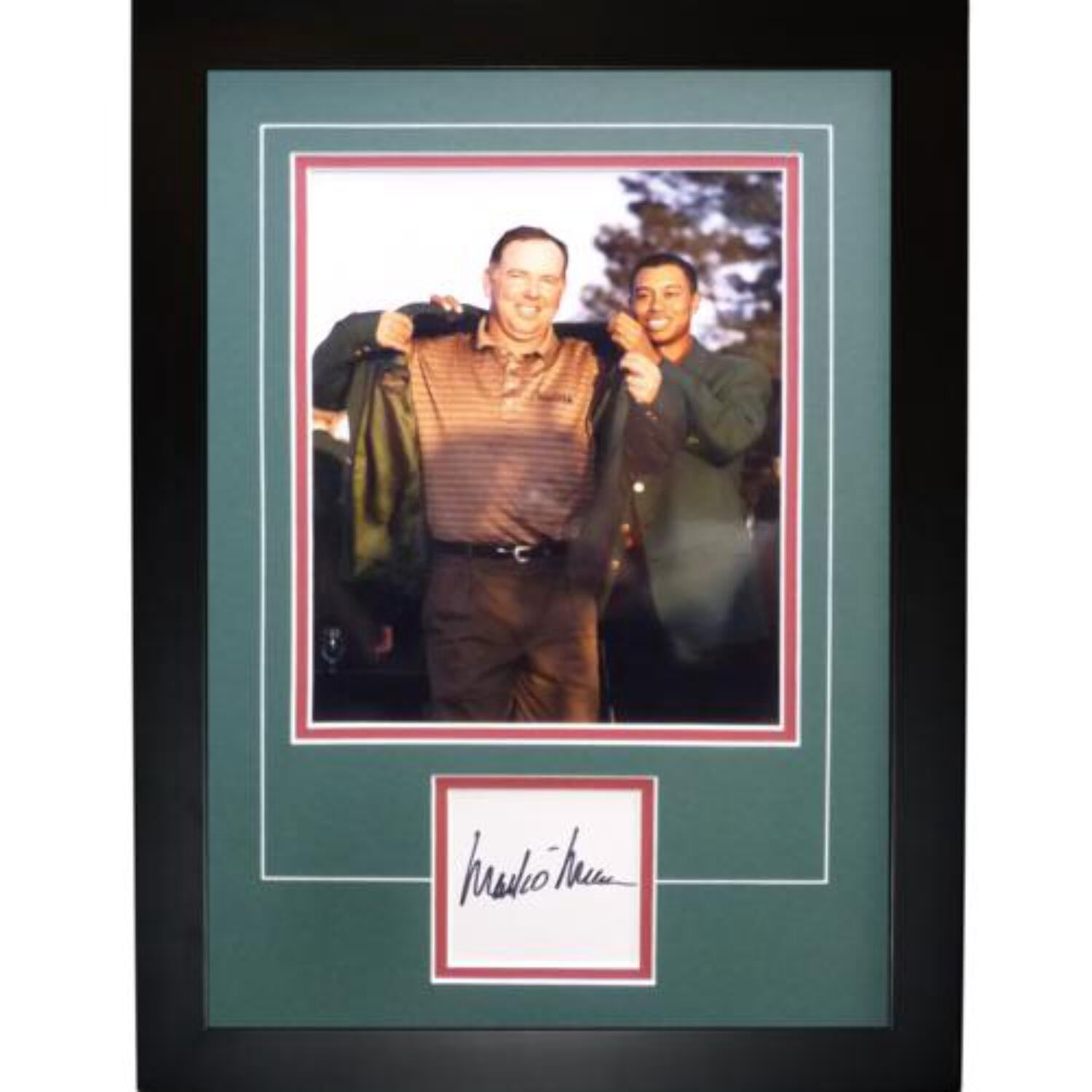
Mark O’Meara won the 1998 Masters Tournament by carding a final-round 67, punctuated by a dramatic 20-foot birdie putt on the 72nd hole to finish at 9-under par. At age 41, O’Meara overcame a star-studded leaderboard including David Duval and Fred Couples to secure his first career Major championship after 15 years on the PGA Tour.
The Context of the 1998 Masters Tournament
The 1998 Masters arrived at a pivotal moment in professional golf history. One year prior, Tiger Woods had dismantled Augusta National with a record-breaking 12-stroke victory, ushering in the "Tiger Era" and prompting discussions about whether the course needed to be lengthened or "Tiger-proofed." As the 62nd Masters commenced in April 1998, the narrative focused heavily on whether Woods could repeat or if a veteran could reclaim the territory.
Mark O’Meara entered the week as a highly respected veteran, known for his superb putting and consistency, yet he carried the unenviable label of "the best player never to win a major." Despite 14 PGA Tour wins at the time, his performance in the four biggest events had often fallen short of the winner's circle. Interestingly, O'Meara was a close mentor and friend to Tiger Woods, often practicing with the young phenom. This relationship played a subtle but significant role in O’Meara’s mental preparation, as he sought to match the competitive intensity of his younger counterpart.
The field in 1998 was exceptionally deep. David Duval was arguably the best player in the world at that moment, having won multiple times in the preceding months. Fred Couples, the 1992 champion, remained a perennial favorite at Augusta, and Jim Furyk was beginning to establish himself as a tactical master. For O'Meara to win, he would need to navigate not just the challenging undulating greens of Augusta, but also the psychological pressure of a crowded Sunday leaderboard.
Round-by-Round Progression to Greatness
O'Meara's path to the Green Jacket was not one of immediate dominance, but rather a steady climb through the ranks as the pressure mounted.
The Opening Rounds: Survival and Positioning
The tournament began under testing conditions. In the first round, O'Meara shot a 2-over par 74. While not disastrous, it left him well behind the early leaders. At Augusta, a 74 often puts a player in a position where they are playing catch-up for the rest of the week. However, O'Meara's veteran experience prevented him from panic.
In the second round, he stabilized his game with a 2-under 70. This moved him to even par for the tournament. While Fred Couples and others were garnering the headlines, O'Meara was quietly moving into a position where a strong weekend could put him in contention. The "moving day" of Saturday is where the 1998 Masters truly began for O’Meara.
Saturday: The Surge
On Saturday, O’Meara carded a 4-under 68. This round was characterized by precise iron play and the clinical putting for which he was famous. By the end of the third round, he was 4-under par, just two strokes off the lead held by Fred Couples and veteran David Toms. The stage was set for a Sunday showdown that would go down as one of the most exciting finishes in the history of the tournament.
The Dramatic Sunday Finale
Sunday at the Masters is often described as a tournament that "doesn't start until the back nine on Sunday." In 1998, this cliché held absolute truth. As the final round progressed, the lead changed hands multiple times.
The Charge of David Duval
David Duval, playing several groups ahead of the leaders, put on a spectacular display of golf. He surged to 8-under par, posting a 67 for the day. For much of the afternoon, it appeared that 8-under might be the winning score. Duval sat in the clubhouse as the leader, watching the monitors to see if anyone could catch him.
Fred Couples’ Resilience
Fred Couples, a fan favorite at Augusta, was also at 8-under par as he approached the final holes. Couples had the advantage of power, which allowed him to reach the par-5s in two, but the treacherous greens of Augusta began to take their toll. After a series of close calls, Couples found himself in a tie with Duval.
O’Meara’s Back-Nine Heroics
Mark O’Meara knew exactly what he had to do. After a steady front nine, he began his charge on the par-5 15th hole. A birdie there moved him to 8-under par, tying him with Duval and Couples. However, the drama was far from over.
On the par-3 16th, O’Meara faced a difficult challenge but managed to save par, keeping his momentum alive. The turning point came at the par-4 17th. O'Meara played the hole beautifully, sticking his approach shot and sinking a clutch birdie putt to move to 9-under par. He was now the solo leader, but the hardest hole on the course—the uphill par-4 18th—remained.
The 72nd Hole: A Moment for History
As O'Meara stood on the 18th tee, the pressure was immense. He pulled his tee shot slightly into the left trees, a common mistake for players trying to avoid the fairway bunkers on the right. He was forced to play a recovery shot that left him about 20 feet from the hole for birdie.
At the same time, Fred Couples, playing behind him, had slipped back, and David Duval remained at 8-under in the clubhouse. If O'Meara two-putted, he would finish at 8-under and enter a playoff with Duval. If he three-putted, he would lose. But Mark O'Meara had other plans.
The putt on the 18th green was a classic Augusta National read: slightly uphill with a subtle break from left to right. O'Meara struck the ball with perfect pace. As it tracked toward the hole, the gallery grew silent. When the ball disappeared into the cup, O'Meara erupted into a celebratory leap, his arms raised high. The birdie 3 gave him a final round 67 and a total score of 279 (-9), winning the Masters by a single stroke.
Technical Analysis of the 1998 Victory
To understand the magnitude of O'Meara's win, one must look at the technical aspects of his performance during that week in April 1998.
| Statistic | Mark O'Meara (1998) | Field Average (Approx.) |
|---|---|---|
| Final Score | 279 (-9) | 288 (E) |
| Round Scores | 74-70-68-67 | N/A |
| GIR (Greens in Regulation) | 69.4% | 61.2% |
| Putts per Round | 28.5 | 30.2 |
| Birdies on Sunday | 6 | 3.1 |
| Winning Margin | 1 Stroke | N/A |
Putting Under Pressure
The 1998 Masters was won on the greens. O'Meara’s performance inside 15 feet was near-perfect on Sunday. Augusta’s greens are notoriously fast, often measuring 12 to 13 on the Stimpmeter, even in the late 90s. O'Meara used a traditional blade-style putter and a "gate" stroke that emphasized a pure roll. His ability to judge the "die-in" speed—where the ball reaches the hole just as it loses momentum—was the deciding factor on the 72nd hole.
Course Management
O'Meara's caddie, Jerry Higginbotham, played a crucial role in navigating the nuances of Augusta. In 1998, the course had not yet undergone the significant "Tiger-proofing" renovations of 2002. However, the pins on Sunday were tucked in their traditional, difficult locations (e.g., the back-right on 12, the front-left on 16). O'Meara’s strategy was to play "fat" to the middle of the greens on the dangerous holes and attack only when he had a short iron in his hand.
The Significance of Age and Experience
At 41 years, 3 months, and 29 days, O’Meara became one of the oldest first-time Major winners in history. His victory served as a testament to the "longevity era" of golf, proving that tactical brilliance and a superior short game could still defeat the raw power of younger players like Tiger Woods or David Duval.
This victory also broke a psychological dam for O'Meara. Just a few months later, he would go on to win The Open Championship at Royal Birkdale, becoming the oldest player to win two Majors in a single season. The 1998 Masters victory transformed him from a "very good tour pro" into a Hall of Fame legend.
Legacy of the 1998 Masters
The 1998 Masters is remembered as the year the "veterans fought back." It remains a favorite among golf purists because of the high-quality leaderboard and the classic Sunday charge. It was also the last time the Masters was played before the era of significant course lengthening began, making O’Meara one of the last champions to win on a "traditional" Augusta setup using mid-90s equipment technology (though solid-core balls were beginning to emerge).
For O'Meara, the win solidified his place in golf history. The image of his birdie putt on 18 is frequently used in Masters highlight reels, symbolizing the "clutch" performance required to earn the Green Jacket.
Frequently Asked Questions
How long was Mark O'Meara's winning putt on the 18th hole?
Mark O’Meara’s winning birdie putt on the 72nd hole was approximately 20 feet long. It featured a slight left-to-right break. By sinking this putt, he avoided a playoff with David Duval and Fred Couples, who finished one stroke back at 8-under par.
Who was the runner-up in the 1998 Masters?
There were two runners-up in the 1998 Masters: David Duval and Fred Couples. Both finished at 8-under par (280). Duval had posted his score early in the clubhouse after a brilliant 67, while Couples was in the final groups and had several chances to reach 9-under but ultimately fell one short.
What were Mark O'Meara's round scores during the 1998 Masters?
O'Meara shot 74-70-68-67. His progression is notable for getting better each day. His final-round 67 was one of the best scores of the day and allowed him to overcome a two-shot deficit entering the final round.
Did Tiger Woods play in the 1998 Masters?
Yes, Tiger Woods was the defending champion in 1998. He finished in a tie for 8th place with a score of 3-under par (285). While he was in contention early, he was unable to mount a significant charge on Sunday to catch O'Meara.
What clubs did Mark O'Meara use in 1998?
In 1998, Mark O’Meara was a prominent staff player for Ping and later Stratata (Callaway). He famously used a Ping Anser-style putter and was one of the early adopters of the multi-layer solid-core golf ball, which many experts believe gave him a distance and control advantage over players still using wound balata balls.
Conclusion and Further Reflection
Mark O’Meara’s 1998 victory stands as a landmark moment in Masters history, representing the triumph of experience and nerves of steel. For those looking to study the art of closing out a Major championship, O’Meara’s final three holes at Augusta National in 1998 provide a perfect blueprint. His ability to stay patient after an opening 74 and slowly dismantle the course over the following 54 holes remains one of the most impressive displays of "grinding" in professional golf.
As we look back from the perspective of 2026, O’Meara’s win is a reminder that while the game has moved toward extreme power and clubhead speed, the Masters is still often decided by the player who can make a 20-foot putt when the entire world is watching.