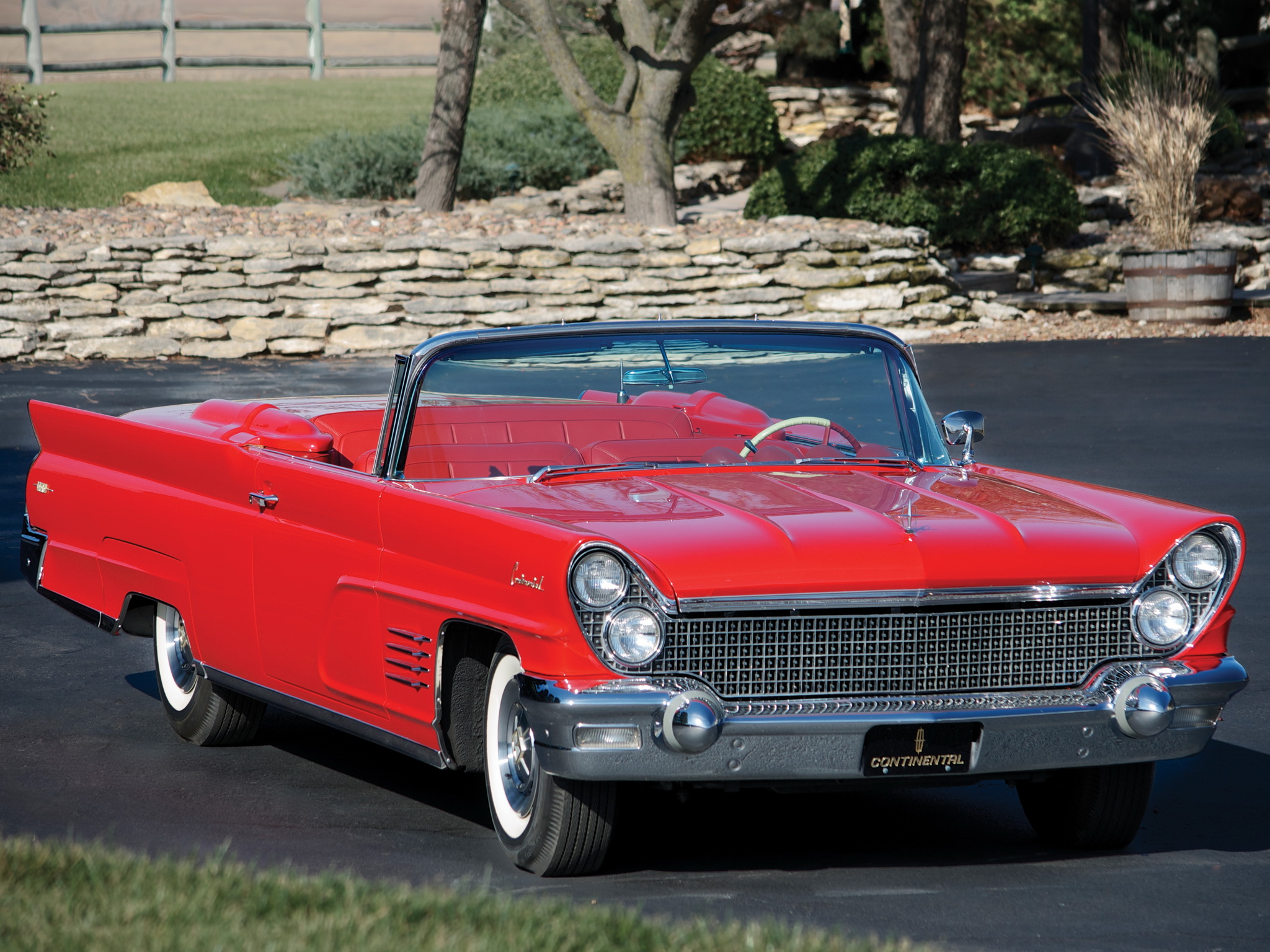
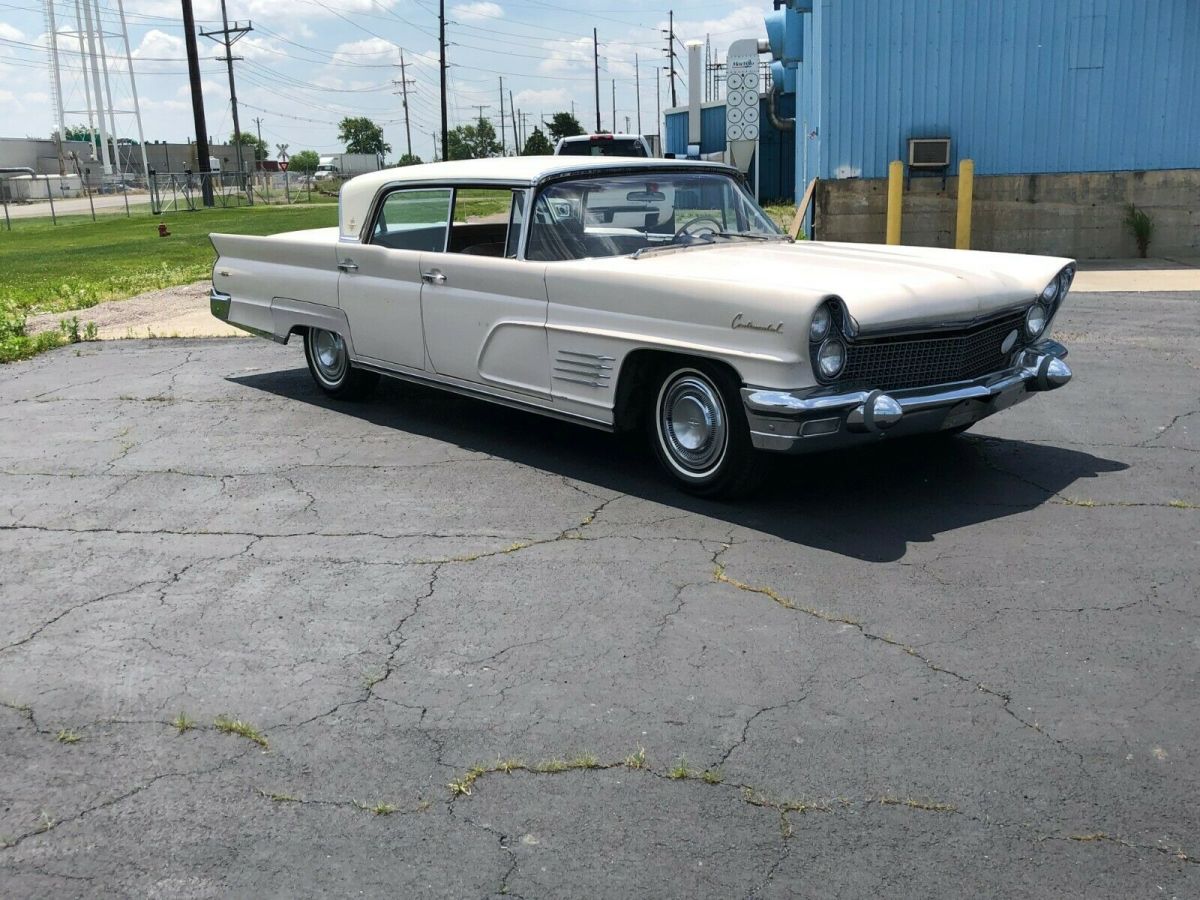
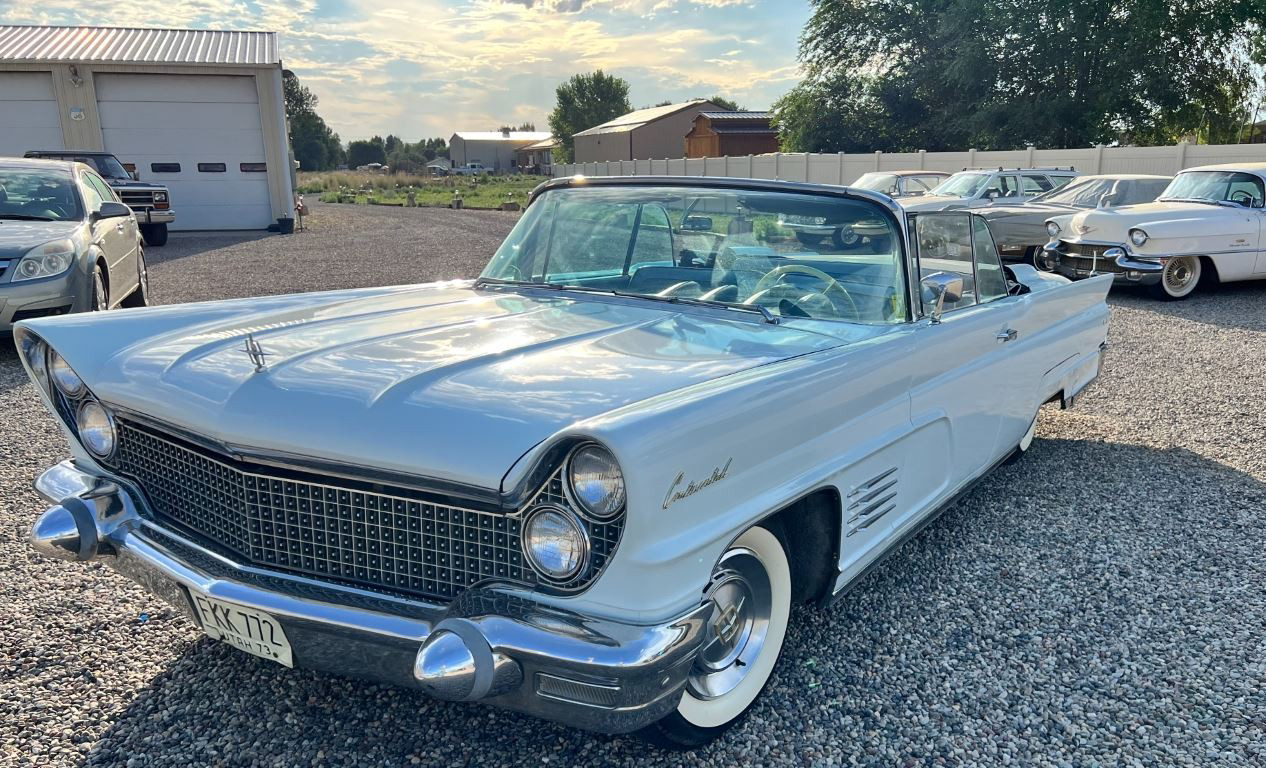
The 1960 Lincoln Continental Mark V represents the final and most refined expression of the extravagant late-1950s "long, low, and wide" design era, bridging the gap between flamboyant chrome-laden cruisers and the minimalist elegance of the legendary 1961 Continental. Produced exclusively for the 1960 model year by Ford Motor Company’s Lincoln division, the Mark V series offered buyers opulent luxury, massive proportions, and unique styling elements such as the signature slanted rear window.
Evolution of the Continental Mark Series (1958–1960)
To understand the 1960 Lincoln Continental Mark V, one must examine the lineage that preceded it. Following the hand-built, ultra-exclusive 1956–1957 Continental Mark II, Ford sought a more profitable luxury vehicle that could compete directly with Cadillac's most expensive offerings.
For the 1958 model year, Lincoln completely redesigned the Continental lineup. Instead of maintaining body-on-frame construction on a bespoke platform, Lincoln engineers utilized unibody construction—a massive engineering feat for a vehicle of this size. This generation also introduced a new naming convention, starting with the Mark III in 1958, evolving into the Mark IV for 1959, and culminating in the Mark V for 1960.
While the 1958 Mark III featured extremely ornate side trim and aggressive styling, subsequent years dialed back some of the more polarizing design flourishes. By 1960, Lincoln designers aimed to clean up the exterior aesthetic while retaining the vehicle's commanding presence on the road.
Exterior Styling and Unique Design Characteristics
The 1960 Lincoln Continental Mark V is instantly recognizable by several distinctive exterior features that set it apart from its 1958 and 1959 predecessors.
The Reverse-Slant Rear Window
Perhaps the most famous design cue of the 1958–1960 Continental generation is the power-operated "veed" backlite, or reverse-slant rear window. Unlike traditional sedans and coupes where the rear glass sloped backward, the Mark V featured a window that angled inward, mirroring the styling of some 1950s station wagons and classic limousines.
This window was operational, allowing rear passengers to lower the glass for flow-through ventilation—a feature enthusiastically marketed by Lincoln as the "Breezeway" ventilation system. However, the design also had practical drawbacks, as the inward slant made the glass highly susceptible to collecting rain, dust, and road grime when driving in inclement weather.
Front Fascia and Side Trim
The 1960 model year brought a revised front grille featuring a clean, rectangular grid pattern replacing the heavier egg-crate design of 1959. Twin headlights were housed in deeply recessed bezels above a wide, heavy chrome bumper that wrapped around the front fenders.
Along the body sides, the massive sheet metal was accented by restrained, linear chrome strips rather than the dramatic, boomerang-shaped side sculptures of the 1958 models. The rear tailfins were significantly toned down compared to the extravagant fins found on contemporary Cadillacs and Chryslers, featuring subtle, bullet-shaped taillights integrated cleanly into the rear fenders.
Dimensions, Weight, and Unibody Engineering
The Mark V was built on a massive 131-inch wheelbase and stretched an impressive 227.1 inches in overall length. To put these numbers into perspective, the Mark V was longer and wider than most full-size family sedans of its era, competing directly in the ultra-luxury personal car segment.
| Specification | 1960 Lincoln Continental Mark V |
|---|---|
| Wheelbase | 131.0 inches (3,327 mm) |
| Overall Length | 227.1 inches (5,768 mm) |
| Overall Width | 80.2 inches (2,037 mm) |
| Curb Weight | Approx. 5,000–5,300 lbs (depending on body style) |
| Engine | 430 cubic inch MEL V8 |
| Transmission | 3-speed Turbo-Drive automatic |
| Body Styles | Hardtop Coupe, Town Car (sedan), Landau, Convertible |
The decision to use unibody construction for a vehicle of this scale proved challenging during production. While unibody frames offer superior torsional rigidity in smaller applications, the immense weight and length of the Mark V required extensive structural reinforcement. Lincoln utilized heavy-gauge steel throughout the floorpans and rocker panels, contributing to a dry curb weight that easily exceeded two and a half tons.
Powertrain and Mechanical Performance
Powering the 1960 Lincoln Continental Mark V was Ford’s rugged MEL (Mercury-Edsel-Lincoln) V8 engine, displacing 430 cubic inches (7.0 liters).
Engine Specifications
The 430 cu in V8 utilized a wedge-type combustion chamber and was rated at 315 horsepower and a massive 485 lb-ft of torque at a low 2,200 RPM. This engine was engineered to deliver effortless, whisper-quiet acceleration befitting a top-tier luxury automobile. Breathing through a single four-barrel carburetor, the massive powerplant was paired with Lincoln’s three-speed Turbo-Drive automatic transmission, transferring power to a conventional rear axle.
Ride and Suspension
To ensure a pillowy-soft ride, the Mark V featured independent front suspension with coil springs and upper and lower control arms, paired with a live rear axle and semi-elliptic leaf springs. Power steering and power-assisted drum brakes were standard equipment, making the heavy cruiser surprisingly light to maneuver at low speeds, though body roll during aggressive cornering was substantial.
Interior Luxury, Comfort, and Technology
Stepping inside a 1960 Lincoln Continental Mark V revealed a cabin designed to rival the finest living rooms of the era. High-grade fabrics, genuine leather seating surfaces, and deeply padded dashboard materials dominated the interior landscape.
Dashboard and Instrumentation
The instrument panel featured an asymmetric layout with a "airplane-style" sweep speedometer flanked by auxiliary gauges for fuel level and engine temperature. Push-button controls for the Turbo-Drive transmission were mounted directly on the left side of the dashboard, a popular styling trend among American luxury manufacturers during the late 1950s and early 1960s.
Amenities and Options
Buyers could equip their Mark V with a comprehensive list of luxury features that were cutting-edge for 1960:
- Power Windows and Seat: Multi-way power adjustable front seats and power-operated windows were standard.
- Auto-Lume Headlights: An early automatic headlight dimmer system that dipped high beams when oncoming traffic was detected.
- Air Conditioning: Integrated factory air conditioning systems routed cool air through roof-mounted vents, ensuring optimal climate control.
- Transistorized Radio: Advanced audio systems featuring signal-seeking capability and rear-seat speakers.
Body Styles and Production Figures
The 1960 Continental lineup was offered in several distinct body styles, catering to buyers who wanted the exclusivity of a personal coupe or the utility of a four-door sedan.
- Hardtop Coupe: The most popular style, emphasizing sleek personal luxury styling.
- Town Car: A formal four-door sedan featuring a distinctive roofline covered in padded vinyl.
- Limousine: Rare factory-built variants intended for corporate and executive transport.
- Convertible: A drop-top variant that offered open-air motoring on the massive platform.
Total production for the 1960 Lincoln Continental Mark series reached approximately 11,000 units across all body styles, representing a solid commercial finish for the final year of the unibody generation before Elwood Engel took over styling direction for the iconic 1961 redesign.
Restoration, Maintenance, and Collector Status Today
In the collector car market, the 1960 Lincoln Continental Mark V occupies a unique niche. While not as universally revered by purists as the hand-built Mark II or the seminal 1961 "suicide door" Continental, the Mark V has seen a surge in appreciation among enthusiasts of 1950s excess and mid-century design.
Common Restoration Challenges
Restoring a 1960 Mark V requires patience and financial commitment due to several unique factors:
- Rust Susceptibility: The complex unibody construction features numerous enclosed structural channels and moisture traps. Rocker panels, floorpans, lower quarter panels, and the cowl area are prone to hidden rust.
- Complex Electrical Systems: Power windows, the complex power rear window mechanism, and vintage vacuum-operated accessories require meticulous troubleshooting and restoration.
- Trim and Brightwork: Sourcing rare exterior stainless steel trim, specific chrome pot metal pieces, and interior soft goods can be exceptionally difficult, as reproduction parts are less common than for contemporary Chevrolets or Fords.
Valuation and Market Trends
Values for 1960 Lincolns vary significantly based on condition and body style. Project cars requiring complete overhauls may trade in the lower five-figure range, while pristine, concours-quality examples or professionally restored convertibles can command substantial sums at major collector car auctions. Buyers looking to acquire a Mark V should prioritize structural integrity and completeness of trim over mechanical running condition, as body and chrome work represent the most expensive aspects of vintage Lincoln restoration.
Frequently Asked Questions
What makes the 1960 Lincoln Continental Mark V different from the Mark III and Mark IV?
The 1960 Mark V represents the final evolution of the 1958–1960 unibody chassis generation. It features a cleaner, revised front grille, simplified side trim, toned-down tailfins, and unique interior refinements compared to the heavier ornamentation of the 1958 Mark III and 1959 Mark IV.
Does the 1960 Mark V have "suicide doors"?
No. The famous rear-hinged "suicide doors" were introduced on the completely redesigned 1961 Lincoln Continental. The 1960 Mark V features conventional front-hinged doors.
How does the reverse-slant rear window operate?
The rear window on the Mark V is powered electrically and can be lowered completely into the bulkhead. This was designed to work in conjunction with cowl vents to pull fresh air through the cabin, a feature marketed as the Breezeway ventilation system.
What engine came in the 1960 Lincoln Continental Mark V?
It is powered by a 430 cubic inch MEL (Mercury-Edsel-Lincoln) V8 engine equipped with a four-barrel carburetor, producing 315 horsepower and 485 lb-ft of torque.
Are replacement parts difficult to find for a 1960 Lincoln?
Mechanical components shared with other Ford and Mercury products of the era are relatively accessible. However, model-specific sheet metal, interior trim, glass, and exterior brightwork can be very difficult to source and often require salvage yards or specialized vintage Lincoln parts specialists.