Over the past decade, AS400 cloud hosting has transformed from a niche, hesitant experiment into a robust, mainstream enterprise strategy. Historically anchored to physical, on-premises data centers running proprietary hardware and operating systems like IBM i, AS400 environments faced immense pressure to modernize as cloud computing matured. This decade-long evolution has been defined by a shift from rigid, localized deployment models to flexible, highly available, hybrid-cloud architectures that maintain backward compatibility for legacy applications while embracing modern security, scalability, and disaster recovery standards.
The Foundation: Legacy AS400 Infrastructure and Early Cloud Resistance
A decade ago, managing an IBM Power Systems environment running IBM i (historically known as AS/400, iSeries, or System i) meant substantial capital expenditure, dedicated server rooms, and specialized in-house talent. Organizations relied heavily on physical hardware refreshes every three to five years. The underlying operating system, renowned for its legendary stability, database integration (DB2 for i), and bulletproof security model, was simultaneously its greatest operational barrier. Because business-critical enterprise resource planning (ERP) systems—such as JD Edwards, Infor, and custom-built RPG applications—were deeply entrenched in this architecture, IT leaders viewed migration as an unnecessary risk.
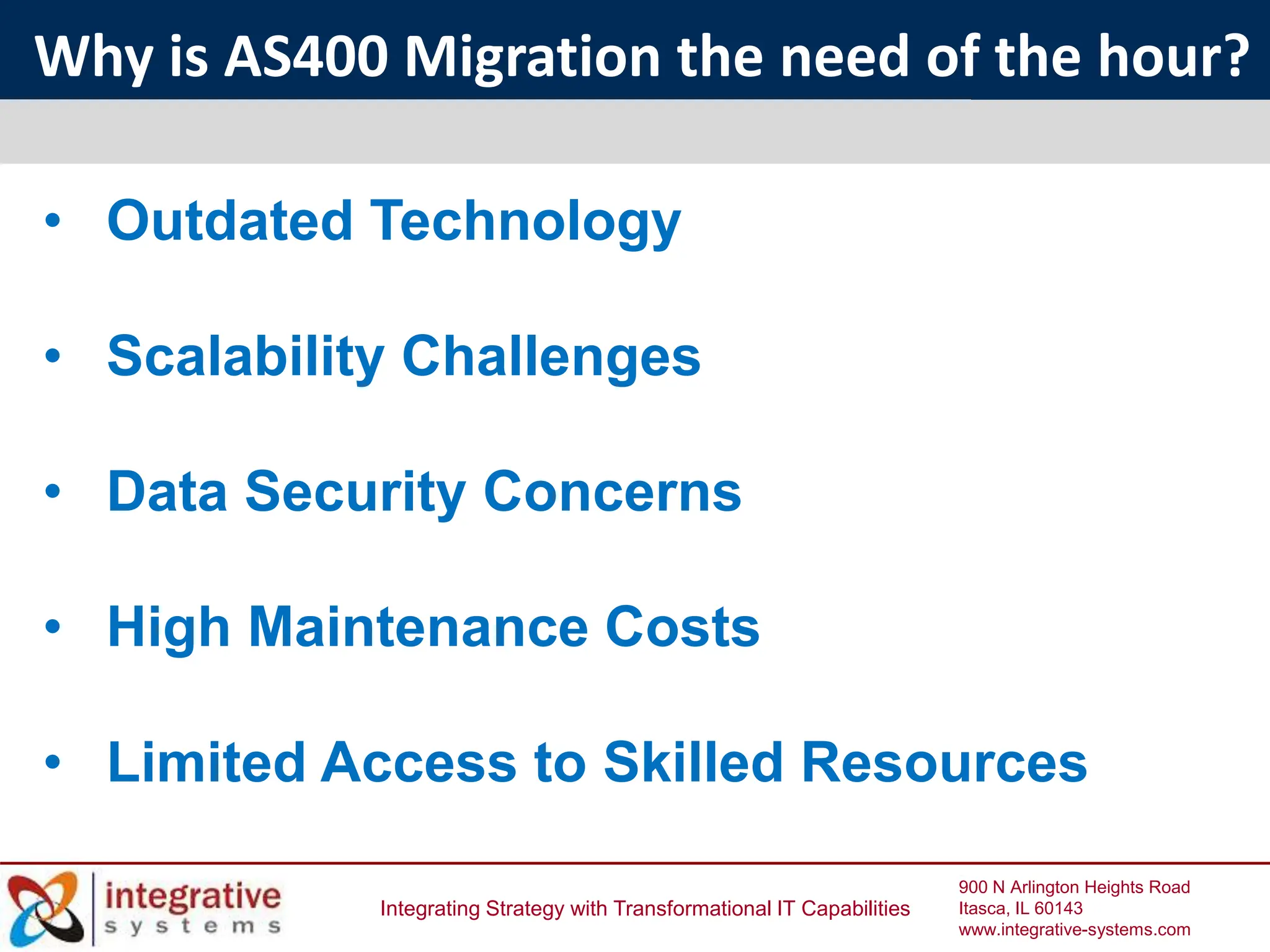
Early attempts at AS400 cloud hosting were met with skepticism. Cloud providers lacked specialized knowledge of IBM i architecture, treating virtual machines (VMs) as generic x86 workloads. Performance bottlenecks, complex licensing structures, and uncertainty regarding hardware tenancy slowed early adoption. However, rising maintenance costs, dwindling pools of physical hardware administrators, and the accelerated push toward enterprise digital transformation forced organizations to reconsider. The realization that legacy codebases did not need to be rewritten to benefit from cloud economics served as the primary catalyst for the hosting evolution.
The Shift to Managed Hosting and Dedicated IBM Partitions
As demand for cloud-based alternatives matured, specialized Managed Service Providers (MSPs) emerged to fill the gap left by hyperscale cloud providers who struggled with the nuances of proprietary IBM Power architecture. Rather than running on multi-tenant public cloud infrastructure, early AS400 cloud solutions relied on dedicated IBM Power Systems hosted in Tier III and Tier IV data centers.
This era of evolution introduced critical operational changes for enterprise IT teams:
- CapEx to OpEx Transition: Businesses replaced massive upfront hardware acquisition costs with predictable monthly operational expenditure models.
- Specialized Expertise: Hosting providers assumed the burden of hardware maintenance, microcode updates, firmware patching, and physical environmental controls.
- Tailored Disaster Recovery (DR): High Availability (HA) and Disaster Recovery-as-a-Service (DRaaS) solutions became accessible to mid-market companies that previously could not afford secondary hardware replication sites.
During this period, service level agreements (SLAs) became more sophisticated, guaranteeing specific Recovery Point Objectives (RPOs) and Recovery Time Objectives (RTOs) tailored specifically to IBM i database requirements.
Modern Hybrid Architectures and Hyperscale Integration
In recent years, the evolution of AS400 cloud hosting reached a major inflection point with the integration of hybrid-cloud frameworks and support from major cloud ecosystems. Rather than isolating legacy workloads in standalone silos, modern architectures connect IBM i hosting environments directly with public cloud providers like Microsoft Azure, Amazon Web Services (AWS), and Google Cloud Platform (GCP).
This integration allows organizations to modernize their periphery applications while leaving the core database and business logic safely on specialized IBM Power infrastructure. For example, an enterprise can host its core RPG-based order management system on a high-performance cloud-hosted IBM i partition, while deploying modern web front-ends, analytical data lakes, and artificial intelligence extensions in hyperscale cloud environments. High-speed, low-latency interconnects bridge these environments, eliminating data transfer friction and enabling real-time analytics.
| Hosting Generation | Primary Infrastructure | Deployment Model | Main Driver | Typical RTO/RPO Capabilities |
|---|---|---|---|---|
| Early Era (Pre-2016) | On-Premises Physical Power Systems | Local Server Room | Hardware control, local security | Hours to Days (Tape-based recovery) |
| Transition Era (2016–2020) | Dedicated Hosting Provider Hardware | Single-Tenant Cloud (Hosted Private) | Cost reduction, hardware lifecycle relief | Minutes to Hours (Software replication) |
| Modern Era (2020–Present) | Hybrid Power Infrastructure & Hyperscale Interconnects | Hybrid Multi-Cloud | Agility, API integration, modern analytics | Near-Zero (Automated HA/DRaaS) |
Security, Compliance, and Licensing Advancements
Security has always been a hallmark of the AS400 platform, but cloud hosting introduced new attack vectors and regulatory frameworks that forced a complete overhaul of security methodologies. Over the past ten years, cloud hosting providers have integrated advanced security tooling directly into their IBM i offerings, moving far beyond native OS security profiles.
Modern AS400 cloud environments now routinely incorporate:
- Encryption at Rest and in Transit: Utilizing native IBM i cryptographic services alongside cloud-managed key vaults to meet stringent standards such as HIPAA, PCI-DSS, and GDPR.
- Immutable Backups: Protecting legacy databases against ransomware attacks through write-once-read-many (WORM) storage configurations in isolated cloud segments.
- Automated Compliance Auditing: Continuous monitoring tools that track system values, user authorities, and unauthorized access attempts across multi-tenant or dedicated cloud partitions.
Simultaneously, IBM evolved its software licensing models to accommodate cloud deployments. Historically tied tightly to specific processor serial numbers, IBM introduced more flexible, Cloud Management Console (CMC)-friendly licensing structures and Capacity BackUp (CBU) terms that made running IBM i workloads in redundant cloud environments financially viable.
Frequently Asked Questions
Can legacy RPG applications run without modification in a cloud-hosted AS400 environment?
Yes. Modern AS400 cloud hosting utilizes genuine IBM Power hardware or authorized virtualization layers that preserve 100% binary compatibility. Custom RPG programs, CL scripts, and DB2 databases execute without requiring code rewrites.
How does cloud hosting impact AS400 performance compared to on-premises hardware?
When properly provisioned with dedicated processing units (cores), sufficient memory, and enterprise-grade NVMe or SSD storage arrays, cloud-hosted AS400 performance matches or exceeds aging on-premises hardware. Network latency is mitigated by deploying workloads in data centers positioned near enterprise user bases.
What happens to existing software licenses when moving an AS400 to the cloud?
Software licenses from IBM and third-party vendors (such as ERP providers) generally transfer to the cloud environment, though agreements often require re-keying or verification under Program Temporary Fix (PTF) and Software Maintenance (SWM) guidelines. Managed hosting providers frequently assist in navigating these vendor audits.
Is disaster recovery easier to manage in a cloud-hosted AS400 model?
Yes. Cloud providers specialize in automated replication, journaling, and failover testing. Instead of managing a duplicate physical data center internally, organizations can leverage cloud-based DRaaS with predefined RTOs and RPO thresholds.
How secure is data stored in a cloud-hosted IBM i environment?
Security in a reputable cloud-hosted environment typically exceeds on-premises security due to 24/7 monitoring, redundant physical security, advanced perimeter firewalls, and regular vulnerability patching managed by certified systems engineers.
Strategic Next Actions for IT Leaders
Evaluating an AS400 cloud migration strategy requires a methodical approach. Begin by conducting a comprehensive inventory of your current IBM i environment, including active user counts, storage volumes, software dependencies, and third-party licensing agreements. Next, engage with specialized MSPs that possess verified credentials in IBM Power architectures rather than generic cloud brokers. Request proof of concept testing, evaluate their disaster recovery validation protocols, and review their SLA terms to ensure alignment with business continuity goals. By modernizing your hosting strategy without discarding your core business logic, you secure enterprise stability for the decade ahead.