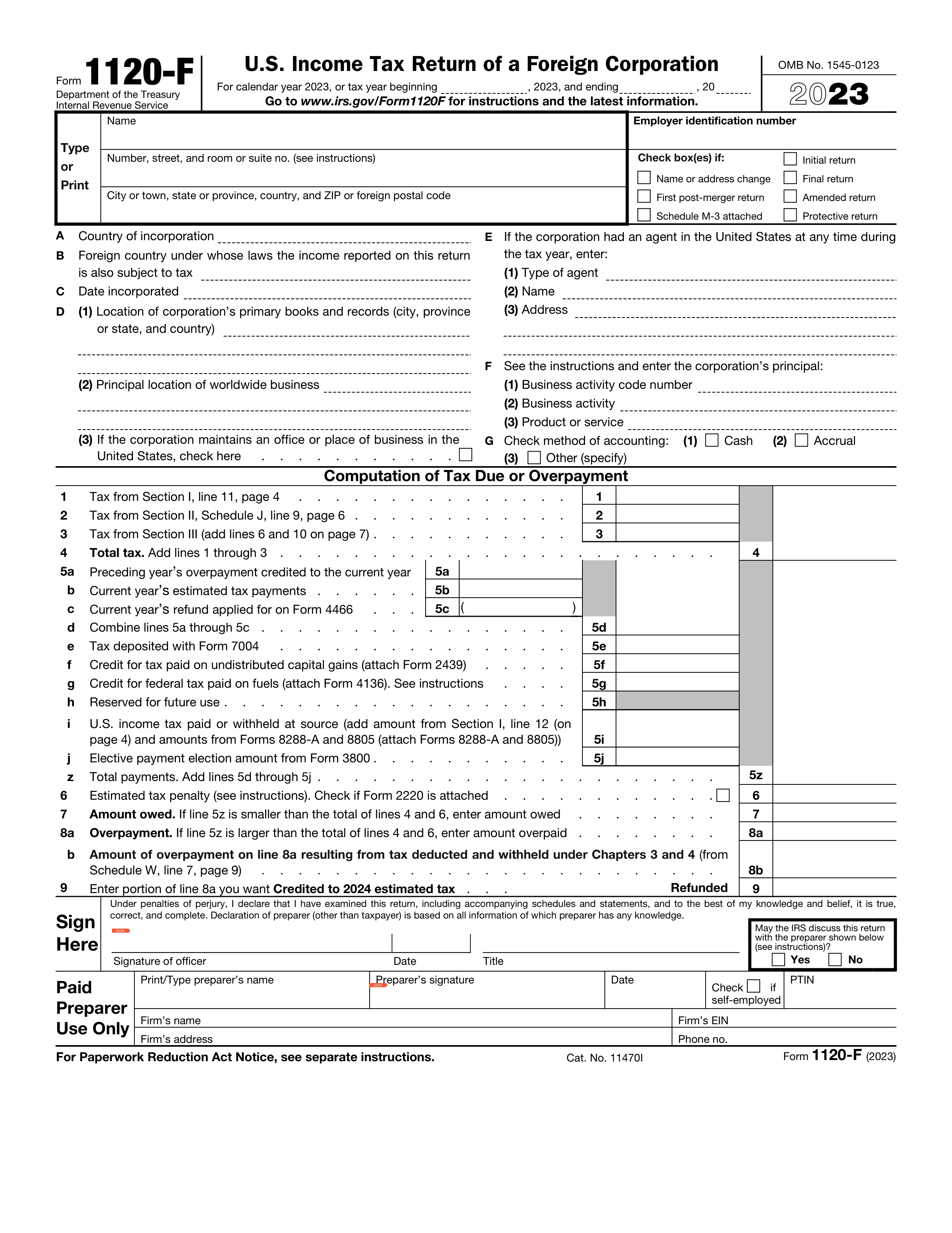
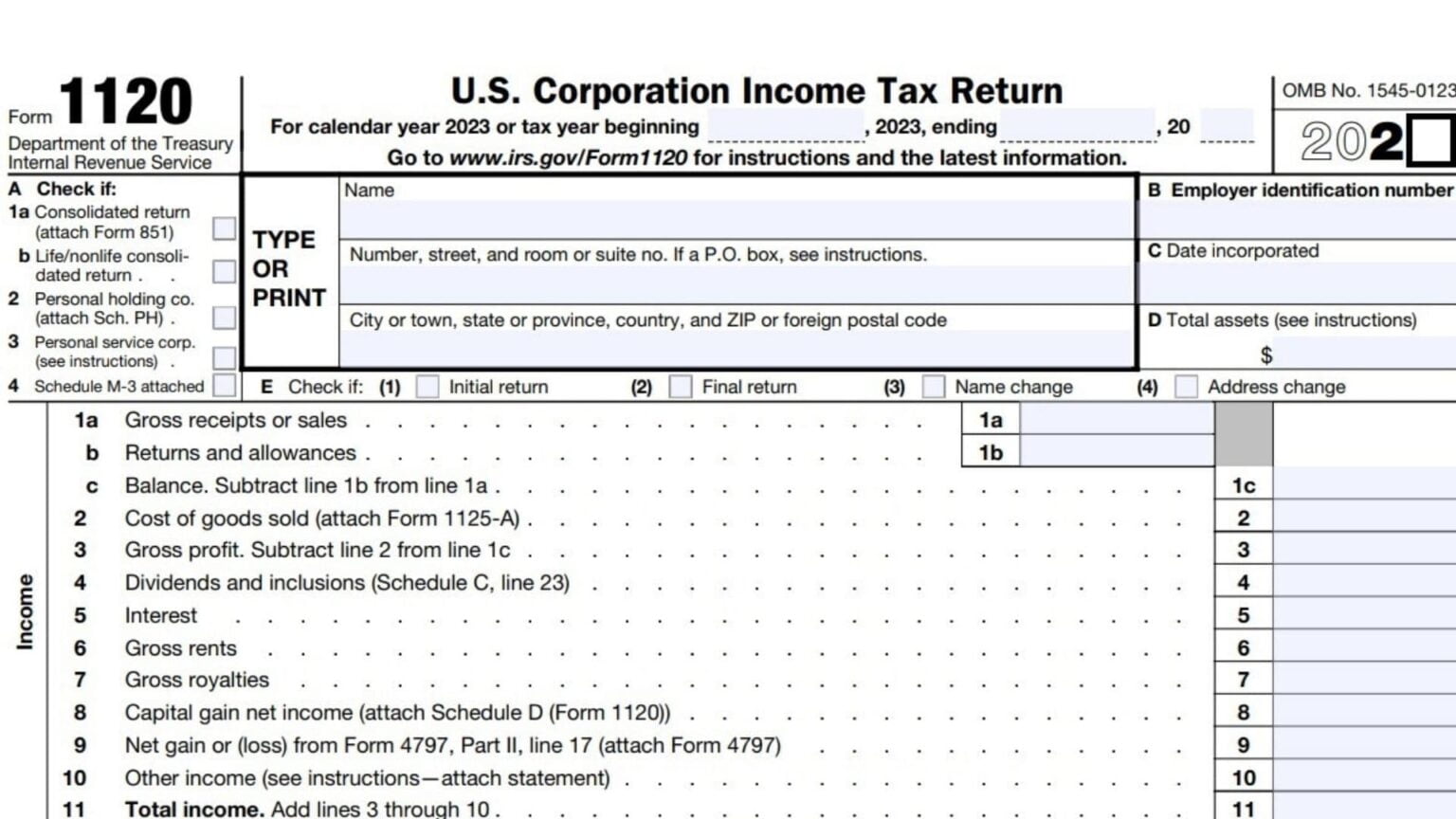
On IRS Form 1120, net worth is represented as Stockholders' Equity on Schedule L (the Balance Sheet per Books). It is calculated by subtracting the corporation's total liabilities from its total assets. This figure reflects the residual value of the company that belongs to the shareholders after all debts have been accounted for at the end of the tax year.
For tax purposes, the IRS requires C-corporations to report their financial position using Schedule L. This schedule is essentially a snapshot of the company's financial health, capturing what the business owns, what it owes, and the resulting equity. While "net worth" is a common financial term used by individuals and analysts, in the context of a federal corporate tax return, it is strictly categorized under the equity section of the balance sheet. Understanding how to calculate and report this figure correctly is essential for maintaining compliance and ensuring the internal consistency of your tax return.
The Role of Schedule L in Form 1120
Schedule L is the section of Form 1120 where a corporation reports its balance sheet information. For the 2026 filing season, as in previous years, the IRS mandates that the figures reported on Schedule L must match the corporation’s "books"—the internal accounting records used to track financial performance.
The balance sheet is divided into three primary sections:
- Assets (Lines 1 through 15): Everything the company owns, including cash, accounts receivable, inventory, and fixed assets like machinery or real estate.
- Liabilities (Lines 16 through 21): Everything the company owes, including accounts payable, mortgages, notes payable, and accrued expenses.
- Stockholders' Equity (Lines 22 through 28): The "net worth" of the corporation.
The fundamental accounting equation dictates that Assets = Liabilities + Stockholders' Equity. Therefore, the net worth on Form 1120 is the balancing figure that ensures the two sides of the ledger align. If a corporation has $1,000,000 in assets and $600,000 in liabilities, its net worth (equity) reported on Form 1120 must be $400,000.
Why "Per Books" Matters
The phrase "per books" is significant. It means that the amounts reported on Schedule L should generally follow Generally Accepted Accounting Principles (GAAP) or the specific accounting method the corporation uses for its financial statements (such as the income tax basis of accounting). This can sometimes create a discrepancy between "book value" and "tax value." While Schedule L records the book value, other schedules, such as Schedule M-1, are used to reconcile these book figures with the tax-basis figures used to calculate the actual tax liability.
Detailed Breakdown of the Net Worth Components
To arrive at the total net worth on Form 1120, several specific line items on Schedule L must be aggregated. These lines represent different types of capital and accumulated earnings.
Line 22: Capital Stock
This represents the par value of the shares issued by the corporation. It includes both common and preferred stock. For most small corporations, this figure reflects the initial investment made by the founders in exchange for shares. In the accounting world, capital stock is the legal capital that must be maintained for the protection of creditors.
Line 23: Additional Paid-in Capital (APIC)
Often, investors pay more for shares than their assigned par value. This excess amount is recorded as Additional Paid-in Capital. For example, if a share has a par value of $1 but is sold for $10, $1 goes to Line 22 and $9 goes to Line 23. Together, Lines 22 and 23 represent the total "contributed capital" from shareholders.
Line 24 & 25: Retained Earnings
Retained earnings are the cumulative profits of the corporation that have not been distributed to shareholders as dividends.
- Line 24 (Appropriated): These are earnings set aside for specific purposes, such as future plant expansion or legal contingencies.
- Line 25 (Unappropriated): This is the "free" pool of earnings available for dividends or reinvestment in the business.
Retained earnings are the most dynamic part of the corporate net worth. They increase with net income and decrease with net losses and dividend distributions.
Line 26: Adjustments to Shareholders' Equity
This is a catch-all for items that affect equity but do not pass through the income statement. Examples include unrealized gains or losses on certain types of investments (available-for-sale securities) or foreign currency translation adjustments.
Line 27: Less Cost of Treasury Stock
If a corporation repurchases its own shares from the open market, those shares are called "treasury stock." Treasury stock is a "contra-equity" account. Instead of being an asset, it is subtracted from the total equity because it represents a reduction in the capital held by outside shareholders.
Calculating Total Net Worth: An Example
To visualize how these components interact, consider a corporation with the following end-of-year balances for 2026:
| Schedule L Category | Line Item | Amount |
|---|---|---|
| Total Assets | Line 15 (Column d) | $2,500,000 |
| Total Liabilities | Line 21 (Column d) | $1,200,000 |
| Capital Stock | Line 22 (Column d) | $100,000 |
| Additional Paid-in Capital | Line 23 (Column d) | $400,000 |
| Retained Earnings | Line 25 (Column d) | $850,000 |
| Treasury Stock | Line 27 (Column d) | ($50,000) |
| Total Equity (Net Worth) | Line 28 (Column d) | $1,300,000 |
In this scenario, the net worth is $1,300,000. Note that the accounting equation holds true: $1,200,000 (Liabilities) + $1,300,000 (Equity) = $2,500,000 (Assets).
The Importance of Schedule M-2
While Schedule L shows the "what," Schedule M-2 explains the "how." Schedule M-2 (Analysis of Unappropriated Retained Earnings per Books) provides a bridge between the beginning-of-year net worth and the end-of-year net worth.
The IRS uses Schedule M-2 to ensure that the change in equity is accounted for correctly. The calculation generally follows this flow:
- Balance at beginning of year (Must match the prior year’s ending balance).
- Plus: Net income per books.
- Plus: Other increases (e.g., tax refunds from prior years).
- Less: Distributions (Dividends paid in cash, stock, or property).
- Less: Other decreases.
- Balance at end of year (This must match Line 25 of Schedule L).
If the ending balance on Schedule M-2 does not match the retained earnings reported on Schedule L, it is a significant red flag for the IRS. It suggests that the corporation has either misreported its income or failed to disclose a distribution to shareholders.
Filing Thresholds: Who Must Report Net Worth?
Not every corporation is required to complete Schedules L, M-1, and M-2. For the 2026 tax year, the IRS maintains a "small corporation" exemption to reduce the administrative burden on minor entities.
According to the instructions for Form 1120, if a corporation meets both of the following criteria, it does not have to complete the balance sheet (Schedule L) or the reconciliation schedules (M-1 and M-2):
- The corporation’s total receipts for the tax year are less than $250,000.
- The corporation’s total assets at the end of the tax year are less than $250,000.
This determination is made on Schedule K, Question 13. If you answer "Yes" to this question, you can skip the net worth reporting sections. However, many accountants still choose to complete these schedules to maintain a clear historical record and to facilitate easier financial analysis in the event of a future audit or loan application.
Common Mistakes in Reporting Corporate Net Worth
Errors in Schedule L are among the most frequent reasons for IRS notices. Understanding these pitfalls can help ensure your 2026 filing is accurate.
1. Discrepancy Between Beginning and Ending Balances
The beginning-of-year column (Column b) on Schedule L must be identical to the end-of-year column (Column d) from the previous year's tax return. If there was a change in accounting method or a prior-period adjustment, it must be clearly explained and reconciled on Schedule M-2.
2. Confusing Tax Basis with Book Basis
Net worth on Form 1120 is specifically "per books." New business owners often try to report assets based on their tax-depreciated value. For example, if you used Section 179 to fully deduct a $50,000 machine for tax purposes, but for your "books" you are depreciating it over five years, Schedule L should show the book value (minus one year of depreciation), not zero. The difference is handled on Schedule M-1.
3. Ignoring Negative Net Worth
It is possible for a corporation to have a negative net worth if its liabilities exceed its assets (often due to accumulated losses). This is reported as a negative number in the equity section. While a negative net worth isn't illegal, it can trigger IRS scrutiny regarding the "going concern" status of the business or whether shareholder loans should be reclassified as equity.
4. Inconsistent Treatment of Shareholder Loans
When a shareholder lends money to the corporation, it is a liability (Line 19, Mortgages, notes, bonds payable in 1 year or more). It is not part of the net worth. Conversely, if a shareholder contributes capital without the expectation of repayment, it is equity. Misclassifying these can significantly distort the corporation's debt-to-equity ratio and net worth.
Strategic Implications of Net Worth on Form 1120
Beyond mere compliance, the net worth reported on Form 1120 serves several practical purposes:
- Franchise Tax Calculation: Many states calculate annual franchise taxes based on the "net worth" or "capital stock" of a corporation. They often pull these figures directly from the federal Schedule L.
- Creditworthiness: When applying for business loans, lenders almost always request the last three years of Form 1120. They look at the net worth on Schedule L to determine the company's leverage and solvency.
- Valuation for Sale: While book value (net worth) is rarely the same as market value, it serves as the baseline for most valuation models. A steady increase in retained earnings on Form 1120 is a primary indicator of a healthy, growing enterprise.
- Audit Selection: The IRS uses automated systems to compare industry averages for debt-to-equity ratios. If your reported net worth is wildly inconsistent with similar businesses in your North American Industry Classification System (NAICS) code, it may increase the probability of an audit.
Frequently Asked Questions
Does corporate net worth on Form 1120 include the value of intangible assets?
Only if those intangible assets are recorded "on the books." Under GAAP, internally developed intangibles like brand names or "goodwill" are generally not recorded as assets. However, if the corporation purchased a trademark or acquired another company and recorded "goodwill" as part of the purchase price, those assets appear on Line 14 of Schedule L and thus contribute to the total net worth.
Can I change my net worth by revaluing my assets to market value?
Generally, no. Schedule L requires reporting "per books," which for most corporations follows the historical cost principle. This means assets are recorded at what you paid for them, not what they are worth today. Revaluing assets upward to increase net worth is usually not permitted under standard accounting frameworks used for Form 1120.
What is the difference between "Retained Earnings - Appropriated" and "Unappropriated"?
Appropriated retained earnings are those that the board of directors has designated for a specific use, meaning they are not available for dividend distributions. Unappropriated retained earnings are the standard "bottom line" of the equity section and represent funds that can be used for any purpose, including paying out dividends to shareholders. Both are part of the total net worth.
How do dividends affect the net worth on Form 1120?
Dividends reduce the net worth of a corporation. When a dividend is paid, cash (an asset) decreases, and retained earnings (a component of net worth) decrease by the same amount. This transaction is specifically detailed on Schedule M-2, Line 5 (Distributions).
If my net worth is negative, does the IRS consider my business a "hobby"?
Not necessarily. A negative net worth simply means the business has more debt than assets, which is common in startups or industries with high upfront capital costs. The "hobby loss" rules (Section 183) usually look at whether the business shows a profit in three out of five years, rather than the absolute net worth on the balance sheet.
Next Steps for Tax Preparation
To ensure your corporation's net worth is reported accurately for the 2026 tax year, begin by finalizing your year-end financial statements. Ensure your trial balance is reconciled and that every entry in your general ledger has supporting documentation.
If you are transitioning from a small corporation (under the $250,000 threshold) to a larger one that must complete Schedule L, it is highly recommended to consult with a tax professional. Reconstructing a beginning-of-year balance sheet from old records can be complex, and errors made during this transition can have compounding effects on future returns.
Finally, always perform a "consistency check" before filing: ensure the ending net worth on Schedule L, Line 28, matches the sum of your equity accounts and that your retained earnings reconciliation on Schedule M-2 is mathematically sound.
Disclaimer: This article provides general information regarding IRS Form 1120 and should not be construed as legal, financial, or tax advice. Tax laws are subject to change, and jurisdictional variations may apply. Always consult with a qualified CPA or tax attorney for specific guidance regarding your corporation's tax obligations.