The W-2 workers' compensation code generally references the standard classification scheme used to identify clerical, office, or administrative professional roles within payroll reporting and insurance premium calculations. While workers' compensation insurance codes typically focus on physical industry operations like construction or manufacturing, administrative personnel operating in standard office settings often fall under specialized classification codes to ensure accurate premium assessments.
Understanding how administrative and clerical classifications function within workers' compensation frameworks is essential for accurate payroll auditing, proper risk assessment, and legal compliance. Employers must correctly segregate clerical duties from operational tasks to avoid misclassifications that can lead to inflated premium charges or costly audit adjustments during end-of-year reconciliations.
The Fundamentals of Workers' Compensation Classification Codes
Workers' compensation insurance provides wage replacement and medical benefits to employees injured on the job in exchange for mandatory relinquishment of the employee's right to sue their employer for negligence. To calculate premiums equitably, insurers utilize standardized classification systems governed by rating bureaus such as the National Council on Compensation Insurance (NCCI) or independent state-specific bureaus in states like California, New York, and Pennsylvania.
Each classification code corresponds to a specific industry group and associated risk level. Premium rates are expressed as a dollar amount per $100 of an employer's total payroll. Because office workers face significantly lower physical risks than construction workers or heavy machinery operators, rating bureaus maintain distinct codes for clerical office employees.
The Role of Clerical Classifications in Payroll Reporting
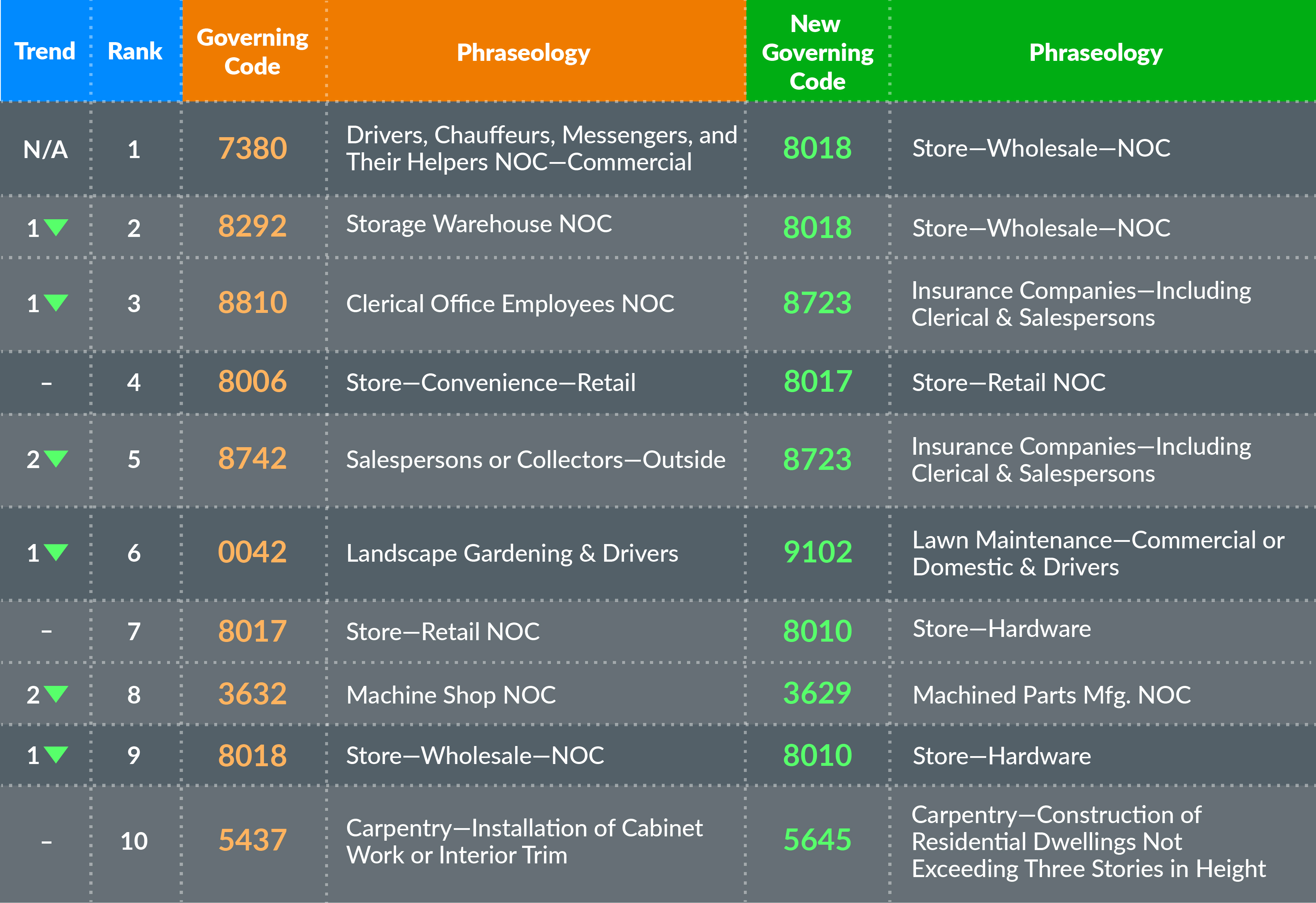
In most standard workers' compensation policies, clerical office employees are assigned a specific classification code (frequently matching codes like NCCI 8810, depending on the jurisdiction). This code typically carries one of the lowest premium rates in the entire manual because the statistical frequency and severity of workplace injuries in a traditional office environment are minimal.
However, assigning a clerical code requires meeting strict operational criteria. Insurance auditors closely examine daily job duties to verify that employees qualifying for a lower-rate clerical code do not perform operational, sales, or supervisory tasks in hazardous environments.
Key Criteria for Qualifying Under Administrative Codes
To properly classify an employee under a standard administrative or clerical code rather than a higher-risk operational code, businesses must satisfy rigorous regulatory guidelines set by insurance rating bureaus. Misunderstanding these criteria is one of the most common triggers for premium adjustments during annual audits.
Definition of Clerical Office Operations
Rating bureaus define clerical office employees as those whose duties are strictly restricted to handling office correspondence, accounting, computer data entry, filing, and general administrative support. These employees must work in an environment physically separated from manufacturing floors, warehouses, or construction sites.
Key defining characteristics include:
- Physical Separation: The workspace must be physically segregated by walls and doors from active operational, processing, or storage areas.
- Exclusive Duties: The employee must not handle, stock, or move physical inventory, nor supervise operational staff on the floor.
- Incidental Exposure: Occasional entry into a warehouse to drop off paperwork usually does not invalidate clerical status, provided it is infrequent and incidental to primary duties.
Common Exceptions and Intermingled Duties
Many modern businesses employ hybrid workers who split time between administrative tasks and hands-on operational duties. When an employee's duties cross between clerical and operational categories, rating bureaus enforce strict "interchange of labor" or payroll segregation rules.
If an employee performs both clerical and operational work, their entire payroll must typically be assigned to the highest-rated applicable classification code unless the employer maintains verifiable, contemporaneous records—such as detailed timecards—proving the exact hours spent exclusively on clerical tasks. Without precise documentation, auditors will reclassify the entire payroll to the higher-risk code.
Comparison of Workers' Compensation Classifications
Understanding how administrative codes differ from operational codes highlights why accurate payroll segregation matters for employer overhead and compliance.
| Classification Type | Typical Focus / Environment | Risk Level | Audit Verification Focus |
|---|---|---|---|
| Clerical Office | Administrative, accounting, data entry in separated office spaces | Lowest | Physical separation, absence of manual labor or floor supervision |
| Sales / Outside | Traveling representatives, client meetings, non-manual promotion | Low to Moderate | Travel logs, job descriptions, time allocation records |
| Light Industrial | Assembly, light warehousing, non-heavy material handling | Moderate | Floor access, inventory interaction, machinery operation |
| Heavy Construction | Job sites, heavy equipment operation, structural labor | Highest | Certified payrolls, job-site logs, subcontractor certificates |
Operational Impact and Premium Calculation Mechanics
The assignment of workers' compensation codes directly influences a company's bottom line. Premium calculations rely on a foundational formula that multiplies payroll by the rate assigned to each specific classification code, adjusted subsequently by the employer's Experience Modification Rate (EMR).
The Premium Formula
- Payroll Determination: Total gross payroll for employees within a specific classification code is divided by 100.
- Manual Rate Application: The resulting figure is multiplied by the manual rate established by the state rating bureau for that specific code.
- Experience Modification: The resulting base premium is multiplied by the company’s EMR, which reflects its historical loss experience relative to peer companies in the same industry.
Because administrative codes carry significantly lower manual rates than operational codes, maintaining proper separation ensures that office payroll is not unnecessarily subjected to high industrial rates. Conversely, improperly assigning clerical codes to workers who perform operational duties constitutes premium fraud or misclassification, which carries severe legal and financial penalties.
Preparing for Workers' Compensation Audits
Insurance carriers conduct annual payroll audits to verify that the classification codes and payroll figures used to estimate initial policy premiums match actual business operations. Employers must maintain meticulous records to substantiate their use of administrative and clerical codes.
Best Practices for Audit Compliance
- Maintain Detailed Job Descriptions: Keep written job descriptions for every employee that clearly outline their daily administrative duties and physical work environment.
- Implement Payroll Segregation: Use accounting software that separates payroll by department or job code, especially for employees with hybrid responsibilities.
- Retain Attendance and Time Records: For employees whose duties cross classifications, preserve verifiable timecards or electronic logs demonstrating exact time allocations.
- Document Physical Layouts: Keep floor plans or facility diagrams on hand to prove the physical separation of administrative offices from operational or warehouse zones.
Frequently Asked Questions
What happens if an employee with a clerical code is injured on the manufacturing floor?
If an administrative employee is injured while temporarily visiting an active operational floor, they remain covered under the employer's workers' compensation policy. However, the insurer's auditor will examine whether that employee's duties regularly expose them to operational risks, which could trigger a reclassification of their payroll during the next audit.
Can remote employees be classified under standard clerical codes?
Yes, remote administrative employees working from home are typically classified under standard clerical office codes, provided their duties remain strictly administrative and free from manual or operational hazards. Employers should verify specific state bureau guidelines regarding out-of-state remote workers.
What is the difference between NCCI code 8810 and other administrative codes?
NCCI code 8810 is widely used for clerical office employees in jurisdictions that follow NCCI rules. However, specific industries—such as construction, trucking, or temporary staffing—may feature specialized clerical codes or inclusion rules where administrative payroll must be bundled directly into the primary operational code.
How does payroll separation work for executives and owners?
Corporate officers and executives often perform executive, administrative, and occasionally operational tasks. State laws and bureau rules dictate whether executive payroll is subject to mandatory inclusion or optional exclusion, and whether executive duties qualify for standard clerical rating or separate operational classification.
Conclusion and Next Actions
Proper classification under administrative and clerical workers' compensation codes requires strict adherence to rating bureau guidelines, clear job descriptions, and diligent payroll recordkeeping. Employers should review their current policy declarations annually, consult with licensed insurance professionals or payroll specialists, and maintain meticulous documentation to ensure seamless annual audits and optimal premium accuracy.