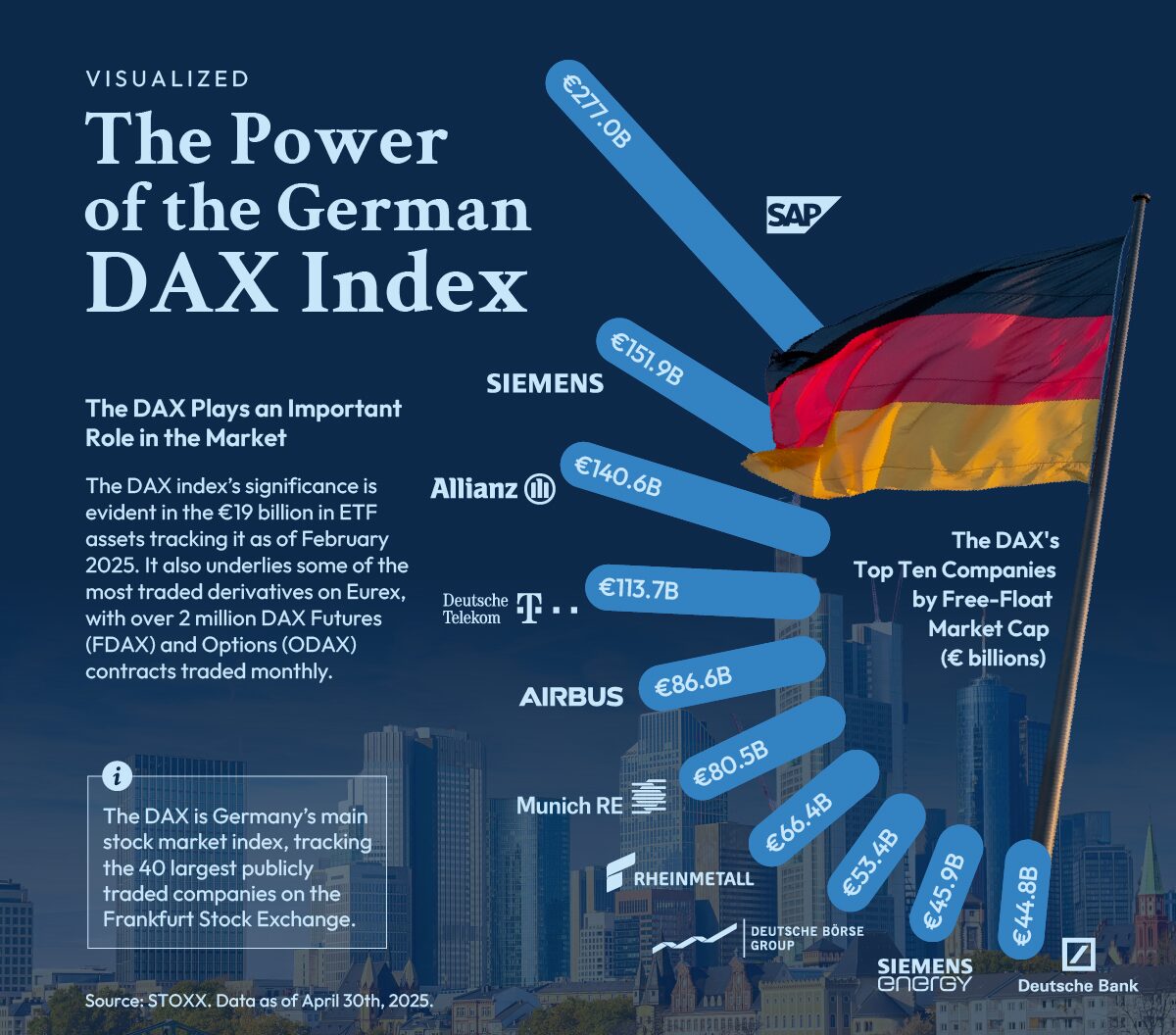
The expansion of Germany's premier stock index from 30 to 40 companies marked a foundational structural evolution, designed to enhance market representation, improve international competitiveness, and align with global governance standards following corporate governance failures.
Introduction to the Transformation of Germany’s Benchmark Index
For decades, the DAX 30 stood as the undisputed flagship of the German financial market, tracking the 30 largest and most liquid publicly traded companies listed on the Frankfurt Stock Exchange. However, shifts in the global economic landscape, changing capital market expectations, and structural pressures necessitated a comprehensive modernization of the index rules. The most significant structural modification in the history of the index was its expansion from 30 constituents to 40, a move officially executed in September 2021.
While market participants often refer to this transition colloquially, understanding the exact mechanics requires looking past simple numerical changes. The expansion was designed to capture a broader swath of the German economy, reduce concentration risk, and incorporate strict regulatory safeguards for incoming constituents. This comprehensive analysis explores the background of the index, the primary motivations behind the expansion, the strict eligibility criteria implemented, the operational impacts on market participants, and the long-term implications for institutional and retail investors navigating European equity markets.
Background: What Was the DAX 30 and Why Did It Matter?
Established in July 1988 with a base value of 1,163 points, the DAX (Deutscher Aktienindex) was designed to measure the performance of the prime segment of the Frankfurt Stock Exchange. Traditionally composed of Germany's heavyweights in manufacturing, automotive, chemicals, and financial services, the DAX 30 functioned as a vital barometer for the health of the broader Eurozone economy.
Unlike price-weighted indices like the Dow Jones Industrial Average, the DAX was calculated as a free-float market-capitalization-weighted index. Furthermore, it uniquely operated as a total return index, meaning dividends and other distributions were reinvested directly into the index calculation, providing a comprehensive view of total shareholder return.
Despite its prestige, the index faced growing structural criticism. With only 30 companies, it was remarkably small compared to international peers like the S&P 500 in the United States or the FTSE 100 in the United Kingdom. This limited scope meant that traditional manufacturing and industrial sectors dominated the weighting, while fast-growing technology, biotechnology, and digital business models—which began driving modern economic growth—were historically underrepresented or entirely absent.
The Catalyst for Change: Governance Failures and Market Evolution
The push for structural reform gained overwhelming momentum following a series of high-profile corporate governance crises within German corporate history. Most notably, the collapse and insolvency of payment processing giant Wirecard AG in 2020 exposed severe vulnerabilities in regulatory oversight, auditing standards, and index inclusion criteria.
Wirecard had risen rapidly through the ranks to enter the DAX 30, only to collapse due to massive accounting fraud. Because the existing rulebook lacked stringent requirements regarding mandatory financial reporting, corporate governance adherence, and profitability, the index’s credibility was severely tested. International institutional investors expressed concern over the risk profiles of companies permitted to enter the benchmark.
In response to these systemic challenges, Deutsche Börse AG, the operator of the Frankfurt Stock Exchange, initiated sweeping market consultations. The resulting reform package aimed to achieve two primary goals:
- Restore and enhance trust through rigorous governance and compliance standards.
- Modernize the index composition to reflect a more diversified, resilient, and globally competitive cross-section of the German corporate ecosystem.
Key Changes Implemented During the Transition
The transition from the DAX 30 to the DAX 40 involved more than simply appending ten new companies to the list. It represented a thorough overhaul of the rulebook governing the index family administered by Qontigo, an international index provider and subsidiary of Deutsche Börse.
| Feature | Old Framework (DAX 30 Era) | Revised Framework (DAX 40 Era) |
|---|---|---|
| Constituent Count | Exactly 30 companies | Exactly 40 companies |
| Profitability Prerequisite | Not strictly required for initial inclusion | Must show positive EBITDA for the two most recent financial years |
| Audited Financials | Basic compliance with listing standards | Mandatory submission of audited annual reports and quarterly statements |
| Supervision Oversight | Self-regulation and exchange rules | Oversight by independent market committees |
| Fast-Exit Rules | Less frequent rebalancing triggers | Stricter rules for non-compliance with reporting standards |
1. Expansion to 40 Constituents
The most visible change was the addition of ten new members, expanding the index capacity to 40. This expansion brought in a wave of mid-cap companies from the former MDAX, increasing the total market capitalization represented by the benchmark and ensuring that a larger portion of the institutional investable universe was captured.
2. Mandatory Profitability and Financial Discipline
Under the updated rulebook, potential candidates seeking entry into the index must satisfy baseline profitability requirements. Specifically, companies must demonstrate positive Earnings Before Interest, Taxes, Depreciation, and Amortization (EBITDA) for the two consecutive financial years preceding their inclusion. This rule effectively filters out speculative, highly leveraged, or pre-revenue firms that might introduce destabilizing volatility into a core benchmark.
3. Strict Reporting and Compliance Requirements
To prevent a repeat of historical governance failures, constituents are now legally and procedurally bound to publish audited annual financial reports and mandatory quarterly financial statements within strict deadlines. Failure to meet these reporting deadlines triggers rapid enforcement mechanisms, including mandatory removal from the index.
4. Separation of the MDAX and SDAX
The expansion of the top-tier index necessitated adjustments to the remainder of the German index family. The MDAX (mid-cap index) was simultaneously reduced in size to maintain a logical hierarchy between large-cap and mid-cap equities, ensuring that the lines between the growth-oriented mid-market and the established blue-chip tier remained distinct.
Operational Impacts on Investors and Funds
For institutional asset managers, exchange-traded fund (ETF) providers, and retail investors, the shift to a 40-stock index required substantial portfolio rebalancing and operational adjustments.
- Tracking Error and Benchmark Adjustment: Passive funds tracking the DAX had to acquire shares in the ten newly admitted companies while adjusting the weightings of the existing 30 constituents. This generated significant trading volume on the Frankfurt Stock Exchange during the effective implementation dates.
- Diversification Benefits: By spreading risk across 40 companies instead of 30, idiosyncratic risk—the risk associated with a single company experiencing financial distress—was marginally reduced.
- Sector Representation: The intake of ten new firms injected greater sector diversity into the index, providing exposure to consumer discretionary, specialized technology, and advanced medical sectors that were previously underrepresented.
Common Misconceptions Regarding the Index Expansion
As with any major financial market modification, several misunderstandings circulated among market participants regarding the nature of the update.
- Misconception 1: It was merely a rebranding exercise. Some casual observers assumed that changing the number from 30 to 40 was purely cosmetic. In reality, the enforcement of mandatory profitability and strict reporting timelines fundamentally altered the risk profile of index membership.
- Misconception 2: It guaranteed higher returns. Expansion of an index does not inherently correlate with outperformance. While breadth increases, the inclusion of smaller large-cap firms can dilute the concentration of mega-cap multinational exporters that historically drove DAX returns.
- Misconception 3: Foreign revenue exposure was eliminated. Critics occasionally worried that adding smaller domestic companies would reduce the global export orientation of the index. However, many of the newly added mid-caps operate with robust international supply chains and substantial global revenue footprints.
Frequently Asked Questions
What are the main differences between the DAX 30 and the DAX 40?
The primary differences lie in the number of constituent companies (expanded from 30 to 40) and the enforcement of much stricter regulatory, reporting, and profitability prerequisites. Companies must now demonstrate positive EBITDA for two consecutive years and adhere to rigorous financial reporting schedules.
Why did the index operator decide to expand the index?
The expansion was designed to modernize the German equity market, improve international competitiveness, reduce concentration risk, and restore investor confidence following corporate governance failures associated with former constituents.
How often is the composition of the index reviewed?
Deutsche Börse conducts regular reviews of the index composition on a scheduled basis—typically in March, June, September, and December—to ensure companies meet ongoing market capitalization and liquidity thresholds.
Does the index still include dividends in its performance calculation?
Yes. The DAX continues to be calculated primarily as a total return index, meaning that dividend distributions are reinvested into the index value, distinguishing it from price-only benchmarks like the Euro Stoxx 50 price index.
How did the expansion affect passive investment products like ETFs?
Asset managers overseeing ETFs and index funds tracking the benchmark were required to rebalance their holdings to match the new 40-stock composition, resulting in large-scale transactions across European exchanges during the transition period.
Conclusion and Next Actions
The structural evolution from the DAX 30 to the DAX 40 represents a defining moment in modern European financial history. By prioritizing strict corporate governance, mandatory profitability metrics, and a broader representation of the German corporate landscape, market operators successfully fortified the benchmark against systemic vulnerabilities. For investors analyzing European exposure, recognizing these structural shifts is essential for evaluating portfolio risk, understanding index construction rules, and making informed allocation decisions in contemporary capital markets.