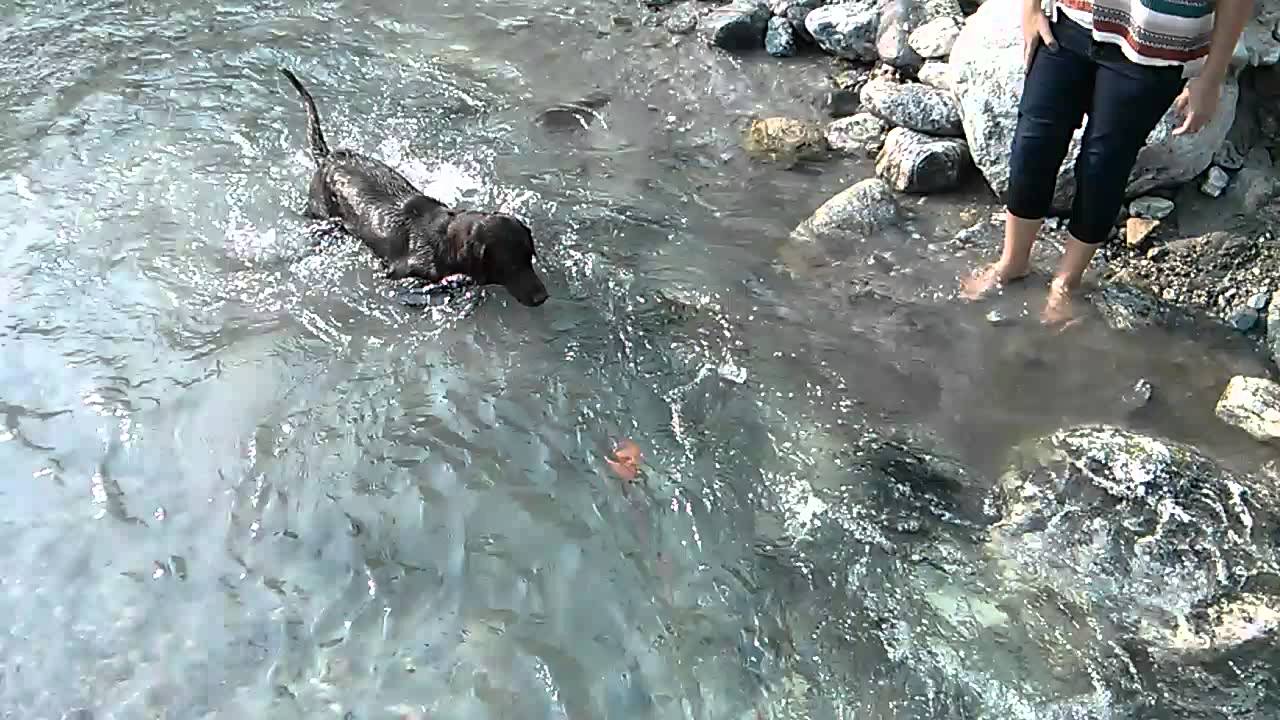
Labrador Retrievers are naturally predisposed to diving due to their ancestry as water rescue and fishing dogs. While most excel at surface swimming and dock diving, many individuals can be trained to submerge fully to retrieve objects from depths of 3 to 8 feet. This ability stems from their water-resistant double coat, webbed paws, and powerful rudder-like tail.
The Evolutionary History of the Water-Loving Labrador
To understand why a Labrador is so adept at diving, one must look back to the rocky shores of Newfoundland. The modern Labrador Retriever descends from the now-extinct St. John’s Water Dog. In the 18th and 19th centuries, these dogs were indispensable partners to fishermen. Their primary tasks were not merely to sit on a boat, but to jump into the frigid North Atlantic to retrieve escaped fish, pull in heavy nets, and even assist in shore-based rope hauling.
The selective pressure for these tasks created a breed that viewed water not as an obstacle, but as a primary environment. Unlike many breeds that swim with a frantic, vertical "dog paddle," Labradors developed a more horizontal, efficient stroke. This historical context is vital because it explains the breed's psychological drive; for a Lab, diving to the bottom of a pool to grab a toy is a modern expression of an ancestral job.
By 2026, the appreciation for these working roots has seen a resurgence. Canine behaviorists often point to underwater retrieval as a high-level "occupational therapy" for the breed, providing the intense physical and mental stimulation they often lack in sedentary domestic environments.
Anatomical Advantages: Why Labradors Are Built for Submersion
The Labrador’s physical blueprint is a marvel of biological engineering specifically designed for aquatic efficiency. When a Labrador dives, several physiological features work in tandem to ensure success and safety.
The Double Coat and Buoyancy Control
The Labrador possesses a dense, weather-resistant double coat. The outer guard hairs are short and straight, while the undercoat is soft and downy. This structure traps a thin layer of air against the skin, providing both insulation and a degree of buoyancy. When a Labrador decides to submerge, they must overcome this natural buoyancy. This requires a powerful initial "porpoise" jump or a forceful downward kick from the hindquarters. Once the dog breaks the surface tension and angles their head downward, the air trapped in the coat compresses slightly, making the descent easier.
Webbed Paws and the "Otter" Tail
One of the most distinctive features of the breed is the interdigital webbing. While all dogs have some skin between their toes, the Labrador’s webbing is extensive, stretching nearly to the ends of the digits. This transforms the paws into efficient flippers, allowing the dog to displace a significant volume of water with every stroke.
The "otter tail" serves as the dog’s rudder. It is thick at the base and tapers toward the tip, covered in the same dense, water-resistant hair. When diving, the Labrador uses the tail to execute sharp turns underwater or to stabilize their body as they reach for an object on the bottom. Without this rudder, the dog would struggle to maintain the correct orientation while fighting the upward pressure of the water.
Distinguishing Between Dock Diving and Underwater Diving
In the world of canine sports, it is important to distinguish between "dock diving" and true "underwater diving." While both involve water, the mechanics and goals are entirely different.
Dock Diving (Big Air and Extreme Vertical): This is a competitive sport where dogs jump off a dock into a body of water. The focus is on the distance (Big Air) or the height (Extreme Vertical) of the jump. In these scenarios, the dog is usually chasing a "bumper" thrown into the air. The dog remains mostly on the surface or just below it upon landing.
Underwater Diving (Submersion Retrieval): This refers to the dog's ability to locate an object that has already sunk to the bottom and intentionally submerge their head, shoulders, and eventually their entire body to retrieve it. This requires a different set of skills, including breath control, managing ear pressure, and visual acuity in murky or refractive water environments.
By 2026, many specialized training facilities have begun offering "Subsurface Retrieval" clinics, focusing specifically on the depth and duration of the dive rather than the length of the jump. This shift recognizes that the mental engagement required for a dog to track a sinking object is significantly higher than simply chasing a moving target on the surface.
The Mechanics of Canine Submersion and Breath Control
How does a dog know to hold its breath? Research into canine physiology suggests that dogs possess a "mammalian dive reflex," though it is less pronounced than in seals or dolphins. When water touches the specialized receptors around the nose and throat, the heart rate slows slightly, and the glottis—the opening to the windpipe—closes instinctively.
A Labrador diving for a toy is not performing a complex "valsalva maneuver" to equalize pressure in the ears as humans do. Instead, they rely on the short duration of the dive to avoid the complications of depth. Most Labradors can comfortably dive to depths of 3 to 6 feet for 5 to 10 seconds. Beyond this depth, the pressure on the eardrums can become uncomfortable, and most dogs will naturally resurface.
Visual distortion is another factor. Water refracts light, meaning an object on the bottom of the pool is not exactly where it appears to be from the surface. Experienced diving Labradors learn to account for this refraction through trial and error, often "sweeping" the bottom with their paws or nose if they miss the target on the first lunge.
Step-by-Step Training: Teaching Your Labrador to Dive
Training a Labrador to dive should never be rushed. It requires building confidence through a series of progressive successes. Forcing a dog underwater can lead to "near-drowning" trauma or water inhalation, which can be fatal.
Phase 1: Perfecting Surface Retrieval
Before a dog can dive, it must be a confident swimmer. Start by throwing floating toys in shallow water where the dog can still touch the ground. Gradually move to deeper water where the dog must swim. Ensure the dog has a reliable "delivery to hand" or "drop it" command so that the focus remains on the task, not on a game of keep-away.
Phase 2: The Semi-Submersion
Use a toy that sinks slowly or a weighted toy in very shallow water (chest-deep). Encourage the dog to put their nose under the water to grab the toy. At this stage, the dog’s ears and eyes usually remain above the surface. Praise heavily when the dog successfully retrieves an object from the floor of the shallow area.
Phase 3: Head Submersion
Move the weighted toy to slightly deeper water, where the dog must submerge their entire head to reach it. Many Labradors find this transition difficult because water enters their ears. Use high-value rewards. It often helps to use a clear, plastic toy that is easy to see against the pool or pond floor.
Phase 4: Full Body Diving
This is the final stage. Drop the toy in water that is 3 to 4 feet deep. The dog will have to paddle downward, often lifting their rear legs into the air to provide the downward thrust. This is sometimes called the "surface dive." Once the dog realizes they can reach the bottom and return safely, their confidence will soar.
| Training Phase | Depth Level | Objective | Key Safety Tip |
|---|---|---|---|
| Shallow Retrieval | 6 - 12 inches | Nose-only submersion | Ensure the ground is not slippery. |
| Head Submersion | 12 - 24 inches | Submerging eyes and ears | Watch for signs of "snorting" water. |
| Partial Dive | 2 - 3 feet | Front half of body submerged | Use clear water for better visibility. |
| Full Submersion | 3 - 6 feet | Entire body underwater | Limit sessions to prevent exhaustion. |
| Advanced Depth | 6+ feet | Full retrieval and ascent | Professional supervision recommended. |
Health Risks and Safety Protocols for Diving Dogs
While diving is an excellent exercise, it is not without risks. Responsible owners in 2026 must be aware of the physiological toll that repeated submersion can take on a Labrador.
Water Intoxication (Hyponatremia)
This is perhaps the most dangerous risk for a diving dog. Water intoxication occurs when a dog ingests a large amount of water in a short period. This typically happens when a dog keeps its mouth open while swimming or diving. The excess water dilutes the sodium in the blood (hyponatremia), causing cells to swell. Symptoms include staggering, bloating, excessive salivation, and, in severe cases, seizures or coma.
Prevention: Limit diving sessions to 15–20 minutes and monitor how much "gulping" the dog does while retrieving toys.
Ear Infections (Otitis Externa)
The Labrador's floppy ears are a double-edged sword. While they protect the inner ear from some debris, they also trap moisture. When a dog dives, water is forced into the L-shaped ear canal. If not dried properly, this creates a warm, dark, moist environment perfect for yeast and bacterial growth.
Protocol: Always use a veterinarian-approved ear drying solution after a diving session to help evaporate trapped water and maintain a healthy pH balance.
Vision and Eye Health
Chlorine in pools or bacteria in ponds can irritate a dog's eyes. While dogs have a nictitating membrane (a third eyelid) that provides some protection, it is not a pair of goggles. If your Labrador dives frequently in chlorinated water, rinse their eyes with a sterile saline solution afterward to prevent chemical conjunctivitis.
Essential Gear for the Diving Labrador
In 2026, the market for canine aquatic gear has matured significantly. While a dog only needs water to dive, certain equipment can enhance safety and performance.
- Durable, Sinking Retrieval Toys: Avoid using rocks, as they can break teeth and cause internal blockages if swallowed. Use heavy-duty rubber toys designed specifically for sinking.
- Canine Life Jackets (with handles): Even for expert divers, a life jacket provides a safety net if the dog becomes exhausted or gets a cramp. Some modern vests are designed to allow for "diving range of motion" without being too buoyant.
- Microfiber Drying Robes: These are essential for preventing "limber tail" (acute caudal myopathy), a condition where the tail hangs limp due to overexertion and cold. Keeping the dog warm and dry immediately after swimming helps prevent this painful muscle issue.
- Non-Slip Ramps: If diving in a pool, ensure there is a clear, easy way for the dog to exit. Ramps are better than stairs as they reduce the impact on the dog's joints when climbing out of the water.
FAQ: Frequently Asked Questions about Diving Labradors
Can all Labradors learn to dive?
Most Labradors have the physical capacity, but not all have the temperament. Some dogs are "water-shy" or have had negative early experiences. While you can encourage a dog to dive, you should never force one that shows genuine fear or distress.
Is it safe for a Labrador to dive in the ocean?
Diving in the ocean carries additional risks, such as strong currents, undertows, and salt poisoning. If a dog swallows too much salt water, it can lead to severe dehydration or "salt toxicity." Diving in the ocean should only be done in calm, shallow areas with a life jacket and constant supervision.
At what age can a Labrador start diving?
A puppy can be introduced to shallow water as soon as they are fully vaccinated (usually around 16 weeks). However, full-body diving should wait until the dog’s joints and growth plates are fully formed, typically around 12 to 14 months. Diving puts significant pressure on the shoulders and spine.
How deep can a Labrador safely dive?
Most healthy Labradors can safely dive to depths of 4 to 6 feet. Some exceptional individuals can go deeper, but the risk of ear trauma and exhaustion increases significantly beyond the 6-foot mark. Always prioritize the dog's comfort over the depth of the retrieve.
Why does my Labrador "blow bubbles" underwater?
This is actually a sign of a very smart diver. Some Labradors learn to exhale slowly through their nose while submerged to prevent water from entering the nasal passages. It is a natural adaptation that some dogs pick up as they become more comfortable with total submersion.
Practical Recommendations for Owners
If you own a Labrador and want to explore the world of diving, start with a veterinary check-up. Ensure your dog's heart, lungs, and joints are in peak condition. Once cleared, find a local canine aquatic center or a clean, safe body of water with a gradual entry.
Focus on quality over quantity. A few successful, high-confidence dives are better than dozens of frantic, exhausting repetitions. Always have fresh drinking water available so your dog isn't tempted to drink the pool or pond water. Finally, keep a close eye on your dog’s body language; if they start to slow down, if their tail carriage drops, or if they seem hesitant to jump, end the session immediately. Diving is a high-intensity activity, and even the most athletic Labrador needs time to recover.