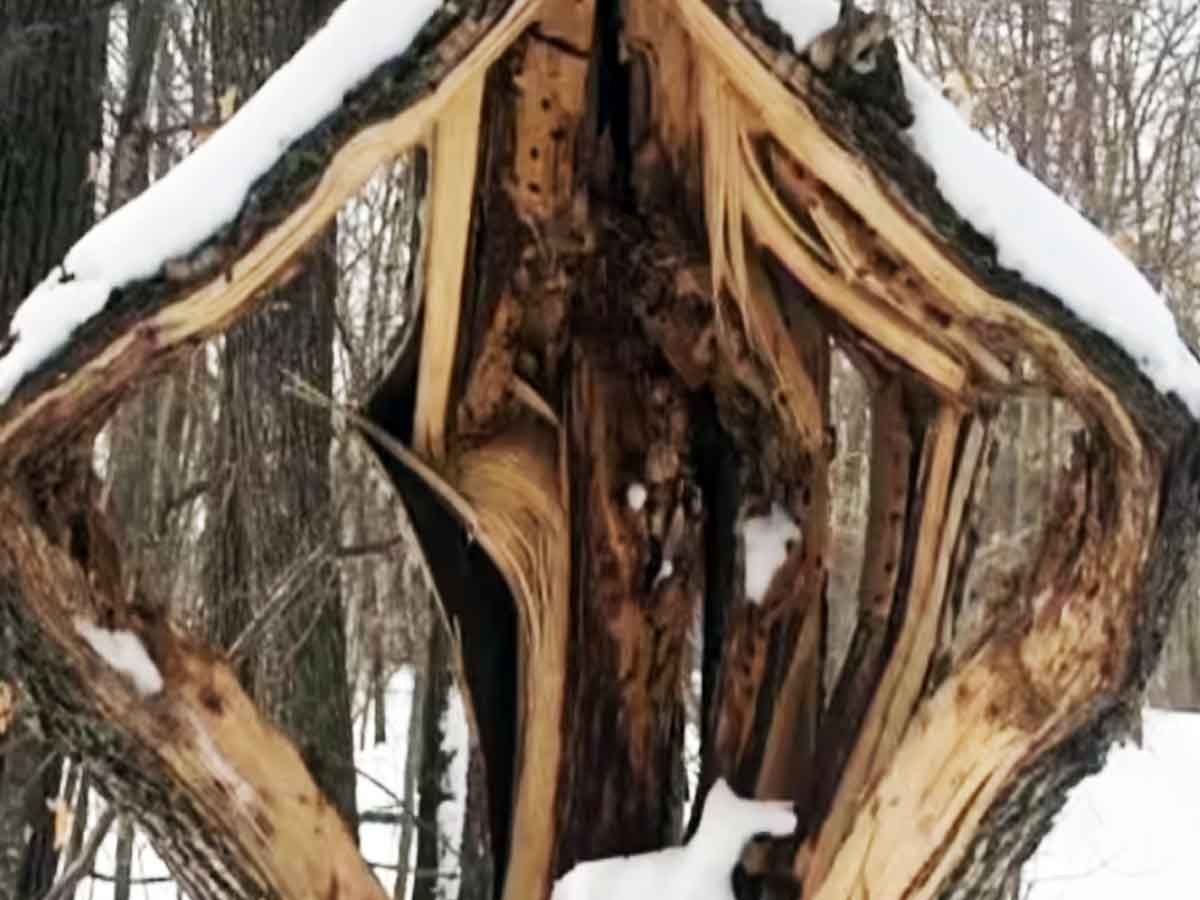
Yes, exploding trees are a documented scientific reality caused by extreme cold, wildfires, lightning, or biological seed dispersal. While they sound like folklore, the combination of internal pressure—from freezing sap, vaporizing moisture, or volatile oils—and external environmental stress can cause various tree species to rupture violently, often producing sounds comparable to gunfire or explosions.
For centuries, tales of "exploding trees" were often dismissed as exaggerations or misidentified sounds. However, as we move through 2026, advancements in dendrology (the study of wooded plants) and high-speed botanical videography have confirmed that several distinct mechanisms can cause a tree to quite literally burst. This phenomenon is not limited to a single species or a specific climate; it ranges from the frozen forests of the north to the tropical jungles of the Amazon and the fire-prone hills of Australia. Understanding whether these trees are "real" requires looking at the specific physical and chemical triggers that lead to these dramatic structural failures.
The Physics of the Frost Crack: Why Trees Explode in Winter
The most common form of a naturally "exploding" tree occurs during periods of extreme cold, a phenomenon known as a frost crack or "explosive freezing." This typically happens when temperatures drop rapidly below freezing, particularly after a period of relative warmth where the tree has begun to draw moisture upward.
The Mechanism of Radial Tension
Trees are composed of complex layers, including the outer bark, the inner phloem, and the dense xylem (wood). Wood is an anisotropic material, meaning its physical properties differ depending on the direction of the grain. When the temperature plunges, the outer layers of the tree cool and contract much faster than the protected inner core.
This differential contraction creates massive radial tension. If the stress becomes greater than the structural integrity of the wood fibers, the tree will suddenly split. Because wood is under immense tension, this split is instantaneous and releases a significant amount of kinetic energy, resulting in a loud "crack" that can be heard for miles. In some cases, if the sap within the tree freezes, it expands. Since water expands by approximately 9% when it turns to ice, the internal pressure can blow the bark clean off the trunk or cause the main stem to shatter.
Environmental Triggers in 2026
In recent years, including the erratic winters leading into 2026, many regions have experienced "flash freezes" where temperatures drop 30 or 40 degrees in a matter of hours. These events are the primary triggers for frost cracking. Deciduous trees with high sap content, such as maples, oaks, and horse chestnuts, are particularly susceptible. The sound produced is often mistaken for a gunshot or a large branch breaking, but the visual evidence—a vertical fissure running down the length of the trunk—is the tell-tale sign of a frost crack.
The Dynamite Tree: Biological Explosions for Survival
While frost cracks are a result of environmental stress, one tree has evolved to explode as part of its reproductive cycle: Hura crepitans, more commonly known as the Dynamite Tree or the Sandbox Tree.
Seed Dispersal via Fragmentation
Native to the tropical regions of North and South America, including the Amazon rainforest, the Dynamite Tree features large, pumpkin-shaped seed pods. These pods are marvels of biological engineering. As the fruit dries, the various sections (carpels) of the pod develop extreme internal tension.
When the pod reaches a critical level of dryness, it undergoes explosive dehiscence. The pod shatters with a bang as loud as a pistol shot, launching flattened seeds at speeds exceeding 150 miles per hour (240 km/h). These seeds can be projected more than 150 feet (45 meters) away from the parent tree.
Safety Concerns and Toxicity
The "explosion" isn't the only danger associated with Hura crepitans. The tree is covered in sharp spines and produces a caustic, milky sap that can cause severe skin irritation or temporary blindness upon contact. In the context of 2026 botanical safety standards, hikers in tropical preserves are often warned to keep a safe distance from these trees during the dry season when the "exploding" fruit is most active. The sheer force of the seeds is enough to cause injury to humans or animals standing in the immediate vicinity.
Wildfires and Volatile Oils: The Eucalyptus "Bomb"
In fire-prone ecosystems, such as the bushlands of Australia or the chaparral of California, trees don't just burn—they can occasionally explode. This is particularly true for species rich in volatile organic compounds (VOCs).
The Role of Cineole and Resin
Eucalyptus trees are the primary examples of this phenomenon. Their leaves and wood contain high concentrations of cineole (eucalyptus oil), which is highly flammable. During a high-intensity wildfire, the extreme heat causes these oils to vaporize before the flames even reach the tree.
This creates a cloud of flammable gas surrounding the canopy. If this gas cloud reaches its auto-ignition temperature or is touched by a stray spark, it ignites in a massive fireball. To an observer, it appears as though the tree has spontaneously exploded. Furthermore, in resinous trees like certain pines, pockets of sap can boil rapidly. If the pressure of the steam and vaporized resin exceeds the strength of the wood or bark "vessel," the tree can burst, showering the area with burning debris and contributing to the rapid spread of the fire.
Lightning Strikes: Instantaneous Vaporization
The most violent "explosion" a tree can undergo is the result of a lightning strike. This is a purely physical reaction to an incredible input of energy.
When lightning strikes a tree, the electricity typically travels through the cambium layer—the moist layer just beneath the bark. Wood is a poor conductor of electricity, but the water and sap within the tree provide a path of least resistance. The massive electrical discharge (often exceeding 30,000 amperes) heats the moisture to several thousand degrees in a fraction of a second.
From Water to Steam
This heat causes the water to undergo a phase change into steam instantaneously. Because steam occupies approximately 1,600 times the volume of liquid water, the internal pressure becomes astronomical. The result is a mechanical explosion that can strip the bark entirely, split the trunk in half, or turn the entire tree into a spray of toothpicks. In 2026, foresters still use the presence of "shatter patterns" to distinguish lightning strikes from wind damage or rot-induced falls.
Comparing Types of Exploding Trees
To better understand the differences between these phenomena, the following table breaks down the causes, sounds, and typical locations of exploding trees.
| Phenomenon | Primary Cause | Driving Force | Typical Sound | Geographic Prevalence |
|---|---|---|---|---|
| Frost Crack | Extreme Cold | Sap expansion & wood contraction | Sharp "crack" or gunshot | Temperate/Boreal forests |
| Dynamite Tree | Reproduction | Drying of seed pod (Dehiscence) | Pistol shot | Tropical/Equatorial |
| Lightning Strike | Electricity | Instant steam vaporization | Thunderous boom/shattering | Global (Storm-prone) |
| Wildfire Pop | Heat/Fire | Volatile oil ignition/Sap boiling | Whooshing roar or "pop" | Australia, California, Mediterranean |
Historical Context and Documented Accounts
The reality of exploding trees has been noted throughout history, though often shrouded in mystery. During the "Great Freeze" periods of the 19th century in North America, pioneer diaries frequently mentioned being woken in the middle of the night by sounds they described as "cannon fire" coming from the woods.
More recently, scientific studies have used acoustic emission (AE) sensors to "listen" to trees. These sensors can detect the microscopic vibrations of wood fibers snapping long before a full-scale explosion occurs. Researchers at institutions like the U.S. Forest Service have documented that drought-stressed trees are even more susceptible to these failures, as their cellular structure is already compromised, making them less able to withstand the internal pressures of freezing or heat.
In the winter of 2024–2025, several state parks in the American Midwest reported an uptick in "exploding" oaks following a series of rapid temperature swings. These events provided valuable data for 2026 arboricultural guidelines, helping urban planners choose more "thaw-hardy" species for city streets to prevent property damage from falling bark and split limbs.
Practical Considerations and Safety
If you live in an area prone to extreme weather, understanding the risks associated with exploding trees is a matter of practical safety.
- Winter Awareness: During a deep freeze, avoid standing directly under large hardwood trees. While the tree itself won't usually disappear, a frost crack can cause large pieces of bark or heavy limbs to be ejected with enough force to cause injury.
- Tropical Travel: If hiking in South American or Caribbean forests, learn to identify the Hura crepitans. Its distinctive spiked trunk is a "keep away" sign from nature. During the dry season, the sound of popping pods is a signal to keep your distance.
- Fire Safety: In wildfire-prone zones, "defensible space" guidelines often suggest removing Eucalyptus or high-resin pines from within 30 to 100 feet of a home. This is precisely because of their tendency to "crown" or explode into fireballs, which can throw embers onto rooftops.
- Property Inspection: If a tree on your property has "exploded" or cracked due to frost, it is structurally compromised. Even if it survives the winter, the crack provides an entry point for fungi, bacteria, and wood-boring insects. In 2026, it is standard practice to have an ISA-certified arborist evaluate any tree that has suffered a significant structural split.
FAQ: Common Questions About Exploding Trees
Can an exploding tree kill a person?
Yes, though it is rare. The most dangerous are lightning strikes, which can send heavy wood fragments flying at high speeds, and the Dynamite Tree, whose seeds act like organic shrapnel. Frost cracks are generally less dangerous to humans unless a large limb is dislodged.
Does the tree die after it "explodes"?
It depends on the cause. Hura crepitans remains perfectly healthy; only the fruit explodes. Lightning strikes often kill the tree or leave it so damaged that it dies within a year. Frost cracks often heal over with "rib" tissue (callus wood), though the tree will always have a structural weak point there.
How loud is an exploding tree?
It varies. A frost crack sounds like a .22 caliber rifle or a sharp handclap. A lightning strike or a large Eucalyptus gas ignition can be as loud as a professional firework or a transformer blowing out.
Are there any exploding trees in the United States?
Yes. Frost cracking is common in the Northern states and Canada. The Dynamite Tree has been introduced to parts of Florida and Hawaii. Lightning strikes occur nationwide, and Eucalyptus-related fire "explosions" are a significant concern in California and Hawaii.
Why do some trees explode and others just break?
The difference lies in internal pressure. A "break" is a mechanical failure due to external weight (like snow or wind). An "explosion" is a failure due to internal pressure (steam, ice expansion, or gas) seeking an immediate exit.
Expert Guidance for 2026
As we move further into 2026, the interaction between shifting climate patterns and forest health remains a key area of study. Trees that were once in stable climates are now facing "thermal shock," leading to higher frequencies of frost cracking. If you encounter an exploding tree phenomenon, the best action is to document it from a distance. Do not attempt to seal a frost crack yourself; trees have natural "compartmentalization" processes to deal with wounds. Instead, focus on maintaining proper hydration for your trees during the summer to ensure their cellular walls are strong enough to handle the pressures of the coming winter.
Exploding trees are not a myth—they are a vivid reminder of the incredible forces of physics and biology at work in the natural world. Whether through the violent expansion of ice or the evolutionary drive to spread seeds, these "explosions" are simply nature's way of responding to extreme internal and external pressures.