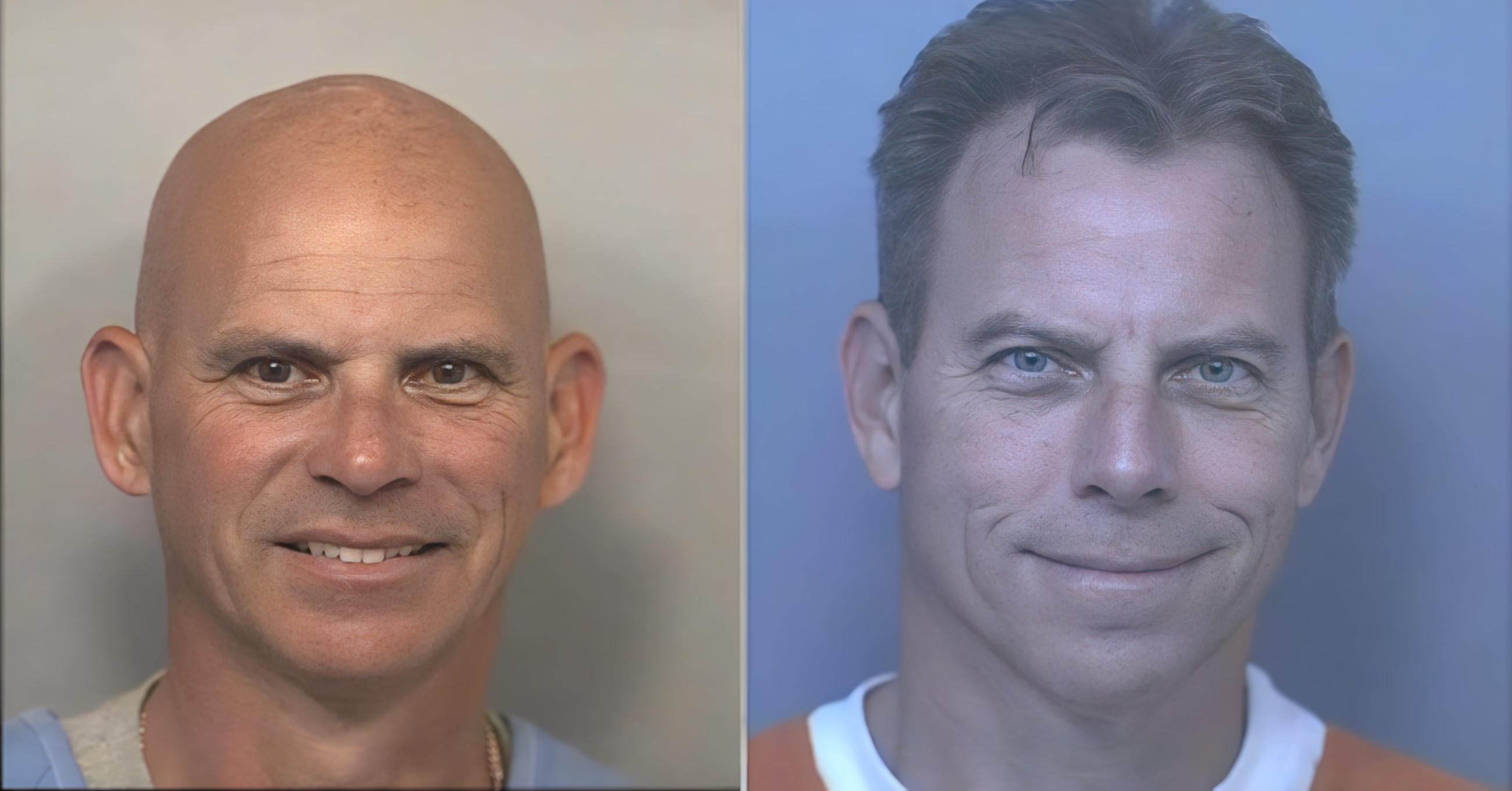
The possibility of Lyle and Erik Menendez being released from prison depends on two primary legal tracks: a recommendation for resentencing by the Los Angeles County District Attorney’s office and a petition for clemency submitted to the Governor of California. While a formal recommendation for resentencing was initiated in late 2024, as of 2026, the brothers remain incarcerated at the Richard J. Donovan Correctional Facility while the judicial system and the parole board evaluate their eligibility for release based on new evidence of historical abuse and their decades of rehabilitation.
Understanding the Legal Momentum for Release
For nearly thirty years, the case of Lyle and Erik Menendez was considered a closed chapter in American criminal history. Convicted in 1996 for the 1989 murders of their parents, Jose and Kitty Menendez, the brothers were sentenced to life in prison without the possibility of parole (LWOP). However, the legal landscape shifted dramatically between 2023 and 2025, leading to the current situation in 2026 where their release is a tangible possibility rather than a theoretical hope.
The push for release is not based on a claim of innocence regarding the killings, but rather on the argument that the brothers were victims of horrific sexual and physical abuse that should have mitigated their charges to manslaughter rather than first-degree murder. In 2026, the legal focus is on whether their original sentence remains "in the interest of justice" given the evolution of trauma-informed law and new corroborating evidence.
The 2024 Resentencing Recommendation
The most significant hurdle the brothers faced was the "Without the Possibility of Parole" stipulation in their sentence. In late 2024, then-District Attorney George Gascón filed a motion to resentence the brothers. This recommendation suggested changing their sentence from life without parole to life with the possibility of parole. Specifically, the recommendation aimed to sentence them for murder, which typically carries a 50-year-to-life term.
Because both Lyle and Erik were under the age of 26 at the time of the crimes—Lyle was 21 and Erik was 18—they qualify for "youthful offender" provisions under California law. If a judge formally accepts the resentencing recommendation, the brothers would technically be eligible for parole immediately, as they have already served over 34 years of their sentence.
Key Factors Influencing the Potential Release
Several distinct factors have converged to create the current momentum for the Menendez brothers' release. These include newly discovered evidence, changes in state law, and an unprecedented shift in public and political sentiment.
New Corroborating Evidence: The Rosselló Allegations and the Cano Letter
Two pieces of evidence that were not available during the 1996 trial have been central to the recent habeas corpus petitions.
- The Roy Rosselló Statement: In 2023, Roy Rosselló, a former member of the boy band Menudo, alleged that he was drugged and raped by Jose Menendez in the 1980s. This testimony provided the first external corroboration of Jose Menendez’s predatory behavior outside of the Menendez family.
- The 1988 Letter to Andy Cano: A letter written by Erik Menendez to his cousin, Andy Cano, approximately eight months before the murders, was discovered. In the letter, Erik alluded to the ongoing abuse he was suffering at the hands of his father. This letter is crucial because it serves as "pre-incident" evidence that the abuse claims were not fabricated as a legal strategy after the murders occurred.
Rehabilitation and Prison Conduct
A primary requirement for resentencing and parole is a demonstration of rehabilitation. During their three decades in the California Department of Corrections and Rehabilitation (CDCR), the brothers have maintained exemplary records.
- Educational Achievements: Both brothers have earned college degrees while incarcerated.
- Program Development: They launched the "Green Space" project at the Donovan facility, aimed at improving the environment for inmates, and have been active in trauma-informed peer support groups.
- Lack of Disciplinary Issues: Their records are largely free of the violence or gang involvement that often characterizes long-term incarceration in maximum-security facilities.
Legal experts argue that if the goal of the justice system is rehabilitation, the Menendez brothers represent a "model" case for successful reentry into society.
The Procedural Path to Freedom
The road to release is not a single event but a multi-step judicial and administrative process. Even with a District Attorney's recommendation, several gates must be passed.
1. The Judicial Hearing
A Superior Court judge must review the DA's recommendation. The judge considers the original trial records, the new evidence of abuse, and the brothers' behavior in prison. The judge has the authority to deny the request, modify it, or grant the resentencing. In 2026, the focus remains on the court's interpretation of whether the 1996 jury was unfairly deprived of hearing the full extent of the abuse evidence.
2. The Parole Board (BPH)
If the judge changes the sentence to "life with the possibility of parole," the case moves to the California Board of Parole Hearings (BPH). The board evaluates whether the inmates pose a current threat to public safety. Given their age and record, many legal analysts believe they would pass this stage, but the process can take several months to schedule and finalize.
3. Gubernatorial Review
The Governor of California has the power to review parole decisions for certain convictions, including murder. The Governor can uphold, reverse, or modify the board's decision. Additionally, there is a separate "Clemency" track where the Governor can commute their sentences directly, bypassing the resentencing hearings altogether.
Historical Context and Why it Matters in 2026
To understand why the question of their release is so prominent in 2026, one must look at the difference between their first trial (1993) and their second trial (1996).
The first trial resulted in a hung jury because jurors could not agree on whether the brothers acted out of fear for their lives (manslaughter) or for financial gain (murder). In the second trial, Judge Stanley Weisberg excluded much of the abuse testimony, characterizing it as irrelevant. This led to the conviction that the defense has spent decades fighting. In 2026, the legal consensus has shifted toward a more sophisticated understanding of "Battered Child Syndrome" and the psychological impact of long-term sexual trauma, which was not widely accepted in the mid-90s.
| Key Event | Date | Significance for Release |
|---|---|---|
| Murders of Jose and Kitty Menendez | August 20, 1989 | The inception of the case. |
| First Trial (Hung Juries) | 1993-1994 | Demonstrated that some jurors believed the abuse defense. |
| Second Trial (Conviction) | 1995-1996 | Resulted in LWOP sentence after abuse evidence was restricted. |
| Discovery of the Cano Letter | 2014-2015 | Provided vital "pre-crime" corroboration of abuse claims. |
| Roy Rosselló Allegations | 2023 | Added external evidence of Jose Menendez's abuse of minors. |
| DA Resentencing Recommendation | October 2024 | Officially opened the door for a sentence reduction. |
| Potential Parole Eligibility | 2025-2026 | The current window for potential release hearings. |
The Role of Public Sentiment and Media
The resurgence of interest in the Menendez case is largely attributed to the "Netflix effect." The 2024 series Monsters: The Lyle and Erik Menendez Story and the accompanying documentary brought the details of the case to a new generation.
Social media platforms like TikTok and Instagram saw a massive influx of "advocacy" content, where younger audiences, more attuned to issues of sexual abuse and mental health, began calling for the brothers' release. This public pressure created a political environment where elected officials, like the District Attorney, felt empowered (or pressured) to revisit the case. While public opinion does not legally dictate court rulings, it often influences the prioritization of cases by the DA's office and the Governor.
Potential Obstacles to Release
Despite the significant momentum, several factors could delay or prevent the release of Lyle and Erik Menendez.
Judicial Discretion
A judge is not obligated to follow the District Attorney's recommendation. If the presiding judge believes that the original jury's verdict was sound despite the exclusion of some evidence, they could maintain the current LWOP status.
Political Changes
District Attorney offices are political entities. If a new District Attorney took office with a "tough on crime" platform, they could theoretically withdraw the recommendation for resentencing if the court had not yet ruled on it. Furthermore, the Governor's office must weigh the political consequences of releasing two of the most famous convicted murderers in the state's history.
Victim Impact Statements
While many members of the Menendez extended family support the release (including Kitty Menendez’s siblings), the law requires the court to listen to all victims' perspectives. Any vocal opposition from family members or representatives of the deceased could influence the judge or the parole board.
Frequently Asked Questions
Will the Menendez brothers be released immediately?
No. Even if a judge grants the resentencing, the process typically involves a referral to the Board of Parole Hearings. This administrative process involves psychiatric evaluations and a formal hearing to ensure they are not a danger to the community. While the brothers have served enough time to be eligible, the "wheels of justice" move slowly, often taking several months.
Are they being exonerated or pardoned?
There is a difference between being released and being exonerated. Resentencing acknowledges that the original punishment was perhaps too harsh or that the legal process was flawed, but it does not erase the conviction for the killings. A pardon, which is rare, would be a complete forgiveness of the crime. The current path is focused on resentencing, not exoneration.
What happens if the Governor denies clemency?
If the Governor denies a direct clemency petition, the brothers must rely on the judicial resentencing path. If they are granted parole by the board, the Governor still has the power to block that parole. If all these avenues fail, they will continue to serve their life sentences without parole.
Why is the 2024 recommendation so important in 2026?
The 2024 recommendation was the first time in 30 years that the state (via the DA) admitted that the original sentence might be unjust. In 2026, this recommendation serves as the legal foundation for all current hearings. Without that specific filing, there would be no legal mechanism to bypass the "Life Without Parole" restriction.
Does the Roy Rosselló evidence prove they were abused?
In a legal sense, the Rosselló allegations serve as "corroborating evidence." It doesn't "prove" the brothers were abused, but it makes their testimony more credible by showing a pattern of behavior by the father. This is often enough to meet the "preponderance of evidence" standard required in many post-conviction relief hearings.
Next Steps in the Case
As we move through 2026, the legal community is closely watching the California Superior Court for a final ruling on the resentencing motion. For those following the case, the next major milestones will be:
- The Resentencing Hearing Date: This is the moment a judge will hear arguments from both the defense and the DA’s office regarding the proposed sentence change.
- The Parole Board Notification: If resentenced, the CDCR will notify the public of a scheduled parole hearing.
- The Governor’s Statement: Governor Gavin Newsom has been cautious in his public comments, but a final decision on clemency or a parole block will eventually require a formal statement from his office.
The case of the Menendez brothers remains one of the most complex intersections of trauma, criminal law, and celebrity in the American justice system. Whether they are released "soon" depends entirely on the court's willingness to re-evaluate a decades-old conviction through a modern understanding of childhood abuse.