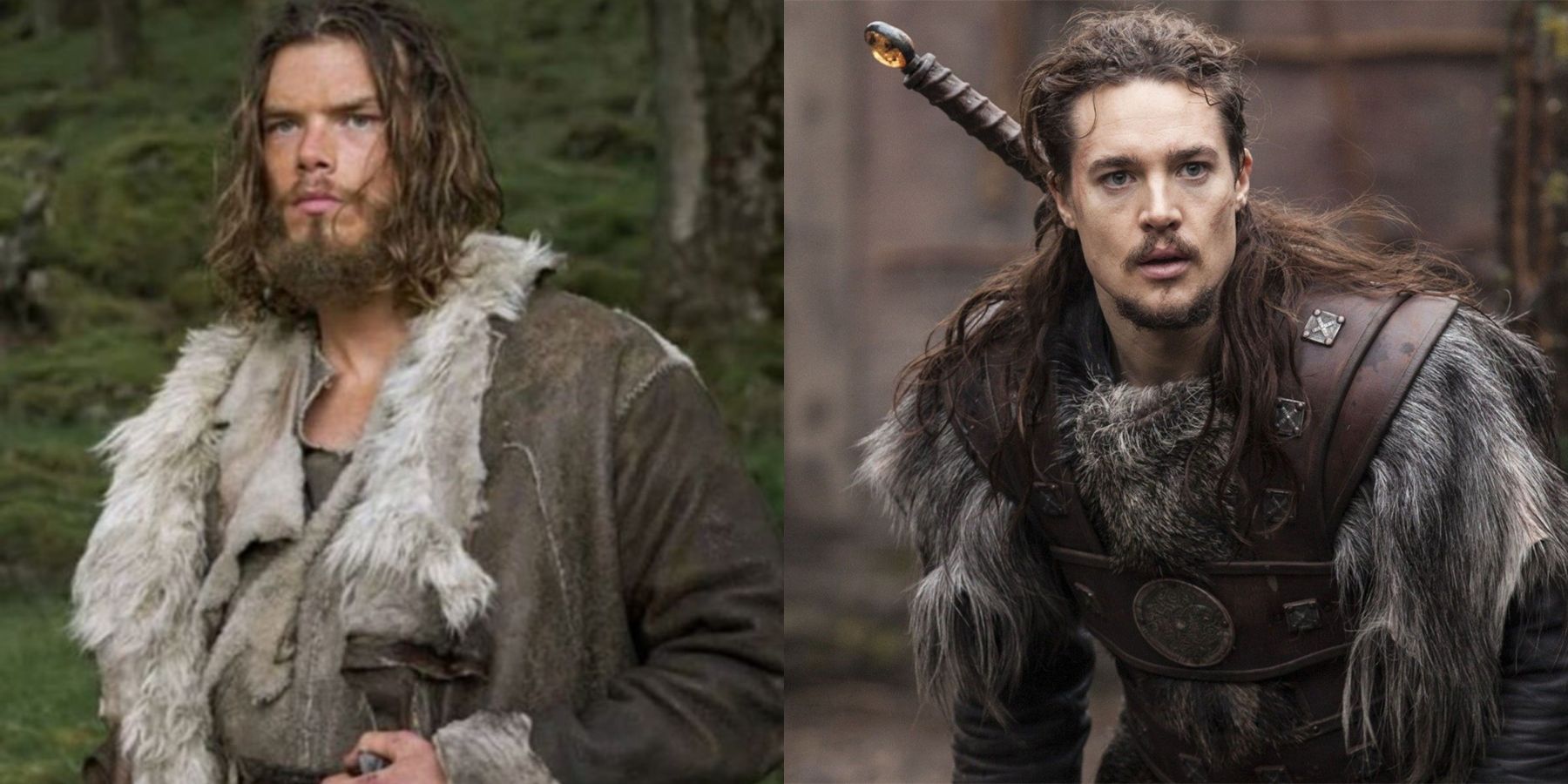
While The Last Kingdom and Vikings (including its sequel Vikings: Valhalla) share the same historical setting, era, and several real-life historical figures, they are not narratively connected. They are separate productions created by different studios, based on different source materials, and they do not share a "cinematic universe" or any continuity.
The confusion regarding a potential connection usually stems from the fact that both series depict the Viking Age in England, specifically the 9th and 10th centuries. Because they both draw from the same well of historical record—the Anglo-Saxon Chronicle and various Norse sagas—they feature the same kings, warriors, and battles. However, the interpretation of these events and characters differs significantly between the two shows.
The Production Gap: Different Creators and Origins
To understand why these shows are not connected, one must look at their creative origins. Vikings was an original creation for the History Channel, written and executive produced by Michael Hirst. Hirst, known for The Tudors, aimed to blend historical fact with Norse mythology and speculative drama. The show premiered in 2013 and ran for six seasons, eventually spawning the Netflix spin-off Vikings: Valhalla.
On the other hand, The Last Kingdom is an adaptation of a specific series of historical fiction novels. It is based on The Saxon Stories by Bernard Cornwell. The television adaptation began on BBC Two in 2015 before moving entirely to Netflix. Because The Last Kingdom is beholden to Cornwell’s specific narrative structure and the protagonist Uhtred of Bebbanburg—a fictional character placed within real history—it follows a very different path than the character-driven ensemble drama of Vikings.
In the world of television licensing and intellectual property, these are distinct entities. MGM Television and Corus Entertainment hold the reins for the Vikings franchise, while Carnival Film & Television (a division of NBCUniversal) produced The Last Kingdom. Consequently, there can be no crossover of actors, specific plot lines, or visual assets between the two.
Timeline Comparison: When Do They Take Place?
One of the most effective ways to distinguish the two shows is by examining their timelines. While there is a slight chronological overlap, they focus on different phases of the Viking expansion into England.
Vikings begins in 793 AD with the raid on Lindisfarne, the event traditionally cited as the beginning of the Viking Age. It follows the rise of Ragnar Lothbrok and eventually transitions to the exploits of his sons. By the end of the original Vikings series, we are in the mid-to-late 9th century.
The Last Kingdom begins in 866 AD, during the invasion of the Great Heathen Army. This is roughly the same time as the later seasons of Vikings. However, The Last Kingdom covers a much longer span of English history, moving through the reign of King Alfred the Great and continuing until the unification of England under King Athelstan in the 10th century.
| Feature | Vikings (Original Series) | The Last Kingdom | Vikings: Valhalla |
|---|---|---|---|
| Start Year (Approx) | 793 AD | 866 AD | 1002 AD |
| Primary Protagonist | Ragnar Lothbrok / Sons of Ragnar | Uhtred of Bebbanburg | Leif Erikson / Freydis / Harald |
| Source Material | Historical Sagas & Original Script | The Saxon Stories by Bernard Cornwell | Historical Sagas |
| Primary Antagonist | Various (King Ecbert, Aelle, etc.) | Various (Danish Warlords, Saxons) | Canute, Olaf, Saxon resistance |
| Focus | Norse perspective and expansion | Anglo-Saxon unification and Uhtred's identity | The end of the Viking Age |
| Network/Studio | History Channel / MGM | BBC / Netflix / Carnival Films | Netflix / MGM |
Shared Historical Characters: Two Versions of the Same People
Because both shows are rooted in the same historical period, they feature several of the same people. However, the characterizations are often wildly different, which serves as the clearest evidence that they do not share a universe.
King Alfred the Great
In Vikings, Alfred is depicted as the illegitimate son of Judith and the monk Athelstan. He is shown as a young man struggling with his health but possessing a keen strategic mind, eventually being mentored by Ragnar’s son, Ubbe.
In The Last Kingdom, Alfred (played by David Dawson) is a central figure for the first three seasons. He is portrayed as a pious, intellectually brilliant, and often cold monarch. His relationship with Uhtred is the emotional core of the series—a "frenemy" dynamic based on mutual need and ideological clashing. This version of Alfred is more aligned with the historical Alfred’s efforts to build the "Burh" system and create a unified "Englaland."
Ubba (Ubbe)
In Vikings, Ubbe (Jordan Patrick Smith) is one of Ragnar Lothbrok’s primary sons. He is portrayed as a thoughtful, diplomatic warrior who eventually explores North America and seeks a peaceful coexistence with the Saxons.
In The Last Kingdom, Ubba (Rune Temte) is a terrifying, superstitious Danish warlord who serves as one of the early antagonists. He is far less diplomatic and much more of a traditional "viking" marauder compared to the version seen in Hirst’s series. He is killed in a duel with Uhtred early in the series, a fate that does not occur in the Vikings timeline.
Guthrum
Guthrum appears in both shows as a leader of the Danes who eventually converts to Christianity. In Vikings, his role is relatively minor in the grand scheme of the sons' saga. In The Last Kingdom, his conversion and the Treaty of Wedmore are pivotal plot points that define the survival of Wessex.
The "Ragnar" Confusion: Lothbrok vs. Ravnsson
A major source of confusion for casual viewers is the name "Ragnar." In Vikings, the lead character is Ragnar Lothbrok, the legendary Norse hero.
In The Last Kingdom, the protagonist Uhtred is adopted by a Danish Earl named Ragnar the Fearless (Ragnar Ravnsson). This Ragnar has a son, also named Ragnar (Ragnar the Younger). While the name is the same, these are entirely different characters. Ragnar Lothbrok is a figure of semi-mythical status whose "sons" (Ivar, Ubbe, Bjorn) are the primary historical drivers. The Ragnars in The Last Kingdom are fictionalized Danish nobility created by Bernard Cornwell to serve Uhtred’s backstory.
Interestingly, The Last Kingdom mentions the "Sons of Ragnar" (Ubbe and Ivar) as separate, established historical figures within its world, further distancing the show's "Earl Ragnar" from the "Ragnar Lothbrok" of the Vikings series.
Tonality and Historical Accuracy
The two shows also differ in their "feel" and technical approach to the era. Vikings often leans into the supernatural and the mythic. It features visions of Odin, prophetic dreams, and a stylized aesthetic that includes heavy leather armor and "biker-chic" aesthetics that are more evocative than historically accurate. It treats the Norse gods as active participants in the characters' lives.
The Last Kingdom is more grounded in the "shield wall" realism characteristic of Bernard Cornwell’s writing. While Uhtred often talks about "Wyrd" (fate), the show focuses heavily on the gritty politics, the logistics of 9th-century warfare, and the religious tension between the "pious" Saxons and the "heathen" Danes. The costuming, while still taking creative liberties, tends to lean closer to the historical reality of the Anglo-Saxon period, emphasizing mail shirts and round shields.
Does Viewing Order Matter?
Since there is no narrative connection, there is no "correct" order to watch these shows. However, for those interested in the historical progression of the Viking Age, a chronological approach can be rewarding:
- Vikings (Seasons 1-3): Covers the initial raids and the rise of the Viking threat.
- Vikings (Seasons 4-6) & The Last Kingdom (Seasons 1-2): These cover the same era of the Great Heathen Army. Watching them side-by-side highlights how different creators interpret the same history.
- The Last Kingdom (Seasons 3-5) and the film Seven Kings Must Die: Covers the maturation of the Kingdom of Wessex and the eventual unification of England.
- Vikings: Valhalla: Set over 100 years after the events of The Last Kingdom, this series explores the final century of the Viking Age, leading up to the Battle of Stamford Bridge in 1066 (the traditional end of the era).
Why the Connection is Often Suggested
The primary reason these shows are frequently linked in discussion is the "Netflix Effect." In 2026, both franchises are major pillars of Netflix's historical drama library. Netflix acquired the rights to The Last Kingdom after its first season and commissioned Vikings: Valhalla as a direct sequel to the original History Channel series.
Because both shows appear in the "Because you watched..." recommendation strips and share similar keywords (Vikings, Saxons, England, Medieval), the algorithm effectively connects them in the minds of the audience. Furthermore, both shows utilize filming locations in Ireland and Hungary, leading to a similar "look" in terms of landscape and atmospheric lighting.
Frequently Asked Questions
Is Uhtred of Bebbanburg based on a real person?
Uhtred of Bebbanburg is a fictional character, but he is inspired by a real historical figure named Uhtred the Bold, who was an Ealdorman of Northumbria. However, the real Uhtred lived about a century after the events of the TV show (early 11th century). Bernard Cornwell essentially "borrowed" his own ancestor's name and title and moved him back in time to the era of Alfred the Great to tell a more compelling story of England's birth.
Is Ragnar Lothbrok in The Last Kingdom?
No. Ragnar Lothbrok is never a character in The Last Kingdom. The show features characters named Ragnar (Earl Ragnar and Ragnar the Younger), but they are not intended to be the same person as the protagonist of Vikings. In The Last Kingdom, Ragnar Lothbrok is referenced only as the father of the leaders of the Great Heathen Army (Ivar and Ubba).
Which show is more historically accurate?
Both shows take significant liberties with history. Vikings is known for compressing time—events that happened 50 years apart often occur within the same season. It also blends different historical figures into single characters. The Last Kingdom is generally considered more accurate regarding the political landscape and the specific battles of Alfred the Great’s reign, largely because it follows Bernard Cornwell’s meticulously researched (though still fictionalized) novels.
Are the actors the same in both shows?
While there is no character crossover, the small world of European period-drama acting means some minor actors have appeared in both. However, none of the lead cast members overlap in major roles. For example, Olafur Darri Olafsson appeared in The Last Kingdom as Sigrunder and also has a career spanning many international hits, but he does not play the same character in both worlds.
Do I need to watch Vikings to understand The Last Kingdom?
Not at all. Because they are unrelated stories, you can watch one without any knowledge of the other. The Last Kingdom is a self-contained story about Uhtred’s quest to reclaim his ancestral home, while Vikings is a generational saga about the legacy of a legendary family.
Recommendation for Viewers
If you enjoy the mythic, character-driven storytelling and the exploration of Norse culture and religion, start with Vikings. If you prefer a faster-paced, politically dense story focused on the birth of a nation and the struggle between two cultures with a single, consistent protagonist, The Last Kingdom is the superior choice. As of 2026, both series are complete, offering hundreds of hours of high-quality historical drama for those fascinated by the era of the Northmen.