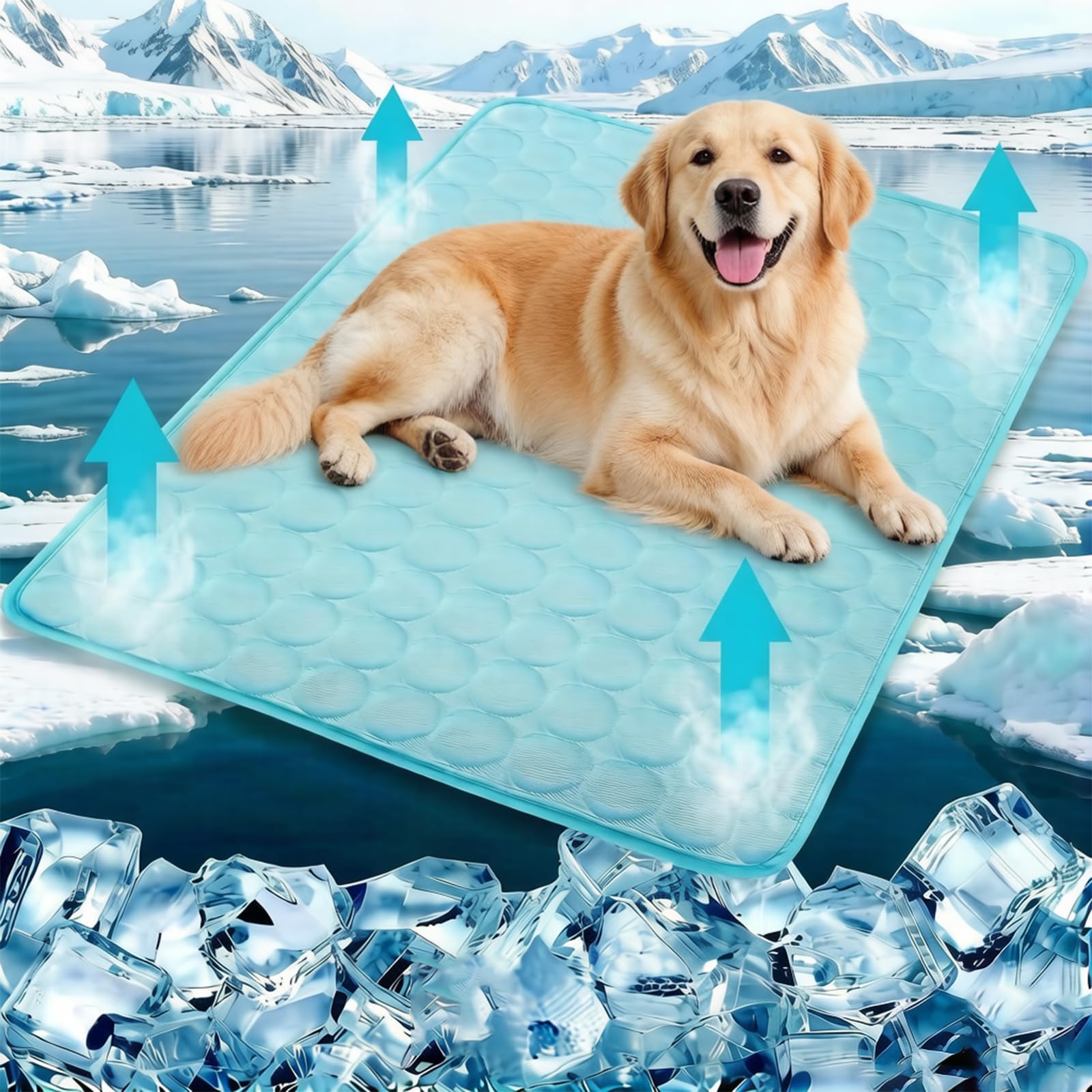
Dog cooling mats are a highly effective solution for managing canine body temperature, particularly for breeds prone to overheating. By utilizing conductive cooling or pressure-activated gels, these mats provide a dedicated surface that absorbs excess body heat, significantly reducing the risk of heatstroke and improving overall comfort during peak summer months.
Understanding the Physiology of Canine Thermoregulation
To determine if a cooling mat is a worthwhile investment for your pet in 2026, it is essential to understand why dogs struggle with heat in the first place. Unlike humans, who possess eccrine sweat glands across the majority of their skin surface, dogs primarily regulate their temperature through panting and vasodilation.
Panting facilitates evaporative cooling through the tongue and respiratory tract. However, when the ambient temperature approaches or exceeds the dog’s internal body temperature (roughly 101°F to 102.5°F), panting becomes significantly less efficient. Vasodilation involves the expansion of blood vessels, particularly in the ears and face, to bring warm blood closer to the skin's surface.
This is where cooling mats provide a critical advantage. They leverage conduction, which is the transfer of heat through direct physical contact. When a dog lies on a cool surface, the mat absorbs the heat from the dog's belly and limbs—areas where the fur is often thinner and blood vessels are more accessible—effectively lowering the core temperature more rapidly than air alone could.
How Different Types of Cooling Mats Work
Not all cooling mats are engineered the same way. As we move through 2026, the market has stabilized around three primary technologies, each offering distinct advantages depending on your dog's lifestyle and your specific environment.
1. Pressure-Activated Gel Mats
These are currently the most popular choice for pet owners. These mats contain a specialized gel—often a combination of water, salt, and a thickening agent like carboxymethyl cellulose (CMC)—that undergoes a physical reaction when pressure is applied.
- Mechanism: The gel is designed to be cooler than the surrounding air. When the dog sits or lies down, the pressure triggers the gel to absorb the heat.
- Benefits: They require no electricity, water, or refrigeration. They automatically "recharge" after a period of non-use (usually 15–30 minutes), making them ideal for constant indoor use.
- Limitations: The cooling effect is finite. Once the gel reaches a certain temperature equilibrium with the dog, it must be left unoccupied to dissipate the heat back into the air.
2. Water-Filled Mats
Often referred to as "hydro-mats," these function similarly to a water bed. You fill a durable bladder with cold water, which then acts as a massive heat sink.
- Mechanism: Water has a high thermal mass, meaning it can absorb a large amount of heat before it begins to feel warm.
- Benefits: These mats often provide more "cushion," making them a favorite for dogs with joint issues or those who prefer a softer sleeping surface.
- Limitations: They are heavy and difficult to move once filled. There is also a higher risk of mold or mildew if the water is not changed regularly or if the interior isn't treated with a mild bacteriostat.
3. Phase Change Material (PCM) Mats
PCM technology is the "high-tech" branch of pet cooling. These mats use substances that change from a solid to a liquid state at a specific temperature (usually around 70°F to 80°F).
- Mechanism: As the dog’s body heat warms the mat, the internal material absorbs that energy to change its state. This maintains a very consistent, cold temperature for a longer duration than standard gels.
- Benefits: Extremely effective in high-humidity environments where evaporative cooling (panting) fails.
- Limitations: These are generally the most expensive options and can feel quite rigid until they begin to "melt" under the dog's weight.
The Primary Benefits of Using a Cooling Mat
The decision to provide a cooling mat goes beyond mere "luxury." For many dogs, it is a vital tool for health maintenance.
Prevention of Heat-Related Illness
Heatstroke (hyperthermia) is a medical emergency that can lead to organ failure and death in minutes. A cooling mat acts as a preventative buffer. By providing a "safe zone" where the dog can proactively lower their temperature, you reduce the physiological stress on their heart and lungs. This is especially critical during the transition periods of late spring and early summer when dogs have not yet acclimated to rising temperatures.
Support for Brachycephalic Breeds
Breeds with "flat faces," such as Bulldogs, Pugs, Boxers, and Shih Tzus, suffer from Brachycephalic Obstructive Airway Syndrome (BOAS). Their shortened airways make panting—the dog's primary cooling mechanism—highly inefficient. For these breeds, a cooling mat is not just a comfort item; it is a safety necessity. Relying on conduction through a mat allows them to cool down without overworking their respiratory system.
Relief for Senior Dogs and Joint Pain
Heat can exacerbate inflammation in the joints. Senior dogs suffering from arthritis or hip dysplasia often find that a cool surface provides a mild analgesic (pain-relieving) effect. In 2026, many orthopedic dog beds now come with integrated cooling layers specifically for this reason. The coolness helps to constrict blood vessels and reduce localized swelling in the limbs.
Improved Sleep Quality
Just like humans, dogs struggle to reach deep REM sleep when they are uncomfortably warm. A dog that is constantly repositioning on the floor to find "the cold spot" is not getting restorative rest. A cooling mat provides a stable, thermally regulated environment, leading to a calmer, better-rested pet.
Comparing Cooling Mat Technologies
| Feature | Pressure-Activated Gel | Water-Filled Mat | PCM (Phase Change) |
|---|---|---|---|
| Cooling Duration | 2–4 Hours | 5–8 Hours | 4–6 Hours (Constant Temp) |
| Recharge Method | Non-use (15-30 mins) | Replace with cold water | Refrigeration or Air < 70°F |
| Portability | High (Foldable) | Low (Heavy when filled) | Medium (Rigid) |
| Durability | Moderate (Puncture risk) | High (Heavy-duty PVC) | High (Reinforced casing) |
| Price Point | Budget to Mid-range | Mid-range | Premium |
| Best For | Daily indoor use | Outdoor/Deck use | Extreme heat/High humidity |
Safety Considerations and Potential Risks
While cooling mats are generally safe, there are specific risks that owners must mitigate to ensure their dog's well-being.
Gel Toxicity and Ingestion
The most significant concern with gel-based mats is the internal contents. While most reputable manufacturers in 2026 use non-toxic, food-grade gels (like CMC), the ingestion of the casing or large amounts of gel can still cause gastrointestinal blockages or stomach upset. If your dog is a "heavy chewer" or is known for destroying their bedding, a gel mat may not be the safest choice unless supervised.
Puncture Resistance
Modern mats are typically made from high-density polyester or nylon with a PVC coating. However, a dog’s claws—especially if not regularly trimmed—can puncture the surface. Once a mat is punctured, the gel can leak, and the cooling effectiveness is lost. Always look for "puncture-resistant" ratings and check the denier count of the fabric (higher is better).
Over-Cooling and Surface Sensitivity
It is rare, but possible, for a dog to become too cold, especially if the mat has been placed in a refrigerator or freezer against manufacturer recommendations. Always ensure the dog has the option to move off the mat. Furthermore, some dogs may dislike the "squishy" or "sliding" feel of the gel. In these cases, placing a very thin cotton sheet over the mat can make the texture more palatable without significantly hindering the heat transfer.
How to Choose the Right Mat for Your Dog
To select the most effective mat in 2026, consider the following technical specifications:
- Size Calibration: The mat should be large enough for the dog to lie down with their entire belly and chest in contact with the surface. If the mat is too small, the heat transfer will be insufficient to lower the core temperature.
- Weight Capacity: Gel mats have internal "cells" or chambers. For giant breeds (Great Danes, Mastiffs), ensure the mat is rated for their weight so the gel isn't simply pushed to the edges, leaving the dog on a "dead spot" of fabric.
- Cleanability: Look for mats with antimicrobial coatings. Since these mats are often used when dogs are panting or slightly damp, they can become breeding grounds for bacteria if they aren't easy to wipe down with a damp cloth.
- Environmental Fit: If you live in a region with high humidity (over 70%), avoid "evaporative" mats that require soaking in water. These work poorly in humid air. Stick to pressure-activated gel or PCM mats for those climates.
Integration into a Heat Management Plan
A cooling mat should be one component of a broader strategy for keeping your dog safe in 2026. Experts at organizations like the American Kennel Club (AKC) and the American Veterinary Medical Association (AVMA) emphasize that no product replaces basic safety measures.
- Hydration: Always provide access to fresh, cool water.
- Airflow: Use the mat in a room with a fan or air conditioning. The mat handles conduction, while the fan handles convection, creating a synergistic cooling effect.
- Shade: Never place a cooling mat in direct sunlight. The UV rays can degrade the gel, and the dark surface of many mats can actually absorb solar heat, making it counterproductively hot.
Frequently Asked Questions
Can I put a cooling mat in the freezer?
Most pressure-activated gel mats are not designed for the freezer. Freezing can cause the gel to become crystalline and brittle, potentially damaging the internal structure and causing the outer casing to crack. Always check the manufacturer's instructions. If extra cooling is needed, 10–15 minutes in the refrigerator is usually the maximum recommended.
How long do dog cooling mats last?
With proper care, a high-quality cooling mat can last 2 to 3 years. The lifespan is primarily determined by the integrity of the outer fabric and the chemical stability of the gel. Storing the mat flat in a cool, dry place during winter months will help prevent the gel from drying out or clumping.
Are cooling mats safe for puppies?
Cooling mats are safe for puppies, but only under strict supervision. Puppies are much more likely to chew on the mat during their teething phase. Because their bodies are smaller, they also lose heat more rapidly, so ensure they can easily crawl off the mat if they become too cold.
My dog won't sit on the mat. What should I do?
Some dogs are wary of new textures. Try placing the mat in their favorite sleeping spot or covering it with a familiar, thin towel. You can also use positive reinforcement by placing low-calorie treats on the mat to encourage them to explore the surface.
Do cooling mats work for long-haired dogs?
Yes, though the effect may be slightly slower than on short-haired breeds. The dog's weight still compresses the fur, allowing the mat to draw heat away. For very fluffy breeds like Malamutes or Chow Chows, the cooling mat is most effective when they lie on their stomachs, where the fur is naturally thinner.
Final Recommendations
In 2026, cooling mats remain one of the most practical and cost-effective tools for pet thermoregulation. If you own a brachycephalic breed, a senior dog, or live in a climate where summer temperatures regularly exceed 80°F, a pressure-activated gel mat is highly recommended. It provides a passive, energy-free way to protect your pet from the physiological strain of heat.
Next Action: Measure your dog while they are lying in their most common sleeping position (stretched out). Use these dimensions to select a mat that covers at least 80% of their body length to ensure maximum conductive efficiency.