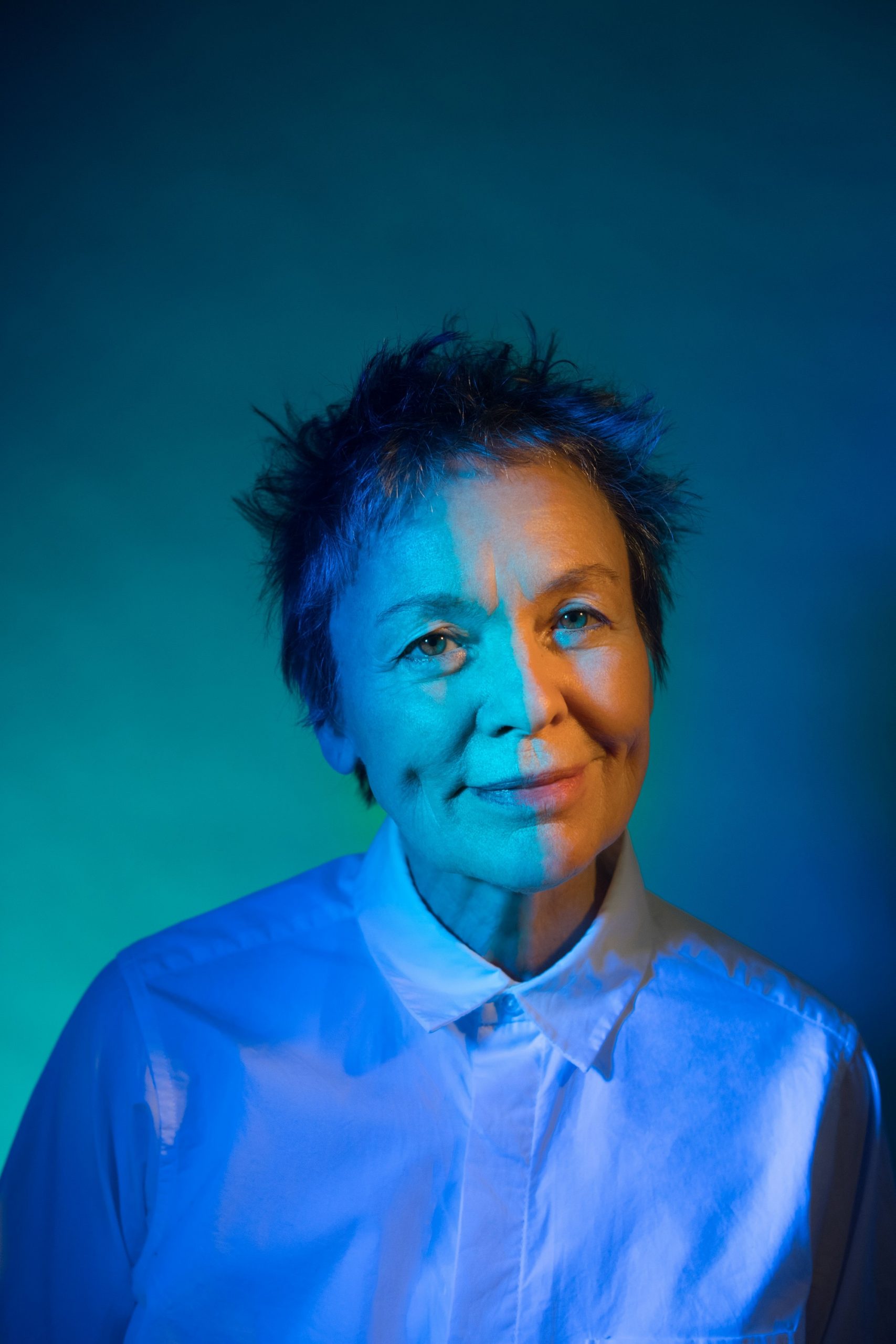
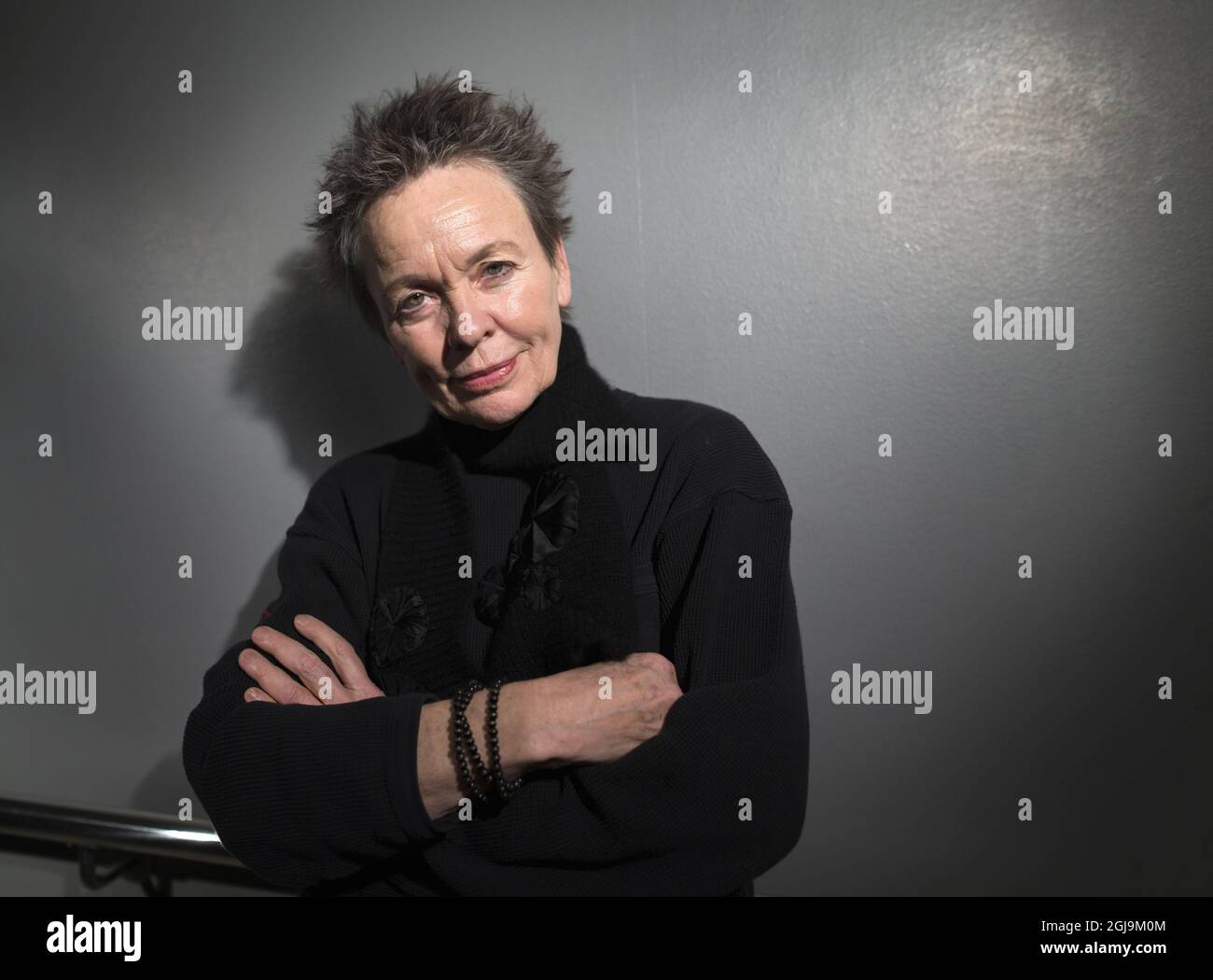
Laurie Anderson is a preeminent American multimedia artist, composer, and musician whose career spans over five decades of innovation in electronic music, performance art, and digital storytelling. As of 2026, she remains a central figure in the avant-garde, bridging the gap between high-art installations and popular culture through her pioneering use of technology and narrative.
Foundations of the New York Avant-Garde
Laurie Anderson’s journey began in the vibrant experimental scene of 1970s New York City. Unlike many of her contemporaries who confined themselves to a single medium, Anderson treated the violin, the spoken word, and the projector as interchangeable tools. Her early work was characterized by street performances and conceptual "interventions" that challenged the traditional boundaries of the gallery space.
One of her most famous early pieces involved her playing the violin while wearing ice skates embedded in blocks of ice. The performance ended only when the ice melted, a literal representation of the ephemeral nature of time and art. This period established her as a master of the "long-form" narrative, where the performance was not just a show but an inquiry into human perception. Her background in sculpture and art history informed her spatial awareness, allowing her to transform a stage into a multi-dimensional canvas.
During these formative years, Anderson became a fixture at venues like The Kitchen and Artists Space. She collaborated with other luminaries of the era, including Philip Glass and William S. Burroughs. Her work during this decade was primarily focused on the deconstruction of language. She explored how words could be manipulated, looped, and distorted to change their meaning, a theme that would eventually lead to her technological breakthroughs in the 1980s.
The Technological Breakthrough: "O Superman" and Big Science
In 1981, Laurie Anderson achieved an improbable feat: a nearly eight-minute avant-garde track titled "O Superman" reached number two on the UK Singles Chart. The song, featuring a repetitive, synthesized vocal loop and a vocoder-processed voice, introduced the mainstream to her unique blend of political commentary and sonic experimentation.
The success of "O Superman" led to a multi-album deal with Warner Bros. Records, a rare occurrence for a performance artist. Her debut album, Big Science (1982), remains a cornerstone of electronic music. The album serves as a critique of American industrialism, technology, and the isolation of modern life. It utilized the vocoder not as a gimmick, but as a way to create the "Voice of Authority," a pitch-shifted persona that Anderson would use throughout her career to represent patriarchal or institutional power.
The impact of Big Science cannot be overstated. It proved that experimental music could be intellectually rigorous while remaining accessible enough for a broad audience. The tracks were vignettes of American life—ominous, humorous, and deeply observant. This era also saw the development of her massive stage production, United States I-IV, a seven-hour performance that utilized film, animation, and custom-built electronic instruments to document the state of the nation.
Custom Instrumentation and Sonic Innovation
Throughout her career, Anderson has been as much an inventor as she is an artist. Dissatisfied with the limitations of standard instruments, she began modifying them to suit her narrative needs. Her most famous invention is the tape-bow violin, created in 1977. Instead of using horsehair on the bow, she used a strip of magnetic audiotape, and she replaced the violin strings with a tape head. This allowed her to "play" recorded sounds—often fragments of speech—by moving the bow across the bridge.
Other notable technological contributions include:
- The Talking Stick: A six-foot-long MIDI controller developed in collaboration with Interval Research. It functions as a wireless granular synthesizer, allowing her to break sounds into tiny "grains" and redistribute them in real-time.
- The Neon Violin: A transparent violin with internal neon lighting that functioned both as a musical instrument and a visual lighting element on stage.
- The Self-Playing Violin: A violin equipped with an internal speaker that could "sing" back to the performer, creating a duet between the human and the machine.
These tools were never intended to show off technological prowess for its own sake. Instead, Anderson used them to further her storytelling. In her view, technology was a "mirror" that could reflect the complexities of the human condition. By 2026, many of these inventions have been archived and displayed in major museums, such as the Smithsonian and the MoMA, as essential artifacts of the digital revolution in art.
The NASA Residency and Scientific Inquiry
In 2002, Laurie Anderson became the first (and only) artist-in-residence at NASA. The appointment was controversial at the time, with some members of the U.S. Congress questioning the use of funds for an artist to "roam" around space centers. However, the residency resulted in The End of the Moon, a profound solo performance that explored the relationship between science, mythology, and the human desire for exploration.
During her time at NASA, Anderson visited various facilities, including the Jet Propulsion Laboratory (JPL) and the Hubble Space Telescope control center. She was fascinated by the language of scientists—how they described the vastness of the universe in technical but often poetic terms. Her work from this period shifted her focus toward the environment and the ethics of technological progress. She began to ask: what does it mean to be a "pioneer" in a world that is increasingly fragile?
This residency solidified her reputation as a "polymath" who could traverse the worlds of hard science and abstract art. It also set a precedent for future collaborations between scientific institutions and the arts, proving that creative inquiry could provide a necessary counterweight to empirical data.
Narrative Evolution: From Heart of a Dog to Amelia
Storytelling has always been the spine of Anderson’s work. In the 21st century, her narratives have become more personal and elegiac. Her 2015 film, Heart of a Dog, is a meditation on death, memory, and the philosophy of Buddhism, centered around the life of her rat terrier, Lolabelle. The film also touches on the loss of her husband, the legendary musician Lou Reed, and her mother.
In 2024, Anderson released Amelia, an ambitious orchestral and electronic album that chronicles the final flight of aviator Amelia Earhart. The project, which was over a decade in the making, features the Brno Philharmonic and utilizes Earhart’s own pilot logs and telegrams as lyrical source material. Amelia represents a culmination of Anderson’s interests: flight, technology, female agency, and the tragedy of the unknown.
By 2026, Amelia is regarded as one of her most cohesive works, blending the avant-garde electronics of her youth with the sophisticated orchestration of her later years. It demonstrates her ability to inhabit a historical figure while maintaining her own distinctive voice. The album's success also highlights her enduring relevance in the streaming era, where her long-form compositions continue to find new audiences.
Immersion and Virtual Reality
In recent years, Anderson has moved away from traditional stage performances toward immersive environments. Working with Taiwanese artist Hsin-Chien Huang, she has created several award-winning Virtual Reality (VR) experiences, including The Chalkroom and To the Moon.
In The Chalkroom, the viewer is placed in a massive dark space where every surface is covered in chalk drawings and words. The viewer can "fly" through the space, interacting with the stories hidden in the walls. This transition into VR was a natural progression for Anderson; it allowed her to place the audience inside her narratives rather than having them watch from a distance.
As of 2026, she is exploring the use of Artificial Intelligence (AI) to create generative art. She has experimented with AI models trained on her own vast archives of writing and music, as well as the archives of Lou Reed. These projects raise complex questions about authorship and the afterlife of creative work, topics that Anderson approaches with her signature mix of curiosity and skepticism.
Summary of Key Works and Milestones
| Era | Primary Focus | Notable Works | Key Innovation |
|---|---|---|---|
| 1970s | Performance Art | Duets on Ice, Institutional Work | Tape-bow violin |
| 1980s | Electronic Pop | Big Science, "O Superman" | Vocoder as "Voice of Authority" |
| 1990s | Multimedia Tours | The Nerve Bible, Bright Red | The Talking Stick |
| 2000s | Institutional Inquiry | The End of the Moon, Homeland | NASA Artist Residency |
| 2010s | Film & Personal Narrative | Heart of a Dog, Landfall | Collaboration with Kronos Quartet |
| 2020s | Immersive Tech & History | Amelia, The Chalkroom (VR) | AI-driven archival art |
The "Laurie Anderson Approach" to Art
What distinguishes Laurie Anderson from other multimedia artists is her specific approach to the audience. She rarely lectures; instead, she "converses." Her performances often involve her sitting at a desk, backlit by a screen, speaking in a calm, melodic tone that belies the weight of her subject matter.
She utilizes several recurring techniques:
- Filters and Pitch-Shifting: Using technology to change her gender or age, allowing her to speak from multiple perspectives.
- The "Slow Build": Starting with a mundane observation and gradually weaving it into a complex philosophical or political argument.
- Humor as a Subversive Tool: Using irony and wit to tackle "difficult" subjects like surveillance, war, and the death of the American Dream.
Her influence is visible in the work of contemporary artists across genres, from musicians like Björk and St. Vincent to digital artists and playwrights. She taught a generation of creators that "multimedia" is not about using every tool available, but about finding the right tool for the story.
Frequently Asked Questions
What is Laurie Anderson's most famous song?
Her most famous work is "O Superman," released in 1981. It is a minimalist, vocoder-heavy track that explores themes of power, technology, and motherhood. Despite its experimental nature, it became an international hit and launched her career beyond the New York avant-garde scene.
Was Laurie Anderson really the only NASA artist-in-residence?
Yes. Anderson was appointed in 2002 as NASA’s first artist-in-residence. Shortly after her residency, the program was discontinued following political scrutiny regarding its funding and purpose. However, her work during this time remains a landmark in the intersection of art and science.
What instruments did Laurie Anderson invent?
She is credited with inventing or co-inventing several electronic instruments, most notably the tape-bow violin (which uses magnetic tape instead of horsehair) and the Talking Stick (a MIDI controller used for granular synthesis). She often collaborates with engineers to push the boundaries of what musical hardware can do.
Is Laurie Anderson still active in 2026?
Yes, Laurie Anderson remains highly active in 2026. Her recent work focuses on the integration of Artificial Intelligence and Virtual Reality into performance art. She also continues to release music, such as her 2024 album Amelia, and oversees the legacy of her late husband, Lou Reed.
How did her marriage to Lou Reed impact her work?
While both were established artists long before they met, their partnership (which began in the 1990s and lasted until Reed's death in 2013) led to several collaborations. Their influence on each other was more ideological than stylistic, with both artists sharing a deep commitment to truth-telling and boundary-breaking in their respective fields.
Recommendations for Experiencing Her Work
To truly understand Laurie Anderson, one should start with her 1982 album Big Science. It provides the foundational aesthetic of her career. For those interested in her narrative style, the film Heart of a Dog (available on various streaming platforms) offers an intimate look at her philosophical outlook.
If you are a student of technology or digital art, seek out her VR installations such as The Chalkroom. Many of these are now hosted as permanent or rotating exhibits in international digital art centers. Finally, her 2024 album Amelia is essential listening for anyone interested in how traditional orchestration can be blended with modern electronic storytelling.
For further information on her current exhibitions and archival projects, consult official resources: