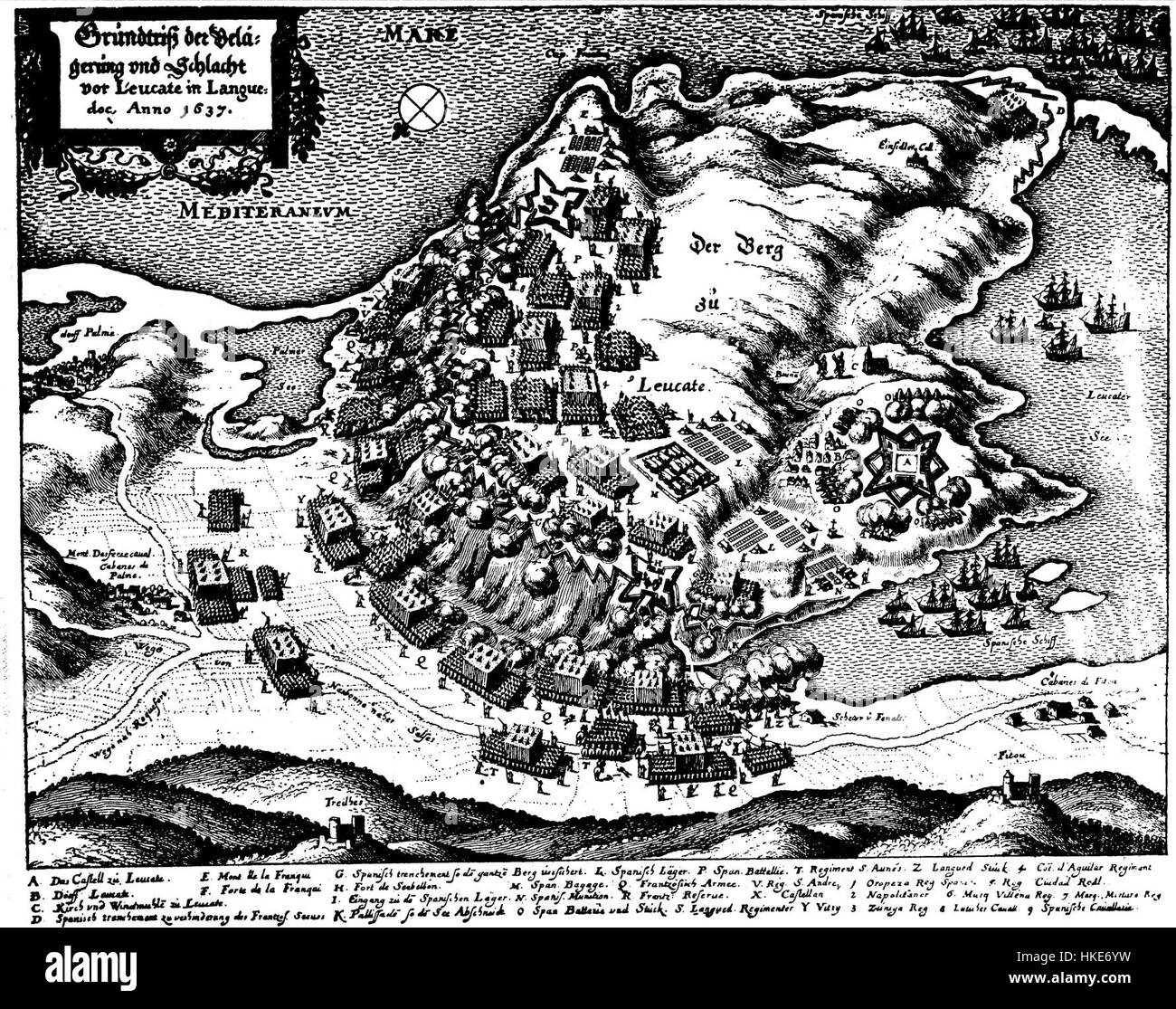
Artistic styles through history serve as a visual record of the human experience, reflecting shifts in religion, philosophy, politics, and technology. By examining examples ranging from the structured harmony of the High Renaissance to the emotional turbulence of Expressionism, we can track how creators have interpreted reality, emotion, and the abstract over thousands of years.
The Foundation of Visual Language: Prehistoric and Ancient Styles
The history of artistic styles begins long before written records, rooted in the fundamental human need to communicate and document. Prehistoric art, most famously represented by the Paleolithic cave paintings in Lascaux, France, and Altamira, Spain, utilized natural pigments to depict animals and hunting scenes. These works were not merely decorative; they likely served ritualistic or educational purposes, establishing the earliest "style" as one of naturalistic symbolism.
As civilizations consolidated, art became a tool for power and the divine. In Ancient Egypt, the style remained remarkably consistent for nearly 3,000 years. It was characterized by "frontalism," where the head is in profile but the body faces forward. This was not due to a lack of skill, but a desire for conceptual clarity—showing each part of the body from its most identifiable angle to ensure the soul's integrity in the afterlife.
The transition to Classical Greece marked a radical shift toward humanism and idealism. Sculptors like Polykleitos developed the "Canon," a mathematical set of proportions designed to create the perfect human form. This period introduced contrapposto, a pose where the weight is shifted onto one leg, creating a naturalistic "S" curve in the torso. Roman art later adopted these Greek ideals but added a layer of verism, or hyper-realism, particularly in portraiture, to emphasize the age and experience of political leaders.
The Medieval Period: Spiritual Symbolism and Architectural Grandeur
Following the fall of the Western Roman Empire, artistic styles shifted away from physical realism toward spiritual representation. During the Middle Ages, the goal of art was to instruct the faithful and glorify the divine, leading to a rejection of three-dimensional depth in favor of flat, iconic imagery.
Romanesque Art (c. 1000–1150)
Romanesque style is characterized by its "monastic" feel—heavy, solid, and fortress-like. In architecture, this meant thick walls, rounded arches, and small windows. In visual art, figures were often elongated or distorted to fit within architectural frames (such as the tympanum above cathedral doors), emphasizing a hierarchy where Christ or the saints dominated the composition.
Gothic Art (c. 1150–1400)
The Gothic style emerged as a pursuit of "light and height." The invention of the pointed arch, the rib vault, and the flying buttress allowed cathedrals to reach unprecedented heights and feature massive stained-glass windows. This period saw a gradual return to naturalism; figures in manuscripts and sculptures began to interact with one another with more realistic gestures and expressions, laying the groundwork for the Renaissance.
The Renaissance: Perspective, Humanism, and the Rebirth of Realism
The Renaissance (meaning "rebirth") was an era of profound intellectual and artistic achievement that began in 14th-century Italy. This period marked the transition from the Middle Ages to Modernity, driven by the philosophy of Humanism, which prioritized human logic and the physical world over purely spiritual interpretations.
The Invention of Linear Perspective
One of the most significant technical developments in art history occurred during the Early Renaissance: the codification of linear perspective by Filippo Brunelleschi and Leon Battista Alberti. This mathematical system allowed artists to create the illusion of three-dimensional space on a flat surface using a vanishing point. Masaccio’s The Holy Trinity is often cited as the first painting to master this technique.
High Renaissance Mastery
By the late 15th and early 16th centuries, artists like Leonardo da Vinci, Michelangelo, and Raphael reached a pinnacle of technical execution. Key stylistic markers of this era include:
- Sfumato: A technique used by Leonardo to blur the edges of forms, creating a smoky, atmospheric effect (seen clearly in the Mona Lisa).
- Chiaroscuro: The use of strong contrasts between light and dark to give figures a sense of volume and drama.
- Pyramidal Composition: Arranging subjects within a triangle to create a sense of stability and balance.
The Drama of the Baroque and the Elegance of Rococo
As the 17th century began, the balanced calm of the Renaissance gave way to the Baroque style, a movement fueled largely by the Catholic Church’s Counter-Reformation. The goal was to inspire awe and religious fervor through grandiosity and intense emotion.
Baroque art is defined by movement and "theatricality." Artists like Caravaggio pioneered tenebrism, a heightened form of chiaroscuro where the subject is bathed in a harsh spotlight against an impenetrable dark background. In sculpture, Bernini’s The Ecstasy of Saint Teresa captures a moment of intense spiritual and physical climax, breaking the "fourth wall" of the altar to involve the viewer.
By the early 18th century, the heavy drama of the Baroque softened into the Rococo. Originating in France, Rococo was the style of the aristocracy, focusing on themes of love, playfulness, and nature. It is characterized by pastel colors, asymmetrical C-curves, and ornate gold leaf. While Baroque was grand and public, Rococo was intimate and decorative.
Neoclassicism vs. Romanticism: The Ideological Struggle
The late 18th and early 19th centuries saw a stylistic tug-of-war between the head and the heart, reflecting the Enlightenment and the subsequent reaction against it.
Neoclassicism (c. 1760–1830)
Neoclassicism was a return to the "noble simplicity and quiet grandeur" of Ancient Greece and Rome. Driven by the discovery of Pompeii and the French Revolution, artists like Jacques-Louis David used clean lines, invisible brushstrokes, and heroic subject matter to promote civic virtue and rationality.
Romanticism (c. 1790–1850)
In contrast, Romanticism championed individual emotion, the sublime power of nature, and the irrational. Artists like Caspar David Friedrich and J.M.W. Turner moved away from rigid structures. Their work often featured dramatic landscapes where humans appeared small and insignificant against the forces of nature, or explored "exotic" and macabre themes.
The Dawn of Modernism: Realism and Impressionism
The mid-19th century introduced a radical idea: art should depict the "now." This was the beginning of Modernism, a broad movement that challenged traditional academic standards.
Realism, led by Gustave Courbet, rejected the idealized subjects of Neoclassicism and the drama of Romanticism. Courbet famously stated, "Show me an angel and I’ll paint one." Instead, he painted peasants, laborers, and the mundane reality of French provincial life, often on a scale previously reserved for kings and gods.
Impressionism took this interest in modern life and added a scientific fascination with light and color. In the 1870s, Claude Monet, Pierre-Auguste Renoir, and Camille Pissarro began painting en plein air (outdoors), aided by the invention of tube paints. They used short, "broken" brushstrokes to capture the fleeting effects of light at specific times of day. Initially mocked by critics for looking "unfinished," Impressionism eventually redefined the boundaries of what a painting could be.
The 20th Century: Fragmentation and Abstraction
The 20th century saw a rapid acceleration of stylistic evolution, influenced by the traumas of world wars, the rise of psychology, and the industrial revolution.
- Cubism (1907–1914): Developed by Pablo Picasso and Georges Braque, Cubism dismantled objects into geometric shapes and reassembled them, showing multiple viewpoints simultaneously. This was a direct rejection of the single-point perspective that had dominated art since the Renaissance.
- Surrealism (1920s–1950s): Influenced by Sigmund Freud, Surrealists like Salvador Dalí and René Magritte sought to channel the unconscious mind. Their style often combined hyper-realistic techniques with dreamlike, illogical subject matter.
- Abstract Expressionism (1940s–1950s): After World War II, the center of the art world shifted from Paris to New York. Jackson Pollock and Mark Rothko moved away from representation entirely, focusing instead on the physical act of painting (action painting) or the emotional resonance of pure color fields.
Identifying Artistic Styles: A Comparative Summary
To better understand these transitions, the following table compares key movements across several critical dimensions.
| Movement | Approximate Dates | Core Philosophy | Primary Technique | Key Example |
|---|---|---|---|---|
| Renaissance | 1400–1600 | Humanism & Rationality | Linear perspective, Sfumato | The School of Athens (Raphael) |
| Baroque | 1600–1750 | Emotion & Grandeur | Tenebrism, Dynamic motion | The Night Watch (Rembrandt) |
| Neoclassicism | 1760–1830 | Logic & Virtue | Smooth finish, Clear lines | Oath of the Horatii (David) |
| Impressionism | 1867–1886 | Capturing the Moment | Broken brushstrokes, Color mixing | Impression, Sunrise (Monet) |
| Surrealism | 1924–1966 | The Unconscious Mind | Unexpected juxtapositions | The Persistence of Memory (Dalí) |
| Pop Art | 1950s–1970s | Consumer Culture | Mass production techniques | Campbell's Soup Cans (Warhol) |
Contemporary Art in 2026: The Digital and Global Shift
As of 2026, the definition of an "artistic style" has become increasingly fluid. The contemporary era is characterized by Pluralism, where no single style or medium dominates. However, several significant trends define the current landscape:
- Digital Integration: The maturation of AI-assisted art and VR/AR installations has created a style often termed "New Aesthetic," characterized by glitches, algorithmic patterns, and immersive environments.
- Post-Colonial Narratives: Modern curation in 2026 emphasizes the "Global South," integrating traditional indigenous techniques with contemporary socio-political themes.
- Sustainable Materialism: As climate concerns peak, many artists have shifted to bio-materials and recycled components, where the medium itself conveys the message of environmental stewardship.
Frequently Asked Questions
How do artistic styles evolve from one to the next?
Styles often evolve as a reaction to the preceding movement. For example, the Rococo was a lighthearted reaction to the heavy drama of the Baroque, while the Neoclassical movement was a stern reaction against the perceived frivolity of the Rococo. Social changes, such as the Industrial Revolution or the invention of photography, also force artists to redefine their purpose and techniques.
What is the difference between Modern Art and Contemporary Art?
In art history, Modern Art refers to a specific period roughly from the 1860s to the 1970s, characterized by the rejection of traditional styles and the experimentation with abstraction. Contemporary Art refers to the art produced from the late 20th century to the present day (including 2026), which focuses on diversity, technology, and global identity.
Why is the Renaissance considered the most important period for artistic style?
The Renaissance is pivotal because it established the technical foundations—such as perspective, anatomy, and oil painting—that would dominate Western art for 500 years. It also shifted the status of the artist from an anonymous craftsman to an intellectual creator, a concept that persists today.
Can an artist belong to multiple styles?
Yes, many artists transition through several styles during their careers. Pablo Picasso is the most famous example, moving through his Blue Period (Somber Realism), Rose Period, Cubism, and even a Neoclassical phase.
How has technology influenced artistic styles throughout history?
Technology has always been a driver of style. The development of oil paint in the Northern Renaissance allowed for more detail and depth than tempera. The invention of the camera in the 19th century pushed painters away from realism toward Impressionism and Abstraction, as they no longer needed to provide purely "factual" records of people and events.
Practical Recommendation for Further Exploration
To truly understand artistic styles, one must experience the scale and texture of the works in person. If you are beginning your journey into art history in 2026, start by visiting major institutional archives that offer comprehensive digital and physical chronologies. The Metropolitan Museum of Art's Heilbrunn Timeline of Art History remains the gold standard for verified historical contexts. Additionally, many museums now offer "Style Reconstruction" apps that allow you to view a painting through various historical lenses using augmented reality, providing a tactile sense of how a Renaissance master might have approached a Cubist subject.