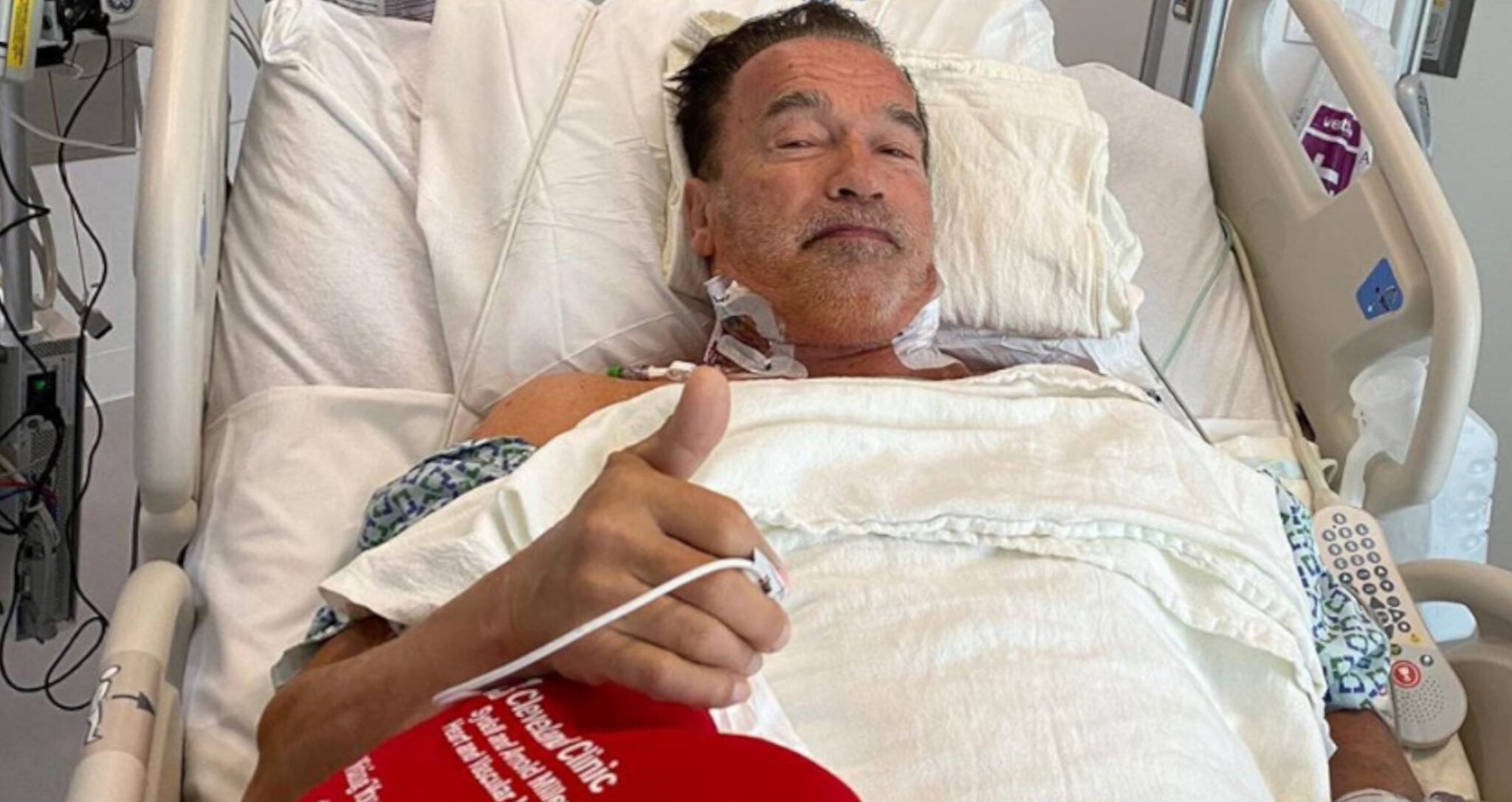
As of 2026, Arnold Schwarzenegger remains in stable health and is active following his most significant recent medical intervention, the successful implantation of a pacemaker in March 2024. He continues to follow a structured fitness regimen and manages his congenital heart condition with regular monitoring, having fully recovered from the complications of scar tissue that necessitated his last hospital stay.
Arnold Schwarzenegger, the legendary bodybuilder, action icon, and former Governor of California, has become as well known for his resilience in the face of cardiac challenges as he is for his cinematic "Terminator" persona. Given his age and high-profile history of heart surgeries, fans frequently seek updates on his condition. To understand his current status in 2026, one must look at the trajectory of his cardiac health, which spans nearly three decades of proactive medical management.
The 2024 Pacemaker Procedure: The Most Recent Milestone
In March 2024, Schwarzenegger surprised his global audience by revealing on his podcast, "Arnold’s Pump Club," that he had undergone surgery to receive a pacemaker. This procedure was not an emergency in the traditional sense but a necessary response to a physiological consequence of his previous open-heart surgeries.
The decision to install the device came after doctors identified an irregular heartbeat caused by scar tissue from his previous procedures. In the years following his 2020 aortic valve replacement, medical professionals monitored his heart rate closely. By early 2024, the "internal wiring" of his heart was no longer communicating efficiently, a common long-term side effect for patients who have undergone multiple cardiac interventions.
The pacemaker was installed at the Cleveland Clinic, the same institution that has handled his previous major heart surgeries. Schwarzenegger joked that he was becoming more like his "Terminator" character by having a "machine part" installed. The procedure was minimally invasive compared to his past surgeries, and he was able to return to public life and non-strenuous work activities within a week.
A Legacy of Cardiac Resilience: Timeline of Major Surgeries
Schwarzenegger’s heart issues are not a result of lifestyle choices or steroid use, as some critics have speculated, but rather a congenital condition known as a bicuspid aortic valve. In a normal heart, the aortic valve has three leaflets (cusps) that open and close to regulate blood flow. A bicuspid valve only has two, which can lead to stenosis (narrowing) or regurgitation (leaking) over time.
1997: The Initial Pulmonic Valve Replacement
His first major surgery occurred in 1997. At the time, Schwarzenegger opted for a Ross Procedure to replace his failing aortic valve. This involved moving his own healthy pulmonic valve to the aortic position and using a donor valve to replace the pulmonic valve. While successful, doctors warned him at the time that these valves would likely need replacement in the future, as biological valves have a finite lifespan, typically 10 to 20 years.
2018: The Emergency Pulmonic Replacement
In March 2018, Schwarzenegger returned to the hospital for a scheduled catheter valve replacement. However, complications arose during the procedure, necessitating an emergency open-heart surgery. This was a critical moment in his health history, as the "planned" non-invasive procedure turned into a life-saving operation to replace the pulmonic valve that had been installed in 1997.
2020: The Aortic Valve Replacement
Two years later, in October 2020, Schwarzenegger returned to the Cleveland Clinic to have his aortic valve replaced. Unlike the 2018 surgery, this procedure went exactly as planned. He received a new aortic valve to replace the one from his 1997 Ross Procedure. His recovery was remarkably fast for a man in his 70s, and he was seen walking the streets of Cleveland shortly after being discharged.
The Science of Scar Tissue and Cardiac Pacing
To understand why a man as fit as Schwarzenegger required a pacemaker in 2024, it is essential to look at the "electrical" side of the heart. While his previous surgeries focused on the "plumbing" (the valves), the repeated surgeries created scar tissue within the heart muscle.
The heart’s rhythm is controlled by electrical impulses. When scar tissue forms near the sinoatrial (SA) node or the atrioventricular (AV) node—the heart's natural pacemakers—it can block or delay these signals. This leads to arrhythmias or bradycardia (a slow heart rate). For Schwarzenegger, the cumulative effect of three major open-heart surgeries meant that his heart's natural rhythm was no longer reliable.
The modern pacemaker installed in 2024 is a sophisticated device that monitors the heart's electrical activity 24/7. It only "fires" when it detects that the heart is skipping a beat or beating too slowly. For an athlete like Schwarzenegger, this ensures that his heart can handle the demands of his daily workouts without the risk of fainting or cardiac insufficiency.
| Year | Procedure Type | Primary Reason | Facility |
|---|---|---|---|
| 1997 | Ross Procedure (Open Heart) | Congenital Bicuspid Aortic Valve | Cedars-Sinai Medical Center |
| 2018 | Pulmonic Valve Replacement | Valve Degradation (from 1997) | Cedars-Sinai Medical Center |
| 2020 | Aortic Valve Replacement | Valve Degradation (from 1997) | Cleveland Clinic |
| 2024 | Pacemaker Implantation | Arrhythmia due to Scar Tissue | Cleveland Clinic |
Fitness and Recovery: Maintaining "The Pump" at 78
In 2026, at the age of 78, Arnold Schwarzenegger continues to be a vocal advocate for fitness, though his approach has evolved significantly. He no longer trains for maximum hypertrophy or heavy powerlifting, which puts excessive strain on the cardiovascular system. Instead, his current regimen focuses on:
- Low-Impact Resistance Training: Utilizing machines rather than free weights to maintain muscle tone while minimizing the risk of injury and sudden blood pressure spikes.
- Daily Cardiovascular Activity: Schwarzenegger is often seen cycling through Santa Monica or walking, ensuring consistent aerobic health.
- The "Pump Club" Philosophy: He has transitioned into a wellness mentor, using his newsletter and app to promote the idea that "doing something is always better than doing nothing."
- Strict Dietary Management: His diet is primarily plant-based, a shift he made several years ago to lower his cholesterol and reduce inflammation, which is vital for heart patients.
His recovery from the 2024 pacemaker surgery was documented through his newsletter. He emphasized that the key to his recovery was "movement." Within days of the procedure, he was walking, and within weeks, he was back in the gym, albeit with restrictions on heavy upper-body lifting to allow the pacemaker site to heal properly.
Public Advocacy and Transparency
One of the most notable aspects of Schwarzenegger's health journey is his transparency. In an era where many celebrities hide their vulnerabilities, he has chosen to be open about his surgeries. He has stated that he shares these updates to encourage others with similar conditions not to lose hope.
His message in 2026 remains consistent: medical technology is a tool that allows people to live full, active lives even with chronic conditions. By being open about his pacemaker and his bicuspid valve, he has helped destigmatize heart surgery for older adults, proving that a "hospital update" does not have to mean the end of an active career.
Frequently Asked Questions
Does Arnold Schwarzenegger still have heart problems in 2026?
Schwarzenegger has a chronic congenital heart condition (bicuspid aortic valve), which is a lifelong reality. However, as of 2026, his condition is well-managed with medical technology, including biological valve replacements and a pacemaker. He is not currently suffering from acute heart "problems" but rather undergoes routine maintenance and monitoring.
Why did Arnold need a pacemaker if he was so fit?
Fitness does not prevent the formation of scar tissue from previous surgeries. Arnold had three major heart surgeries before the pacemaker. These surgeries left scar tissue that interfered with his heart’s electrical signals. The pacemaker was a technical solution to an electrical issue caused by his surgical history, not a result of poor fitness or health habits.
Is Arnold Schwarzenegger still making movies after his 2024 surgery?
Yes. Schwarzenegger has remained active in the entertainment industry. Following his 2024 pacemaker implantation, he returned to filming schedules for various projects, including his Netflix series FUBAR. His medical team cleared him for work, provided he avoids extreme physical stunts that could impact the pacemaker site.
Can Arnold Schwarzenegger still lift weights with a pacemaker?
Schwarzenegger still lifts weights, but he has modified his routine. In 2026, he focuses on higher repetitions with moderate weight and uses machines that provide a controlled range of motion. He avoids certain movements that might put excessive pressure on the area where the pacemaker is implanted (near the collarbone) during the initial healing phases, but he has largely returned to his legendary gym routine.
What is the lifespan of a pacemaker like the one Arnold has?
Modern pacemakers typically last between 7 and 15 years, depending on how often the device needs to pace the heart. Schwarzenegger will likely require a simple battery replacement (which involves a minor procedure) in the early 2030s.
Professional Medical Context and Disclaimer
While Arnold Schwarzenegger’s recovery is an inspiration, his case is unique due to his access to world-class medical care and his lifelong physical conditioning. Heart valve replacements and pacemaker implantations are serious medical procedures that require individualized recovery plans.
Disclaimer: This article provides information based on public records and news reports regarding Arnold Schwarzenegger’s health history. It is for informational purposes only and does not constitute medical advice. Consult a qualified healthcare provider for diagnosis and treatment of any cardiac conditions.
Practical Recommendations for Heart Health Monitoring
For individuals inspired by Arnold's journey or those managing similar congenital heart issues, the following actions are recommended:
- Regular Echocardiograms: If you have a known valve issue, consistent imaging is the only way to track stenosis or regurgitation before symptoms become severe.
- Listen to Your Body: Schwarzenegger sought medical help in 2024 because he noticed he felt more tired than usual—a sign of an irregular heartbeat. Early detection of arrhythmia can prevent more serious cardiac events.
- Maintain a "Fitness Bank": Arnold’s doctors often credit his fast recoveries to his "base" level of fitness. Maintaining muscle mass and cardiovascular health at any age provides a buffer that helps the body heal after surgery.
- Follow Professional Advice: Schwarzenegger has consistently emphasized following the exact protocols laid out by his surgeons at the Cleveland Clinic, particularly regarding the gradual reintroduction of exercise.