An antecedent is a noun, phrase, or clause that a pronoun later refers back to in a sentence. It provides the identity or meaning for the pronoun, establishing a core linguistic link that ensures clarity and coherence. Mastering the relationship between an antecedent and its pronoun is fundamental for effective communication, precise writing, and avoiding common syntactic ambiguities.
Defining the Antecedent in Linguistic Context
The term "antecedent" originates from the Latin antecedere, meaning "to go before." In English grammar, the antecedent represents the source of reference for a pronoun. While the antecedent typically appears before the pronoun, the relationship is defined by their semantic connection rather than just their physical placement in the text.
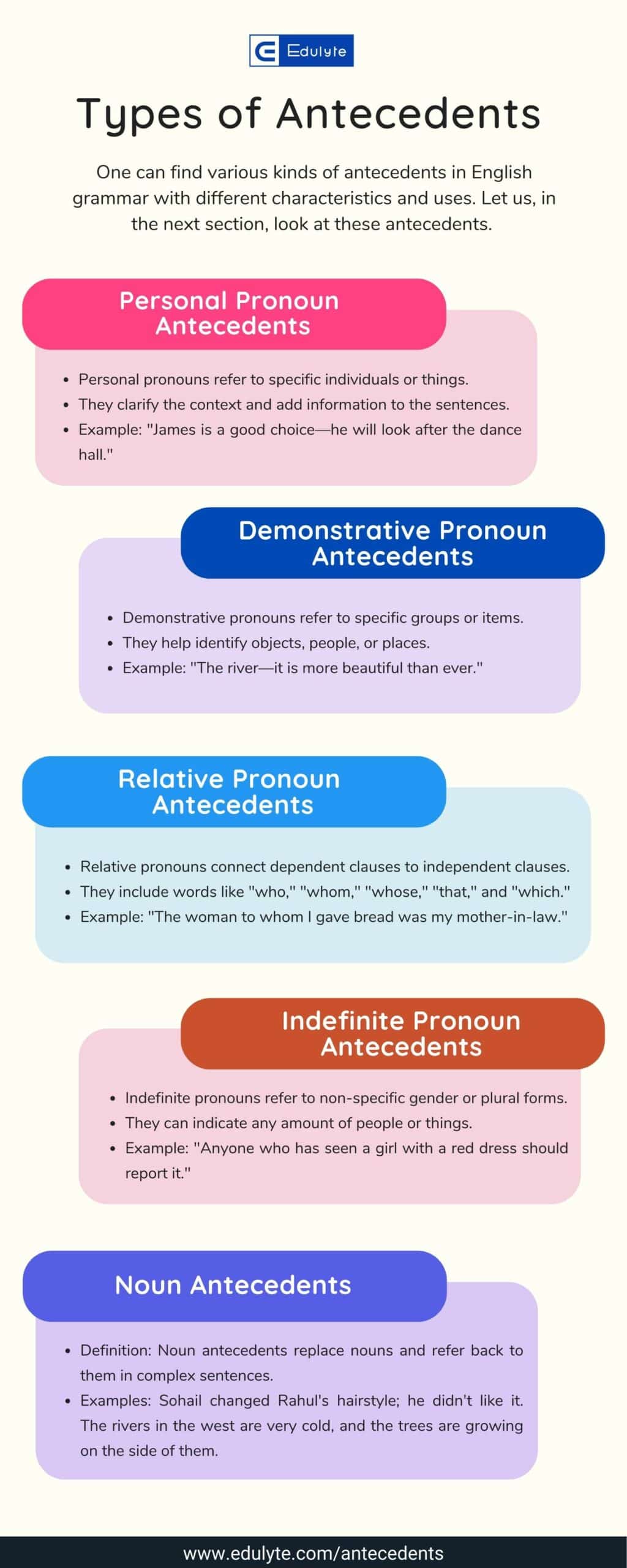
The most common examples involve personal pronouns, such as "he," "she," "it," or "they," which act as substitutes for previously mentioned entities. For example, in the sentence, "Sarah completed her report," the noun "Sarah" is the antecedent, and "her" is the pronoun that refers back to that antecedent. Without the antecedent, the reader would have no context for who "her" represents.
Core Functions of the Antecedent
The primary function of an antecedent is to establish a referential anchor. By using an antecedent, writers avoid repetitive phrasing. Instead of saying, "The manager entered the office and the manager sat at the manager’s desk," a writer uses pronouns: "The manager entered the office and sat at her desk." The antecedent "The manager" provides the necessary context for the pronoun "her" to be understood accurately.
Types of Antecedents and Their Relationships
Understanding the different types of antecedents requires examining how pronouns bind to their subjects. While nouns are the most frequent antecedents, other linguistic structures can fulfill this role.
Nouns as Antecedents
The most straightforward form of an antecedent is a singular or plural noun.
- Example: "The car is in the garage; it is red." In this instance, "car" is the antecedent, and "it" is the pronoun.
Phrases as Antecedents
Sometimes, a pronoun refers back to an entire phrase rather than a single word. This requires careful construction to ensure the pronoun has a clear, singular reference point.
- Example: "Eating healthy food and exercising daily is important, but it is often ignored." Here, "it" refers back to the entire act of "eating healthy food and exercising daily."
Clauses as Antecedents
A pronoun can refer to the information contained within an entire preceding clause.
- Example: "The candidate withdrew from the race, which surprised the voters." In this case, the relative pronoun "which" refers to the entire situation described in the first clause.
Agreement Rules: Number, Gender, and Person
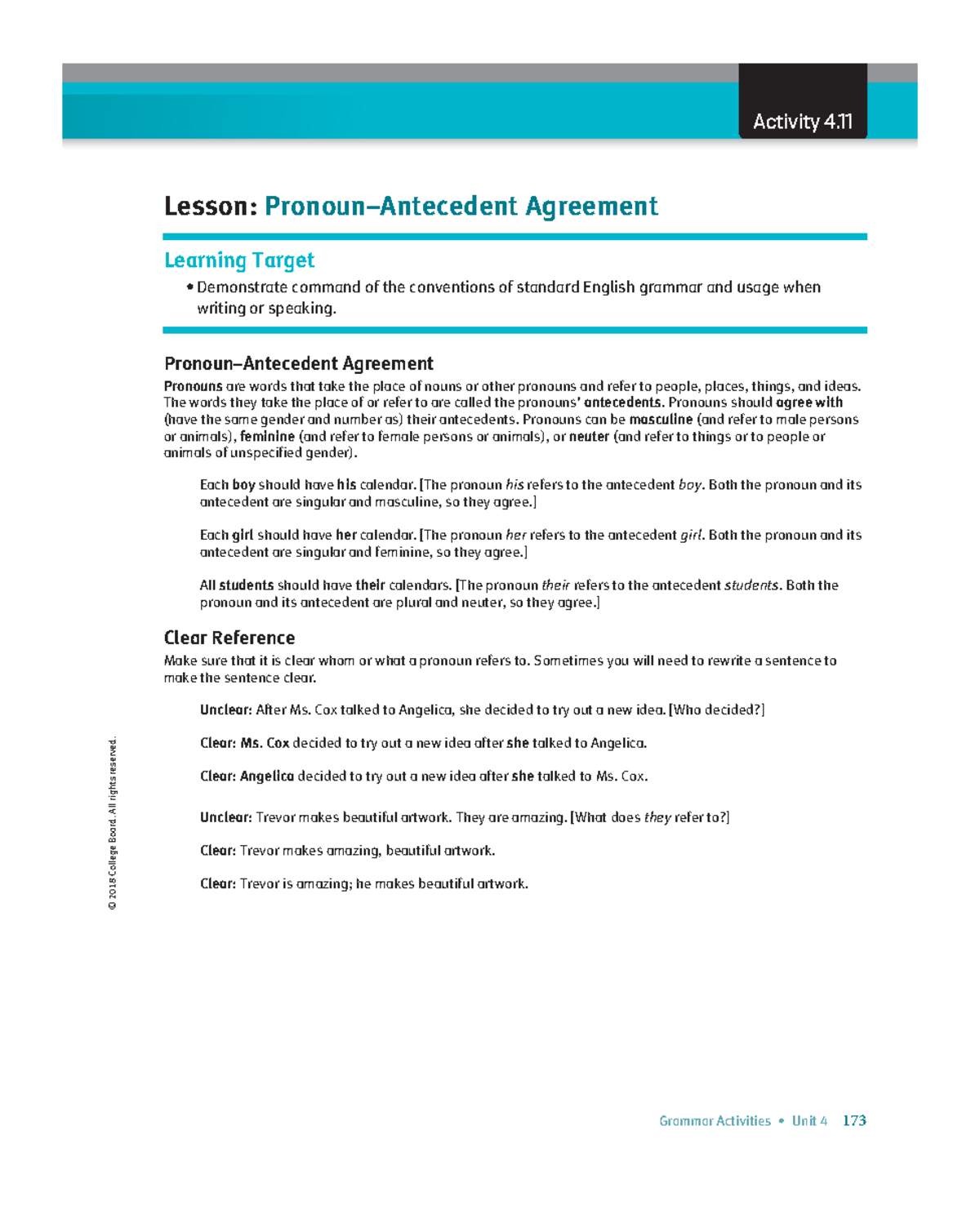
Grammatical accuracy relies on the agreement between the antecedent and its corresponding pronoun. Violating these rules results in "pronoun-antecedent disagreement," which can lead to confusion or the perception of poor writing.
Number Agreement
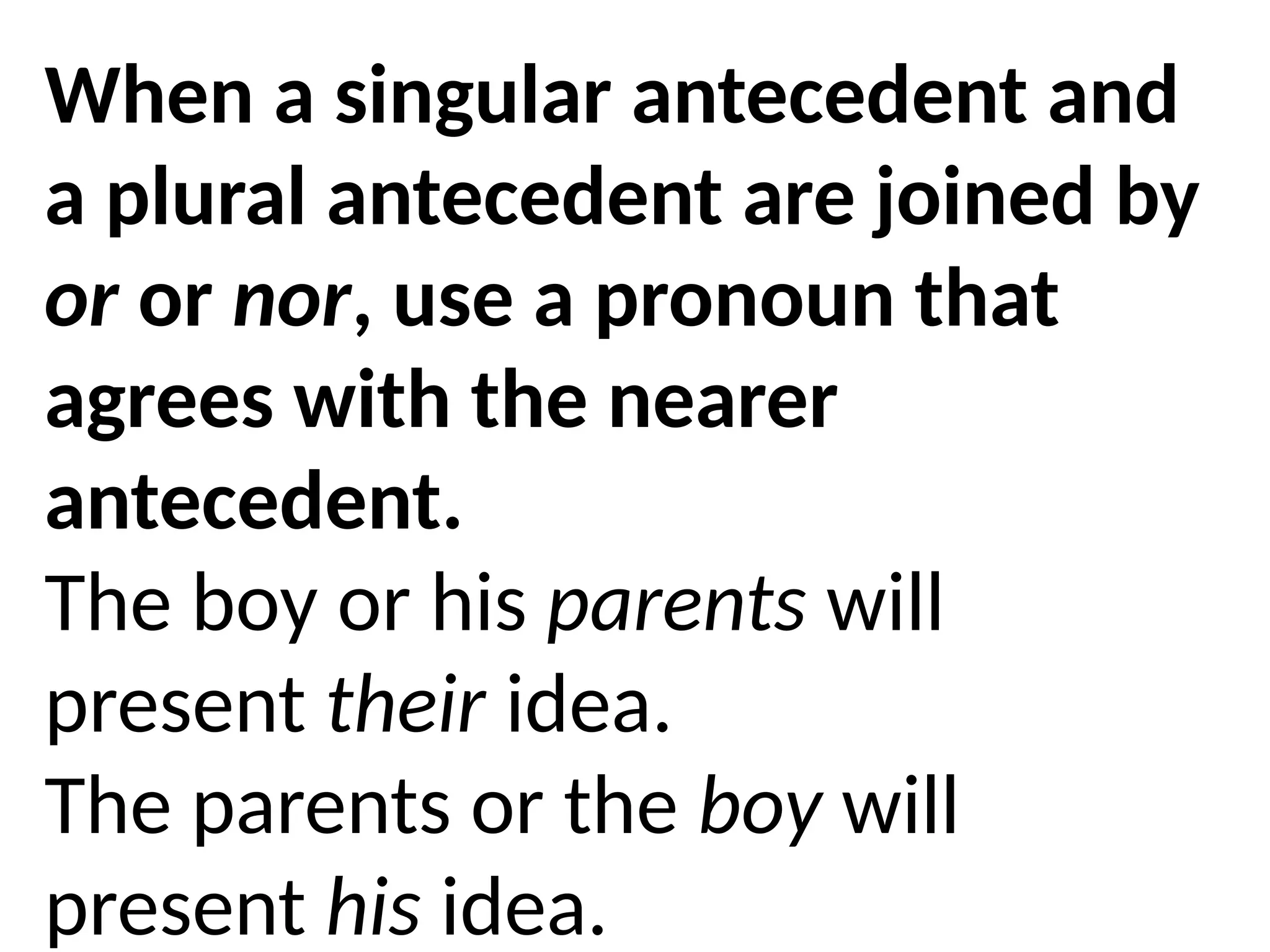
A singular antecedent requires a singular pronoun, while a plural antecedent requires a plural pronoun.
- Correct: The student (singular) forgot his (singular) book.
- Correct: The students (plural) forgot their (plural) books.
Gender Agreement
Pronouns must reflect the gender of the antecedent. While English has moved toward more inclusive language, the fundamental rule remains that the pronoun must correspond to the antecedent's intended gender or a neutral alternative when gender is unknown or irrelevant.
Person Agreement
The pronoun must match the point of view of the antecedent. If the antecedent is in the third person, the pronoun must also be in the third person.
| Feature | Requirement | Example |
|---|---|---|
| Number | Must match (Singular/Plural) | The dog (S) lost its (S) toy. |
| Gender | Must align with entity | Sarah (F) took her (F) coat. |
| Person | Must maintain perspective | The team (3rd) played its (3rd) best. |
Common Errors and How to Troubleshoot Them
Even experienced writers sometimes struggle with the placement and clarity of antecedents. Identifying these errors is the first step toward clearer prose.
The Ambiguous Antecedent
Ambiguity occurs when a pronoun could potentially refer to two or more different nouns within the same sentence.
- Ambiguous: "John told Mark that he was going to be late." Does "he" refer to John or Mark? To fix this, rewrite the sentence to eliminate the pronoun or clarify the reference: "John told Mark, 'I am going to be late'" or "John told Mark that Mark was going to be late."
The Remote Antecedent
If the antecedent is placed too far from the pronoun, the reader may lose the connection. If there are several nouns appearing between the antecedent and the pronoun, the reader will inevitably experience cognitive friction. Ensure that the pronoun is in close proximity to the noun it modifies.
The Missing Antecedent
A missing antecedent occurs when a writer uses a pronoun like "it," "they," or "this" without having introduced the subject earlier. This often happens in casual speech or drafts. Always check that every pronoun can be traced back to an explicit, previously mentioned entity.
Advanced Usage: Relative Pronouns and Binding
In more complex sentences, relative pronouns like "who," "whom," "which," and "that" introduce relative clauses. In these constructions, the antecedent is the noun immediately preceding the relative pronoun.
- Restrictive clauses: The house that I bought is blue. ("House" is the antecedent).
- Non-restrictive clauses: The house, which I bought in 2025, is blue.
These clauses provide essential or non-essential information about the antecedent. The rules for selecting the correct relative pronoun—using "who" for people and "which/that" for objects—are strictly tied to the nature of the antecedent.
Best Practices for Clarity and Style
To ensure your writing is precise, adopt these professional strategies for managing antecedents:
- Direct Proximity: Place the pronoun as close as possible to the antecedent. If you must use a long subject or complex predicate, repeat the noun if the pronoun becomes confusing.
- Avoid Vague References: Be cautious when using "this" or "which" to refer to an entire preceding sentence. If the reference is not immediately obvious, replace the pronoun with a noun phrase. For example, instead of "This is why...", use "This policy is why..."
- Perform a "Trace" Test: When editing, circle every pronoun you have used and draw a line back to its antecedent. If you cannot draw a clear line, or if the line crosses other potential nouns, the sentence requires restructuring.
- Consistency in Tense and Voice: While not strictly an antecedent rule, keeping the subject consistent makes it easier for the reader to keep track of the antecedent throughout a paragraph.
Frequently Asked Questions
Can an antecedent appear after the pronoun?
Yes, this is known as "cataphora." While most standard English follows the "noun first, pronoun second" structure, literary or stylistic writing may place the pronoun before the antecedent. Example: "Because he was hungry, John ate the apple." Use this sparingly, as it can confuse the reader in technical or instructional writing.
What is a "hidden" antecedent?
A hidden antecedent occurs when the noun is implied but not explicitly stated. This is often grammatically incorrect in formal writing. For example, saying "He is a great baker; that’s why I love his bread" is fine, but if you haven't mentioned the person before, the "he" has no antecedent. Always define your subject first.
Does every pronoun need an antecedent?
Not necessarily. Expletive pronouns like "it" in "It is raining" do not refer to a specific noun. These are called "dummy pronouns" or "pleonastic pronouns." They function as structural elements rather than referential ones.
How do I handle collective nouns as antecedents?
Collective nouns like "team," "committee," or "family" can be treated as singular or plural depending on whether you are emphasizing the group as a unit or the individuals within it. Consistency is key. Choose one and stick to it throughout the document.
Is "everybody" or "everyone" an antecedent?
Yes, these are indefinite pronouns. They are traditionally treated as singular, meaning they should take singular pronouns like "he or she" or "their" (in modern, accepted singular-they usage). Be aware of your organization's style guide regarding singular-they usage.
Next Steps for Improving Your Writing
To master the use of antecedents, review your most recent long-form document. Identify every occurrence of the pronouns it, he, she, they, this, and which. Verify that each has a clear, singular, and proximal antecedent. By tightening these connections, you will significantly improve the readability and professional quality of your work. If you find a pronoun that lacks a clear home, replace it with the specific noun it represents to provide immediate clarity.