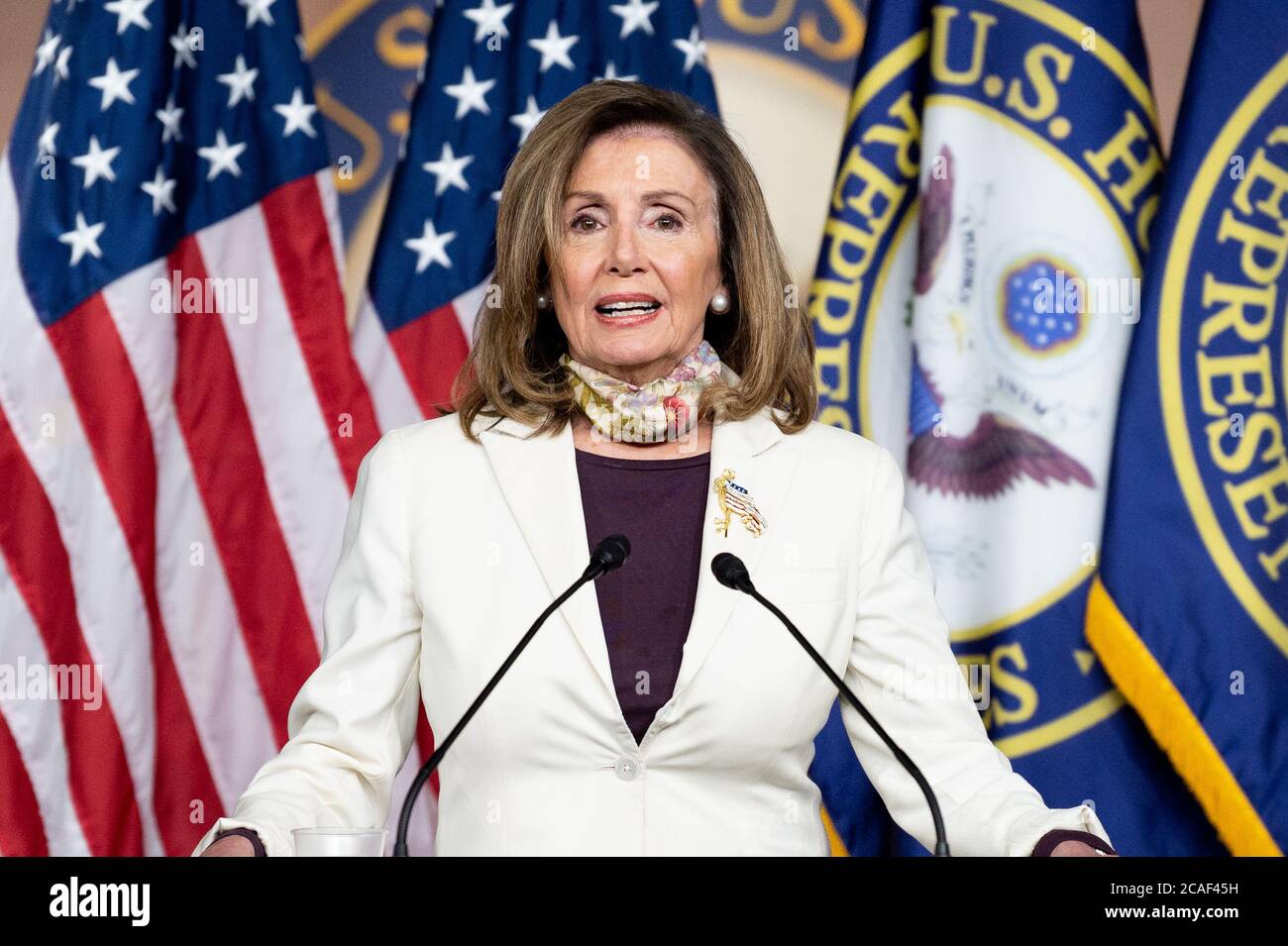
On December 5, 2019, House Speaker Nancy Pelosi delivered one of the most memorable press conference responses in modern American political history. After announcing that the House of Representatives would draft articles of impeachment against President Donald Trump, Pelosi forcefully rejected a reporter’s question asking if she hated the president, stating her Catholic faith forbade hatred and sternly declaring, "Don't mess with me."
Historical Context: The 2019 Impeachment Inquiry
To understand the intensity of Nancy Pelosi’s reaction during the December 5, 2019 press briefing, one must examine the extraordinary political backdrop of the U.S. Capitol late that autumn.
Months earlier, in September 2019, Speaker Pelosi had formally announced a central impeachment inquiry into President Donald Trump. The inquiry centered on allegations that President Trump had leveraged U.S. military aid and a coveted White House meeting to pressure Ukrainian President Volodymyr Zelenskyy into announcing investigations into his political rival, Joe Biden, and Biden's son, Hunter Biden.
Timeline of Events Leading to the December 5, 2019 Press Briefing:
| Date | Event |
|---|---|
| Sept 24, 2019 | Speaker Pelosi announces formal impeachment inquiry. |
| Oct–Nov 2019 | House Intelligence Committee conducts public hearings. |
| Dec 4, 2019 | House Judiciary Committee begins constitutional hearings. |
| Dec 5, 2019 | Pelosi announces drafting of impeachment articles; delivers viral exchange with reporter James Rosen. |
Throughout October and November 2019, the House Intelligence Committee held televised hearings featuring testimony from diplomatic and national security personnel. By early December, the investigation transitioned to the House Judiciary Committee to consider formal charges.
On the morning of December 5, Pelosi made a solemn televised address from the Speaker’s balcony hallway, announcing that she was instructing House committee chairs to proceed with drafting articles of impeachment. She grounded the decision in constitutional duty, arguing that the president had abused his power for personal political benefit. Following this historic announcement, Pelosi stepped into the Capitol press room for her weekly briefing, where tensions between congressional leadership, the White House, and national press outlets were running exceptionally high.
The Exchange: Step-by-Step Breakdown
The famous confrontation occurred near the conclusion of the press conference as Speaker Pelosi prepared to exit the room.
The Question from James Rosen
As Pelosi began stepping away from the podium, James Rosen, then a reporter for the Sinclair Broadcast Group, shouted a question from the middle of the room:
"Do you hate the president, Madam Speaker?"
Rosen followed up by suggesting that conservative critics believed the Democratic leadership was pushing impeachment simply because they personally disliked President Trump, pointing out that Republicans argued the effort was fueled by partisan animus rather than constitutional necessity.
Pelosi’s Immediate Reaction and Return to the Podium
Rather than continuing her exit or offering a standard political dodge, Pelosi stopped in her tracks, turned back toward the press corps, and pointed directly at Rosen.
"I don't hate anybody," Pelosi said sharply, her tone instantly shifting the atmosphere in the room.
She then walked back down the aisle toward the lectern, reclaiming the microphone to address the implication directly. She emphasized that the decision to pursue impeachment was driven entirely by constitutional principles, not personal emotions.
Key Excerpts from Nancy Pelosi's Response (Dec 5, 2019):
"I don't hate anybody. I was raised in a Catholic system that taught me never to hate anyone in the world..."
"As a Catholic, I pray for the president all the time. I still pray for the president all the time. I pray for the president all the time."
"So don't mess with me when it comes to words like that."
The Core Statement: Faith and Political Duty
Standing at the lectern, Pelosi articulated her personal and religious rationale:
- Rejection of Hatred: She cited her strict Catholic upbringing, noting that her faith taught her never to hold hatred toward anyone.
- Prayer for the President: She forcefully asserted that she prayed for President Trump regularly, dismissing the idea that her political actions were rooted in malice.
- Constitutional Focus: She stressed that while she believed President Trump’s policy actions regarding immigration, climate, and the military were wrong, those policy differences were addressed at the ballot box—whereas violations of the U.S. Constitution required congressional intervention.
- The Final Warning: Concluding her response, Pelosi raised her hand and delivered the line that dominated headlines: "So don't mess with me when it comes to words like that." She then turned and exited the room.
Strategic Analysis: Faith, Rhetoric, and Framing
The exchange highlighted Pelosi’s seasoned instincts as a political communicator. Her response achieved several strategic and political objectives simultaneously during a high-stakes legislative campaign.
- POLITICAL & RHETORICAL STRATEGY AT THE LECTERN
- DEFLECT CHARGES OF PARTISANSHIP: Repels GOP narrative of personal bias.
- MORAL GROUNDING IN FAITH & LAW: Cites Catholic upbringing and regular prayer.
- SET BOUNDARIES WITH THE MEDIA: Reasserts leadership authority.
Neutralizing the "Personal Animus" Narrative
Republicans in Congress and commentators on conservative networks consistently argued that Democratic efforts to impeach President Trump were driven by deep personal hostility and resentment over the 2016 election results. By framing the issue as a matter of constitutional duty while rejecting personal hatred, Pelosi sought to counter the claim that the proceedings were merely a personal vendetta.
Leveraging Faith in Public Discourse
Pelosi’s invocation of her Catholic faith was a deliberate rhetorical anchor. Throughout her career, Pelosi frequently referenced her Catholic upbringing as the foundation of her public service values. By shifting the debate from political maneuvering to personal faith and prayer, she challenged the moral framing utilized by her critics and established a defense that resonated with religious moderates.
Asserting Leadership and Setting Press Boundaries
The moment also served to reinforce Pelosi's reputation as a firm manager of both her caucus and the press room. By returning to the podium to challenge the wording of the question, she demonstrated an unwillingness to let hostile framing pass unchallenged on national television.
Media Coverage and Political Reaction
The reaction to the December 5 press conference was immediate and split along predictable political lines, reflecting the partisan polarization of the era.
Reactions Across Political Spectrum
| Group / Sector | Primary Argument or Reaction | Key Takeaway |
|---|---|---|
| House Democratic Caucus | Strongly defended Pelosi’s response as authentic, principled, and constitutionally grounded. | Viewed the moment as an effective defense of the caucus's impeachment effort. |
| Republican Leadership | Dismissed the response as performative, arguing Democratic policies demonstrated clear partisan hostility. | Maintained that the impeachment process was inherently unfair and politically motivated. |
| White House Response | President Donald Trump tweeted in response, questioning Pelosi's sincerity and her claim of praying for him. | Doubled down on the accusation that Democrats were driven by personal animus. |
| News Media & Analysis | Covered the exchange as a defining viral moment of the 116th Congress. | Highlighted the rhetorical clash between Capitol Hill leadership and conservative media. |
The White House Counter-Response
Shortly after the press conference concluded, President Trump responded directly on Twitter (now X). Trump challenged Pelosi’s statement, questioning her claim that she prayed for him and arguing that her legislative record contradicted her public statements regarding faith and unity. This back-and-forth further elevated the moment in national news coverage.
Digital and Cultural Impact
Video clips of the confrontation spread rapidly across social media platforms. Supporters framed the clip as an example of strong leadership and moral clarity, while critics analyzed it as an overreaction that underscored the political tension surrounding the impeachment inquiry. The phrase "Don't mess with me" quickly became a widely cited political quote throughout the remainder of the 116th Congress.
Comparison: Key High-Stakes Pelosi Press Moments
Throughout her tenure as the first female Speaker of the House, Nancy Pelosi engaged in several high-profile public confrontations and press briefings that defined her leadership style. The table below compares the December 5, 2019 press conference with other prominent public exchanges during her speakership.
| Event / Date | Key Subject Matter | Central Conflict or Moment | Political Outcome |
|---|---|---|---|
| December 2018 White House Oval Office Meeting | Border wall funding and potential government shutdown. | Open televised argument between Trump, Pelosi, and Senate Minority Leader Chuck Schumer. | Established Pelosi's firm posture ahead of reclaiming the Speaker's gavel in 2019. |
| December 5, 2019 Press Conference | Announcement of impeachment articles and question on personal hatred. | Pelosi rejects reporter James Rosen’s question; delivers "Don't mess with me" response. | Set the tone for Democratic messaging during the first impeachment trial. |
| February 2020 State of the Union Address | Presidential address to a joint session of Congress. | Pelosi visibly rips a copy of President Trump's speech behind the podium at its conclusion. | Drew intense national debate regarding congressional decorum and political protest. |
| January 2021 Post-Capitol Attack Briefings | Security of the Capitol, 25th Amendment, and second impeachment. | Calls for immediate resignation or removal of executive officials following January 6. | Led directly to the second impeachment of Donald Trump within a single week. |
Long-Term Legacy of the Moment
Nancy Pelosi’s 2019 press conference exchange remains a case study in political communication, press relations, and crisis messaging.
- LONG-TERM IMPACT & IMPLICATIONS
- INSTITUTIONAL LESSONS
- Re-established boundary lines for Capitol press interactions.
- Demonstrated tactical management of live televised pressers.
- RHETORICAL LEGACY
- Highlighted the role of personal faith in political rhetoric.
- Preserved a key video moment in modern impeachment history.
- INSTITUTIONAL LESSONS
- Defining the Framing of the First Impeachment: By confronting the question head-on, Pelosi established the official Democratic narrative that impeachment was a painful constitutional necessity rather than an act of personal malice.
- Standard for Live Media Interactions: The moment demonstrated how political leaders can seize control of live television coverage to reframe questions they view as flawed or biased.
- Archival Significance: The footage continues to be featured in historical retrospectives, political science curricula, and documentary coverage examining the presidency of Donald Trump and the leadership of Nancy Pelosi.
Frequently Asked Questions
What exact question prompted Nancy Pelosi's response?
Reporter James Rosen asked Pelosi, "Do you hate the president, Madam Speaker?" He added that conservative critics contended Democrats were impeaching President Trump simply out of personal hatred.
Who was the reporter involved in the exchange?
The reporter was James Rosen, who was attending the briefing as a correspondent for the Sinclair Broadcast Group.
What date did this press conference take place?
The press conference took place on the morning of December 5, 2019, in the U.S. Capitol briefing room.
What had Pelosi announced right before the exchange?
Just prior to the briefing, Pelosi delivered a formal televised address announcing that she was instructing House committee chairs to draft formal articles of impeachment against President Donald Trump regarding his dealings with Ukraine.
What was President Trump's reaction to the press conference?
President Trump responded on social media shortly after the press conference, publicly questioning Pelosi's statement that she prayed for him and accusing her of partisan bias.
Did this exchange occur during the first or second impeachment?
This exchange occurred during the first impeachment inquiry against Donald Trump in late 2019. The second impeachment occurred later, in January 2021.
Key Takeaways and Historical Perspective
Nancy Pelosi’s December 5, 2019 press conference remains a landmark interaction between congressional leadership and the press corps. By rejecting the premise of James Rosen’s question, grounding her rationale in her Catholic faith, and delivering a firm warning from the lectern, Pelosi sought to protect the constitutional legitimacy of the impeachment process. The exchange underscores the central role that live press conferences play in shaping public perception during major constitutional crises.