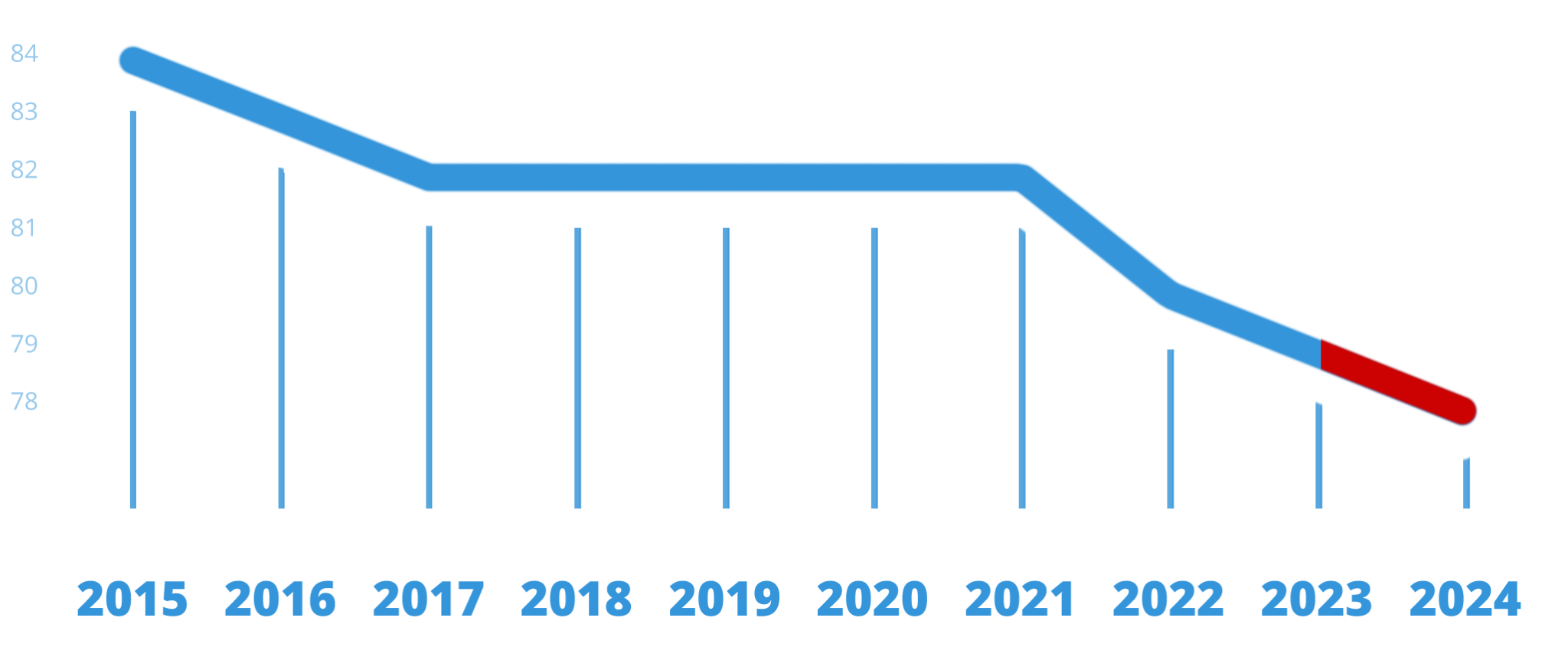
Angola received a score of 33 out of 100 on Transparency International's 2024 Corruption Perceptions Index (CPI), reflecting a period of consolidation following notable gains made since 2018. While this score places Angola above its historical low of 19, it highlights persistent structural challenges, selective enforcement concerns, and the complex reality of reforming public sector integrity.
1. Executive Summary: Angola on the 2024 Corruption Perceptions Index
The publication of the 2024 Corruption Perceptions Index (CPI) by Transparency International provides a critical benchmark for evaluating Angola’s ongoing anti-corruption agenda. Scoring 33 on a scale where 0 represents highly corrupt and 100 represents very clean, Angola maintained a stable position relative to recent years, ranking among the mid-tier countries in Sub-Saharan Africa.
- CPI Scale:
- 0 (Highly Corrupt)
- 33 (Angola 2024)
- 100 (Very Clean)
To understand the 2024 CPI score, one must view it not as an isolated datapoint, but as part of a broader multi-year trajectory. In 2018, Angola registered a low score of 19/100, heavily burdened by decades of kleptocratic governance, state capture, and opaque management of national oil revenues. The sub-35 score in 2024 indicates that while initial legal and institutional overhauls yielded progress, anti-corruption momentum has encountered a plateau characterized by institutional bottlenecks and deep-seated systemic practice.
For international investors, multilateral lenders, and domestic civil society, Angola’s 2024 CPI score offers a mixed signal. It signals that the sweeping institutional collapse of previous decades has been halted, yet confirms that public procurement, the judiciary, and local administrative authorities remain vulnerable to corruption, bribery, and political influence.
2. Historical Evolution: From State Capture to Targeted Reform
To assess Angola's current standing, it is necessary to examine the political and legal shifts that have taken place since 2017.
The Dos Santos Era and Structural Corruption
For nearly four decades under former President José Eduardo dos Santos (1979–2017), Angola’s political economy was defined by centralized authority and the intermingling of private interest with public assets. State-owned oil enterprise Sonangol and the national diamond company Endiama served as primary vehicles for patronage. Millions of dollars in natural resource rents were diverted into offshore accounts, shell companies, and private real estate portfolios held by political elites and their immediate families.
The systemic nature of this corruption severely weakened public institutions, undermined sovereign credit ratings, and deprived the general population of basic infrastructure and social services despite Angola being one of Africa's largest crude oil producers.
The Lourenço Administration's Anti-Corruption Drive
When President João Lourenço assumed power in late 2017, he declared anti-corruption the cornerstone of his administration's legislative and economic strategy. The government initiated high-profile investigations targeting former senior officials, family members of the former president, and key figures within the military and state enterprises.
Significant legal milestones during this legislative push included:
- Asset Recovery Law (Lei de Repatriamento de Recursos Financeiros): Establishing legal mechanisms to freeze, seize, and repatriate illegally acquired state assets located both domestically and internationally.
- Public Procurement Law Overhaul: Mandating competitive bidding processes for major public contracts to reduce reliance on direct awards (ajuste direto).
- National Anti-Corruption Strategy (Estratégia Nacional de Combate à Corrupção): A structured framework focused on prevention, detection, and prosecution across public bodies.
High-profile international enforcement actions—most notably the exposure of illicit financial flows through investigative projects like the "Luanda Leaks" and legal proceedings against figures such as Isabel dos Santos and José Filomeno dos Santos—underscored the international dimension of Angola's anti-corruption campaigns.
3. Key Factors Shaping Angola's 2024 CPI Performance
Transparency International’s CPI aggregates data from independent expert assessments and business executive surveys, evaluating factors such as public sector bribery, diversion of public funds, effective prosecution of corrupt officials, and administrative red tape. Several key factors directly influenced Angola's 2024 rating.
- Factors Influencing 2024 CPI Score
- Institutional Asset Recovery
- Judicial & Institutional Bottlenecks
- Extractive Sector Reforms
Institutionalized Asset Recovery Operations
Angola’s National Asset Recovery Office (Serviço Nacional de Recuperação de Activos - SENRA), operating under the Attorney General's Office (Procuradoria-Geral da República - PGR), has recovered billions of dollars in real estate, corporate stakes, and liquid funds. International judicial cooperation with jurisdictions including Switzerland, the United Kingdom, and Portugal helped validate these recovery efforts on the global stage.
Extractive Sector Transparency
Angola's progress within the Extractive Industries Transparency Initiative (EITI) supported its score stabilization. By publishing detailed accounts of government revenues generated from oil, gas, and mining licenses, the state improved baseline transparency in sectors traditionally vulnerable to diversion. The restructuring of Sonangol—separating its commercial oil operations from its regulatory responsibilities (which shifted to the National Oil, Gas and Biofuels Agency, ANPG)—mitigated severe conflicts of interest.
Judicial Bottlenecks and Resource Limits
Despite headline-grabbing prosecutions, Angola’s judicial system faces severe backlogs, inadequate funding, and a shortage of specialized magistrates trained in complex forensic accounting and financial crime analysis. These operational constraints slow down prosecutions, leading to extended pre-trial detentions and prolonged legal proceedings that weaken public trust in rule of law enforcement.
4. Historical CPI Score Comparison: 2018–2024
The table below details Angola's performance trajectory on the Corruption Perceptions Index over a seven-year period, alongside regional benchmarks for Sub-Saharan Africa.
| Year | CPI Score (0–100) | Global Rank | Total Countries Assessed | Sub-Saharan Africa Average Score | Key Contextual Milestones |
|---|---|---|---|---|---|
| 2018 | 19 | 165 | 180 | 32 | Initial launch of President Lourenço's anti-corruption campaign. |
| 2019 | 26 | 146 | 180 | 32 | Creation of specialized anti-corruption judicial units; PGR investigations expand. |
| 2020 | 27 | 142 | 180 | 32 | Publication of "Luanda Leaks"; high-profile asset freezes across European jurisdictions. |
| 2021 | 29 | 136 | 180 | 33 | Enactment of updated Anti-Money Laundering (AML) legislation; EITI application process. |
| 2022 | 33 | 116 | 180 | 32 | Significant upward leap; formal admission into EITI; Sonangol asset unbundling. |
| 2023 | 33 | 121 | 180 | 33 | Score plateau; growing public debate over selective prosecution and judicial delay. |
| 2024 | 33 | 121 | 180 | 33 | Consolidation period; ongoing focus on FATF grey-list compliance and public procurement. |
Data Source: Transparency International Corruption Perceptions Index historical data series.
5. Structural Challenges and Systemic Vulnerabilities
While Angola’s movement from 19 to 33 represents meaningful reform, remaining below the threshold score of 50 indicates persistent structural vulnerabilities.
Allegations of Selective Justice
A primary criticism leveled by civil society groups, opposition figures, and independent analysts is the perception of selective enforcement. Critics argue that prosecutorial actions disproportionately target political allies of the former regime while failing to investigate corruption allegations involving current cabinet officials, provincial governors, or senior members of the ruling party. For anti-corruption campaigns to deliver long-term cultural change, enforcement must apply uniformly regardless of political affiliation.
Financial Action Task Force (FATF) Scrutiny
Angola’s financial system continues to work through strategic deficiencies identified by the Financial Action Task Force. Concerns center on:
- Beneficial Ownership Identification: Gaps in public registers that allow ultimate beneficial owners of corporate entities to remain anonymous.
- Politically Exposed Persons (PEPs): Inconsistent application of enhanced due diligence by local banking institutions when onboarding high-risk political figures.
- Cross-Border Asset Tracking: Delayed execution of mutual legal assistance requests in complex money laundering cases.
Addressing these technical compliance gaps is essential for Angola to maintain full access to international correspondent banking relationships and reduce foreign transaction costs.
Petty Corruption and Administrative Discretion
While macro-level anti-corruption efforts focus on high-yield asset recovery, everyday petty corruption (gasosa) remains common across municipal administrations, traffic police, border control, and public health facilities. Low civil service wages, combined with discretionary administrative powers, preserve an environment where informal payments are frequently solicited to expedite basic public services.
6. Business Implications: Foreign Investment and Corporate Compliance
Angola’s 2024 CPI score directly impacts international corporate operations, joint ventures, and capital deployment strategies within the country.
- Corporate Risk Profile in Angola
- Compliance Risk: FCPA / UKBA Exposure
- Contract Risk: Procurement & Direct Awards
- Financial Risk: Banking & FX Restraints
Foreign Corrupt Practices Act (FCPA) and UK Bribery Act Compliance
Multinational enterprises operating in Angola must maintain rigorous compliance programs. Because a CPI score of 33 signals elevated risk environments, international regulators—such as the U.S. Department of Justice (DOJ) and the UK Serious Fraud Office (SFO)—subject commercial operations in Angola to close scrutiny under the U.S. Securities and Exchange Commission and FCPA guidelines.
Key risk areas requiring institutional controls include:
- Third-Party Intermediaries: Local agents, customs brokers, and consultants used to navigate regulatory processes must undergo comprehensive background checks and beneficial ownership screening.
- State-Owned Partner Vetting: Entering joint ventures with local entities requires tracing equity stakes to ensure non-sanctioned PEP involvement.
- Permitting and Licensing: Administrative approvals in construction, telecommunications, and mining demand auditable, transparent workflows to avoid facilitation payments.
Sovereign Risk and Capital Costs
A country's CPI score correlates closely with sovereign credit ratings and international borrowing costs. While Angola’s economic policy has improved through fiscal consolidation and cooperation with the International Monetary Fund, persistent corruption risks keep borrowing costs elevated, complicating private sector infrastructure project financing.
7. Strategic Recommendations for Governance and Regulatory Reform
To break past its score of 33 and build lasting institutional integrity, Angola can focus on several target policy areas:
1. Institutionalizing Judicial Independence
- Autonomy of Prosecutorial Bodies: Establish structural protections that shield the Attorney General's Office (PGR) and specialized anti-corruption tribunals from executive oversight or political selection.
- Magistrate Capacity Building: Invest in continuous training for judges, auditors, and financial investigators focused on forensic accounting, digital forensics, and international asset recovery law.
2. Digitalization of Public Services
- E-Government Expansion: Transition public services, customs declarations, tax collection, and business registrations to centralized digital platforms to minimize direct interaction with administrative officials, reducing opportunities for informal payment requests.
- Transparent Procurement Portals: Standardize public access to tendering documents, bidding outcomes, and direct-award justifications via a single, publicly accessible digital portal.
3. Enhancing Protection for Civil Society and Whistleblowers
- Whistleblower Protection Legislation: Enact statutory protections against retaliation, blacklisting, or legal harassment for individuals reporting corruption within public or private institutions.
- Press Freedom Support: Safeguard investigative journalists examining public spending, land concessions, and state enterprise management.
Frequently Asked Questions
What was Angola's official score on the 2024 Corruption Perceptions Index?
Angola scored 33 out of 100 on the 2024 Corruption Perceptions Index, placing it at rank 121 out of 180 countries and territories evaluated by Transparency International.
How does Angola's 2024 CPI score compare to its historical performance?
Angola's score of 33 reflects significant long-term progress compared to 2018, when it registered a score of 19. However, the score has remained unchanged since 2022, indicating that the initial momentum of anti-corruption reforms has hit an institutional plateau.
Why did Angola's score improve significantly between 2018 and 2022?
The upward movement was driven by anti-corruption initiatives introduced under President João Lourenço. Key measures included the creation of asset recovery units, prosecution of high-profile political figures, structural reorganization of Sonangol, and joining the Extractive Industries Transparency Initiative (EITI).
What are the main obstacles keeping Angola's CPI score below 50?
Primary obstacles include perceptions of selective prosecution targeting political opponents, judicial backlogs, administrative red tape, limited whistleblower protections, and persistent daily petty corruption in public administration.
How does Angola's CPI score affect foreign investors?
A score of 33 highlights elevated compliance risks under international laws such as the U.S. FCPA and UK Bribery Act. Foreign investors must conduct thorough due diligence, screen third-party intermediaries, trace beneficial ownership, and maintain audited compliance frameworks when operating in the country.
Conclusion and Next Actions
Angola's 2024 Corruption Perceptions Index score of 33 underscores both the real gains achieved since the end of the Dos Santos era and the substantial work that remains to build an open, accountable governance framework. Moving beyond this plateau will require transitioning from executive-led political campaigns to permanent, independent legal institutions, digitized public administration, and uniform enforcement across all sectors of society.
Practical Steps for Business Leaders and Compliance Officers:
- Conduct Comprehensive Supply Chain Audits: Re-screen all local Angola-based partners, customs agencies, and legal representatives against updated sanctions and PEP databases.
- Enforce Anti-Facilitation Payment Policies: Establish zero-tolerance rules for facilitation payments, supported by local-language training programs for staff and contractors.
- Monitor FATF and AML Regulatory Developments: Align corporate financial reporting and anti-money laundering controls with FATF recommendations to prevent payment delays and banking complications.
- Engage in Industry Transparency Initiatives: Participate in collective action groups, such as local EITI multi-stakeholder working groups, to encourage transparent regulatory practices across key economic sectors.