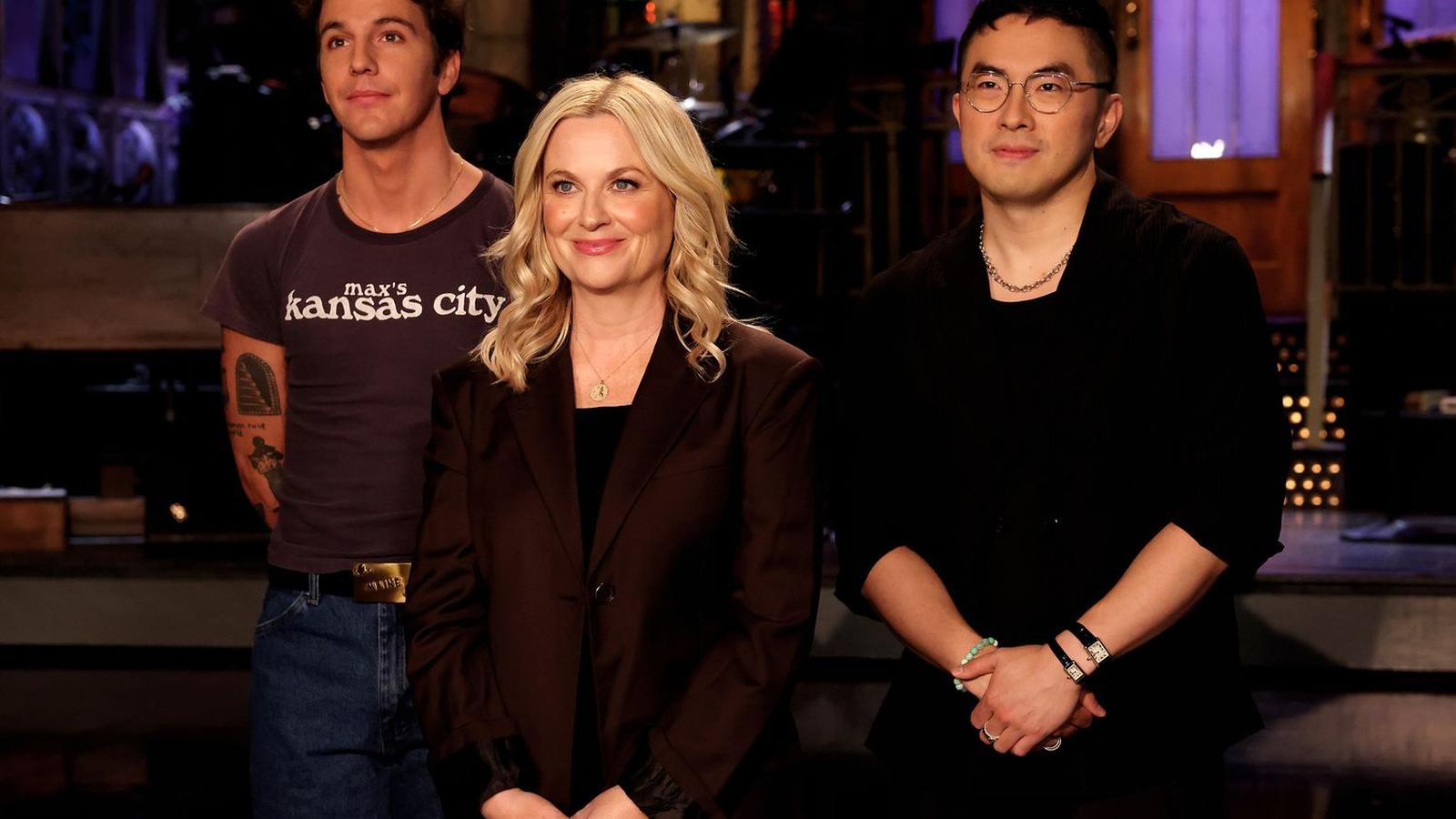
Amy Poehler’s tenure on Saturday Night Live (2001–2008) is defined by her fearless physicality, groundbreaking leadership, and characters like "Amber," the hyper-confident one-legged girl. Her legacy includes being the first woman promoted to repertory player in her first season and co-anchoring the first all-female Weekend Update desk.
The Origin and Impact of "Amber" the One-Legged Girl
Among the pantheon of Amy Poehler’s Saturday Night Live (SNL) characters, few capture her commitment to high-energy absurdity quite like Amber. Often referred to by fans as the "one-legged girl," Amber was a recurring character who appeared in various sketches, most notably beauty pageants and talent competitions. The character was defined not by her disability, but by an aggressive, unearned confidence and her signature catchphrase: "I did it!"
Amber’s presence on the show during the early to mid-2000s represented a specific era of SNL comedy that leaned into character-driven, repetitive hooks. However, Poehler brought a layer of nuance to the role. Instead of making the character a figure of pity, she made Amber the most competitive person in the room. Whether she was flatulating during a pageant or attempting a complex dance routine on her prosthetic limb, Amber was always the hero of her own story. This subversion of expectations—making a marginalized character the loudest and most boisterous—was a hallmark of Poehler’s comedic philosophy.
The technical execution of the character also showcased Poehler’s physical dedication. Performing with one leg tucked back or utilizing props required a level of athleticism that often went unnoticed behind the laughter. In sketches alongside "The Rick" (played by Seth Meyers), the chemistry between the characters highlighted Poehler’s ability to play off a "straight man" while remaining entirely untethered from reality. As we look back from 2026, Amber remains a testament to a time when SNL was transitioning from the grounded sketches of the late 90s into a more surreal, energetic style.
The Meteoric Rise: 2001 and the Repertory Promotion
Amy Poehler joined the cast of SNL in September 2001, a time of immense transition for both the show and New York City. While most new cast members spend years as "featured players" before being promoted to the "repertory" cast, Poehler broke the mold. Her impact was so immediate and her talent so undeniable that she was promoted to repertory status midway through her first season. This was a historic first for a female cast member and signaled to the industry that Poehler was a generational talent.
Her arrival provided a necessary spark. Working alongside titans like Tina Fey, Maya Rudolph, and Rachel Dratch, Poehler helped usher in what many critics now call the "Second Golden Age of Women on SNL." Before this era, female cast members were often relegated to supporting roles—the wife, the mother, or the straight-line reporter. Poehler, however, demanded the spotlight through sheer force of will and comedic range.
Her versatility allowed her to inhabit dozens of recurring roles. From the sugar-addicted, hyperactive Kaitlin to her pitch-perfect impressions of celebrities like Kelly Ripa and Dakota Fanning, Poehler proved she could handle both broad character work and sharp celebrity satire. This range was essential for the show’s survival during the post-Will Ferrell era, as the writers needed a reliable "utility player" who could anchor any sketch.
Breaking the "Weekend Update" Glass Ceiling
In 2004, the landscape of late-night comedy changed when Amy Poehler joined Tina Fey at the Weekend Update desk. This was the first time in the show's history that two women co-anchored the news segment. The pairing was a masterclass in comedic chemistry. While Fey played the sophisticated, dry-witted intellectual, Poehler brought a more kinetic, "theatre of the absurd" energy to the desk.
Their tenure on Weekend Update redefined the segment for a new generation. They moved away from the purely cynical tone of previous anchors and introduced a celebratory, feminist-adjacent perspective that was both biting and inclusive. Segments like "Really!?! with Seth and Amy" (which continued after Fey’s departure) became cultural touchstones, providing a platform for Poehler to vent the frustrations of the American public with a mix of disbelief and hilarity.
By 2026, the Fey-Poehler Update era is viewed as the blueprint for modern political satire on the show. It paved the way for future female anchors like Cecily Strong and established the idea that the news desk didn't need a traditional "alpha male" presence to be authoritative. Poehler’s ability to pivot from a silly character bit to a searing indictment of current events showed a level of intellectual depth that few of her predecessors possessed.
The Political Satire: Hillary Clinton and the 2008 Election
Perhaps the most significant component of Poehler’s legacy is her portrayal of Hillary Clinton. During the 2008 Democratic primaries, Poehler’s Clinton was a fixture of the cultural conversation. She portrayed Clinton not just as a politician, but as a woman driven by a fierce, almost manic desire to lead—a portrayal that was both a critique and a celebration of her ambition.
The "Sarah Palin and Hillary Clinton" sketch, featuring Tina Fey’s return as Palin, remains one of the most-watched moments in SNL history. In this sketch, Poehler’s Hillary had to balance her professional resentment of Palin’s sudden popularity with her own long-standing struggle for recognition. Poehler’s performance—specifically her strained, forced laugh—captured the absurdity of the political circus in a way that resonated across the political spectrum.
This era of political parody was foundational for the show’s later success during the 2010s and 2020s. Poehler’s Hillary Clinton set the standard for how the show would handle high-profile female political figures: focusing on their internal psychology rather than just their outward mannerisms. It was a sophisticated approach to satire that helped SNL maintain its relevance in an increasingly polarized media environment.
A Legacy of Collaboration and Mentorship
Amy Poehler’s influence on SNL extends far beyond her individual performances. She was a central figure in creating a collaborative, supportive environment for female comedians. Alongside Tina Fey, Maya Rudolph, and Kristen Wiig, she helped dismantle the "boys' club" reputation that had plagued the show since the 1970s.
Her legacy is visible in the careers of the women who followed her. Kate McKinnon, Aidy Bryant, and Cecily Strong have all cited Poehler as a primary influence. Her philosophy of "play to the top of your intelligence" encouraged performers to trust the audience and take risks. Even after leaving the show in 2008, she continued to support the SNL community, returning frequently to host or appear in anniversary specials.
Furthermore, Poehler’s post-SNL career—specifically her production company, Paper Kite Productions—has focused heavily on elevating female voices. By 2026, her impact is seen not just on the screen, but in the writers' rooms and production offices of comedy specials and television series across the industry. She proved that an SNL star could successfully transition into a mogul while maintaining their comedic integrity.
Comparative Evolution of SNL's Female Leadership
To understand Poehler's impact, it is helpful to look at the milestones achieved by women during her era compared to the periods before and after.
| Milestone Era | Key Leadership Figures | Major Shift in Tone | Impact on the Industry |
|---|---|---|---|
| Pre-Poehler (1990s) | Molly Shannon, Cheri Oteri | Physicality and high-energy recurring characters. | Proved women could be the "breakout" stars of the cast. |
| The Poehler Era (2001-2008) | Amy Poehler, Tina Fey, Maya Rudolph | Intellectual satire, first all-female Update desk, political dominance. | Established women as the primary writers and anchors of the show. |
| The Post-Poehler Era (2010-2020s) | Kate McKinnon, Cecily Strong | Conceptual absurdity and multi-faceted political impressions. | Normalized the "female-led" cast as the standard for SNL success. |
| Modern Era (2025-2026) | Ego Nwodim, Heidi Gardner | Digital integration and character-driven viral content. | Focus on diverse perspectives and multi-platform presence. |
Cultural Impact by 2026: The "Poehler Effect"
Looking back from 2026, we see the "Poehler Effect" in full bloom. This term refers to the specific blend of kindness and cutthroat comedy that Poehler championed. She proved that one could be "the funniest person in the room" without being the meanest. This is perhaps most evident in her work on Parks and Recreation, where she took the comedic skills she honed on SNL and applied them to a character, Leslie Knope, who was defined by her relentless optimism.
Her character "Amber" might seem like a small footnote in her massive career, but it represents the DNA of her comedy: a refusal to be limited by expectations. Amber’s "I did it!" catchphrase was more than just a joke; it was a mantra for Poehler’s career. She did it all—she mastered sketches, she conquered the news desk, she redefined political satire, and she did it while supporting everyone around her.
In 2026, Poehler is regarded as a "Dean of Comedy," a figure whose work is studied in performance classes and whose path is emulated by every new Saturday Night Live hire. Her legacy is one of empowerment, showing that with enough energy and intelligence, a performer can change the culture of an institution as storied as SNL.
Frequently Asked Questions
Who was the character Amber on SNL?
Amber was a recurring character played by Amy Poehler, characterized as a hyper-confident, one-legged woman who frequently entered beauty pageants and talent competitions. Her catchphrase was an enthusiastic "I did it!" after completing mundane or disastrous tasks. The character was known for her high energy and refusal to acknowledge any limitations, often stealing the spotlight from other performers in the sketch.
How many seasons was Amy Poehler on Saturday Night Live?
Amy Poehler was a cast member on SNL for eight seasons, from 2001 to 2008. She holds the distinction of being the first woman to be promoted from featured player to repertory player in the middle of her first season. Her departure in 2008 was marked by a series of high-profile political sketches and a legendary "farewell" during a Weekend Update segment while she was pregnant with her first child.
What was Amy Poehler’s most famous SNL sketch?
While she had many, her portrayal of Hillary Clinton in the 2008 election sketches—particularly alongside Tina Fey’s Sarah Palin—is considered her most culturally significant work. Other fan favorites include the "Kaitlin" sketches (the hyperactive young girl) and her various co-hosting segments on Weekend Update.
Did Amy Poehler win an Emmy for her work on SNL?
Amy Poehler was nominated for several Primetime Emmy Awards for her work as a performer on SNL. Interestingly, she made history in 2016 when she and Tina Fey won a joint Emmy for Outstanding Guest Actress in a Comedy Series for co-hosting an episode of SNL. This was the first time the award had been given to two people simultaneously for the same role.
Why is her legacy on the Weekend Update desk so important?
Her legacy is significant because she was part of the first all-female co-anchor team in the show’s history (with Tina Fey). This broke a 30-year tradition of male dominance at the desk and proved that the "news" segment could be anchored with a feminine perspective that was just as sharp, authoritative, and popular as its predecessors.
Practical Recommendation for Further Viewing
To fully appreciate Amy Poehler’s SNL legacy, viewers should look beyond the highlight reels. Start by watching the "Pageant" sketches featuring Amber to see her commitment to physical comedy. Then, transition to the 2004–2006 Weekend Update segments to observe her evolution into a sharp-witted social commentator. Finally, watch the 2008 "Palin/Clinton" sketches to understand her mastery of political satire. These three pillars—absurdity, intelligence, and satire—provide the complete picture of why she remains one of the most influential figures in the history of the show.