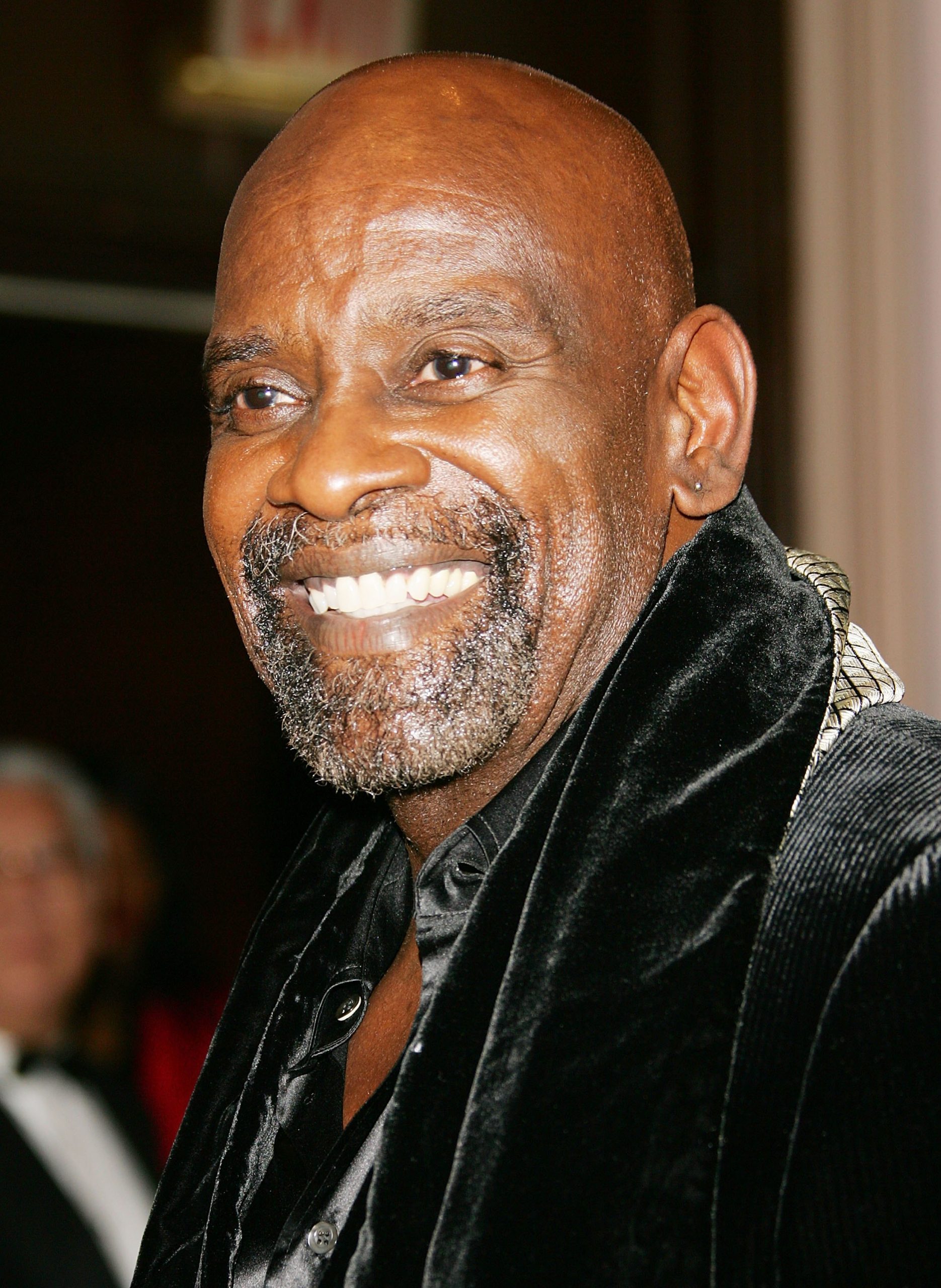
As of 2026, Alston Gardner’s net worth is estimated to be in the mid-to-high nine-figure range, primarily anchored by the landmark $300 million sale of his company, OnTarget, to Siebel Systems. His sustained wealth is the result of disciplined private equity management through Fulcrum Ventures and strategic leadership roles within the University of North Carolina (UNC) ecosystem and the Morehead-Cain Foundation.
The Foundation of Alston Gardner’s Wealth: The OnTarget Exit
To understand Alston Gardner’s financial standing in 2026, one must look back at the defining moment of his professional career: the acquisition of OnTarget. Founded by Gardner, OnTarget became the gold standard in sales methodology and training for high-growth technology companies during the late 1990s.
In 2000, at the height of the enterprise software boom, Siebel Systems—then the dominant force in Customer Relationship Management (CRM) software—acquired OnTarget for approximately $300 million in a combination of cash and stock. This transaction did more than just provide Gardner with a significant liquidity event; it positioned him as a central figure in the tech-enablement space.
The Strategic Value of OnTarget
OnTarget wasn't merely a training company; it provided the intellectual framework that many Silicon Valley giants used to scale their sales teams. By the time of the sale, Gardner had built an organization that was indispensable to the B2B tech sector. The capital gained from this exit served as the "seed corn" for his subsequent two decades of investment and philanthropic work.
Stock Transition and Portfolio Diversification
While the initial sale price was $300 million, the context of Gardner's net worth depends on the management of that capital. Following the acquisition, Siebel Systems was eventually acquired by Oracle in 2005. Investors and executives who transitioned their holdings into diversified portfolios or participated in the subsequent Oracle growth saw their initial wealth compound significantly. Gardner’s transition from an operator to an investor allowed him to preserve and grow this capital through multiple market cycles, including the tech corrections of the early 2000s and the 2008 financial crisis.
Fulcrum Ventures and the Growth Equity Model
Following the OnTarget era, Gardner focused his professional energy on Fulcrum Ventures, a private equity firm where he served as a Managing Partner. This phase of his career is crucial for understanding his 2026 net worth, as it represents the transition from a single-asset founder to a multi-asset institutional investor.
Targeted Investment Strategy
Fulcrum Ventures specialized in "growth equity," targeting lower-middle-market companies that were already profitable but needed capital to scale. Unlike high-stakes venture capital, which often bets on unproven concepts, Gardner’s approach at Fulcrum was characterized by:
- Revenue Stability: Investing in companies with proven product-market fit.
- Operational Oversight: Leveraging Gardner’s experience at OnTarget to provide strategic guidance to portfolio CEOs.
- Sector Focus: Primarily focusing on business services, tech-enabled services, and healthcare.
Compounding Returns
By 2026, the cumulative returns from a career in private equity can often eclipse the value of an initial business sale. If the initial $300 million (or a substantial portion thereof) was reinvested into growth equity and diversified market indices, the "contextual" net worth of an individual like Gardner would logically reach the upper echelons of private wealth. His ability to identify scalable business models has been a hallmark of his financial longevity.
The Morehead-Cain Foundation and Institutional Leadership
Gardner’s net worth is often discussed in tandem with his influence at the University of North Carolina at Chapel Hill. He has served as the Chairman of the Morehead-Cain Foundation and as a member of the UNC Board of Trustees. While these are not "income-generating" roles in the traditional sense, they reflect a level of financial independence and "social capital" that is characteristic of high-net-worth individuals.
Philanthropic Commitment
Philanthropy on this scale requires a robust financial base. The Morehead-Cain Scholarship is one of the most prestigious and well-endowed undergraduate scholarship programs in the United States. Gardner’s leadership in this organization suggests that a significant portion of his wealth is directed toward institutional sustainability.
In the context of 2026, Gardner’s legacy is defined as much by his "giving" as his "getting." High-net-worth individuals at this stage of their careers often shift their focus toward legacy-building, where net worth serves as a tool for systemic impact rather than mere personal consumption.
The UNC Ecosystem
Gardner’s involvement with the UNC Board of Trustees involves overseeing multi-billion dollar budgets and complex capital campaigns. This proximity to institutional finance reinforces his status as a sophisticated financial actor. His insights into the "business of education" have likely mirrored his private sector investments in ed-tech and professional development.
Estimating Net Worth in 2026: Economic Factors
Calculating a private individual's net worth involves analyzing both historical data and current economic conditions. As of 2026, several factors influence the valuation of Gardner’s estimated assets.
| Wealth Component | Description | Impact on 2026 Valuation |
|---|---|---|
| Initial Exit Capital | The 2000 sale of OnTarget to Siebel Systems. | Primary foundation; high impact due to long-term compounding. |
| Private Equity (Fulcrum) | Management fees and carried interest from portfolio exits. | Significant growth driver through the 2010s and early 2020s. |
| Real Estate Holdings | Private residences and potential commercial interests. | Likely stable appreciation in line with luxury market trends. |
| Public Market Investments | Diversified equity portfolios managed through family offices. | Influenced by the 2024-2026 market stabilization. |
| Philanthropic Outflows | Large-scale donations to UNC and Morehead-Cain. | Reduces liquid net worth but increases social/institutional equity. |
The Role of Inflation and Asset Appreciation
Between 2000 and 2026, the purchasing power of the dollar has changed significantly. A $300 million exit in 2000 is equivalent to over $530 million in 2026 inflation-adjusted terms. However, professional investors rarely let cash sit; by 2026, a well-managed portfolio based on that original capital would likely be valued significantly higher than the inflation-adjusted baseline.
Strategic Networking and Global Influence
One cannot discuss Alston Gardner’s net worth without mentioning his role in global business networks. Gardner has long been a proponent of global education and cross-border business collaboration. This global outlook has likely influenced his investment portfolio, moving beyond US-centric assets to include international tech and service sectors.
Mentorship as an Asset
In the business world, "contextual" wealth includes the value of one's network. Gardner has mentored dozens of entrepreneurs who have gone on to lead major corporations. In 2026, this "network equity" often manifests as early-access investment opportunities (angel investing) or advisory roles that come with equity grants. These "off-balance-sheet" assets are common among retired or semi-retired executives of Gardner’s stature.
Common Misconceptions About High-Profile Net Worth
When searching for "Alston Gardner net worth," many readers encounter automated "celebrity net worth" sites that often provide outdated or purely speculative numbers. It is important to distinguish between:
- Liquid Wealth: Cash and easily tradable securities.
- Asset Wealth: The value of private companies, real estate, and equity in investment funds.
- Controlled Wealth: Capital managed through foundations where the individual has influence but not ownership.
In Gardner’s case, the majority of his value in 2026 likely sits in the second and third categories. As a private citizen, he is not required to disclose his personal balance sheet, which is why "contextual" analysis—looking at his career trajectory and known institutional roles—is the most accurate way to gauge his financial standing.
The Evolution of the "Sales Professional" Wealth Model
Alston Gardner represents a specific era of wealth creation where expertise in sales methodology was as valuable as expertise in software coding. This is a critical context for his net worth.
In the current 2026 market, many of the principles Gardner championed at OnTarget—such as "Target Account Selling"—are still embedded in modern CRM systems. The intellectual property he helped popularize created a ripple effect in the tech industry, ensuring that his name remains synonymous with the professionalization of B2B sales. This enduring reputation contributes to his "brand equity," which facilitates high-value board placements and consulting engagements.
Frequently Asked Questions
How did Alston Gardner make his money?
The primary source of Alston Gardner's wealth was the sale of his sales training and consulting company, OnTarget, to Siebel Systems in 2000 for roughly $300 million. He subsequently grew this wealth through his role as Managing Partner at Fulcrum Ventures and other strategic investments.
What is Alston Gardner's connection to UNC?
Gardner is a deeply involved alumnus of the University of North Carolina at Chapel Hill. He has served as a member of the Board of Trustees and as the Chairman of the Morehead-Cain Foundation, which oversees one of the nation's most prestigious merit scholarship programs.
Does Alston Gardner still run OnTarget?
No. OnTarget was acquired by Siebel Systems in 2000. Siebel was later acquired by Oracle in 2005. The OnTarget methodologies were integrated into Siebel's software offerings, and Gardner moved on to private equity and philanthropic leadership.
What is Fulcrum Ventures?
Fulcrum Ventures is a private equity firm that focuses on growth equity investments in lower-middle-market companies. Alston Gardner served as a Managing Partner, utilizing his operational expertise to help scale profitable businesses.
Is Alston Gardner's net worth publicly disclosed?
No. As a private individual and private equity investor, Gardner is not required to publicly disclose his total net worth. Estimates are based on historical business sales, known investment roles, and his level of philanthropic activity.
How has the 2026 economy affected his net worth?
By 2026, the economy has seen a stabilization of tech valuations and a continued emphasis on profitable growth over "growth at any cost." This environment favors the growth equity model Gardner championed at Fulcrum Ventures, likely resulting in a stable or increasing net worth.
Final Perspective: Wealth as a Tool for Institutional Change
In 2026, Alston Gardner’s net worth should be viewed not just as a figure on a ledger, but as a testament to the value of operational excellence. From his early days of defining how the world’s largest companies sell products, to his current role as a steward of one of the most important educational foundations in the country, his financial journey is one of strategic accumulation followed by purposeful distribution.
For those looking to replicate his success, the takeaway is clear: focus on creating a service or methodology that becomes indispensable to an entire industry. The "context" of his wealth is a career spent at the intersection of technology, education, and strategic investment.