Alaska Airlines flight attendants are compensated through a complex, seniority-based pay scale that factors in hourly rates, minimum monthly guarantees, premium pay for specific duties, and annual step increases. Flight attendants are paid for flight time, with additional compensation provided for boarding, reserve duty, per diem expenses, and international routes, allowing total annual earnings to vary based on monthly hours flown and contractual allowances.
Navigating the financial structure of an airline career requires a comprehensive understanding of how compensation is calculated, structured, and grown over time. For individuals evaluating careers in aviation or current applicants preparing for initial training, understanding the Alaska Airlines flight attendant pay scale provides essential insight into earning potential. Compensation in the commercial aviation industry differs significantly from standard 9-to-5 employment models. Rather than receiving a static annual salary, flight attendants operate under collective bargaining agreements that dictate exact hourly wages, minimum guarantees, and rules governing compensation for time spent on the ground and in the air.
The Foundations of Flight Attendant Compensation at Alaska Airlines
The compensation framework for flight attendants at Alaska Airlines is established through collective bargaining agreements negotiated between the airline and the Association of Flight Attendants-CWA (AFA-CWA). These agreements dictate the hourly wage rates, rules for trip rig calculations, and minimum guarantees that protect workers during months with fewer scheduled flights.
Unlike traditional salaried positions, flight attendants are primarily compensated for "block time"—the time elapsed from the moment an aircraft pushes back from the departure gate until it parks at the arrival gate. However, modern airline compensation has evolved to include partial or full pay for ground duties, such as passenger boarding, which historically went uncompensated. Understanding how these baseline metrics interact with the seniority structure is the first step in analyzing the Alaska Airlines flight attendant pay scale.
Furthermore, compensation is heavily influenced by operational rules known as "rigs." A duty rig and a trip rig ensure that flight attendants receive a minimum amount of pay relative to the time spent on duty or away from base, protecting them from inefficiencies in scheduling. For example, if a flight attendant is on duty for a long period but accumulates very little actual flight time, a duty rig ensures they are compensated for their time commitment.
The Seniority Step System: How Pay Increases Over Time
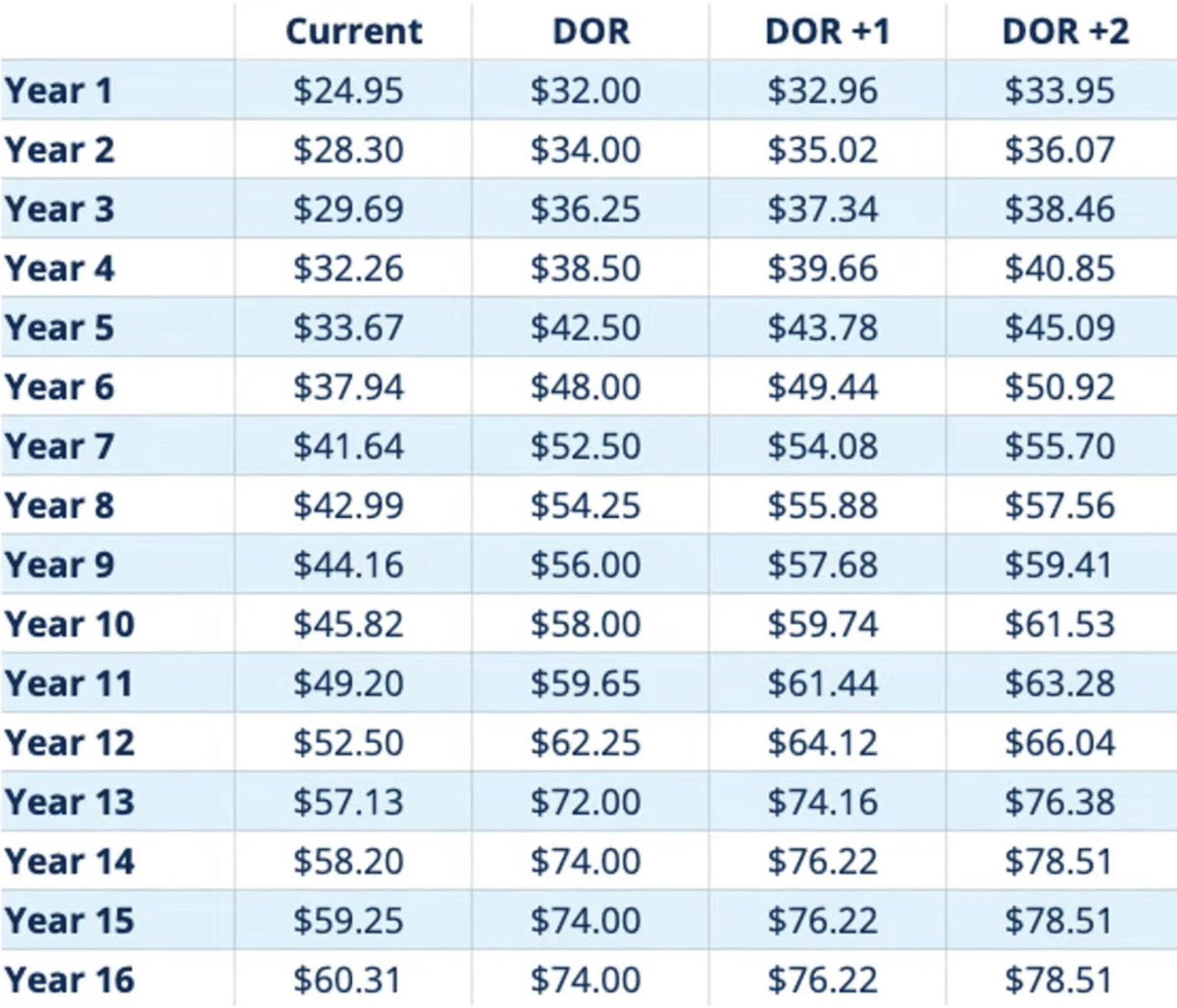
The backbone of the Alaska Airlines flight attendant pay scale is the seniority step system, often referred to as longevity steps. New hires start at Step 1, representing the entry-level hourly wage for training graduates and probationary flight attendants. With each successive year of employment with the company, flight attendants advance one step on the pay scale, resulting in an automatic hourly wage increase until they reach the top of the scale.
Seniority progression is measured by company seniority, which begins on the first day of initial training or ground school. This structure creates a predictable long-term career trajectory where earnings increase annually regardless of broader economic fluctuations, barring negotiated contract changes. The top of the pay scale is typically reached after a set number of years—often ranging from 12 to 15 years depending on the specific collective bargaining agreement in effect—after which hourly pay increases are tied exclusively to cost-of-living adjustments or general wage increases negotiated during contract amendable periods.
| Seniority Step / Year | Approximate Description | Compensation Focus & Structural Factors |
|---|---|---|
| Year 1 | Initial Hire / Probationary | Base hourly rate, minimum monthly guarantee, mandatory unpaid or low-paid initial training stipends. |
| Years 2–5 | Early Career Growth | Annual step increments, increasing schedule flexibility, eligibility for minor premium assignments. |
| Years 6–10 | Mid-Level Experience | Substantial hourly increases, eligibility for line holder status, optimal base assignments. |
| Years 11+ | Senior Flight Attendant | Top-tier hourly rates, maximum schedule control, high-value trip acquisition, priority vacation bidding. |
Direct Flight Pay and Minimum Monthly Guarantees
The primary driver of monthly income is direct flight pay, calculated by multiplying the total block hours flown by the flight attendant's current hourly step rate. However, to protect workers from volatile scheduling and seasonal fluctuations in flight volume, Alaska Airlines guarantees a minimum number of paid hours per month, typically referred to as the Minimum Monthly Guarantee (MMG).
Even if a flight attendant's scheduled trips fall below the MMG threshold due to weather cancellations, reserve scheduling anomalies, or low line construction, they are guaranteed to receive compensation equivalent to the minimum hours. Conversely, flight attendants who pick up open time, work on their days off, or fly high-utilization pairings can exceed the MMG, substantially increasing their monthly gross pay.
Reserve flight attendants—those who are on call to cover open trips due to illness or irregular operations—also operate under the MMG framework. While reserve life involves unpredictability, reserve guarantees ensure a stable baseline income, while reserve pick-ups and premium availability can push earnings higher.
Supplemental Pay: Boarding Pay, Per Diem, and Premiums
Beyond standard hourly flight pay, Alaska Airlines flight attendants earn supplemental income through several contractually mandated mechanisms:
- Boarding Pay: Flight attendants receive compensation for time spent during the passenger boarding process prior to departure. This hourly or trip-based addition recognizes the safety, security, and customer service duties executed while the aircraft is still at the gate.
- Per Diem: To offset the cost of meals and incidental expenses while away from their designated domicile base, flight attendants receive a non-taxable per diem allowance for every hour spent away from home, starting from check-in time until release at their home base.
- Language and Purser Premiums: Flight attendants who are certified to speak designated foreign languages or who undergo specialized training to act as lead flight attendants (pursers) on mainline flights receive an hourly premium added to their base wage when performing those duties.
- Holiday and Overtime Pay: Working on designated holidays or picking up trips that trigger overtime rules (such as flying on scheduled days off or exceeding specific monthly thresholds) results in premium pay multipliers, often ranging from time-and-a-half to double time.
Factors Influencing Total Annual Earnings
While hourly wage charts provide a clear picture of base rates, a flight attendant's actual annual take-home pay depends on a variety of operational and personal choices. Total compensation varies widely across the workforce based on individual scheduling preferences and lifestyle choices.
Credit Hours vs. Clock Hours
Flight attendants do not necessarily work a standard 40-hour workweek. Instead, schedules are built around credit hours. A trip might take 10 hours of actual time to complete, but due to minimum daily guarantees or trip rigs, it might "credit" 12 hours. Maximizing credit hours relative to actual time spent working is a key skill for optimizing income.
Domicile Location and Cost of Living
Alaska Airlines operates several major crew bases (domiciles), including Seattle, Anchorage, Portland, San Francisco, Los Angeles, San Diego, and Boise. While the pay scale is uniform across all bases, the local cost of living and commuting logistics significantly impact net financial outcomes. Commuting flight attendants—those who live in a city different from their assigned domicile—must factor in commuting costs and standby travel realities.
Schedule Flexibility and Open Time
The ability to trade trips, drop assignments, or pick up high-value open time allows flight attendants to tailor their work schedules. Those seeking maximum earnings frequently pick up open trips on days off at premium rates, while those prioritizing lifestyle balance may work closer to the minimum monthly guarantee.
Frequently Asked Questions
How is the starting pay determined for new Alaska Airlines flight attendants?
Starting pay is determined by Step 1 of the flight attendant pay scale, as outlined in the current collective bargaining agreement. New hires also receive a living allowance or training pay during initial ground school, though specific training compensation terms are governed by company policy and union agreements.
Do Alaska Airlines flight attendants get paid during boarding?
Yes, Alaska Airlines flight attendants receive boarding pay for time spent working during the pre-departure passenger boarding process. This compensates crew members for the security checks, safety demonstrations, and customer assistance provided while the aircraft remains parked at the gate.
How often do flight attendants receive pay increases?
Flight attendants advance one step on the pay scale every year on their company seniority date until they reach the maximum longevity step. Additionally, overall wage rates across all steps can increase when the union and airline negotiate and ratify updates to the collective bargaining agreement.
What is a Minimum Monthly Guarantee (MMG)?
The Minimum Monthly Guarantee is the contractual baseline number of hours flight attendants are paid for each month, regardless of whether their actual scheduled flight hours fall below that threshold. It provides income stability during slow operational periods or unexpected schedule reductions.
Does Alaska Airlines pay per diem for layovers?
Yes, flight attendants receive an hourly per diem rate for every hour spent away from their home domicile. This tax-free allowance is designed to cover meals and incidental expenses incurred while staying downline on layovers between scheduled flight assignments.
Next Actions and Further Exploration
For prospective applicants preparing for interviews or new hires evaluating their career path, reviewing the complete collective bargaining agreement via the Association of Flight Attendants (AFA-CWA) website or official airline recruitment portals offers precise, up-to-date figures. When assessing airline career opportunities, prospective crew members should evaluate hourly rates alongside reserve rules, base locations, and total benefit packages to gain a complete financial perspective.