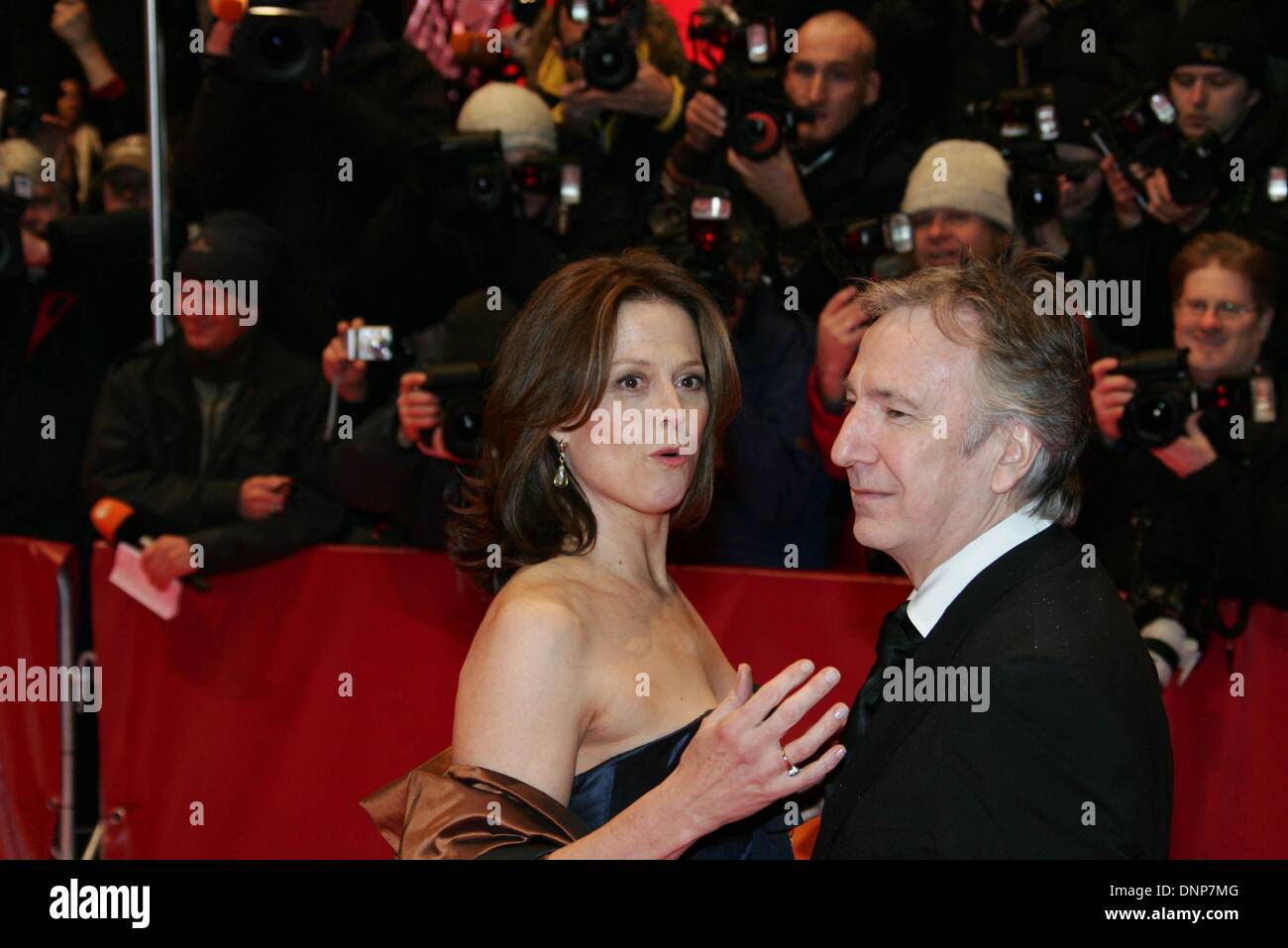
The 2006 indie drama Snow Cake features a profound collaboration between Alan Rickman and Sigourney Weaver, portraying the unlikely bond between a grieving Englishman and an autistic mother. Their performances are celebrated for eschewing Hollywood melodrama in favor of a quiet, authentic exploration of neurodiversity, guilt, and the transformative power of unconventional friendships.
Set against the stark, frozen backdrop of Wawa, Ontario, Snow Cake is a film that relies almost entirely on the interior lives of its protagonists. While many viewers initially sought out the film due to the star power of its leads—Alan Rickman, then in the height of his Harry Potter fame, and Sigourney Weaver, a sci-fi icon—they discovered a delicate character study that remains a touchstone for nuanced acting. As we look back from 2026, two decades after its release, the film’s reputation has only grown, particularly for its sensitive portrayal of autism and its showcase of Rickman’s range beyond the archetypal villain.
The Genesis of an Unlikely Cinematic Pairing
The production of Snow Cake began with a script by Angela Pell, who drew significant inspiration from her own experiences as the mother of an autistic son. This personal connection provided the foundation for a narrative that felt lived-in rather than researched. When the script reached Alan Rickman, he was immediately drawn to the character of Alex Hughes—a man burdened by a past trauma that is only slowly revealed to the audience.
Rickman was instrumental in bringing Sigourney Weaver onto the project. The two had previously worked together on the 1999 sci-fi comedy Galaxy Quest, where they developed a strong mutual respect. However, Snow Cake demanded a completely different dynamic. Rickman recognized that Weaver possessed the intellectual rigor and physical discipline necessary to play Linda Freeman, a woman whose neurological makeup prevents her from experiencing or expressing grief in a traditional manner.
The film was directed by Marc Evans, who chose to lean into the atmospheric isolation of Northern Ontario. This choice was not merely aesthetic; the cold, crystalline environment served as a physical manifestation of the characters' emotional states. For Rickman and Weaver, the filming process involved navigating both the sub-zero temperatures and the complex psychological terrain of Pell’s screenplay.
Alan Rickman as Alex Hughes: A Masterclass in Restraint
In the mid-2000s, Alan Rickman was globally recognized as Severus Snape, a role defined by controlled malice and hidden depths. Snow Cake offered him the opportunity to play a character who was equally guarded but far more vulnerable. Alex Hughes is a man who has just been released from prison for a crime of passion and finds himself in a fatal car accident that kills a young hitchhiker, Vivienne.
Rickman’s performance is built on a foundation of "listening." He spends much of the film reacting to the world around him with a weary, soulful resignation. His portrayal of Alex is not one of a hero, but of a survivor who is perpetually searching for a way to atone for a past he cannot change.
The Evolution of Alex's Grief
The brilliance of Rickman’s work in Snow Cake lies in how he depicts the gradual thawing of Alex’s emotional exterior. When he first meets Linda, he is looking for a way to discharge his guilt by helping her. He expects a standard grieving process—tears, funeral arrangements, and shared sorrow. Instead, he is met with a woman who is more concerned with the cleanliness of her kitchen and the texture of snow. Rickman plays this frustration and confusion with a dry, British wit that prevents the film from becoming overly sentimental.
Sigourney Weaver’s Portrayal of Linda Freeman
Sigourney Weaver’s performance as Linda Freeman is often cited by clinicians and film critics alike as one of the most accurate depictions of high-functioning autism in 21st-century cinema. To prepare for the role, Weaver spent significant time with Ros Blackburn, a well-known autistic speaker and consultant. Weaver’s goal was to avoid the "Rain Man" tropes of savant-like genius, focusing instead on the sensory realities and social challenges of the condition.
Linda is a character who finds joy in the simple, tactile sensations of life—the feel of a "snow cake" (a handful of fresh snow eaten like a snack) or the rhythmic spinning of a washing machine. She does not maintain eye contact, and her speech patterns are blunt and literal.
Authenticity and Controversy
While the film was praised for its sincerity, Weaver’s casting—as a neurotypical actress playing an autistic character—is a subject that has been viewed through evolving lenses. By 2026, the industry has shifted toward prioritizing neurodivergent actors for such roles. However, historians of the craft note that Weaver’s performance was a major step forward in 2006, moving away from portraying autism as a tragedy to be cured. Instead, she portrayed Linda as a complete person who simply processed the world through a different "operating system."
The Dynamics of the Rickman-Weaver Relationship
The core of Snow Cake is the chemistry between Alex and Linda. It is not a romantic chemistry; rather, it is a symbiotic relationship based on mutual need. Alex needs a purpose to distract him from his self-loathing, and Linda needs someone to navigate the logistical hurdles of her daughter’s death—tasks she is functionally capable of but emotionally detached from.
One of the most memorable sequences involves Linda insisting that Alex jump on her trampoline. It is a moment of pure, childlike kineticism that forces the rigid, middle-aged Alex to break his physical and emotional posture. Weaver’s uninhibited joy contrasts sharply with Rickman’s initial reluctance, creating a scene that is both humorous and profoundly moving.
Their interactions are punctuated by silence. Unlike many Hollywood scripts that rely on heavy exposition, Snow Cake allows the actors to communicate through subtext. Rickman uses his voice—that famous, resonant baritone—to convey a gentleness that his character hides from the rest of the world, while Weaver uses her physical presence to establish the boundaries of Linda’s personal space.
Comparison of Character Archetypes in Snow Cake
The following table outlines the stark contrasts between the two lead characters, which fuels the film's central tension and ultimate resolution.
| Feature | Alex Hughes (Alan Rickman) | Linda Freeman (Sigourney Weaver) |
|---|---|---|
| Primary Motivation | Seeking atonement and relief from guilt. | Maintaining order and sensory comfort. |
| Communication Style | Sarcastic, articulate, emotionally guarded. | Literal, blunt, non-verbal cues. |
| Reaction to Death | Intense internal trauma and responsibility. | Detached, focused on immediate routine. |
| Physicality | Rigid, heavy, constrained. | Energetic, tactile, sensory-focused. |
| Arc | Moving from isolation to human connection. | Finding a temporary "bridge" to the neurotypical world. |
Themes of Grief and the Wawa Landscape
The town of Wawa, Ontario, is more than just a setting; it acts as a silent character in the film. The vast, white expanses of snow represent the blank slate Alex is looking for, as well as the sensory purity that Linda craves. The director, Marc Evans, utilizes wide shots to emphasize how small and isolated these individuals are in the face of nature and their own histories.
The "Snow Cake" metaphor itself is central to the film's philosophy. To Linda, a snow cake is something beautiful, temporary, and pure. It represents the ability to find wonder in the immediate present, a skill that Alex lacks. For Alex, the "cake" is a reminder that life can be sweet despite the cold. This theme of finding beauty in the midst of tragedy is what prevents the film from being a "misery memoir" and instead turns it into a meditation on resilience.
Critical Legacy and Awards
Upon its release, Snow Cake was selected as the opening film for the 56th Berlin International Film Festival. Critics were nearly unanimous in their praise for the lead performances. While some felt the subplot involving Carrie-Anne Moss (who plays a local woman Alex becomes involved with) was less developed, the central Rickman-Weaver duo was seen as a powerhouse pairing.
The film received several nominations at the Genie Awards (now the Canadian Screen Awards), including Best Motion Picture. For Rickman, it remains one of the best examples of his ability to anchor a film with subtle emotional intelligence. For Weaver, it remains a performance she often cites as one of her most challenging and rewarding.
By 2026, Snow Cake has found a permanent home in the canon of "quiet" cinema—films that don't rely on spectacle but on the intricate dance of human interaction. It is frequently studied in film schools for its use of environment and its approach to depicting disability without falling into the "inspiration porn" trap.
Frequently Asked Questions
Is Snow Cake based on a true story?
No, Snow Cake is not a true story in the sense of being a biographical account. However, it is deeply rooted in truth. The screenwriter, Angela Pell, wrote the character of Linda based on her experiences raising her autistic son. Furthermore, Sigourney Weaver's performance was heavily influenced by her time spent with Ros Blackburn, a real-life autistic woman who provided the behavioral template for Linda.
Where was Snow Cake filmed?
The film was shot on location in Wawa, Ontario, Canada. Wawa is a small town known for its giant goose statue and its harsh, beautiful winters. The choice of location was deliberate, as the production team wanted to capture the authentic light and atmosphere of Northern Ontario rather than using a film set or a more temperate location.
What is the meaning of the "Snow Cake" in the movie?
The "Snow Cake" refers to Linda's habit of eating handfuls of fresh, clean snow. Symbolically, it represents the purity of her perspective. While others see snow as a nuisance or a danger (as in the accident that kills her daughter), Linda sees it as a source of sensory delight. It serves as a metaphor for the film's message: that value can be found in things that others might overlook or dismiss.
How did Alan Rickman and Sigourney Weaver prepare for their roles?
Sigourney Weaver undertook an intensive period of research, including living with and observing autistic individuals to master the specific vocal tics and physical mannerisms of the condition. Alan Rickman focused on the internal life of his character, Alex, working on the backstory of a man who has spent years in prison and is struggling to reintegrate into a world that feels alien to him.
What happened to the hitchhiker in the film?
The hitchhiker, Vivienne (played by Emily Hampshire), is killed in a car accident early in the film. Alex was driving the car when it was struck by a truck. The rest of the movie follows Alex as he seeks out Vivienne’s mother, Linda, to deliver the news and offer his help, which sets the main plot in motion.
Practical Recommendation for Viewers
For those looking to experience Snow Cake for the first time or revisit it in 2026, it is best viewed with an understanding of its 2006 context. It is a slow-burn drama that rewards patience. Pay close attention to the sound design—the way the crunch of snow or the hum of an appliance is amplified—as this helps the audience enter Linda’s sensory world.
If you are a fan of Alan Rickman, this film is essential viewing to see the "human" side of his acting range. For those interested in the history of disability in film, Snow Cake serves as an important bridge between the caricatures of the past and the more authentic, inclusive representations of the present day.