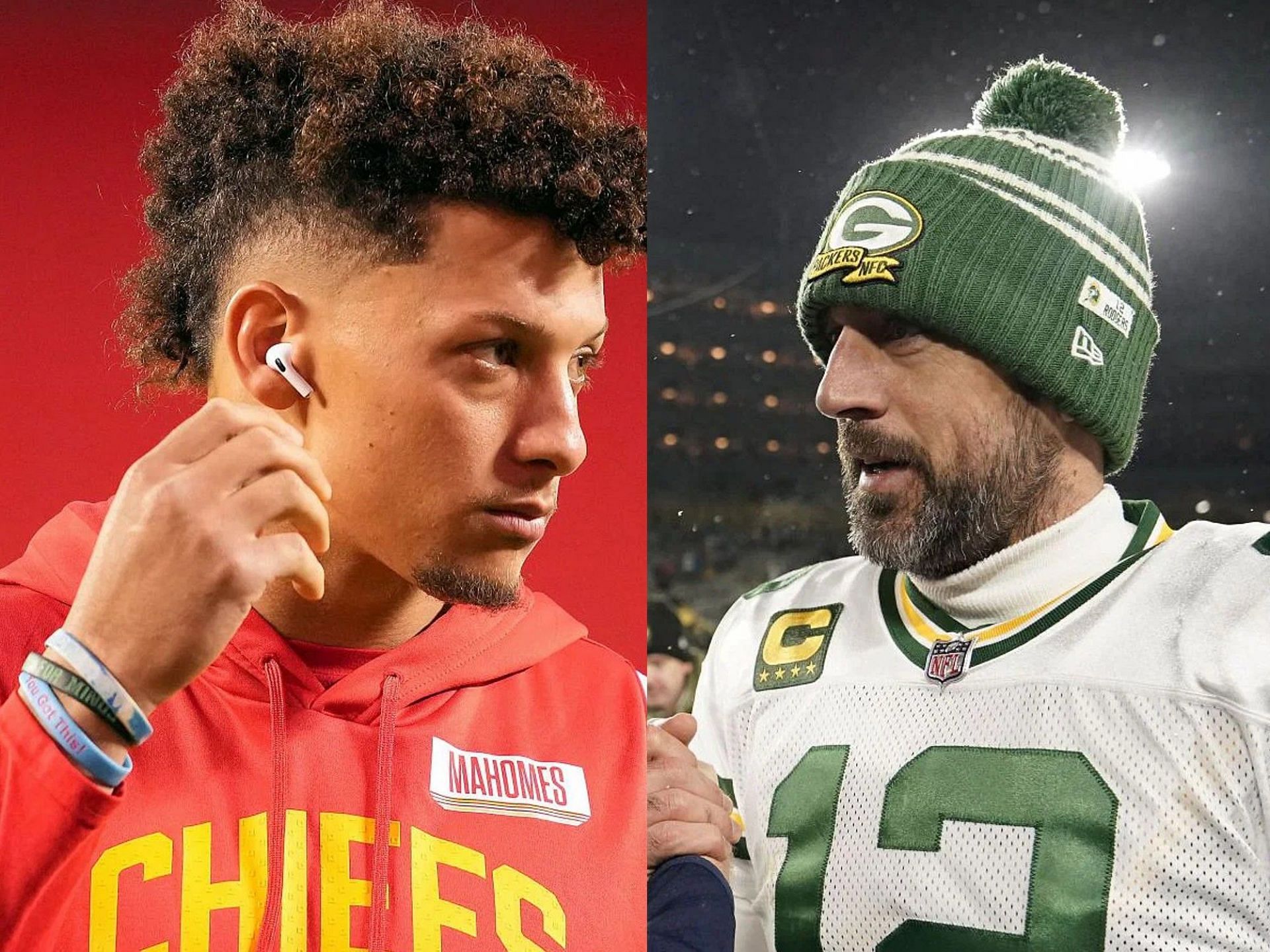
Aaron Rodgers and Patrick Mahomes represent two distinct eras of elite NFL quarterback play, featuring contrasting styles, legendary coaching lineages, and profound impacts on modern offensive football. While Aaron Rodgers has defined the art of efficient pocket passing, pinpoint accuracy, and mastery of the mental aspect of the game over a long career, Patrick Mahomes has popularized a high-octane, improvisational style characterized by sidearm throws, extraordinary arm strength, and a relentless knack for late-game comebacks. Together, these two quarterbacks bridge the gap between traditional West Coast principles and the contemporary era of positionless, creative play-calling.
The Evolution of Quarterback Play: Rodgers and Mahomes in Context
To understand the impact of Aaron Rodgers and Patrick Mahomes, one must look at how the quarterback position has evolved over the past two decades. Aaron Rodgers entered the NFL in 2005 as a first-round draft pick out of California, sitting behind Brett Favre for three seasons before taking over the Green Bay Packers' offense in 2008. His development coincided with the modern shift toward spread offenses, rule changes protecting defenseless receivers, and an increased emphasis on quarterback mobility combined with high-level mechanics. Rodgers refined a style defined by quick releases, minimal turnover ratios, and an uncanny ability to throw accurately on the run.
Patrick Mahomes arrived a decade later, entering the league in 2017 as a first-round selection by the Kansas City Chiefs out of Texas Tech. Mahomes stepped into a league that had fully embraced analytics, RPOs (Run-Pass Options), and wide-open passing schemes. Under the guidance of head coach Andy Reid, Mahomes was given the freedom to merge structured West Coast offense concepts with backyard-style improvisation. Where Rodgers perfected the calculated dissection of defensive coverages through pre-snap reads and disciplined execution, Mahomes introduced a brand of chaos management, regularly completing passes from off-platform angles that traditional coaching manuals historically discouraged.
Playing Style, Mechanics, and Technical Approach
Examining the mechanics and on-field philosophies of both players reveals both sharp contrasts and surprising similarities in their pursuit of excellence.
Aaron Rodgers: Precision, Rhythm, and the Hard Count
Aaron Rodgers is widely regarded as one of the most mechanically sound and efficient throwers in NFL history. His skill set rests on several foundational pillars:
- The Quick Release: Rodgers possesses one of the fastest and most compact throwing motions in football, allowing him to neutralize elite pass rushes by getting the ball out before defenders can close.
- Pre-Snap Command: Known for utilizing the hard count to perfection, Rodgers routinely forces opposing defenses to jump offsides, burn timeouts, or show their coverage shells prematurely.
- Pinpoint Accuracy: His trajectory control and ball placement allow receivers to catch passes in stride, minimizing yards-after-catch opportunities for opponents while maximizing his own pass-catchers' potential.
- Risk Aversion: Historically, Rodgers has prioritized ball security, maintaining one of the lowest interception percentages in league history.
Patrick Mahomes: Off-Platform Mastery and Creative Extension
Patrick Mahomes has redefined what is possible outside the structural pocket, introducing innovative tactical approaches:
- Arm Talent and Elasticity: Mahomes can generate elite throwing velocity from virtually any arm angle, whether running to his left, jumping, falling away, or throwing sidearm around defensive linemen.
- Play Extension: His mobility allows him to turn broken plays into explosive gains, frustrating pass-rushers who maintain discipline for three seconds only to see Mahomes scramble and find an open receiver downfield.
- Aggressive Big-Play Hunting: Mahomes thrives on pushing the ball vertically and testing deep coverage boundaries, trusting his receivers to win 50-50 balls or adjust to off-schedule throws.
- Adaptive Pocket Presence: Beyond his scrambling, Mahomes has matured into a disciplined pocket passer who understands when to take the check-down rather than forcing a low-percentage play.
Career Achievements, Statistics, and Accolades
Both quarterbacks have secured their places in NFL history through remarkable individual achievements and sustained team success.
| Metric / Honor | Aaron Rodgers | Patrick Mahomes |
|---|---|---|
| Draft Position | 1st Round, 24th Overall (2005) | 1st Round, 10th Overall (2017) |
| NFL MVP Awards | 4 (2011, 2014, 2020, 2021) | 2 (2018, 2022) |
| Super Bowl Titles | 1 (Super Bowl XLV) | 3 (Super Bowls LIV, LVII, LVIII) |
| Super Bowl MVP Awards | 1 | 3 |
| First-Team All-Pro Selections | 4 | 2 |
| Career Passer Rating (Approx.) | ~103.6 | ~103.0 |
Rodgers's four MVP awards place him in an elite historical tier alongside Peyton Manning, highlighting his ability to carry rosters through regular-season consistency. Meanwhile, Mahomes's early-career accumulation of Super Bowl rings and Super Bowl MVP honors places him on a trajectory that rivals the greatest dynasties in NFL history.
| Feature | Aaron Rodgers | Patrick Mahomes |
|---|---|---|
| Primary Offense | Modified West Coast / Air Coryell hybrids | Spread West Coast with RPO integration |
| Coaching Tree Influence | Mike McCarthy, Matt LaFleur, Nathaniel Hackett | Andy Reid, Matt Nagy, Eric Bieniemy |
| Signature Skill | Exceptional TD-to-INT ratio and hard count | Off-schedule playmaking and sidearm deliveries |
| Leadership Style | Analytical, demanding, veteran-led composure | High-energy, buoyant, collaborative |
The Impact of Supporting Casts and Coaching
Quarterback success does not occur in a vacuum. Both Rodgers and Mahomes have benefited from—and occasionally had to elevate—their surrounding infrastructure.
For Rodgers, the Green Bay Packers provided long-term stability with head coach Mike McCarthy and later Matt LaFleur. Rodgers worked with elite pass-catchers like Greg Jennings, Donald Driver, Jordy Nelson, Davante Adams, and tight end Jermichael Finley. However, critics frequently point out that the Packers front office rarely spent premium draft capital on wide receivers during the peak of Rodgers's prime, forcing him to elevate mid-round picks and undrafted free agents. Later in his career, Rodgers transitioned to the New York Jets, bringing his veteran presence to an entirely different conference and organizational culture.
Mahomes stepped into an ideal offensive laboratory in Kansas City under Andy Reid, an offensive mastermind known for maximizing quarterback strengths. Mahomes benefited immediately from generational pass-catching talent, most notably tight end Travis Kelce and, in his early years, game-breaking speedster Tyreek Hill. The Chiefs' front office consistently invested in offensive line protection and dynamic skill-position talent, allowing Mahomes to operate within a system that encourages calculated risks and inventive play designs.
Cultural Influence on the Next Generation of Quarterbacks
The stylistic footprints of both players are clearly visible in how high school and college quarterbacks are coached today.
Aaron Rodgers influenced a generation of signal-callers to prioritize mechanics, study pre-snap coverages meticulously, and protect the football. Young quarterbacks study his footwork drills, release speed, and ability to manipulate safeties with subtle head fakes and eye movement.
Patrick Mahomes, on the other hand, changed coaching philosophy regarding unorthodox throws. Prior to Mahomes's emergence, youth and collegiate coaches heavily penalized quarterbacks for throwing off their back foot or using sidearm deliveries. Following Mahomes's historic success, talent evaluators now view creative arm angles and off-platform throws not as flaws, but as valuable traits for escaping pressure and creating offense when plays break down.
Frequently Asked Questions
Who has more Super Bowl rings, Aaron Rodgers or Patrick Mahomes?
Patrick Mahomes has more Super Bowl rings, having won three championships with the Kansas City Chiefs. Aaron Rodgers has won one Super Bowl title with the Green Bay Packers.
What are the main differences in their playing styles?
Aaron Rodgers relies on pinpoint accuracy, quick decision-making, exceptional pre-snap manipulation through hard counts, and a historically low interception rate. Patrick Mahomes utilizes extraordinary arm elasticity, off-platform throwing angles, dynamic scrambling ability, and aggressive play extension to break down defenses.
How many MVP awards have Aaron Rodgers and Patrick Mahomes won?
Aaron Rodgers has won four NFL MVP awards, placing him second all-time behind Peyton Manning. Patrick Mahomes has won two NFL MVP awards.
Did Aaron Rodgers and Patrick Mahomes play against each other often?
Because they played in opposite conferences for the majority of their careers (Rodgers primarily in the NFC North and Mahomes in the AFC West), regular-season matchups between the two have been relatively rare, though highly anticipated when scheduled.
How did their paths to the NFL differ?
Aaron Rodgers was drafted 24th overall in 2005 after playing at Butte College and UC Berkeley, sitting on the bench for three years. Patrick Mahomes was drafted 10th overall in 2017 out of Texas Tech and sat for only one season before taking over the starting role in Kansas City.
Conclusion and Legacy
Evaluating Aaron Rodgers and Patrick Mahomes requires appreciating two distinct peaks of quarterbacking artistry. Aaron Rodgers stands as a monument to execution, efficiency, and mental mastery, maintaining elite statistical production across nearly two decades. Patrick Mahomes represents the dynamic future of the position, blending traditional West Coast principles with unmatched improvisation and a habit of winning championships early in his career. Both players have permanently altered the tactical landscape of the NFL, ensuring their legacies will be studied by football historians and future generations of athletes for decades to come.