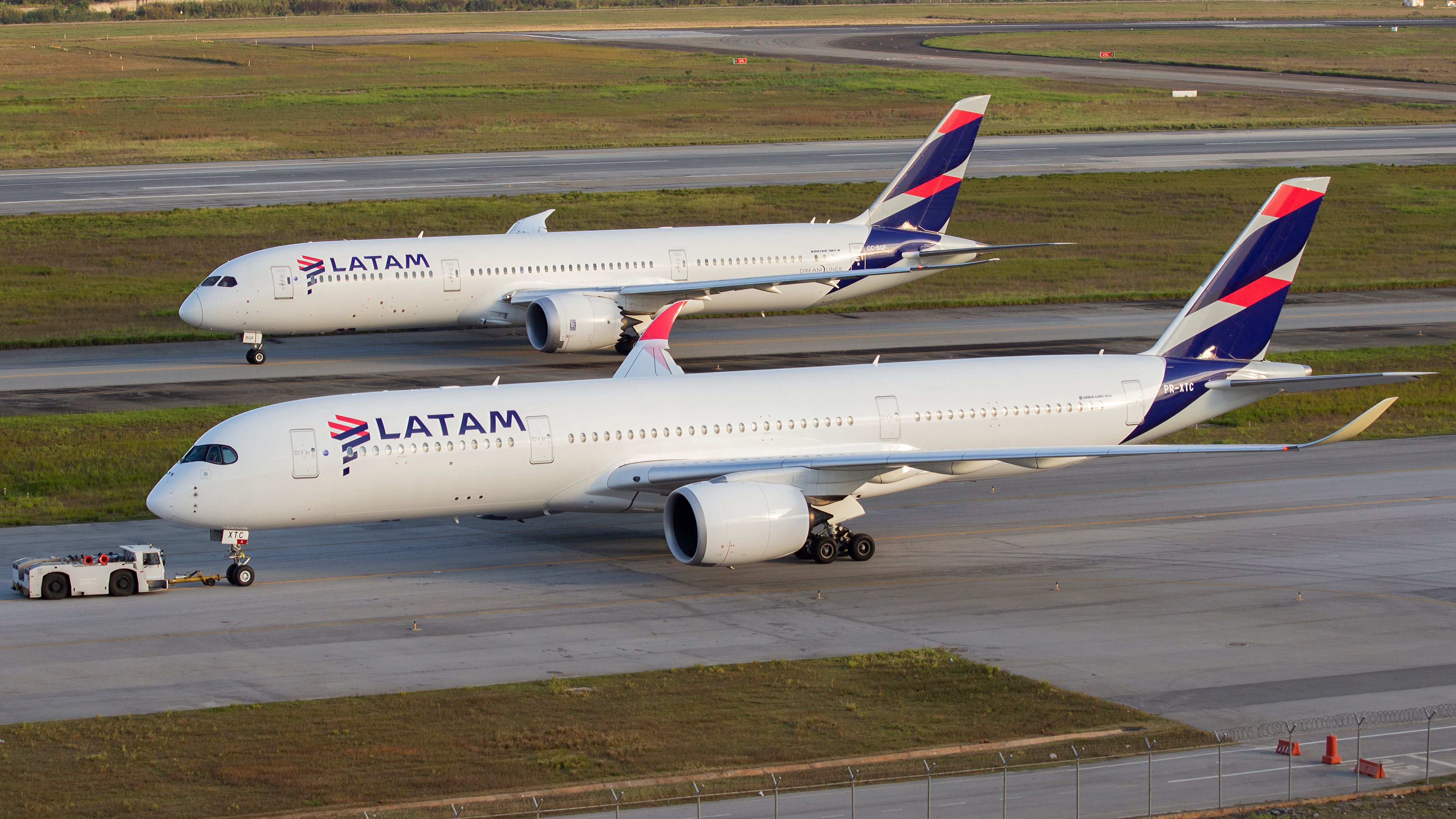
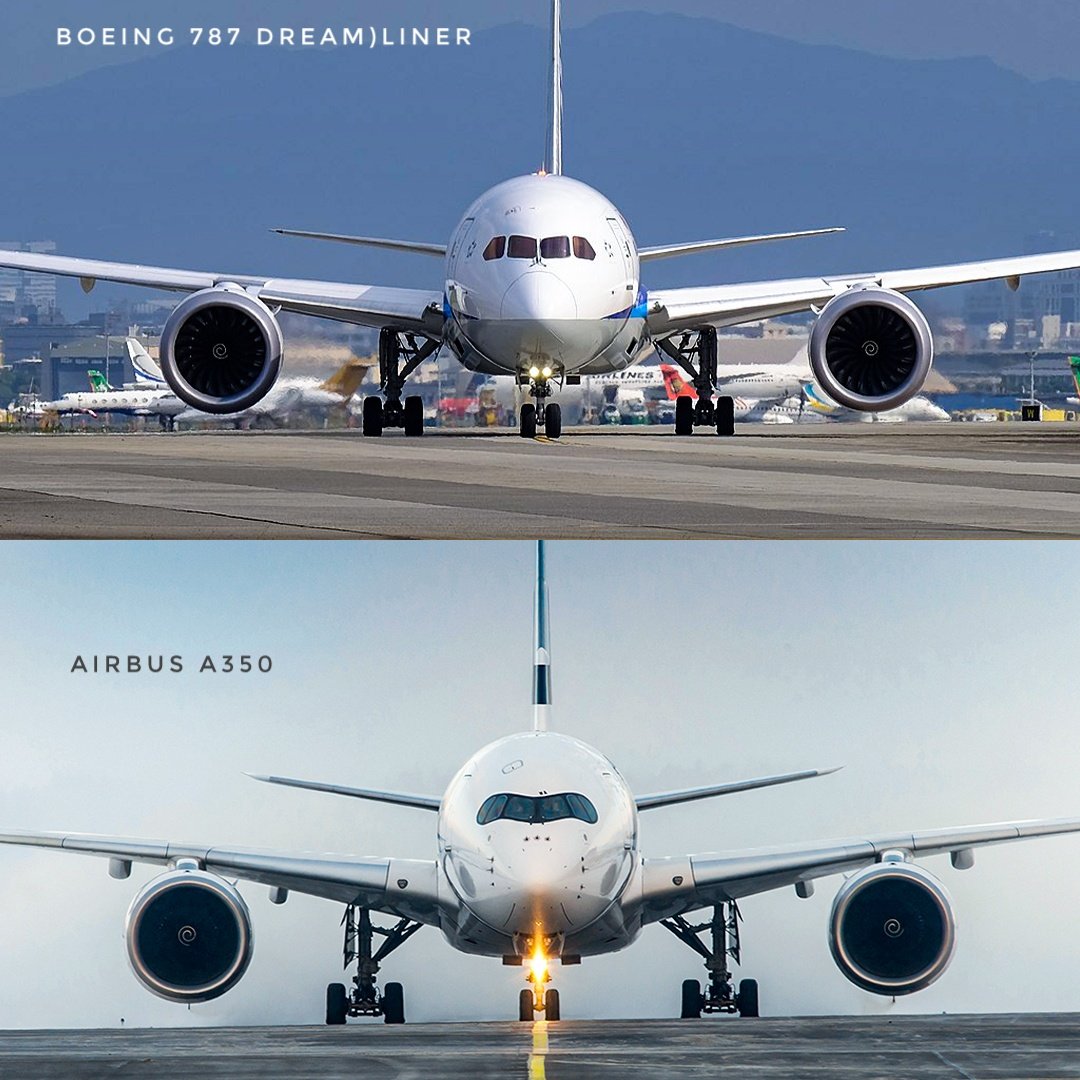
The primary difference between the Boeing 787-10 and the Airbus A350-1000 lies in their operational intent: the 787-10 is a highly efficient "regional" heavyweight optimized for high-density routes up to 6,400 nautical miles, while the A350-1000 is a long-range flagship capable of flying over 8,700 nautical miles with a significantly higher payload.
In the current landscape of 2026, the aviation industry has moved decisively toward twin-engine, composite-heavy widebodies. The Boeing 787-10 Dreamliner and the Airbus A350-1000 represent the largest iterations of their respective families. While they are often mentioned in the same breath as "next-generation" aircraft, they serve distinct niches within an airline's fleet. Choosing between them is not merely a matter of brand preference but a strategic decision based on route architecture, fuel economics, and passenger capacity requirements.
The 787-10 is the "stretch" of the Dreamliner family, designed to maximize seat-mile efficiency at the expense of the extreme range found in its smaller sibling, the 787-9. Conversely, the A350-1000 is Airbus’s answer to the aging Boeing 777-300ER, built to carry more passengers across the world’s longest routes. This comparison explores the technical specifications, operational advantages, and passenger experiences that define these two engineering marvels.
Technical Specifications Comparison
To understand how these aircraft perform in the real world, we must first look at the raw data. As of 2026, both aircraft have undergone minor weight-block improvements and software optimizations that have refined their original launch specifications.
| Feature | Boeing 787-10 | Airbus A350-1000 |
|---|---|---|
| Length | 68.3 m (224 ft 1 in) | 73.79 m (242 ft 1 in) |
| Wingspan | 60.1 m (197 ft 3 in) | 64.75 m (212 ft 5 in) |
| Typical Seating (3-class) | 300 – 330 seats | 350 – 410 seats |
| Maximum Range | ~6,330 nmi (11,730 km) | ~8,700 nmi (16,100 km) |
| Max Takeoff Weight (MTOW) | 254,000 kg (560,000 lbs) | 322,000 kg (710,000 lbs) |
| Engine Options | GEnx-1B or Trent 1000 | Rolls-Royce Trent XWB-97 |
| Fuel Capacity | 126,206 L | 159,000 L |
| Fuselage Material | Carbon Fiber Composite | Carbon Fiber Composite |
The table highlights the fundamental "weight class" difference. The A350-1000 is nearly 70 metric tons heavier at maximum takeoff weight, allowing it to carry substantially more fuel and payload over much greater distances.
Range and Payload: The Capability Gap
The most significant differentiator between the 787-10 and the A350-1000 is the range-payload curve. When Boeing designed the 787-10, they chose to prioritize commonality with the 787-9. This meant using the same wing and landing gear structure while stretching the fuselage. While this kept development costs low and ensured pilot commonality, it resulted in a "weight-limited" aircraft.
The 787-10 is a "regional powerhouse." It excels on routes like Singapore to Tokyo, London to New York, or Dubai to Bangkok. On these 7-to-10-hour missions, the 787-10 offers arguably the best economics in the sky because it isn't "carrying the weight" of massive fuel tanks it doesn't need. However, as the flight duration exceeds 12 hours, the 787-10 begins to struggle with payload restrictions. It cannot fly a full load of passengers and belly cargo from Los Angeles to Sydney without significant compromises.
The A350-1000, however, was designed from the ground up to be a 777-300ER replacement. It features a massive wing area with advanced "morphing" technology that adjusts the flap surfaces in flight to optimize aerodynamics. With its higher MTOW and larger fuel capacity, the A350-1000 is a "true" long-haul aircraft. It can comfortably handle 14-to-16-hour missions, such as Hong Kong to London or Doha to New York, with a full passenger count and significant cargo revenue. For an airline needing a flagship to connect distant global hubs, the A350-1000 is the clear winner in capability.
Structural Engineering and Systems Philosophy
Both aircraft utilize approximately 50% or more carbon-fiber-reinforced polymer (CFRP) in their airframes. This material choice allows for higher cabin humidity and lower cabin altitude, which reduces passenger fatigue and "jet lag" symptoms. However, their internal systems philosophies diverge significantly.
Boeing's "More Electric" Architecture
The 787 family, including the -10, famously moved away from traditional pneumatic "bleed air" systems. In traditional aircraft, hot air is tapped (bled) from the engines to power air conditioning and anti-icing systems. The 787 uses large electric compressors instead. By removing the complex network of high-pressure pipes, Boeing reduced weight and improved engine efficiency. This "More Electric" architecture allows for more precise control of the cabin environment, though it required a significant overhaul of the aircraft's electrical grid, leading to some early-service teething issues that have since been resolved by 2026.
Airbus's Refined Traditionalism
Airbus took a more conservative approach with the A350-1000. It still utilizes a bleed-air system for environmental control but has optimized it to be significantly more efficient than previous generations. Airbus argues that the weight of the electrical generators required for a "no-bleed" system offsets the efficiency gains. Furthermore, the A350's fuselage is constructed using large CFRP panels attached to a metallic frame, whereas the 787 uses "one-piece" composite barrel sections. Airbus claims their panel-based approach makes repairs easier in the event of ground damage, as a single panel can be replaced rather than having to patch a structural cylinder.
Passenger Experience: Cabin Comfort and Layout
For the passenger, the choice between a 787-10 and an A350-1000 often comes down to cabin width and window design.
The Boeing 787-10 Experience:
- Windows: The 787 features the largest windows in the commercial industry. They are electronically dimmable, eliminating plastic shades. This allows the cabin crew to dim the entire cabin while still allowing passengers to see outside.
- Cabin Altitude: Pressurized to approximately 6,000 feet, which is lower than the 8,000 feet found on older aluminum aircraft. This helps maintain higher blood-oxygen levels and reduces headaches.
- Seating Configuration: Almost all airlines fly the 787 in a 3-3-3 configuration in Economy. While efficient for the airline, the 17-to-17.5-inch seat width can feel cramped for larger passengers compared to older jets.
The Airbus A350-1000 Experience:
- Cabin Width: The A350's "Xtra Wide Body" (XWB) design offers a noticeably wider cabin than the 787. In a standard 3-3-3 Economy layout, the A350 provides 18-inch wide seats. This extra half-inch or inch is a significant differentiator in passenger comfort on flights over 10 hours.
- Vertical Walls: The A350 fuselage has a more "upright" wall profile, providing more shoulder room for passengers in window seats.
- Quietness: The Rolls-Royce Trent XWB is widely regarded as one of the quietest engines in the sky, contributing to a lower ambient noise floor in the cabin.
Operational Economics and Maintenance
From an airline's financial perspective, the 787-10 is often seen as the "efficiency king" for specific missions. Its lower empty weight translates directly into lower landing fees and lower fuel burn on shorter segments. For an airline like United or Singapore Airlines, the 787-10 is an ideal tool for high-traffic "trunk" routes where the extreme range of the A350-1000 would be "dead weight."
However, the A350-1000 offers superior "unit costs" (cost per seat-mile) when fully loaded. Because it carries 40 to 60 more passengers than the 787-10, the revenue potential per flight is significantly higher. Additionally, by 2026, the A350-1000 has proven to be an exceptionally reliable aircraft with high dispatch reliability.
Maintenance cycles for both aircraft have been extended compared to previous generations. The use of composites means that "heavy checks" involving corrosion inspections are less frequent and less intensive than they were for the aluminum 777 or A340. The engines—the GEnx/Trent 1000 for the Boeing and the Trent XWB for the Airbus—represent the pinnacle of current propulsion technology, with significantly higher time-on-wing (TOW) intervals than their predecessors.
Choosing the Right Tool: Airline Strategy
The competition between these two aircraft is not a zero-sum game; many airlines operate both.
- The Case for the 787-10: Choose this aircraft if your network consists of 8-to-11-hour "high-density" routes. It is the perfect replacement for the Airbus A330 or older Boeing 777-200s. Its commonality with the 787-8 and 787-9 allows for a "seamless" fleet where pilots can switch between variants with minimal training.
- The Case for the A350-1000: Choose this aircraft if you need a flagship capable of conquering the globe. It is the spiritual successor to the 777-300ER and even the 747 in some fleets. Its ability to carry 400 passengers across oceans without compromise makes it the backbone of global hub-and-spoke networks.
Frequently Asked Questions
Which aircraft is more fuel-efficient?
The 787-10 is generally more fuel-efficient per flight on shorter long-haul routes (under 6,000 nmi) because it is a lighter aircraft. However, the A350-1000 can be more fuel-efficient per seat when flying at high capacity on very long routes due to its larger size and optimized aerodynamics for long-range cruise.
Can the 787-10 fly the same routes as the A350-1000?
Not all of them. While the 787-10 can handle many transatlantic and transpacific routes, it cannot fly "ultra-long-haul" routes (e.g., Singapore to New York or Perth to London) that the A350-1000 handles with ease. The 787-10's range is roughly 2,400 nautical miles shorter than the A350-1000's.
Is the A350-1000 bigger than the Boeing 787-10?
Yes. The A350-1000 is approximately 5.5 meters longer and has a wingspan nearly 5 meters wider than the 787-10. It also typically accommodates about 40 to 80 more passengers depending on the cabin configuration.
Which aircraft has a better cabin environment?
Both offer a similar "high-altitude" comfort experience with 6,000-ft cabin altitudes and higher humidity. The A350-1000 offers a wider cabin and wider seats in Economy, while the 787-10 offers much larger, electronically dimmable windows.
Why do some airlines choose the 787-10 over the A350-1000?
Airlines often choose the 787-10 for its lower acquisition cost and lower operating costs on mid-range routes. If an airline already operates a large fleet of 787-8s or 787-9s, the 787-10 is a natural choice due to pilot and maintenance commonality.
Final Recommendation: Selecting Based on Mission Profile
When evaluating the 787-10 vs A350-1000, the "winner" depends entirely on the mission. For operators looking to maximize efficiency on high-volume routes within a 10-hour radius, the Boeing 787-10 provides an unbeatable combination of low weight and high capacity. It is a precision tool for regional dominance.
For operators requiring a global workhorse that can carry heavy loads to the farthest corners of the earth, the Airbus A350-1000 is the superior choice. Its massive range, extra cabin width, and superior payload capacity make it the definitive replacement for the 777-300ER and a formidable competitor to the upcoming 777X. Before making a fleet commitment, stakeholders should perform a detailed route-by-route analysis to determine if the A350's extra range is a necessary asset or unnecessary weight.