A DUI conviction significantly impacts SR-22 insurance by reclassifying the driver as a high-risk entity, leading to premium increases of 80% to 300%. The SR-22 is a state-mandated certificate proving financial responsibility, which triggers administrative fees, multi-year monitoring periods, and the potential loss of standard coverage, forcing drivers into more expensive non-standard insurance markets.
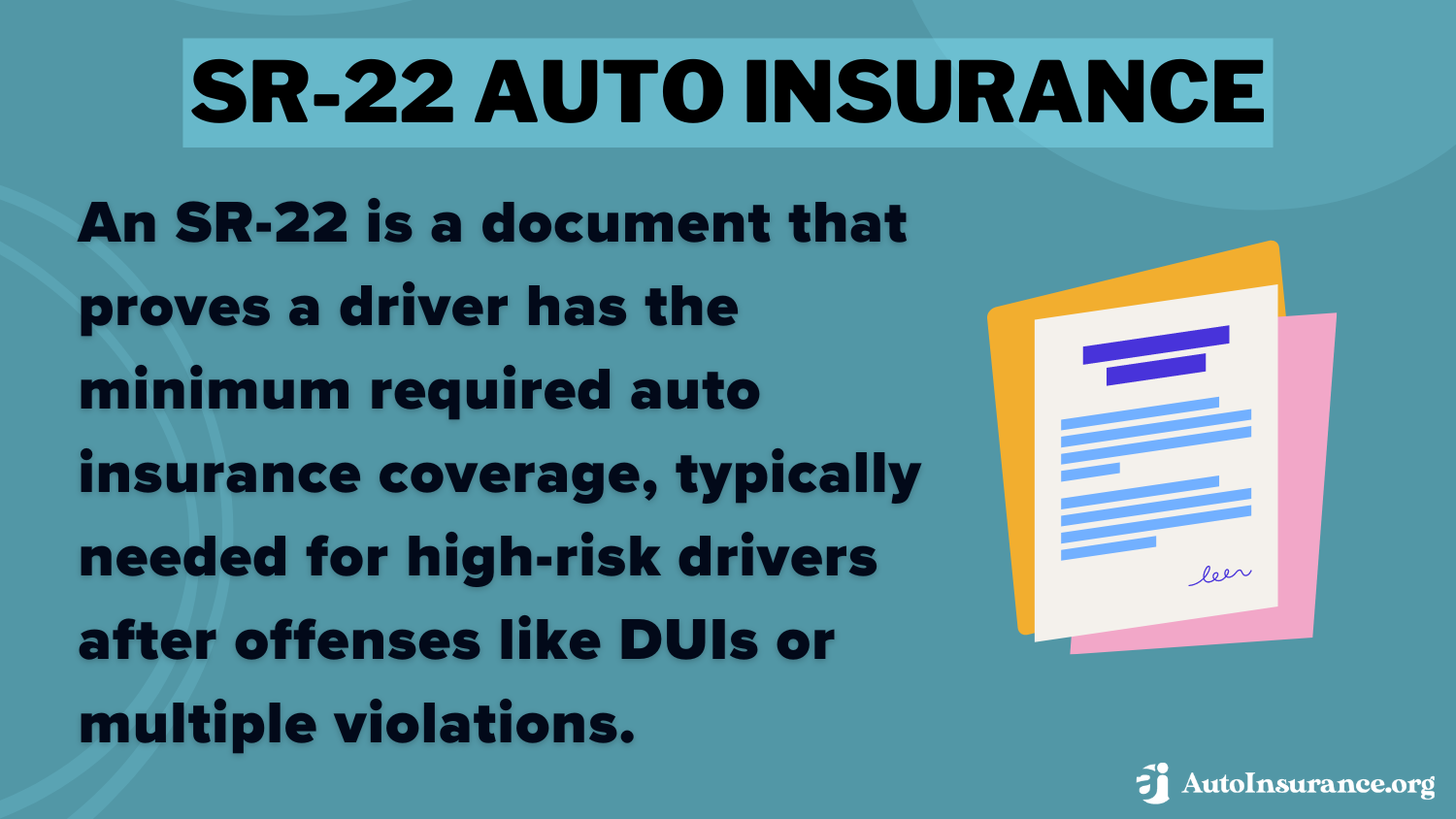
Understanding the intersection of a Driving Under the Influence (DUI) conviction and SR-22 requirements is essential for any driver navigating the legal aftermath of an impaired driving charge. While many people refer to "SR-22 insurance" as a specific policy type, it is actually a document—a Certificate of Financial Responsibility—that an insurance provider files with the state's Department of Motor Vehicles (DMV) or equivalent agency. This filing serves as a guarantee that the driver is carrying at least the minimum liability coverage required by state law.
In 2026, the integration of digital record-keeping and real-time risk assessment has made the SR-22 process more transparent but also more immediate. Once a court or the DMV mandates an SR-22, the impact on your insurance profile is profound and multifaceted.
1. Immediate Reclassification to High-Risk Status
The most fundamental way a DUI impacts your insurance is through the lens of actuarial risk. Insurance companies operate on the principle of probability; they use historical data to predict the likelihood of a future claim. Statistics consistently show that drivers with a DUI conviction are statistically more likely to be involved in high-cost accidents or to repeat the offense.
When you are required to file an SR-22, you are officially labeled a high-risk driver. In 2026, underwriting algorithms are more sensitive than ever. This label moves you out of the "Standard" or "Preferred" rating tiers and into the "Non-Standard" tier. This transition is not merely a name change; it dictates the base rate of your policy before any other factors—like your age or vehicle type—are even considered. Being in a high-risk pool means you are sharing the financial burden of a group of drivers who, as a whole, cost the insurance company more in settlements and legal fees.
2. Exponential Increases in Premium Costs
The most visible impact of a DUI on SR-22 insurance is the cost. Because the insurance company is now taking on a much higher level of risk, they must collect more in premiums to offset potential payouts.
On average, a driver can expect their annual premiums to double or even triple following a DUI-related SR-22 filing. For example, if a driver was paying $1,500 annually for full coverage, that figure could jump to $3,000 or $4,500. This increase remains in effect as long as the SR-22 filing is required.
Furthermore, the "Good Driver" discounts that many policyholders rely on to keep costs low are immediately revoked. In many jurisdictions, state law prohibits insurers from offering good driver discounts to anyone with a major violation like a DUI on their record for at least three to five years.
3. Mandatory Filing and Monitoring Requirements
The SR-22 is not a passive document; it is an active monitoring tool used by the state. When a DUI triggers an SR-22 requirement, your insurance company becomes a de facto reporting agent for the DMV.
If your policy lapses for any reason—whether you cancel it, fail to pay the premium, or the company non-renews you—the insurer is legally obligated to file an SR-26 form. This form notifies the state immediately that your financial responsibility is no longer in place. In 2026, this notification is almost instantaneous due to statewide digital reporting systems. The result is typically an immediate suspension of your driver’s license. This mandatory reporting adds a layer of administrative burden and stress, as even a minor oversight in payment can lead to a total loss of driving privileges and a "reset" of your SR-22 clock.
4. Policy Non-Renewals and Cancellations
A common misconception is that your current insurance company must continue to cover you if you provide them with the SR-22 paperwork. In reality, many "Standard" market insurers (the household names most consumers recognize) do not have a license or a business model that allows them to cover high-risk drivers.
Once you inform your carrier of the DUI or the need for an SR-22, they may choose to:
- Cancel the policy mid-term: If state law allows, they may terminate the contract due to a "material change in risk."
- Non-renew the policy: At the end of your current term, they may simply decline to offer a new policy.
This forces many drivers to seek coverage from surplus lines or non-standard carriers. These companies specialize in high-risk cases but often offer fewer features, such as lower limits for comprehensive and collision coverage, and higher deductibles. Finding a new carrier while a license is suspended or under a DUI cloud is significantly more difficult and often leads to gaps in coverage.
5. Extended Compliance Durations
A DUI conviction doesn't just affect your insurance for one year; it is a multi-year commitment. Most states require drivers to maintain an SR-22 filing for a minimum of three years, though some states—and specific circumstances like a second offense—can extend this to five or ten years.
In 2026, these durations are strictly enforced. If you are required to have an SR-22 for 36 months, and your coverage lapses in month 35, the "clock" often restarts from zero in many jurisdictions. This means the financial impact of the DUI—the high premiums and the filing fees—is a long-term liability that must be factored into your personal budget for nearly half a decade.
6. Administrative and Filing Fees
Beyond the premium increase, there are direct costs associated with the SR-22 itself. Insurance companies typically charge a fee to file the SR-22 on your behalf. While the filing fee is often modest (ranging from $15 to $50), it is a recurring cost if you switch insurers.
Additionally, the state DMV will often charge a license reinstatement fee once you have secured the SR-22. These fees have risen in many states by 2026 to cover the costs of high-risk driver monitoring programs. When you combine the filing fee, the reinstatement fee, and the increased premiums, the "true cost" of a DUI on your insurance profile becomes a significant financial hurdle.
7. Reduced Coverage Options and Flexibility
When you are under an SR-22 mandate, you lose much of the flexibility you previously enjoyed as a policyholder. Standard drivers can easily shop around, adjust their limits, or add and remove vehicles with a phone call or an app.
For an SR-22 driver, every change is scrutinized. Adding a new vehicle may require a new filing. Furthermore, because of the high costs, many drivers are forced to drop "optional" coverages like roadside assistance, rental car reimbursement, or even comprehensive and collision (if the vehicle is not financed) just to afford the mandatory liability portion. This leaves the driver financially vulnerable to other types of losses, such as theft, vandalism, or minor fender benders that they must now pay for out of pocket.
Comparison of Standard Insurance vs. SR-22 High-Risk Insurance
| Feature | Standard Insurance | SR-22 Post-DUI Insurance |
|---|---|---|
| Average Cost | Baseline rates for the region | 80% to 300% Increase |
| Filing Requirement | None (Standard ID card) | Mandatory SR-22 form with DMV |
| Duration of Rating | Annual or Semi-Annual | 3 to 5 years (typically) |
| Carrier Options | Wide (State Farm, Geico, etc.) | Limited (Non-Standard Specialists) |
| Lapse Consequences | Grace periods, late fees | Immediate license suspension |
| Discounts | Good Driver, Safe Vehicle, Loyalty | Usually revoked or unavailable |
Frequently Asked Questions
How long does an SR-22 stay on my record in 2026?
In most states, the SR-22 requirement lasts for three years of continuous coverage. However, the DUI conviction itself may stay on your motor vehicle record (MVR) for much longer—often 7 to 10 years, and in some states, it remains permanently. The insurance "surcharge" associated with the DUI usually decreases after the SR-22 filing period ends, provided you maintain a clean record during that time.
Can I get SR-22 insurance if I do not own a car?
Yes, this is known as a Non-Owner SR-22 policy. If your license is suspended following a DUI and you need to reinstate it but do not own a vehicle, you must purchase non-owner coverage. This provides you with liability protection when you drive a vehicle borrowed from someone else (that is not in your household) and allows the insurance company to file the SR-22 with the state to satisfy your legal requirement.
What happens if I move to another state while I have an SR-22?
If you have an SR-22 requirement in State A and move to State B, you must still fulfill the requirements of State A to keep your driving privileges valid. You generally need to find an insurance carrier licensed in your new state that is also willing to file an "out-of-state" SR-22 with your former state's DMV. Failing to do this will result in a license suspension in your old state, which, due to the Driver License Compact, will usually lead to a suspension in your new state as well.
Does an SR-22 cover the damage to my own car?
No, the SR-22 itself is simply a certificate of financial responsibility for liability insurance. Liability insurance only covers injuries or property damage you cause to others. To cover your own vehicle, you must still purchase "full coverage," which includes collision and comprehensive insurance. These are separate from the SR-22 filing but will also see significant price increases following a DUI.
Can I remove the SR-22 once my three years are up?
Yes, but you should never do so without confirmation from the DMV. Once you reach the end of your mandated period, you can contact your insurance company and ask them to stop the SR-22 filing. If you do this even one day too early, the DMV may view it as a lapse in coverage and suspend your license. Always verify your "clearance date" with the state authorities before changing your policy status.
Practical Recommendations for Drivers
If you are facing an SR-22 requirement due to a DUI, your primary goal is to minimize the long-term financial damage while remaining in legal compliance.
- Shop Non-Standard Carriers: Don't assume your current insurer is your only option. Companies like Dairyland, Progressive, and The General have robust systems for handling SR-22 filings and may offer more competitive high-risk rates than a standard carrier trying to "price out" a risky driver.
- Maintain Continuous Coverage: The "restart" rule for SR-22 clocks is unforgiving. Set up automatic payments to ensure your policy never lapses, as even a 24-hour gap can lead to license suspension and extended filing requirements.
- Increase Your Deductible: If the premiums are unaffordable, consider raising your deductible from $500 to $1,000 or $2,000. This will lower your monthly premium, though it increases your out-of-pocket risk in an accident.
- Monitor Your Record: In 2026, errors in digital reporting can happen. Once a year, pull your MVR from the DMV to ensure your SR-22 status is correctly recorded and that no expired violations are still affecting your rates.
- Utilize Telematics: Some high-risk insurers offer telematics programs (apps that track your driving). While this allows the company to monitor you, consistent safe driving can sometimes lead to rate reductions even during the SR-22 period.
The impact of a DUI on SR-22 insurance is a significant burden, but it is manageable with diligent record-keeping and proactive shopping. By understanding that the SR-22 is a temporary—albeit multi-year—requirement, you can plan your finances to weather the period of high-risk classification until your record clears.