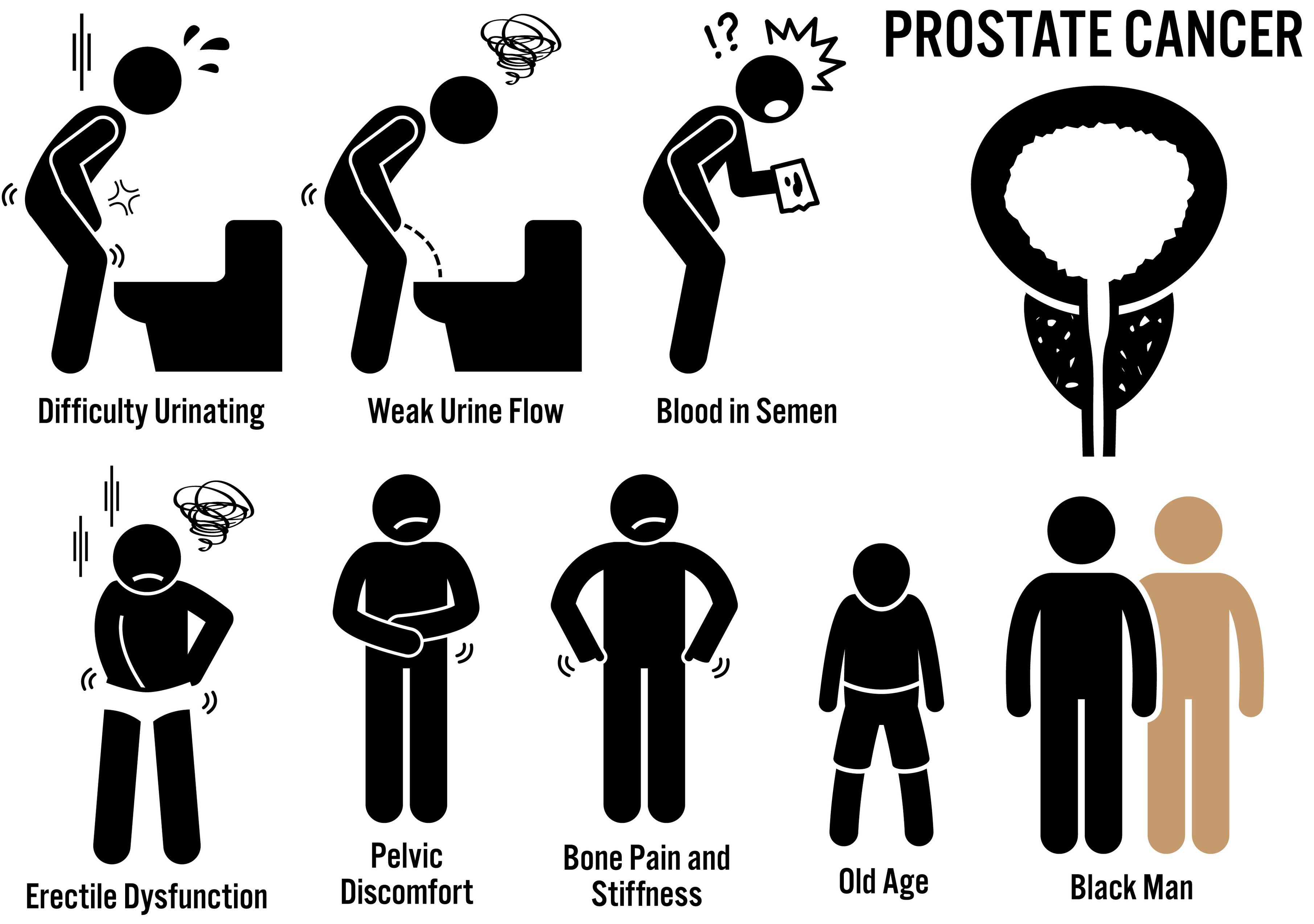
Identifying the 6 signs of prostate cancer—including frequent urination, weak urine flow, blood in the urine or semen, erectile dysfunction, and persistent bone pain—is critical for early intervention. Because early-stage prostate cancer is often asymptomatic, these symptoms usually indicate the growth has begun to affect the urethra or surrounding tissues.
Prostate cancer remains one of the most significant health challenges for men globally. As of 2026, it continues to be the most frequently diagnosed non-skin cancer in the male population. The prostate is a small, walnut-sized gland located just below the bladder and in front of the rectum, responsible for producing the seminal fluid that nourishes and transports sperm. Because of its location, any abnormal growth within the gland often manifests as changes in urinary or sexual function.
While many of these symptoms can be caused by non-cancerous conditions, such as Benign Prostatic Hyperplasia (BPH) or prostatitis, their presence necessitates a thorough medical evaluation. Understanding the biological mechanisms behind these signs can help patients and their families navigate the diagnostic process with greater clarity.
1. Frequent Urination, Especially at Night
One of the most common early indicators of a prostate issue is a significant increase in the frequency of urination, a condition known medically as polyuria. When this occurs specifically during sleeping hours, it is termed nocturia.
The biological reason for this symptom lies in the anatomy of the male pelvic region. The urethra, the tube that carries urine from the bladder out of the body, passes directly through the center of the prostate gland. As a cancerous tumor grows, it may begin to exert pressure on the urethra or the neck of the bladder. This pressure irritates the bladder wall, making it feel "full" even when it contains very little urine.
In 2026, clinical guidelines suggest that waking up more than twice a night to urinate on a regular basis is a threshold that warrants a discussion with a urologist. While nocturia is often a natural part of aging or a symptom of BPH, in the context of prostate cancer, it reflects the physical displacement of the urinary tract.
2. Weak or Interrupted Urine Flow
A change in the quality of the urinary stream is a classic sign of urethral obstruction. Patients often report that their urine flow has become "weak" or "slow," or that it takes much longer to empty their bladder than it used to. This can also manifest as "hesitancy," where the individual finds it difficult to start the flow of urine despite feeling a strong urge to go.
In more advanced cases, the flow may become "interrupted," meaning it starts and stops involuntarily. This happens because the tumor has constricted the urethral passage to such an extent that the bladder muscles must work significantly harder to push urine through. Over time, the bladder muscles may weaken, leading to "dribbling" at the end of urination or a feeling that the bladder has not been completely emptied.
According to the Urology Care Foundation, these obstructive symptoms are common across various prostate conditions. However, if these symptoms appear suddenly or worsen rapidly, they are considered high-priority "red flags" for malignancy.
3. Hematuria and Hematospermia (Blood in Urine or Semen)
The presence of blood in the urine (hematuria) or in the semen (hematospermia) is a symptom that should never be ignored. While it is not always a sign of cancer—it can be caused by infections, stones, or trauma—it is a frequent indicator of more aggressive prostate cancer.
- Hematuria: Blood in the urine may appear pink, red, or tea-colored. In some cases, the blood is microscopic and only detectable through a urinalysis.
- Hematospermia: Blood in the semen is often more alarming to patients. It occurs when a tumor invades the seminal vesicles or the prostate’s internal ductal system, causing small blood vessels to rupture during ejaculation.
The American Cancer Society notes that blood in the semen is relatively rare but is more specifically associated with prostate issues than general urinary blood. If a man in his 50s or older notices any discoloration in these fluids, a Prostate-Specific Antigen (PSA) test and a physical exam are essential next steps.
4. New Onset of Erectile Dysfunction
Prostate cancer and its growth can interfere with sexual health in several ways. The nerves and blood vessels responsible for triggering and maintaining an erection run very close to the prostate gland. If a tumor begins to spread outside the "capsule" of the prostate (extraprostatic extension), it can put pressure on these neurovascular bundles or infiltrate them directly.
While erectile dysfunction (ED) is incredibly common due to cardiovascular issues, diabetes, or psychological factors, a sudden and unexplained decline in erectile function—especially when accompanied by urinary changes—can be a sign of locally advanced prostate cancer.
Furthermore, some patients report painful ejaculation (dysorgasmia). This occurs because the prostate and seminal vesicles are involved in the muscular contractions of ejaculation; a tumor can make these contractions physically painful or cause a deep, aching sensation in the pelvic floor following climax.
5. Pain or Burning During Urination
Painful urination, known as dysuria, is less common as a primary sign of prostate cancer compared to urinary frequency, but it remains a significant symptom. This sensation is often described as a sharp stinging or a dull burning during the passing of urine.
In the context of prostate cancer, dysuria usually suggests one of two things:
- Secondary Infection: The tumor is preventing the bladder from emptying fully, leading to stagnant urine and a subsequent urinary tract infection (UTI).
- Urethral Invasion: The cancer has begun to irritate the lining of the urethra or the bladder neck.
It is important to distinguish this from prostatitis (inflammation of the prostate), which often presents with similar burning but is usually accompanied by fever and chills. In 2026, diagnostic protocols emphasize that chronic "UTI-like" symptoms in older men should always be screened for underlying prostatic malignancy.
6. Persistent Pain in the Back, Hips, or Pelvis
If prostate cancer moves beyond the gland, it most frequently metastasizes to the bones, particularly the axial skeleton (the spine, pelvis, and ribs). This is often the first sign of "advanced" or "metastatic" prostate cancer, especially in men who did not experience early urinary symptoms.
This pain is distinct from typical muscle soreness or age-related arthritis. It is characterized as:
- Persistent: It does not go away with rest or position changes.
- Deep: It feels like it is "inside the bone" rather than in the muscles.
- Nocturnal: The pain often feels worse at night.
When cancer cells invade the bone, they disrupt the balance of bone-building and bone-resorbing cells, leading to weakened areas that can cause deep aching or even "pathological fractures" (breaks that occur with minimal impact). If you experience new, unexplained bone pain in the lower back or hips that lasts for more than a few weeks, medical consultation is vital.
Comparing Common Prostate Conditions
It is vital to understand that prostate cancer is not the only cause of these six signs. The following table compares prostate cancer with Benign Prostatic Hyperplasia (BPH) and Prostatitis.
| Feature | Prostate Cancer | Benign Prostatic Hyperplasia (BPH) | Prostatitis (Infection) |
|---|---|---|---|
| Primary Age Group | 55+ (Most common) | 50+ (Very common) | Any age (20s to 80s) |
| Onset of Symptoms | Often slow/gradual | Gradual, over years | Can be sudden/acute |
| Urinary Stream | Weak or interrupted | Weak, hesitant, dribbling | Often painful/burning |
| Pain Presence | Rare in early stages; bone pain in late stages | Generally painless | Pelvic/perineal pain common |
| Fever/Chills | Usually absent | Absent | Common in acute cases |
| PSA Levels | Usually elevated | Can be mildly elevated | Elevated during infection |
The Role of Screening in 2026
By the time the "6 signs" appear, the cancer may have already progressed. This is why screening is the cornerstone of modern prostate health. The two primary tools used by physicians are the PSA Blood Test and the Digital Rectal Exam (DRE).
PSA (Prostate-Specific Antigen) Test
PSA is a protein produced by both cancerous and non-cancerous tissue in the prostate. While high PSA levels don't always mean cancer, a rising trend over time is a significant indicator. In 2026, doctors look at "PSA velocity" (how fast the number rises) rather than just a single static number.
Digital Rectal Exam (DRE)
Because the prostate is located next to the rectum, a doctor can manually feel the back of the gland. A cancerous tumor often feels like a hard, irregular, or "nodular" area, whereas a healthy prostate (or one with BPH) feels firm but smooth and rubbery.
Advanced Imaging (mpMRI)
If symptoms are present or PSA is high, the standard of care in 2026 involves a multiparametric MRI (mpMRI). This allows doctors to see specific suspicious regions within the gland before performing a biopsy, increasing the accuracy of the diagnosis and reducing unnecessary procedures.
Risk Factors and When to See a Doctor
Understanding your risk profile helps determine how aggressively you should monitor these signs. Key risk factors include:
- Age: The risk increases significantly after age 50.
- Family History: Having a father or brother with prostate cancer more than doubles your risk.
- Race: Black men are statistically more likely to develop prostate cancer and are more likely to be diagnosed with aggressive forms of the disease.
- Genetic Mutations: Inherited mutations in the BRCA1 or BRCA2 genes (also linked to breast cancer) can increase prostate cancer risk.
You should schedule an appointment with a healthcare provider immediately if you notice blood in your urine or semen, or if you experience a sudden inability to urinate. For other symptoms, like increased frequency or weak flow, an appointment should be made within a few weeks to rule out malignancy and discuss management options for BPH or other conditions.
Frequently Asked Questions
Can you have prostate cancer with no symptoms? Yes. In fact, most early-stage prostate cancers do not cause any symptoms at all. The tumor is often too small to press on the urethra or nerves. This is why regular screening (PSA tests) is recommended for men starting at age 45 to 55, depending on their individual risk factors.
Is back pain always a sign that prostate cancer has spread? No. Back pain is incredibly common and is usually caused by musculoskeletal issues, disc degeneration, or strain. However, if the back pain is deep, persistent, and occurs alongside urinary symptoms or an elevated PSA, it requires investigation to ensure it isn't bone metastasis.
Does an enlarged prostate always lead to cancer? No. Benign Prostatic Hyperplasia (BPH) is a non-cancerous enlargement of the prostate that affects nearly 50% of men by age 60. Having BPH does not increase your risk of developing prostate cancer, although the two conditions can exist at the same time.
Can a urinary tract infection (UTI) cause the same symptoms as prostate cancer? Yes. A UTI can cause frequent urination, burning, and even blood in the urine. However, UTIs are relatively uncommon in men compared to women. If a man has a UTI, doctors usually investigate the prostate as a potential underlying cause, as an enlarged or cancerous prostate can cause the urinary retention that leads to infection.
What is the survival rate for prostate cancer in 2026? When caught in the local or regional stages (before it has spread to distant organs), the 5-year survival rate for prostate cancer is near 100%. Even in cases where the cancer has spread, 2026-era treatments including targeted therapies, immunotherapy, and advanced hormonal treatments have significantly extended life expectancy and quality of life.
Next Actions for Prostate Health
If you or a loved one are experiencing any of the 6 signs of prostate cancer, the first step is to maintain a "bladder diary" for 48 hours. Record how often you urinate, the volume (small/large), and any pain or flow issues. This data is invaluable for your doctor.
The next step is to request a comprehensive prostate evaluation, which should include a PSA blood test and a physical examination. Early detection remains the most effective tool in successfully treating prostate cancer and maintaining a high quality of life. Do not wait for symptoms to become "severe" before seeking a professional opinion; proactive screening is the gold standard for men's health in 2026.