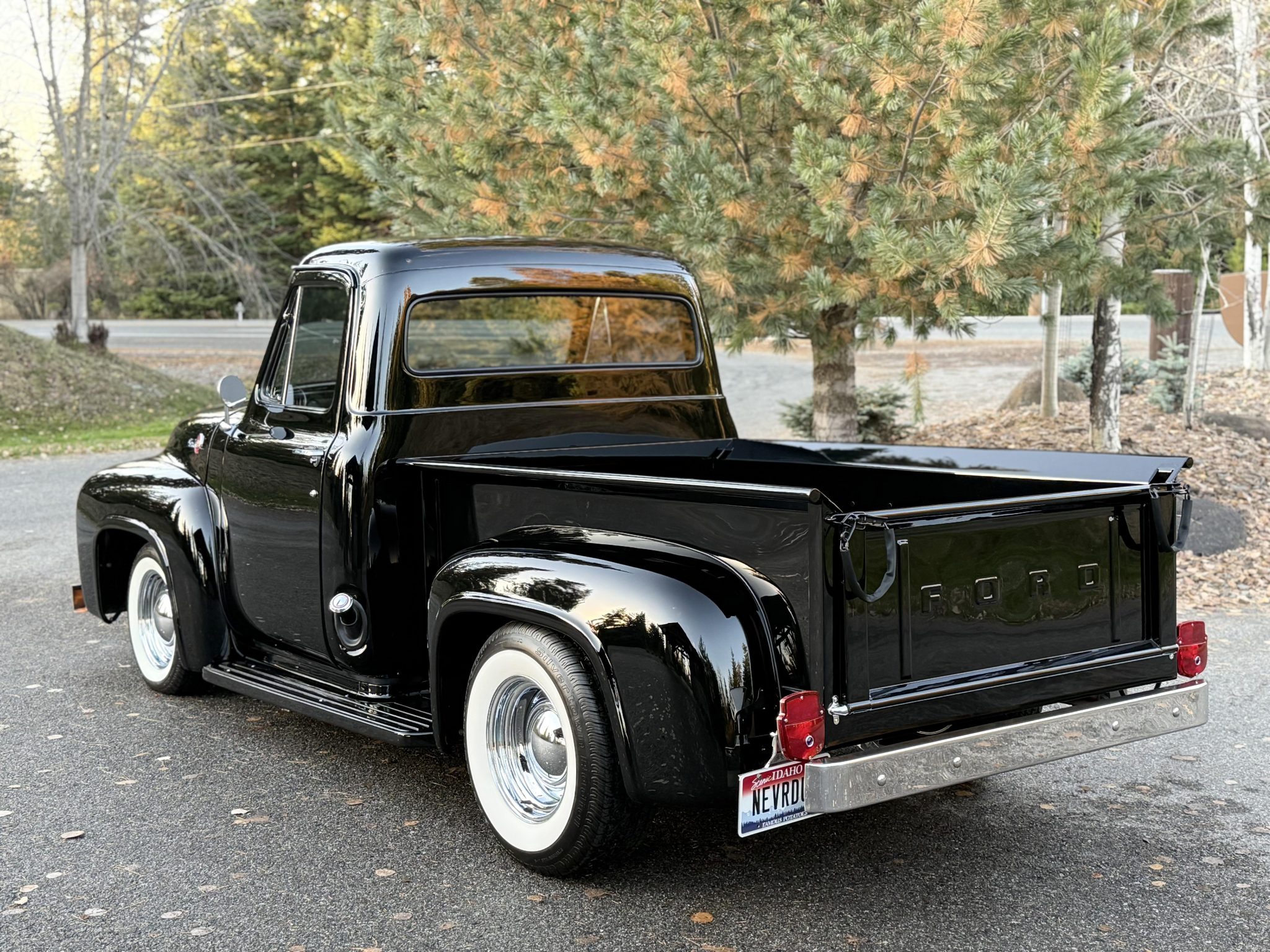
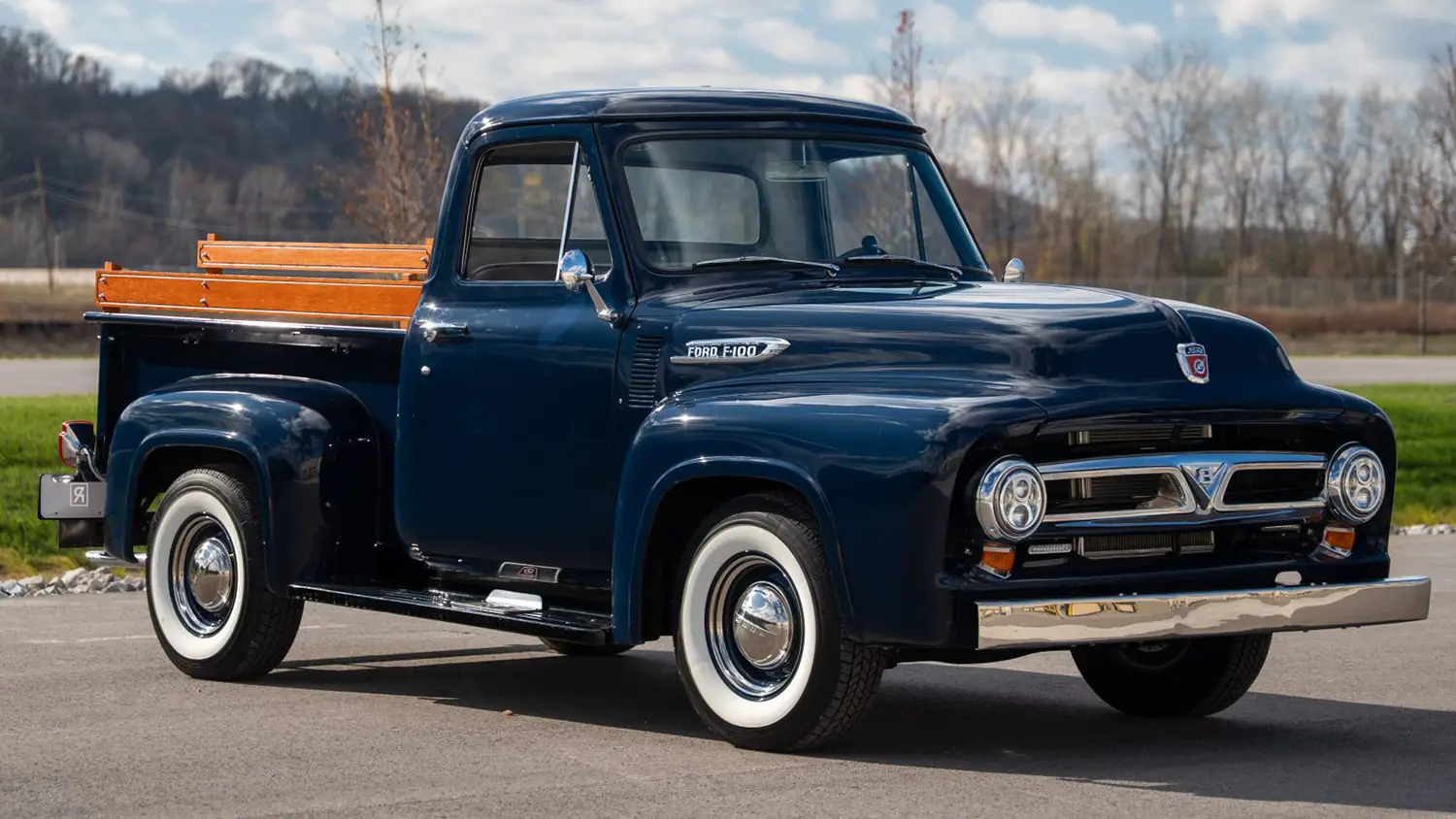
Celebrating fifty years of the Ford F-100 involves tracing the evolution of an automotive icon that shifted the American pickup truck from a utilitarian farm implement to a beloved cultural symbol and collectible classic. Introduced for the 1953 model year to commemorate Ford’s golden anniversary, the F-100 designation replaced the older half-ton F-1 series and rapidly transformed the light-duty truck landscape through decades of mechanical innovation, styling shifts, and enduring utility.
The Origins and Introduction of the F-100 in 1953
When Ford Motor Company rolled out its second-generation truck lineup for 1953, the nomenclature shifted from the post-war F-series (F-1 through F-8) to a more intuitive naming convention. The F-100 designated the lightweight, half-ton payload capacity model, sitting at the base of a completely redesigned vehicle architecture. This redesign was not merely cosmetic; it addressed long-standing driver complaints about cab comfort, visibility, and ride quality.
Engineers widened the cab, improved the insulation, and introduced a significantly larger one-piece curved windshield that drastically improved outward visibility. The chassis was strengthened, and the wheelbase was lengthened slightly to provide a more stable platform. Under the hood, buyers could choose between the reliable "Mileage Maker" inline-six engine and the newly introduced "Cost Clipper" overhead-valve V8, which began Ford’s long-standing dominance in engine performance for light trucks.
Furthermore, 1953 marked the fiftieth anniversary of Ford Motor Company, a milestone commemorated by special hood badges and promotional materials. The F-100 nameplate quickly became synonymous with toughness, dependability, and approachable styling. It established a blueprint that other manufacturers would spend decades chasing, blending passenger-car-like interior appointments with heavy-duty commercial truck DNA.
Generations of Evolution: From Workhorse to Cultural Icon
Over its primary production run, which spanned from 1953 until 1983 in North America (when it was officially succeeded entirely by the F-150), the F-100 underwent several distinct generational transformations. Each era reflected changing consumer tastes, safety regulations, and mechanical technologies.
| Generation | Production Years | Key Design and Mechanical Milestones |
|---|---|---|
| First | 1953 – 1956 | Introduction of F-100 name, panoramic windshield, V8. |
| Second | 1957 – 1960 | "Styleside" integrated bed, quad headlights, styling. |
| Third | 1961 – 1966 | "Unibody" experiment, Twin-I-Beam front suspension. |
| Fourth | 1967 – 1972 | Ranger trim levels, greater comfort, classic lines. |
| Fifth | 1973 – 1979 | "Dentside" body, disk brakes, massive popularity. |
The First Generation (1953–1956)
The initial run of the F-100 is widely celebrated by collectors today. The 1956 model year is particularly iconic, featuring a distinct wrap-around windshield (often called the "Big Window" option) and sharply defined front fenders. These trucks established the foundational aesthetic of the classic American pickup.
The Second Generation (1957–1960)
Ford modernized the pickup profile in 1957 by introducing the "Styleside" bed, which integrated the rear fenders smoothly into the body lines rather than keeping them as bolted-on external structures. Traditional "Flareside" beds with running boards remained available for traditionalists. This era also saw the introduction of optional four-wheel drive systems supplied by suppliers like Marmon-Herrington before Ford developed its own factory four-wheel-drive systems.
The Third Generation (1961–1966)
This era brought bold styling experiments, most notably the "Unibody" design introduced in 1961, where the cab and the bed were fused into a single continuous structure. While sleek, structural twisting under heavy loads occasionally caused the doors to bind, prompting Ford to return to a traditional separate cab-and-bed configuration by 1965. Crucially, 1965 introduced the revolutionary Twin-I-Beam independent front suspension, which gave trucks a smoother, car-like ride without sacrificing payload capacity.
The Fourth and Fifth Generations (1967–1979)
By the late 1960s and 1970s, trucks were transitioning from pure work tools to personal-use daily drivers. Trim packages like the Custom, Sport Custom, and upscale Ranger elevated interior luxury with carpeting, padded dash panels, and air conditioning. The fifth generation (1973–1979), often called the "Dentside" due to the distinct horizontal body-side molding channel, solidified Ford's sales dominance, a crown the company has held in the American market for decades.
Mechanical Innovations and Powertrain Legacy
The longevity and reliability of the F-100 stem directly from its robust mechanical architecture. Over its lifespan, Ford equipped the truck with some of the most legendary engines in automotive history.
In the early years, flathead V8s gave way to modern overhead-valve Y-block V8s, which provided increased horsepower and torque. By the mid-1960s and 1970s, the ubiquitous Ford FE-series big-block engines—including the 352, 390, and 460 cubic-inch powerplants—alongside the legendary small-block 302 and the virtually indestructible 300 cubic-inch straight-six, powered millions of F-100s. The 300 straight-six, in particular, earned a legendary reputation for durability, often running hundreds of thousands of miles with minimal maintenance under harsh working conditions.
Transmission options evolved similarly. Three-speed manual floor- and column-shifted transmissions ("three-on-the-tree") were standard for many years, alongside heavy-duty four-speed manuals and durable automatic transmissions like the Cruise-O-Matic and the C6 three-speed automatic. Power steering and power front disc brakes, introduced progressively through the late 1960s and standard by the 1970s, transformed the F-100 from a tiring physical chore to drive into a comfortable cruiser.
The F-100 in Modern Culture and the Collector Market
Fifty years after its introduction, and decades after the final production units rolled off the assembly line, the Ford F-100 holds a revered status in the classic car and truck hobby. While its successor, the F-150, became the best-selling vehicle in America, enthusiasts specifically seek out the F-100 for its pure lines, vintage mechanical simplicity, and immense aftermarket support.
Restomodding—the practice of restoring a classic vehicle while upgrading its chassis, powertrain, and comfort features—is exceptionally popular with F-100s. Owners frequently pair vintage 1950s or 1960s sheet metal with modern Coyote V8 engines, independent front suspensions, fuel injection, and modern audio systems. Conversely, original-condition, numbers-matching trucks command significant respect and high values at collector car auctions, prized for their historical authenticity.
Frequently Asked Questions
What is the difference between a Ford F-100 and an F-150?
The F-100 was Ford's light-duty, half-ton pickup model produced primarily from 1953 to 1983. The F-150 was introduced in the mid-1970s (specifically for the 1975 model year) to navigate around certain federal emissions and GVWR (Gross Vehicle Weight Rating) regulations. Over time, the heavier-duty payload ratings and corporate strategy led Ford to phase out the F-100 in favor of the F-150 as the standard half-ton offering.
When was the Ford F-100 first produced?
The F-100 was introduced for the 1953 model year, replacing the older F-1 truck. Ford chose 1953 to launch this new generation to coincide with the company's fiftieth anniversary.
What engines came stock in classic F-100 trucks?
Classic F-100 trucks featured a wide variety of engines depending on the year. These included inline-six engines (such as the famous 300 cubic-inch six) and numerous V8 powerplants, ranging from early flatheads and Y-blocks to later FE big-blocks and Windsor small-blocks.
Are classic Ford F-100 trucks easy to restore?
Yes, the F-100 has one of the most robust aftermarket and reproduction parts ecosystems in the automotive hobby. Virtually every piece of sheet metal, interior trim, glass, and mechanical component can be purchased new, making them excellent projects for both amateur and professional restorers.
Did the F-100 come with four-wheel drive?
Factory four-wheel drive became officially available starting in the late 1950s, though earlier models were often converted using aftermarket four-wheel-drive systems supplied by specialized manufacturers like Marmon-Herrington. Four-wheel drive became a widely popular factory option through the 1960s and 1970s.
Conclusion and Preservation Next Actions
Preserving or restoring a classic Ford F-100 requires careful attention to historical authenticity, rust mitigation, and mechanical evaluation. For current owners and prospective buyers, the primary next action is to inspect structural frame integrity—particularly around the cab mounts and rear leaf spring hangers—as these areas are prone to fatigue and corrosion. Sourcing original factory shop manuals and joining regional enthusiast clubs will ensure proper maintenance, secure reliable parts sourcing, and preserve a magnificent fifty-year legacy of American automotive engineering.