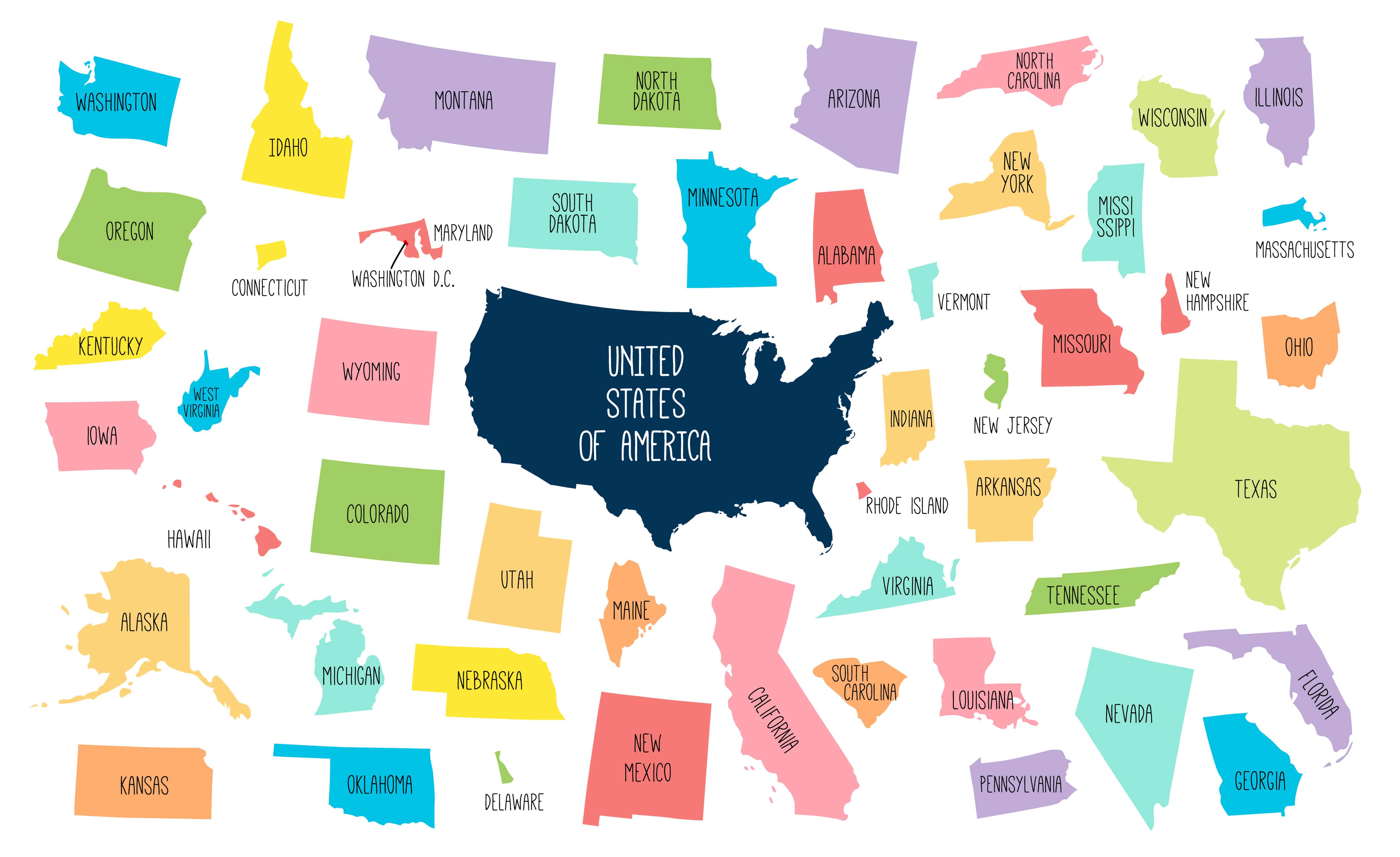
Exploring the United States reveals a rich tapestry of localized quirks, peculiar laws, geographic anomalies, and bizarre historical events that make each of the fifty states entirely unique. From strange state legislation and bizarre food origins to unusual ecological phenomena, every jurisdiction boasts trivia that defies standard expectations and highlights America's eccentric regional identity.
Understanding the quirky side of the United States requires examining how local history, geography, and cultural evolution shape state legislation and identity. This comprehensive compilation examines distinctive, verified trivia from all fifty states, breaking down the strange laws, odd official symbols, and historic oddities that define the American landscape from coast to coast.
The Eastern Seaboard and New England Quirks
The oldest settled regions of the United States are steeped in colonial history, which often translates into centuries-old statutes and bizarre local customs that persist into the modern era.
- Connecticut: As the Constitution State, Connecticut takes its pickle naming rights seriously. According to state food standards established in the mid-20th century, an official pickle must bounce to be legally classified as a pickle. If a batch fails the bounce test, it cannot be sold under that moniker.
- Delaware: The First State holds the distinction of having more corporate entities than actual human residents. Due to favorable corporate laws and the Court of Chancery, over one million legal entities are registered in a state with a human population hovering around one million.
- Maine: In this northernmost New England state, it is technically against the law to leave Christmas decorations up after January 14th. While enforcement is virtually non-existent, the municipal ordinance remains on the books as a vestige of seasonal tidiness expectations.
- Maryland: Annapolis, the state capital, maintains a strict architectural preservation law prohibiting the construction of any building taller than the historic Maryland State House dome, ensuring that colonial-era vistas remain unobstructed.
- Massachusetts: Boston boasts the site of the Great Molasses Flood of 1919, a bizarre and tragic industrial accident where a storage tank burst, sending a 25-foot wave of sticky molasses rushing through the North End streets at 35 miles per hour.
- New Hampshire: State law technically requires anyone driving a motor vehicle to wear a seatbelt, but only if they are under the age of 18. New Hampshire is famously the only U.S. state that does not mandate adult drivers to wear seatbelts, aligning with its libertarian "Live Free or Die" motto.
- New Jersey: Motorists pumping their own gas faced legal restrictions for decades. Until recently, New Jersey and Oregon were the only states where self-service gasoline was banned by law at standard retail stations, though Oregon has since altered its statutes.
- New York: Jumping from a building is a risky endeavor anywhere, but in New York City, it carries a very specific legal status. The penalty for jumping off a building in the metropolis is technically capital punishment, though the physical impossibility of executing a deceased jumper makes the law a dark piece of legal satire.
- Pennsylvania: Philadelphia is home to the Liberty Bell, but the state also features a bizarre piece of vehicle legislation. Historically, if a driver spots a horse that is spooked by their automobile, the driver was legally required to pull over, take the car apart piece by piece, and hide the components under a large cloth until the horse calmed down.
- Rhode Island: The Ocean State features a law prohibiting anyone from biting off another person's appendage, which sounds like common sense until one examines the archaic penal codes designed to address barroom brawls in early colonial settlements.
- Vermont: In the Green Mountain State, women are legally required to obtain written permission from their husbands if they wish to wear false teeth. While completely unenforceable and unconstitutional under modern equal protection laws, this relic of coverture law remains printed in old legislative archives.
The Mid-Atlantic and Southern Peculiarities
Moving down the coast and into the American South, the climate shifts, and so do the cultural eccentricities, ranging from strange animal laws to unusual agricultural milestones.
- Alabama: Selling peanuts after sunset on a Wednesday in the county of Lee is technically an illegal act, stemming from an old market regulation designed to prevent nighttime agricultural theft and rowdy trading.
- Arkansas: The pronunciation of the state's name was officially codified by the state legislature in 1881. To settle a debate between "Ar-kan-saw" and "Ar-kansas," lawmakers passed a resolution declaring the final "s" silent, making it officially illegal to mispronounce the state name in official contexts.
- Florida: Owning an elephant in the Sunshine State comes with a financial catch. If an owner ties an elephant to a parking meter, they must pay the exact same parking fee as a standard automobile occupying the space.
- Georgia: Residents of Jonesboro are prohibited from coloring a rabbit, chick, or other pet animal using dyes or artificial colorings, a law enacted to protect animal welfare during spring holiday celebrations.
- Kentucky: The Bluegrass State is famous for bourbon and horse racing, but it also holds a legal mandate requiring every citizen to take a bath at least once a year, a hygiene law passed during early frontier sanitation efforts.
- Louisiana: Instead of traditional counties, Louisiana is divided into parishes. Furthermore, verbal contracts are legally binding up to a certain financial threshold under the state's unique civil law system, which is heavily influenced by the French Napoleonic Code rather than British common law.
- Mississippi: The Magnolia State was the last state in the union to officially ratify the 13th Amendment abolishing slavery, completing the administrative paperwork in 1995, with final federal recognition occurring in 2013.
- North Carolina: Playing bingo is heavily regulated. According to state statute, traditional bingo games hosted by charitable organizations are strictly forbidden from lasting more than a specific number of hours to prevent excessive gambling fatigue.
- South Carolina: In the city of Fountain Inn, horses are legally prohibited from being kept in bathtubs under any circumstances, reflecting a very specific type of municipal nuisance law.
- Tennessee: Driving while sleeping is explicitly addressed, but more famously, catching fish with a lasso is strictly illegal in the state's public waterways.
- Virginia: Colonial history runs deep, and an old statute in Virginia makes it illegal to hunt any wild animals on a Sunday, with the sole exception of raccoons, which can be pursued until 2:00 AM.
- West Virginia: Whistle while you work, but watch out for wildlife. West Virginia is one of several states where drivers who accidentally hit an animal with their vehicle are legally permitted to take the carcass home for dinner, provided they report the incident to wildlife authorities.
The Industrial Heartland and Great Lakes Oddities
The heartland states combine agricultural might with heavy industry, producing a distinct blend of culinary traditions, weather anomalies, and quirky local ordinances.
| State | Weird Fact / Legal Oddity | Category |
|---|---|---|
| Illinois | It is illegal to speak English incorrectly according to an archaic state law that officially designated "American" as the state language in 1923. | Language Law |
| Indiana | The value of pi was almost legally changed to 3.2 via a mathematical bill introduced by a physician in 1897. | Legislative Error |
| Michigan | Painting a sparrow to sell it as a parakeet is explicitly outlawed in the state penal code. | Animal Protection |
| Minnesota | Participating in a trivia contest or event where participants impersonate a gorilla can lead to municipal code violations in certain cities. | Public Nuisance |
| Missouri | St. Louis maintains an old city ordinance that prevents firefighters from rescuing women who are wearing nightgowns, requiring firefighters to ensure women are fully dressed before aiding them—a rule that is universally ignored today. | Municipal Code |
| Ohio | Catching a whale on a Sunday is strictly illegal in the Buckeye State, an amusingly irrelevant statute for a landlocked Midwestern territory. | Outdated Statute |
| Wisconsin | Serving margarine as a substitute for butter in public restaurants was strictly prohibited for decades, requiring restaurateurs to explicitly inform patrons if butter was unavailable. | Dairy Regulation |
The Great Plains and Western Expanses
As the geography flattens into the Great Plains and rises into the Rocky Mountains, the laws reflect vast expanses of land, ranching culture, and wide-open spaces.
- Iowa: Kisses in the Hawkeye State carry a legal time limit. According to an old ordinance, a single kiss is legally permitted to last for a maximum of five consecutive minutes before running afoul of public indecency codes.
- Kansas: Serving beer in teacups was a legal requirement in Topeka during the prohibition era, a workaround allowing establishments to skirt the letter of local temperance laws while serving alcohol.
- Nebraska: If a child burps during a church service in the state, the parents can technically be arrested under an old public disturbance statute, though enforcement has never been documented in modern times.
- North Dakota: Serving beer and pretzels simultaneously at a bar or restaurant in the town of Elrose is prohibited by an ancient local ordinance, though the rule is entirely defunct in practice.
- Oklahoma: Making ugly faces at a dog can result in a fine or jail time in Oklahoma, making canine emotional well-being a matter of state misdemeanor law.
- South Dakota: Falling asleep inside a cheese factory is explicitly illegal, a strangely specific health code regulation designed to protect dairy sanitation during the production process.
The Southwest and Mountain Ranges
Rugged terrain, desert climates, and Spanish colonial influences shape the distinctive character of the Southwestern states.
- Arizona: Cutting down a cactus, specifically a protected Saguaro cactus, can carry a severe penalty equivalent to a felony theft charge, with prison sentences up to 25 years.
- Colorado: Denver maintains a historic ordinance stating that dog catchers must notify canines of their impending impoundment by posting a notice on a tree, giving the animal a theoretical chance to flee.
- New Mexico: The use of the word "idiot" on public radio or television is technically prohibited by a state statute aimed at curbing public insults and obscene language.
- Texas: Owning an encyclopedia is technically illegal if it contains a page detailing how to brew beer at home, a vestige of prohibition-era censorship that remains embedded in old state code books.
- Utah: Birds have absolute right-of-way on all public highways in the state, meaning motorists are legally required to yield to any avian creature crossing the asphalt.
- Wyoming: Riding a bicycle while under the influence of alcohol is illegal, but the state penal code explicitly treats a bicycle with the exact same legal status as a motor vehicle for DUI enforcement.
The Pacific Coast and Island Frontiers
From the rainforests of the Pacific Northwest to the tropical climate of the Pacific, the final stretch of states rounds out the nation's most eccentric geographic spectacles.
- California: Throwing a frisbee on a public beach without the explicit permission of a local lifeguard is prohibited in certain Los Angeles County municipal codes.
- Idaho: Giving someone a box of chocolates weighing more than 50 pounds is illegal, a romantic restriction designed to prevent extreme confectionery gifting.
- Montana: Having a sheep ride in the cab of your truck without a human chaperone is illegal, protecting livestock transit safety standards.
- Nevada: Driving a camel on a state highway is strictly prohibited by a mid-19th-century law passed when the U.S. Army briefly experimented with using camels for desert transport in the American West.
- Oregon: Maintaining an unpaved sidewalk in front of a residential property can lead to municipal citations, keeping pedestrian pathways clear and standardized.
- Washington: Painting polka dots on the American flag is explicitly illegal under state flag desecration statutes, protecting patriotic symbols from artistic alterations.
- Alaska: Looking at a moose from the window of an airplane is strictly prohibited in certain hunting districts, leveling the playing field between airborne spotters and ground hunters.
- Hawaii: Billboards are entirely illegal. To preserve the natural scenic beauty of the islands, Hawaii banned outdoor billboard advertising in 1927, making it one of the few states completely free of commercial roadside billboards.
Frequently Asked Questions
Are these weird state laws actually enforced today?
Most of these archaic statutes are dead laws or legal "blue laws" that remain on municipal books because legislatures rarely spend time repealing harmless historical quirks. Law enforcement agencies do not actively target citizens for breaking them.
Which state has the most unusual laws?
States with long histories of continuous governance, such as Massachusetts, Pennsylvania, and New Jersey, tend to have the highest volume of bizarre, centuries-old legislative relics.
Why do these strange laws exist in the first place?
They were typically enacted to address specific, temporary local crises, sanitation concerns, or moral panics of their era, long before modern legal codes were streamlined.
Can you get arrested for violating an old state law?
Technically, if a law remains active on the books, an officer has the theoretical authority to cite it, but courts routinely dismiss charges related to obsolete or unconstitutional statutes.
Final Recommendation
While these quirky laws and bizarre historical facts provide endless entertainment, readers should verify local municipal codes before assuming any historic statute holds modern validity. For those looking to explore American history further, visiting state archives or checking official state legislative websites offers a fascinating look into how local governance has evolved.