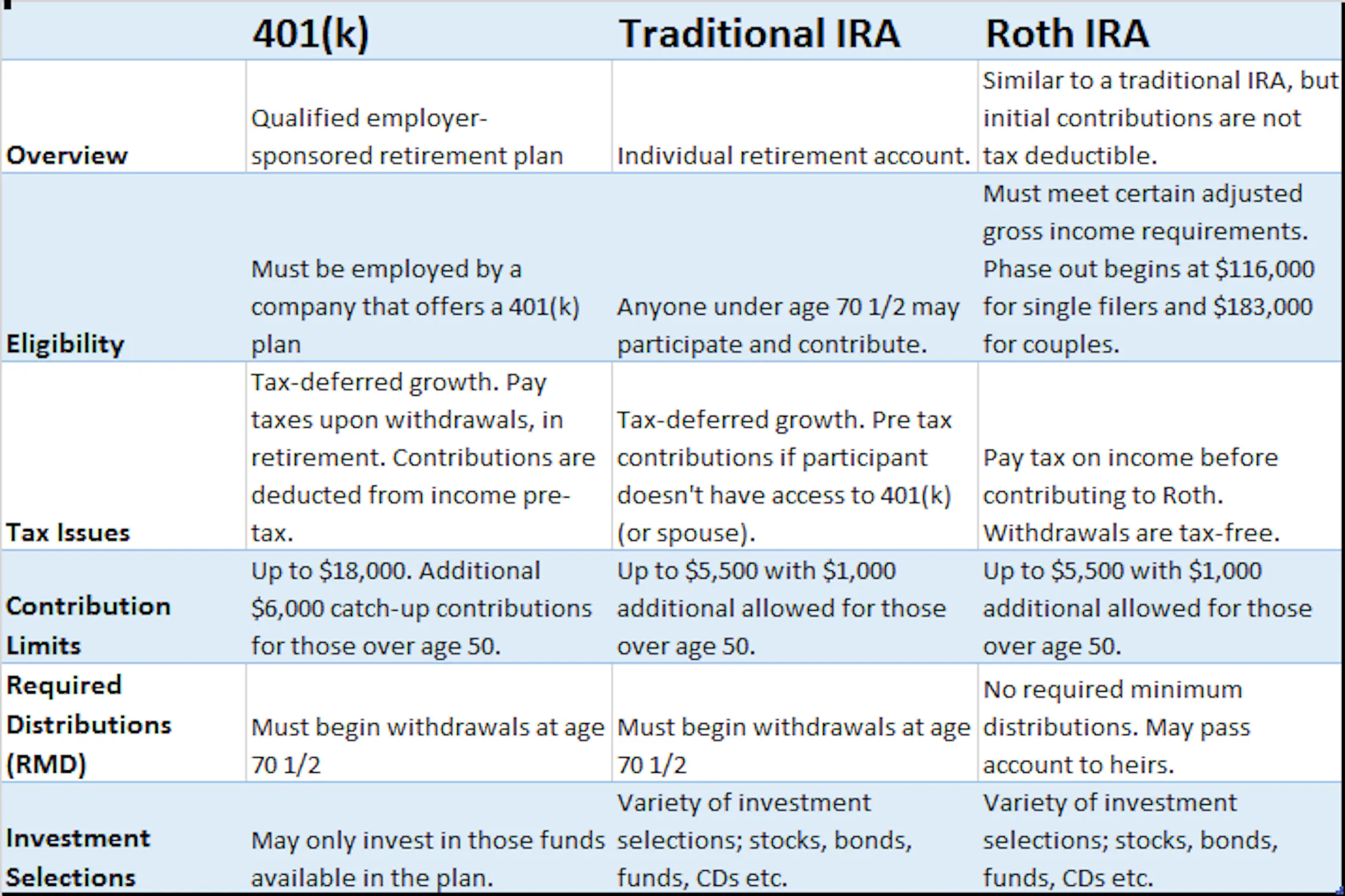
A 401(k) is a tax-advantaged, employer-sponsored retirement savings plan that allows employees to contribute a portion of their wages to individual accounts. Funds are typically invested in stocks, bonds, and mutual funds, growing tax-deferred or tax-free depending on the plan type. These accounts often include employer matching contributions, making them a primary vehicle for long-term wealth building.
The Foundation of the 401(k) Plan
The 401(k) plan takes its name from Section 401(k) of the Internal Revenue Code. Established in the late 1970s and gaining widespread popularity in the 1980s, it marked a significant shift in the American retirement landscape. Previously, many workers relied on defined-benefit plans, commonly known as pensions, where the employer guaranteed a specific monthly benefit upon retirement. In contrast, a 401(k) is a defined-contribution plan. In this model, the retirement outcome depends on how much the employee contributes and how well the underlying investments perform over time.
As of 2026, the 401(k) remains the most common retirement savings tool provided by private-sector employers. It functions as a partnership between the employer and the employee. The employer provides the platform, administrative oversight, and often a financial incentive in the form of a "match," while the employee provides the capital through payroll deductions. This structure simplifies saving by automating the process, ensuring that a portion of every paycheck is redirected toward the employee's future before they have a chance to spend it.
The legal framework governing these plans is primarily the Employee Retirement Income Security Act (ERISA). This federal law sets minimum standards for most voluntarily established retirement and health plans in private industry to provide protection for individuals in these plans. It requires plan providers to provide participants with information about plan features and funding, and it increases the fiduciary responsibilities of those who manage and control plan assets.
How a 401(k) Operates in 2026
The mechanics of a 401(k) are designed for consistency and ease of use. Once an employee is eligible—often after a probationary period ranging from 30 days to one year—they select a percentage of their gross income to contribute. These funds are deducted automatically from their paycheck by the employer’s payroll department.
Automatic Enrollment and Escalation
Following the implementation of the SECURE Act 2.0, most new 401(k) plans established after 2025 are required to include automatic enrollment features. This means that unless an employee explicitly opts out, they are automatically signed up for the plan at a starting contribution rate (usually between 3% and 10%). Furthermore, many plans now include "automatic escalation," which increases the contribution percentage by 1% each year until a specific cap is reached. This nudge-based system is intended to combat inertia and ensure that workers are saving adequately without needing to manually adjust their settings every year.
The Role of the Plan Administrator
While your employer "sponsors" the plan, they rarely manage the money themselves. Instead, they hire a plan administrator—often a large financial institution like Vanguard, Fidelity, or Charles Schwab. This administrator provides the digital portal where you select your investments, view your balance, and update your beneficiaries. They also ensure the plan complies with IRS regulations and provide annual statements to participants.
Traditional vs. Roth 401(k): Choosing Your Tax Advantage
One of the most critical decisions an employee must make is whether to contribute to a Traditional 401(k) or a Roth 401(k). The primary difference lies in when you pay taxes on the money.
Traditional 401(k)
In a Traditional 401(k), contributions are made pre-tax. This reduces your taxable income for the current year. For example, if you earn $75,000 and contribute $10,000 to a Traditional 401(k), the IRS only taxes you as if you earned $65,000. The money grows tax-deferred, meaning you pay no taxes on capital gains or dividends while the money is in the account. However, when you withdraw the money in retirement, the entire amount—both your original contributions and the growth—is taxed as ordinary income at your then-current tax rate.
Roth 401(k)
The Roth 401(k) operates on the opposite schedule. Contributions are made after-tax, meaning there is no immediate tax break. However, the enormous benefit of the Roth is that your money grows tax-free, and qualified withdrawals in retirement are also completely tax-free. This is particularly advantageous for younger workers who expect to be in a higher tax bracket later in life or for those who want to hedge against future increases in federal tax rates.
As of 2026, many employers have also begun offering the option for employer matching contributions to be designated as Roth. Under previous rules, employer matches were always pre-tax; now, if the plan allows it, you can opt to have that "free money" taxed now so it can be withdrawn tax-free later.
2026 Contribution Limits and Catch-Up Rules
The IRS sets annual limits on how much an individual can contribute to their 401(k) to prevent the accounts from being used solely as tax shelters for the wealthy. These limits are adjusted periodically for inflation.
For the 2026 tax year, the individual elective deferral limit is $24,000. This is the maximum amount an employee can contribute from their salary. However, there are two important extensions to this limit:
- The Catch-Up Contribution: For employees aged 50 and older, an additional "catch-up" contribution is permitted. In 2026, this limit is $7,500, bringing the total possible contribution for older workers to $31,500.
- The Total Limit: The IRS also limits the total amount that can be added to a 401(k) account from all sources combined (employee contributions + employer matching + profit sharing). For 2026, this combined limit is $71,000 (or $78,500 for those 50+).
It is important to note that the SECURE Act 2.0 introduced a specialized catch-up limit for employees aged 60, 61, 62, and 63. These individuals can contribute even more than the standard catch-up amount—specifically, the greater of $10,000 or 150% of the standard catch-up limit for that year.
| Feature | Traditional 401(k) | Roth 401(k) |
|---|---|---|
| Contribution Tax Treatment | Pre-tax (Reduces current taxable income) | After-tax (No current tax break) |
| Growth Tax Treatment | Tax-deferred | Tax-free |
| Withdrawal Tax Treatment | Taxed as ordinary income | Tax-free (if qualified) |
| 2026 Contribution Limit | $24,000 | $24,000 |
| Age 50+ Catch-up (2026) | $7,500 | $7,500 |
| Required Minimum Distributions | Yes (Starting at age 73/75) | No (as of 2024 legislation) |
The Power of the Employer Match and Vesting
The employer match is often described as the only "guaranteed return" in the financial world. A common match structure is "50 cents on the dollar up to 6%." This means if you contribute 6% of your salary, your employer will contribute an additional 3%. This is essentially a 50% return on your investment before a single cent is even moved into the stock market.
Understanding Vesting Schedules
While the money you contribute to your 401(k) is always 100% yours, the money your employer contributes may be subject to a vesting schedule. Vesting refers to the ownership of employer-contributed funds. There are three common types of vesting:
- Immediate Vesting: You own 100% of the employer's match as soon as it is deposited.
- Cliff Vesting: You own 0% of the match until you have worked for the company for a specific period (e.g., three years), at which point you own 100%.
- Graded Vesting: Your ownership increases gradually over time (e.g., 20% after year two, 40% after year three, etc., until you are 100% vested after year six).
If you leave your job before being fully vested, you forfeit the unvested portion of the employer’s contributions. Always check your Summary Plan Description (SPD) to understand your company’s specific vesting timeline.
Investment Options and Asset Allocation
Unlike a brokerage account where you can buy almost any stock, a 401(k) typically offers a curated menu of 15 to 30 investment options. These usually include:
- Mutual Funds: Pools of stocks or bonds managed by professionals.
- Index Funds: Passively managed funds that track a specific market index (like the S&P 500) and usually have lower fees.
- Target-Date Funds (TDFs): These are "all-in-one" funds that automatically adjust their risk level based on your expected retirement year. As you get closer to retirement, the fund shifts from aggressive stocks to conservative bonds.
- Stable Value Funds / Money Market Funds: Low-risk options designed to preserve capital, though they offer lower growth potential.
Expense Ratios are the fees you pay for these funds. A 1% fee might seem small, but over 30 years, it can eat up a significant portion of your total balance. In 2026, savvy investors prioritize low-cost index funds with expense ratios below 0.10% whenever possible.
Withdrawals, Loans, and the 10% Penalty
The 401(k) is a long-term vehicle. To ensure the money is used for retirement, the IRS imposes strict rules on accessing funds early.
Early Withdrawals
Generally, if you withdraw money from your 401(k) before age 59.5, you must pay ordinary income tax on the amount plus a 10% early withdrawal penalty. There are exceptions for "hardship distributions," which include things like preventing eviction, paying for unreimbursed medical expenses, or funeral costs. However, even with a hardship waiver, you still owe the income tax.
401(k) Loans
Many plans allow you to take a loan from your own account. You typically can borrow up to 50% of your vested balance (up to a maximum of $50,000). You pay the interest back to yourself, which sounds like a win-win. However, 401(k) loans have significant risks:
- Opportunity Cost: The borrowed money is no longer invested and misses out on market growth.
- Repayment Risk: If you leave your job or are terminated, you may be required to pay back the full loan balance very quickly (often by the next federal tax filing deadline). If you cannot, the balance is treated as a distribution, triggering taxes and the 10% penalty.
Portability: What Happens When You Change Jobs?
In the modern economy, workers change jobs frequently. When you leave an employer, you have four main options for your 401(k) balance:
- Leave it where it is: If your balance is over a certain threshold (usually $5,000-$7,000), you can often leave the money in your former employer's plan. You cannot make new contributions, but the money stays invested.
- Rollover to a New Employer: If your new job has a 401(k) plan, you can "roll" your old balance into the new plan. This keeps your retirement assets consolidated.
- Rollover to an IRA: You can move the money into an Individual Retirement Account (IRA). This typically offers a much wider range of investment choices and potentially lower fees.
- Cash out: This is generally the worst option. You will be taxed immediately, hit with a 10% penalty if you are under 59.5, and you lose the future compounded growth of those assets.
Frequently Asked Questions
What happens to my 401(k) if my company goes bankrupt?
Your 401(k) assets are held in a trust, separate from the company's business assets. Under ERISA law, creditors of the company cannot claim your retirement funds. If the company goes under, the plan is usually terminated, and you are given the option to roll your funds into an IRA or another 401(k).
Can I contribute to both a 401(k) and an IRA?
Yes. You can contribute to both simultaneously, provided you have earned income. However, if you or your spouse are covered by a 401(k) at work, there are income limits that may restrict your ability to deduct Traditional IRA contributions from your taxes. Roth IRA contributions also have income eligibility limits.
How much should I contribute to my 401(k)?
Most financial experts recommend saving at least 15% of your gross income for retirement. At a minimum, you should contribute enough to receive the full employer match. For example, if your company matches up to 4%, contributing less than 4% is effectively turning down part of your salary.
What are Required Minimum Distributions (RMDs)?
RMDs are mandatory withdrawals you must start taking from your Traditional 401(k) once you reach a certain age (currently 73, moving to 75 for those who turn 74 after 2032). The IRS requires these so they can finally collect the deferred tax revenue. Roth 401(k)s, as of 2024, no longer require RMDs during the original owner's lifetime.
Next Steps for Your Retirement Strategy
To make the most of your 401(k) in 2026, your first action should be to log into your plan’s participant portal and verify your contribution rate. Ensure you are contributing at least enough to capture the full employer match. Next, review your asset allocation to ensure it aligns with your risk tolerance and your "years to retirement." If you find your plan fees are high or your investment options are limited, consider consulting with a fee-only financial advisor to discuss whether a rollover to an IRA is appropriate for older accounts from previous employers.