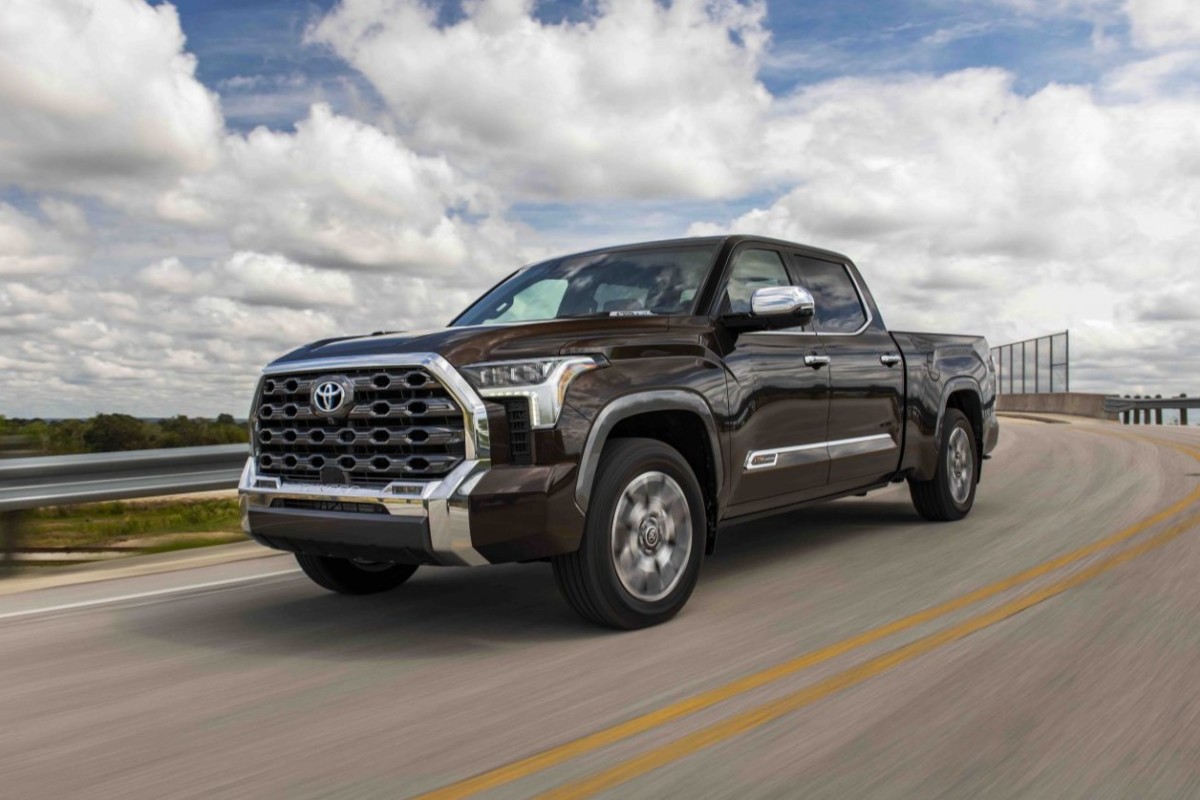
The Toyota Tundra equipped with the 4.7-liter 2FZ-FE V8 engine represents a defining era of full-size truck engineering, celebrated for its legendary mechanical longevity, refined power delivery, and robust architecture. Spanning the first generation and early second generation of the Tundra, this powerhouse earned a reputation as one of the most dependable light-truck engines ever built, blending everyday drivability with enduring utility.
Introduction to the 4.7L V8 Toyota Tundra
When Toyota entered the domestic-dominated full-size pickup truck market in North America with the Tundra for the 2000 model year, it needed a powerplant that could command respect from buyers accustomed to domestic V8 platforms. The solution was the 2UZ-FE, a 4.7-liter dual overhead cam (DOHC) V8 engine initially developed for heavy-duty luxury SUVs like the Lexus LX 470 and Toyota Land Cruiser.
Unlike many pushrod engines of its era, the 4.7L V8 utilized an aluminum cylinder block (in later iterations) or an iron block with aluminum heads, featuring four valves per cylinder and multi-port fuel injection. This engineering approach delivered smooth, linear power output accompanied by a quiet, subdued exhaust note that appealed to buyers seeking refinement alongside capability. Over its production run, which lasted in the Tundra through the 2009 model year, the 4.7L V8 established a benchmark for longevity, frequently surpassing 300,000 miles with only routine fluid changes and adherence to maintenance schedules.
Engine Architecture and Technical Specifications
At the core of the 4.7L V8 Toyota Tundra is an engine built with structural rigidity and thermal efficiency in mind. The 2UZ-FE features a 94.0 mm bore and a 84.0 mm stroke, yielding a displacement of 4,664 cubic centimeters. The compression ratio sat at a moderate 9.6:1 (later raised to 10.0:1 with the introduction of VVT-i), allowing the engine to run efficiently on regular 87-octane gasoline while resisting detonation under load.
Evolution of Power: Non-VVT-i vs. VVT-i
The 4.7L V8 engine received a significant mid-cycle update for the 2005 model year in the first-generation Tundra, gaining Toyota’s Variable Valve Timing with intelligence (VVT-i) system and an electronic throttle control system (drive-by-wire).
- 2000–2004 (Non-VVT-i): Rated at 245 horsepower at 4,800 RPM and 315 lb-ft of torque at 3,400 RPM. These models paired the engine with a 4-speed automatic transmission.
- 2005–2009 (VVT-i): Power jumped to 282 horsepower at 5,400 RPM and 325 lb-ft of torque at 3,400 RPM. For the final years of the first generation (2005–2006), it was paired with a 5-speed automatic transmission. In the early second generation (2007–2009), it served as the base engine and was mated to a 5-speed or 6-speed automatic depending on configuration.
| Engine Generation | Horsepower | Torque (lb-ft) | Transmission Pairing | Key Technologies |
|---|---|---|---|---|
| 2000–2004 2UZ-FE | 245 @ 4,800 RPM | 315 @ 3,400 RPM | 4-Speed Automatic | DOHC, 32-Valve, Cable Throttle |
| 2005–2009 2UZ-FE | 282 @ 5,400 RPM | 325 @ 3,400 RPM | 5 / 6-Speed Automatic | VVT-i, Electronic Throttle Control |
First Generation Tundra (2000–2006): Establishing the Legacy
The first-generation Tundra was slightly smaller than its domestic competitors, a design choice that made it exceptionally agile for a full-size truck while still offering a payload capacity exceeding 1,500 pounds and towing capacities ranging from 6,500 to 7,200 pounds depending on cab style and axle ratio.
During this era, the 4.7L V8 was the premier engine choice, completely overshadowing the optional 3.4-liter V6 in sales volume. The truck was offered in Regular Cab, Access Cab, and eventually a spacious Double Cab body style introduced for the 2004 model year. Owners praised the first-gen Tundra for its car-like ride quality, tight turning radius, and interior ergonomics that borrowed heavily from Toyota's passenger vehicle division.
Second Generation Transition (2007–2009): The 4.7L as a Base Engine
When Toyota completely redesigned the Tundra for the 2007 model year, the truck grew significantly in physical dimensions, payload capacity, and towing ratings to compete directly with heavy-hitters like the Ford F-150, Chevrolet Silverado, and Dodge Ram.
To power this larger platform, Toyota introduced the massive 5.7-liter 3UR-FE V8 engine. However, the venerable 4.7L V8 was retained as the base engine for lower trim levels, appealing to fleet buyers and individual owners who prioritized proven fuel economy and lower upfront purchase costs over maximum towing power. In this heavier second-generation body, the 4.7L V8 performed adequately, though it lacked the effortless acceleration of its larger 5.7L sibling when pulling heavy trailers. By the end of the 2009 model year, Toyota phased out the 4.7L V8 in the Tundra in favor of more modern powertrain configurations.
Maintenance Requirements and Common Service Items
While the 4.7L V8 is widely considered bulletproof, long-term ownership requires attention to specific maintenance intervals to ensure trouble-free operation.
Timing Belt Service
Unlike many modern truck engines that utilize a timing chain, the 2UZ-FE uses a rubber timing belt. Toyota specifies a replacement interval of every 90,000 miles or 9 years. Neglecting this maintenance item risks catastrophic internal engine damage if the belt fails, as the 4.7L is an interference design. During a timing belt service, technicians routinely replace the water pump, tensioner pulleys, and serpentine belt as preventative measures.
Exhaust Manifold Cracks
An endemic issue across high-mileage 4.7L V8 engines is the cracking of the cast iron or stainless steel exhaust manifolds. This typically manifests as a ticking noise upon cold startup that diminishes as the metal expands. While largely a cosmetic and acoustic nuisance that does not immediately strand the vehicle, replacing them with aftermarket headers or updated OEM manifolds resolves the exhaust leak and restores proper backpressure.
Cooling System Upgrades
The factory radiators on early models feature plastic end tanks that can become brittle over time and develop hairline fractures. Inspecting coolant levels regularly and replacing aging radiator hoses and the thermostat during timing belt services prevents overheating events that could compromise the aluminum cylinder heads.
Fuel Economy and Real-World Efficiency
Fuel efficiency for the 4.7L V8 Tundra reflects the standards of full-size trucks from the 2000s. EPA fuel economy estimates generally hover around 14 to 15 mpg in city driving and 17 to 18 mpg on the highway for four-wheel-drive configurations. Real-world fuel economy is heavily dependent on tire size, gear ratios, and driving habits. Adding leveling kits, heavy all-terrain tires, or aftermarket bumpers noticeably decreases highway efficiency, though the mechanical simplicity of the fuel delivery system ensures predictable consumption patterns.
Frequently Asked Questions
Is the Toyota 4.7L V8 an interference engine?
Yes, the 2UZ-FE 4.7L V8 is an interference engine. If the timing belt snaps while the engine is running, the pistons can contact the valves, resulting in severe internal engine damage. Adhering strictly to the 90,000-mile timing belt replacement interval is critical.
How many miles can a 4.7L V8 Tundra last?
With proper maintenance—including regular oil changes, timely cooling system refreshes, and scheduled timing belt replacements—it is common for a 4.7L V8 Tundra to exceed 300,000 to 400,000 miles on the original engine block and transmission.
What is the towing capacity of a 4.7L V8 Tundra?
Towing capacity varies by model year and configuration. First-generation models (2000–2006) typically feature towing capacities ranging between 6,500 and 7,200 pounds when properly equipped with a towing package and transmission cooler.
Does the 4.7L V8 engine have a timing chain or a belt?
The 4.7L V8 uses a toothed rubber timing belt. This differs from its successor, the 5.7L V8 (3UR-FE), which utilizes a metal timing chain designed to last the lifetime of the engine.
Which model years of the Tundra feature the 4.7L V8?
The 4.7L V8 was available in the Toyota Tundra from its introduction in the 2000 model year through the 2009 model year, spanning the entirety of the first generation and the first three years of the second generation.
Final Recommendation for Prospective Buyers
For buyers shopping in the used truck market, a well-documented 4.7L V8 Toyota Tundra represents a sound investment in mechanical reliability. Prioritize vehicles with comprehensive service records verifying that the timing belt has been changed on schedule. While newer trucks offer higher towing limits and advanced infotainment technology, the analog mechanical simplicity, robust frame construction, and proven endurance of the 4.7L Tundra ensure its continued status as a sought-after workhorse.