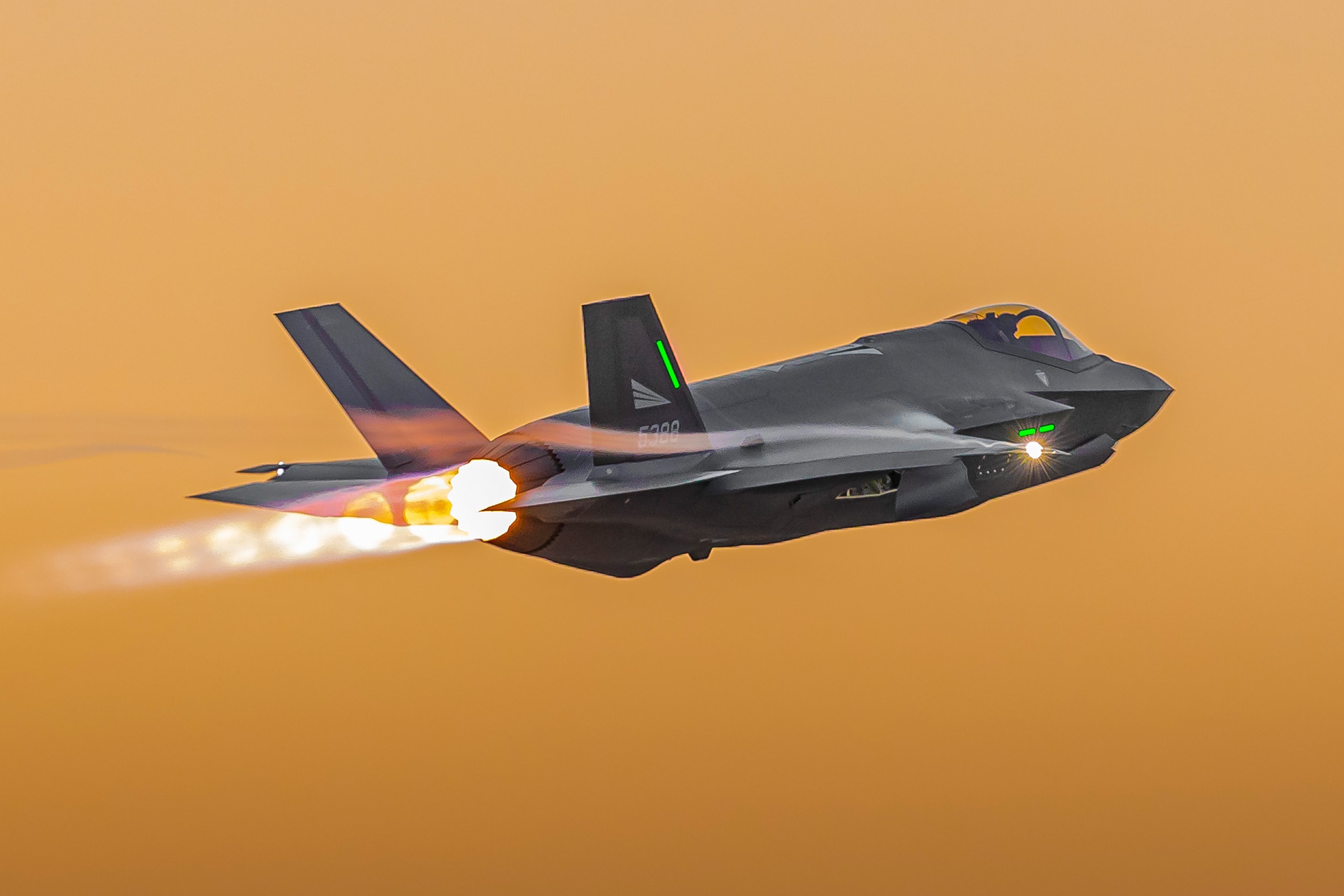
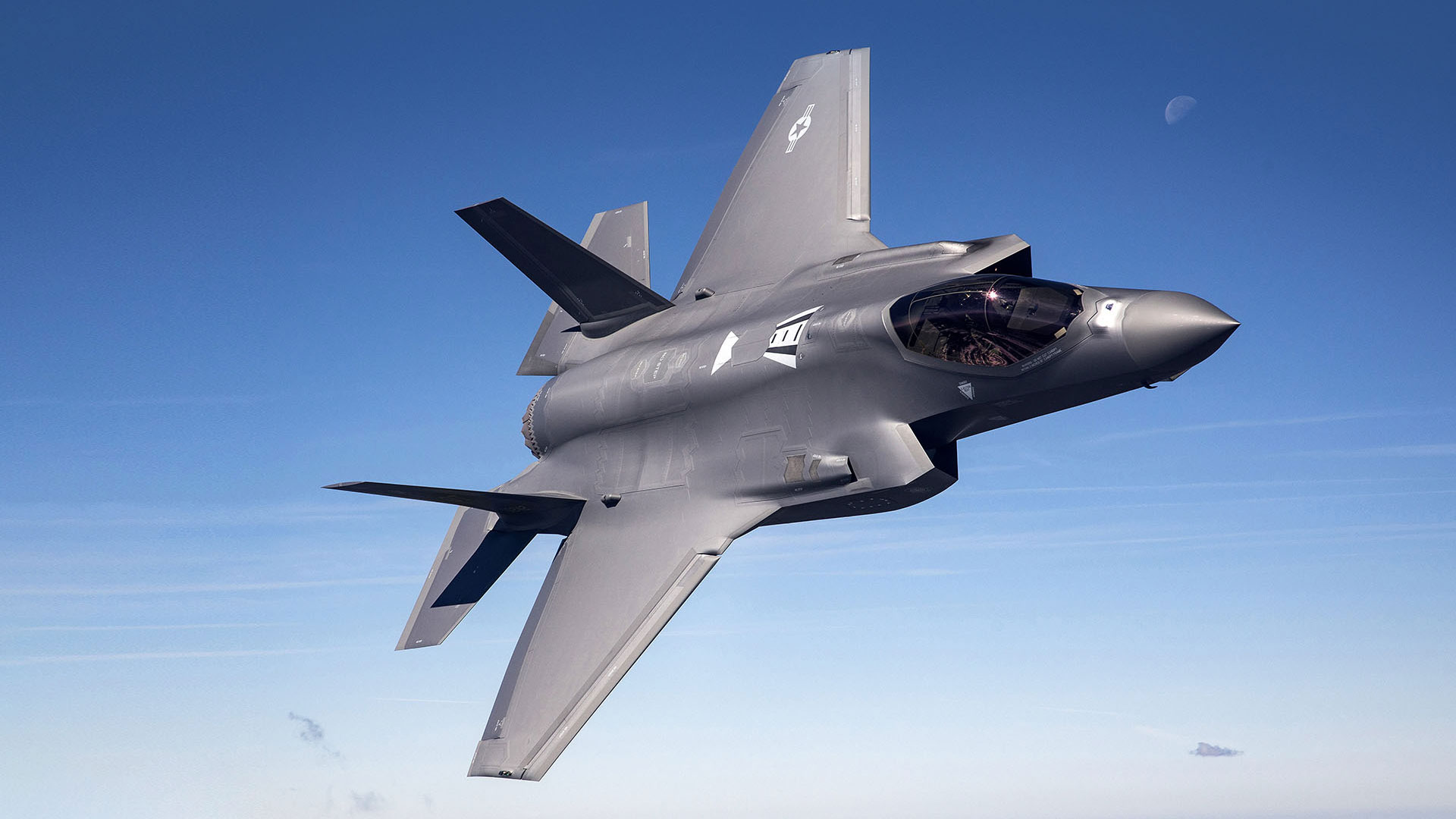
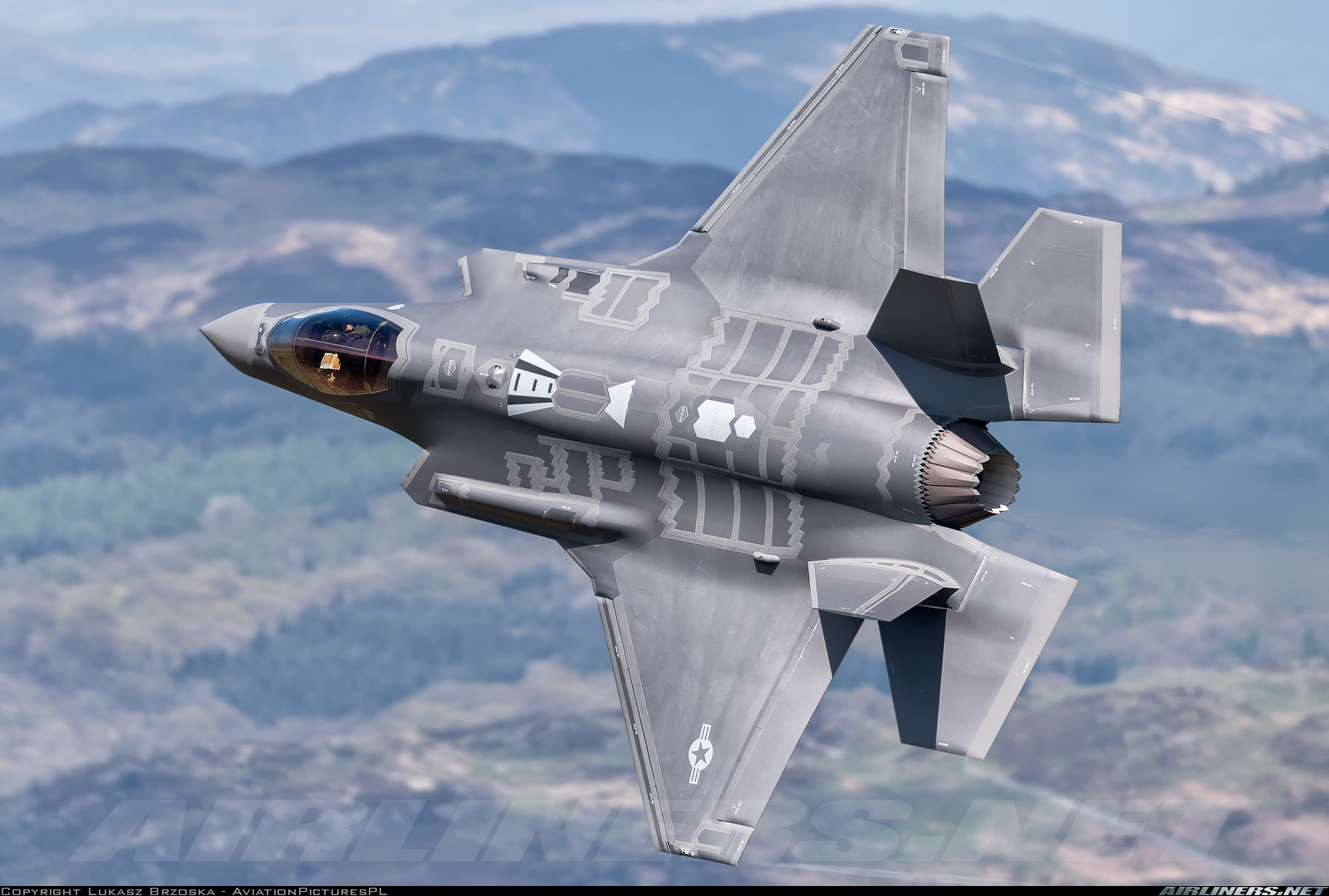
The $24.3 billion Lockheed Martin F-35 contract represents a multi-year procurement agreement negotiated by the United States Department of Defense for Lots 18 and 19 of the Joint Strike Fighter program. This landmark agreement secures the production and delivery of up to 478 aircraft for the U.S. military and international partners, establishing a foundational framework for global tactical air power, multi-service aviation modernization, and international defense industrial collaboration through the late 2020s.
Introduction to the F-35 Joint Strike Fighter Enterprise
The F-35 Lightning II program stands as the world's most complex and comprehensive defense acquisition initiative. Administered by the F-35 Joint Program Office (JPO), the program coordinates the development, manufacturing, and sustainment of three distinct variants: the F-35A Conventional Takeoff and Landing (CTOL) variant used primarily by the U.S. Air Force and allied air arms, the F-35B Short Takeoff and Vertical Landing (STOVL) variant utilized by the U.S. Marine Corps and international forces like the UK Royal Air Force, and the F-35C Carrier-Based Catapult-Assisted Takeoff But Arrested Recovery (CATOBAR) variant designed for U.S. Navy and Marine Corps aircraft carriers.
Managing an acquisition program of this magnitude requires continuous multi-year procurement (MYP) considerations, block buys, and lot-by-lot negotiations between the prime contractor, Lockheed Martin Aeronautics, and the government customer. The $24.3 billion agreement, announced as a joint framework agreement for Lots 18 and 19, reflects a concerted effort to stabilize supply chain pressures, secure economies of scale, and provide predictable scheduling for defense manufacturing facilities located across the United States and partner nations. Understanding this contract requires evaluating its financial architecture, technical scope, production cadence, and the broader strategic context that shapes modern defense acquisition.
Financial Architecture and Multi-Year Procurement Mechanics
Defense contracting of this scale involves intricate financial engineering designed to balance taxpayer value with contractor stability. The $24.3 billion figure reflects the baseline negotiated value for Lots 18 and 19, encompassing air vehicle production, initial spare parts, ground support equipment, and engineering sustainment services.
Lot 18 and Lot 19 Breakdown
Procurement lots are negotiated sequentially or as combined blocks to optimize pricing through volume commitments. Lots 18 and 19 cover aircraft ordered during fiscal cycles that feed into assembly lines operating at Lockheed Martin's primary facility in Fort Worth, Texas, alongside major sub-assembly plants operated by tier-1 partners like Northrop Grumman and BAE Systems.
- Fixed-Price Incentive Fee Structure: The majority of F-35 production contracts utilize fixed-price incentive fee (firm target) structures. This means the government and Lockheed Martin agree on a target cost and target profit. If manufacturing costs exceed the target, the contractor absorbs a higher percentage of the overage, protecting the government from uncontrolled budget inflation.
- Economic Price Adjustment (EPA): Given ongoing fluctuations in raw material costs, inflation, and global supply chain volatility, these contracts incorporate EPA clauses. These clauses permit adjustments to final pricing based on verified indices for materials such as titanium, carbon composites, and specialized electronics.
- Long-Lead Material Funding: Prior to the finalization of the overarching lot contracts, the Department of Defense routinely issues advance procurement funds—known as long-lead funding. This capital allows Lockheed Martin and its supply chain network to secure raw materials and components with extended manufacturing lead times well in advance of final assembly.
Aircraft Volume, Delivery Schedules, and Variant Distribution
The scope of the $24.3 billion contract extends directly to the physical delivery of advanced fifth-generation tactical fighters. While exact numbers fluctuate slightly based on final legislative appropriations, foreign military sales (FMS) modifications, and partner nation adjustments, the agreement is structured to deliver hundreds of aircraft over a multi-year window.
| Aircraft Variant | Primary Service / User | Operational Role | Production Focus in Lots 18-19 |
|---|---|---|---|
| F-35A | U.S. Air Force, International Partners | Conventional air superiority and strike | Core volume backbone for domestic and global air arms |
| F-35B | U.S. Marine Corps, UK, Italy | Expeditionary short takeoff and vertical landing | Amphibious assault ship and austere base operations |
| F-35C | U.S. Navy, U.S. Marine Corps | Carrier-based operations | Catapult launch and arrested recovery operations |
The delivery schedule spans several years following contract execution. Manufacturing timelines typically require 24 to 36 months from the initial issuance of long-lead funding to final rollout and flight testing at the Fort Worth facility. Aircraft delivered under these lots will incorporate mature software baselines and hardware updates, bridging the gap toward the fully integrated Tech Refresh 3 (TR-3) configuration and subsequent Block 4 modernization packages.
Supply Chain Ecosystem and Global Industrial Participation
The economic impact of a $24.3 billion defense contract extends far beyond Lockheed Martin's primary assembly lines. The F-35 enterprise relies on a deeply integrated, global supply chain involving thousands of suppliers across the United States and international partner nations, including the United Kingdom, Italy, Australia, Canada, Norway, Denmark, and the Netherlands.
Tier-1 and Tier-2 Subcontractors
Major defense contractors manage specific structural and technological domains within the aircraft:
- Northrop Grumman: Manufactures the center fuselage, composite skin panels, and key radar sensor elements.
- BAE Systems: Designs and produces the aft fuselage, vertical and horizontal tails, and essential electronic warfare support systems.
- Pratt & Whitney: Produces the F135 turbofan engine, which powers all three variants, under a separate, highly scrutinized propulsion contract structure that runs parallel to the air vehicle production contract.
This distributed manufacturing model ensures political and industrial buy-in from international partners, but it also creates unique vulnerabilities. Supply chain disruptions, labor shortages, and geopolitical bottlenecks directly influence production pacing. Consequently, a portion of the $24.3 billion contract value is dedicated to supply chain resiliency initiatives, supplier capability assessments, and small-business support programs designed to mitigate single-point-of-failure risks.
Technological Modernization: Tech Refresh 3 and Block 4
Contract negotiations for recent production lots cannot be viewed in isolation from the technological evolution of the aircraft. Lots 18 and 19 intersect with a critical phase of hardware and software modernization known as Tech Refresh 3 (TR-3).
TR-3 introduces foundational computing power upgrades necessary to support the extensive Block 4 capability upgrade suite. These improvements include:
- Integrated Core Processor: A new high-performance computer built by Mercury Systems that provides significantly greater processing capacity.
- Panoramic Cockpit Display: An upgraded widescreen display system that replaces legacy processors and enhances pilot situational awareness.
- Enhanced Electronic Warfare Hardware: Expanded memory and processing bandwidth to detect, identify, and counter modern integrated air defense systems.
Delays in software integration and flight test validation for TR-3 hardware have historically impacted the acceptance timeline of newly built aircraft, resulting in temporary storage of jets until software maturity is certified by the Joint Program Office. The financial terms of the $24.3 billion contract reflect negotiated accommodations between the government and the contractor regarding these integration milestones, ensuring that accountability for delivery delays is properly distributed.
Oversight, Government Accountability, and Congressional Scrutiny
A procurement action exceeding $20 billion draws intense scrutiny from oversight bodies, including the Government Accountability Office (GAO) and the congressional Armed Services Committees. These entities continuously evaluate whether defense contractors meet cost, schedule, and performance benchmarks.
Key Oversight Metrics
- Unit Recurring Flyaway (URF) Cost: A primary metric tracked by Congress is the cost to build a single aircraft. Over successive lots, the URF for the F-35A has steadily decreased due to learning curves and volume efficiencies, though inflation in recent years has pressured these cost-reduction trends.
- Schedule Compliance: Analysts monitor delivery dates against original contractual baselines to identify systemic manufacturing bottlenecks.
- Sustainment Cost Integration: While production contracts cover the acquisition cost, lawmakers increasingly tie procurement agreements to long-term affordability initiatives aimed at driving down the cost-per-flight-hour over the multi-decade lifecycle of the fleet.
Comparative Analysis of F-35 Procurement Models
To appreciate the scale and structure of the $24.3 billion agreement, it is helpful to compare it against alternative acquisition models utilized by the Department of Defense.
| Procurement Feature | Lot 18-19 Framework ($24.3B Contract) | Annual Definitive Contracts | Multi-Year Block Buy (Proposed) |
|---|---|---|---|
| Commitment Duration | Multi-year multi-lot framework | Single fiscal year | 3 to 5 continuous years |
| Cost Predictability | Moderate-to-high across two lots | Low due to annual re-negotiations | Maximum stability for supply chain |
| Supplier Discount Potential | Moderate bulk purchasing discounts | Minimal volume leverage | Maximum material bulk-buy savings |
| Government Fiscal Flexibility | Locked into multi-year obligations | High annual adjustment capability | Lower flexibility due to legislative lock-in |
Frequently Asked Questions
What specific aircraft lots does the $24.3 billion Lockheed Martin F-35 contract cover?
The contract primarily covers production and delivery for Lots 18 and 19 of the Joint Strike Fighter program. These lots encompass hundreds of aircraft designated for the U.S. armed services as well as international Foreign Military Sales (FMS) customers and cooperative program partners.
Does the $24.3 billion contract include the engines for the aircraft?
No. While the primary air vehicle contract is awarded to Lockheed Martin, the propulsion system—specifically the Pratt & Whitney F135 turbofan engine—is typically contracted under separate, parallel agreements managed by the F-35 Joint Program Office to acquire engines for the corresponding production lots.
How does inflation affect a multi-billion-dollar defense procurement contract?
Large defense contracts incorporate Economic Price Adjustment (EPA) clauses. These contractual mechanisms allow final prices to adjust incrementally based on verified government indices for raw materials, labor rates, and industrial manufacturing costs, protecting both the government and the contractor from unforeseen macroeconomic volatility.
What is the primary operational objective of the F-35 modernization upgrades tied to these lots?
Lots 18 and 19 integrate crucial hardware improvements known as Tech Refresh 3 (TR-3). TR-3 upgrades the aircraft's core processing power, memory capacity, and electronic warfare infrastructure, laying the technical foundation for the expansive Block 4 software suite and advanced threat-response capabilities.
How are international partner nations factored into this production contract?
International partners who co-developed or purchased the F-35 through Foreign Military Sales agreements participate in the overarching production lots. Their ordered aircraft are integrated into the master manufacturing schedule at the Fort Worth final assembly facility, allowing all participants to benefit from shared volume pricing and synchronized supply chain logistics.
Strategic Conclusion and Next Actions
The $24.3 billion Lockheed Martin F-35 contract for Lots 18 and 19 stands as a pillar of modern defense industrial planning, balancing complex manufacturing requirements with stringent financial oversight. For defense analysts, policymakers, and industry stakeholders, monitoring the execution of this contract requires tracking delivery milestones, verifying software integration progress for TR-3 and Block 4, and evaluating ongoing supply chain adaptations. Stakeholders should review official Department of Defense budget justification documents, Government Accountability Office program assessments, and Joint Program Office status reports to obtain verified data on delivery rates, cost adjustments, and long-term fleet readiness metrics.