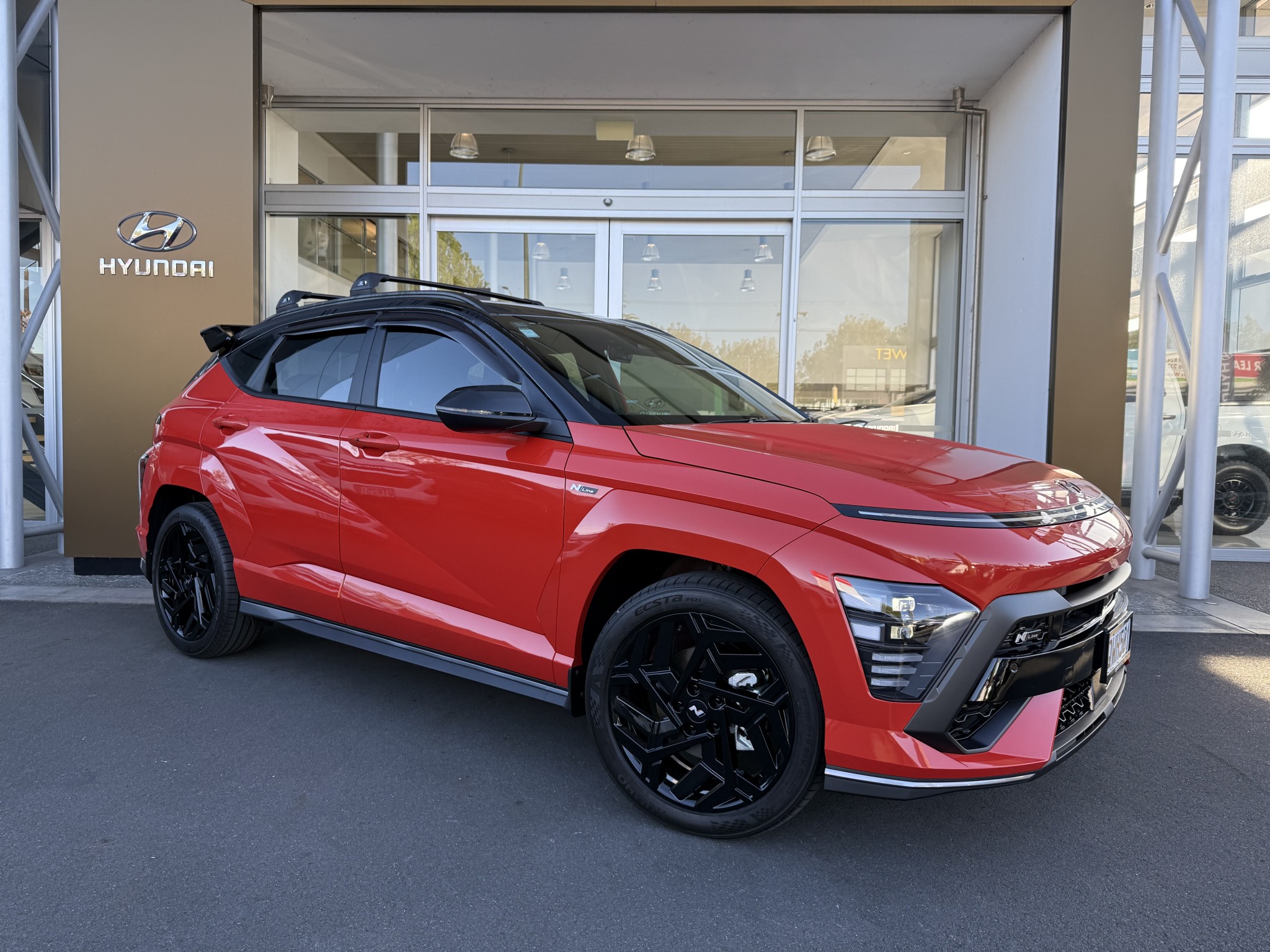
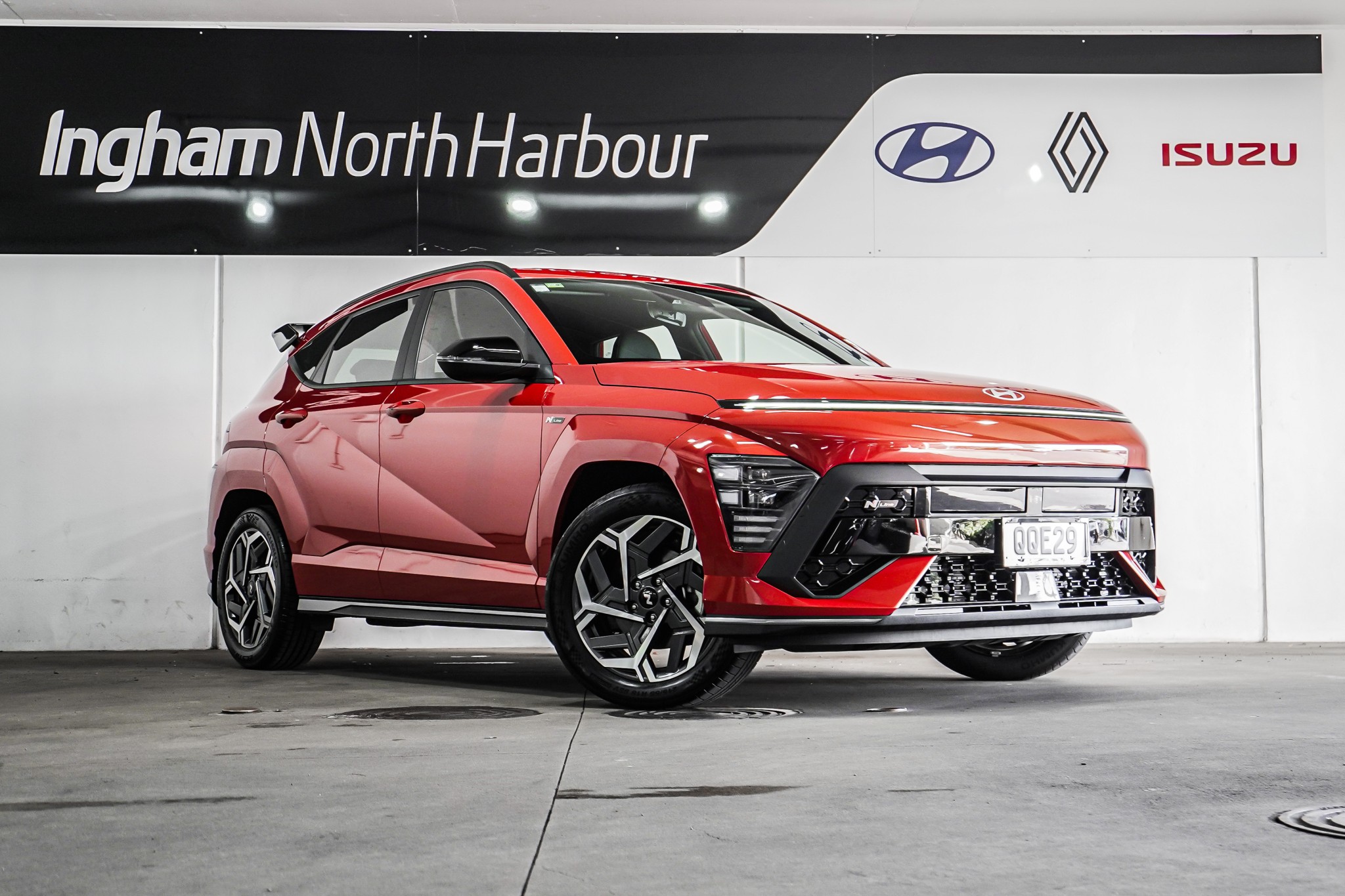
The 2024 Hyundai Kona N Line is equipped with a 1.6-liter turbocharged four-cylinder engine, which allows it to reach 0-60 mph in approximately 7.5 to 7.8 seconds. While this performance figures it as a spirited daily driver, it is important to note that the N Line trim emphasizes sport-inspired aesthetics and handling characteristics over track-focused acceleration.
Overview of the 2024 Hyundai Kona N Line Powertrain
The 2024 model year marked a significant redesign for the Hyundai Kona, introducing a larger, more mature chassis and a refined interior. Within this lineup, the N Line serves as a performance-oriented trim level, though it is vital to distinguish it from the high-output "N" models produced by Hyundai’s performance division in previous years.
The heart of the 2024 Kona N Line is a 1.6-liter turbocharged GDI (Gasoline Direct Injection) four-cylinder engine. This powerplant generates 190 horsepower and 195 lb-ft of torque. Unlike the base powertrain found in the SE and SEL trims, which utilizes a 2.0-liter naturally aspirated engine paired with an Intelligent Variable Transmission (IVT), the N Line employs an 8-speed automatic transmission. This mechanical configuration is designed to provide more direct power delivery and a more engaging driving experience, even if it does not reach the sub-six-second times associated with dedicated performance hatchbacks.
Performance Dynamics: Why 0-60 Times Matter
When enthusiasts search for the 0-60 mph time of a vehicle like the 2024 Kona N Line, they are often attempting to gauge the car's "seat-of-the-pants" feel. Acceleration from a standstill is a benchmark for how the vehicle handles merging onto highways, passing slower traffic, and maneuvering through urban environments.
In the case of the 2024 Kona N Line, the engine’s power delivery is tuned for mid-range punch rather than aggressive off-the-line launches. The use of an 8-speed automatic transmission helps maintain the engine in its optimal power band during acceleration, contributing to a smooth, linear experience. Because the 2024 redesign resulted in a slightly larger and heavier vehicle compared to its predecessor, the acceleration figures remain consistent with its class segment—the subcompact SUV market—rather than attempting to compete with hot hatches.
Technical Specifications Affecting Acceleration
Several engineering factors influence the acceleration capability of the 2024 Hyundai Kona N Line. Understanding these components helps provide context for why the vehicle performs as it does in real-world testing conditions.
- Engine Displacement and Turbocharging: The 1.6L turbo unit is efficient and capable, but it is calibrated for balance between fuel economy and responsiveness. Turbo lag is minimized, but the engine is designed for daily drivability rather than sustained high-RPM track performance.
- Transmission Logic: The 8-speed automatic transmission in the N Line is a conventional torque-converter unit. It offers a more traditional shifting feel compared to the dual-clutch transmissions (DCTs) found in some previous Kona models. This change improves low-speed smoothness, which is highly beneficial in stop-and-go traffic.
- Curb Weight: The 2024 redesign increased the vehicle's footprint. The added weight, while improving interior space and highway stability, inevitably affects the power-to-weight ratio.
- Drivetrain Options: The Kona N Line is available in both front-wheel drive (FWD) and all-wheel drive (AWD) configurations. The added weight and mechanical complexity of the AWD system may result in slight variances in 0-60 times compared to the FWD version, though these differences are often negligible in daily driving scenarios.
Comparative Performance Analysis
To understand where the 2024 Kona N Line sits within the automotive landscape, it is helpful to look at how it compares to similar vehicles in the segment.
| Vehicle Model | Engine Type | Est. 0-60 mph | Focus |
|---|---|---|---|
| 2024 Hyundai Kona N Line | 1.6L Turbo | 7.5 - 7.8s | Sporty Daily |
| 2024 Honda HR-V | 2.0L Naturally Aspirated | 9.5 - 10s | Utility/Economy |
| 2024 Mazda CX-30 Turbo | 2.5L Turbo | 6.0 - 6.5s | Performance/Luxury |
| 2024 Toyota Corolla Cross | 2.0L Naturally Aspirated | 8.0 - 8.5s | Reliability |
As shown in the table above, the Kona N Line strikes a balance. It is significantly faster than entry-level subcompact SUVs that utilize naturally aspirated engines, yet it does not aim for the high-performance benchmark set by more expensive, turbo-heavy luxury competitors like the Mazda CX-30.
Real-World Driving Expectations
For a potential owner or enthusiast, the 0-60 time is only one metric of performance. The 2024 Kona N Line is specifically designed to provide a "sporty" feel without sacrificing the comfort expected of a daily commuter. The N Line aesthetic package includes unique front and rear bumpers, a rear spoiler, twin-tip exhaust outlets, and 19-inch alloy wheels. These features, combined with the sport-tuned suspension, give the driver a sense of agility that is often lacking in more utilitarian subcompact SUVs.
When testing the vehicle, drivers will notice that the N Line holds gears longer than the base trim, which contributes to a more aggressive exhaust note and more immediate throttle response. It is a vehicle that feels "peppy" when maneuvering around town, which is arguably more important for the target demographic than the exact fraction of a second it takes to hit 60 mph.
Potential Factors Impacting Acceleration
If you are attempting to verify performance figures yourself, be aware that many variables can influence the results of a 0-60 run. These are not merely statistics; they are real-world conditions that alter mechanical output.
- Tire Grip and Compound: The factory-installed tires are optimized for all-season longevity and fuel efficiency. Switching to a high-performance summer tire can improve launch traction significantly.
- Environmental Conditions: Ambient air temperature, humidity, and altitude all play a major role. Engines—especially turbocharged ones—produce more power in cooler, dense air at sea level. Tests conducted in high-altitude environments will show significantly slower times.
- Fuel Quality: Using premium fuel (91-93 octane) can allow the Engine Control Unit (ECU) to optimize ignition timing, potentially providing a slight performance advantage over the standard regular unleaded fuel recommended for the vehicle.
- Driver Technique: Proper weight transfer and throttle modulation are essential. While modern traction control systems prevent wheel spin, they can also "choke" power delivery, leading to slower times.
Common Questions Regarding Kona Performance
Is the 2024 Kona N Line considered a "Fast" car? It is not classified as a "fast" or "high-performance" car in the traditional sense. It is a brisk, fun-to-drive crossover that offers more power than the average vehicle in its class.
Does the AWD system make the N Line faster? Generally, AWD provides better traction off the line, which can help in 0-60 mph times on slick surfaces. However, on dry pavement, the added weight of the AWD system typically offsets the grip advantage, resulting in similar or slightly slower times compared to the FWD version.
How does the 8-speed transmission affect acceleration? The 8-speed automatic is designed for reliability and smoothness. It provides a wide range of gear ratios, which keeps the engine in its power band during acceleration, preventing the "droning" sensation often associated with CVT-equipped competitors.
Does the 2024 Kona have an "N" version like the older models? No. Hyundai discontinued the dedicated high-performance "N" trim for the Kona following the 2023 model year. The N Line is now the performance-aesthetic apex of the lineup.
What is the best way to maintain top performance? Adhere strictly to the manufacturer's maintenance schedule. Ensuring that you use the recommended oil viscosity and keeping the air filter clean are critical for turbocharged engines, which rely on precise airflow and lubrication for optimal operation.
Conclusion and Recommendations
The 2024 Hyundai Kona N Line is an excellent choice for drivers who want a stylish, well-equipped, and responsive vehicle that feels more capable than the average commuter. While its 0-60 time is not track-oriented, it provides ample power for all highway merging and urban driving situations.
If you are considering purchasing this vehicle, focus less on the specific 0-60 stopwatch numbers and more on how the power delivery aligns with your driving style. We recommend scheduling a test drive that includes highway merging to see how the 1.6L turbocharged engine performs in conditions relevant to your daily commute. Ensure you evaluate the transition between gears to determine if the 8-speed automatic meets your expectations for smoothness and responsiveness. For those who prioritize aesthetics, the N Line package offers a distinct, aggressive look that justifies its position within the 2024 Kona hierarchy, regardless of raw acceleration figures.