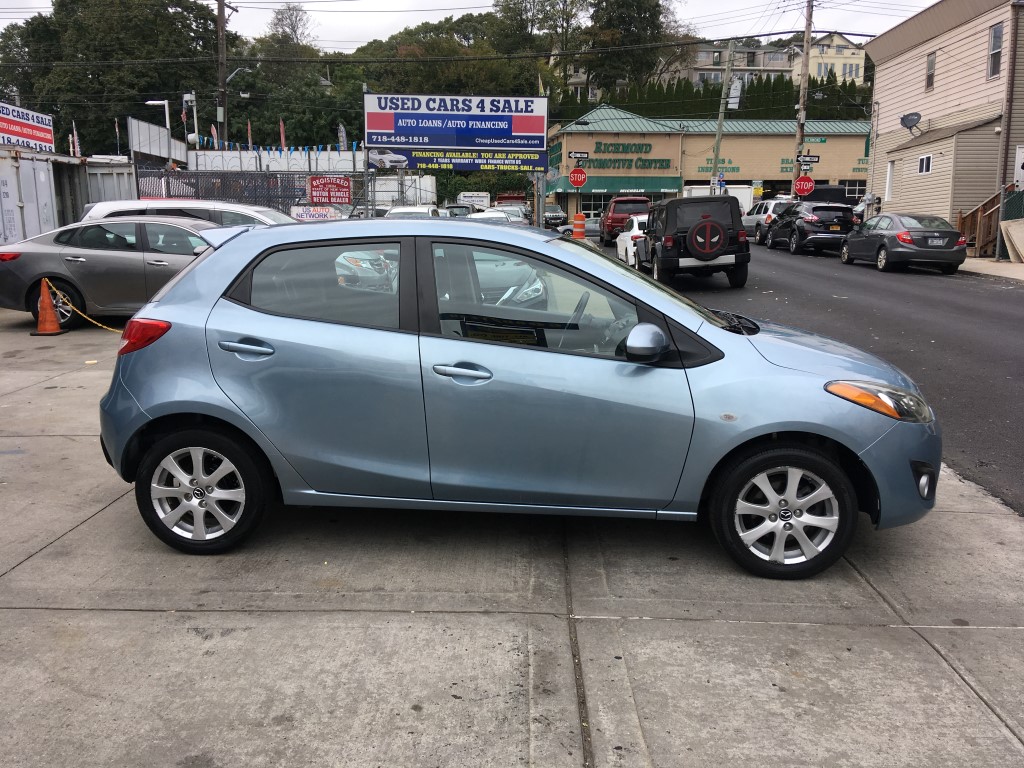
The 2013 Mazda2 Touring represents the pinnacle of the DE-generation Mazda2 in the North American market, serving as a lightweight, driver-centric alternative to heavier subcompact competitors. This timeline traces its development from the 2011 U.S. launch through its 2013 mid-cycle refinements, concluding with its current status as a highly sought-after used vehicle in 2026.
As the automotive landscape in 2026 shifts increasingly toward heavy electric vehicles and complex software-defined platforms, the 2013 Mazda2 Touring stands out for its mechanical simplicity and the "Gram Strategy" engineering that kept its curb weight under 2,300 pounds. For buyers and enthusiasts, understanding the timeline of this specific model year involves looking at the evolution of the trim levels, the technical milestones of the MZR engine family, and the long-term reliability profile that has emerged over the last thirteen years.
The Genesis of the North American Mazda2 (2011–2012)
Before the 2013 model could establish its place, Mazda had to adapt its global "Demio" platform for North American tastes. While the third-generation (DE) Mazda2 had been winning awards globally since 2007, it did not arrive in the United States and Canada until the 2011 model year.
The Gram Strategy and Lightweight Philosophy
The foundation of the 2013 Mazda2 was laid during the development of the DE platform. Mazda engineers utilized a "Gram Strategy," where every component was scrutinized to shave off weight. This resulted in a car that was significantly lighter than the model it replaced globally, a rarity in an industry where cars typically grow larger and heavier with each generation. This lightweight construction is the primary reason the 2013 Touring remains a favorite for autocross and enthusiast commuting in 2026; it offers a level of agility that modern, safety-bloated subcompacts cannot replicate.
2012: The Standard Safety Push
In 2012, Mazda began standardizing electronic stability control and traction control across all trims. This was a critical precursor to the 2013 model, ensuring that the "Touring" trim would not just be about aesthetic upgrades but would also meet the increasingly stringent safety expectations of the time. These early years established the car's reputation for being "slow-car fast"—a vehicle that lacked raw horsepower but excelled in momentum-based driving.
The 2013 Mazda2 Touring: The Mid-Cycle "Sweet Spot"
The 2013 model year is often cited by enthusiasts as the "sweet spot" for the Mazda2. It benefited from two years of consumer feedback regarding the 2011 and 2012 models, leading to small but significant quality-of-life improvements.
Key Refinements for 2013
For the 2013 model year, Mazda addressed one of the most frequent complaints regarding the interior: connectivity. The 2013 Mazda2 Touring finally integrated a standard USB port, a feature that had been conspicuously absent in earlier iterations. While the infotainment system remained a basic "double-DIN" style head unit by 2026 standards, this addition made the 2013 model significantly more livable for daily drivers.
Additionally, the 2013 Touring trim received updated cloth seat upholstery with red piping, which provided a more premium feel than the base Sport trim. The exterior also saw the standardization of the "smiling" front fascia, a hallmark of Mazda’s design language during that era, which remains a polarizing but iconic look.
The Touring vs. Sport Differentiation
In 2013, the Mazda2 was offered in only two trims: Sport and Touring. The Touring was the "luxury" version of this minimalist car. To understand the timeline of the vehicle's value, one must look at what the Touring trim added over the base model:
- 15-inch Alloy Wheels: Replacing the steel wheels of the Sport trim.
- Fog Lights: Integrated into the lower front bumper.
- Rear Spoiler: Improving the hatchback's aerodynamic profile and visual length.
- Leather-Wrapped Steering Wheel: Featuring audio and cruise control buttons.
- Six-Speaker Audio System: An upgrade over the base four-speaker setup.
- Trip Computer: Providing fuel economy and range data.
Technical Specifications and Engineering Timeline
The 2013 Mazda2 Touring was powered by the 1.5-liter MZR four-cylinder engine. This engine is a cornerstone of the car's longevity. By 2026, many of these engines have surpassed the 200,000-mile mark with only routine maintenance.
Performance Data and Drivetrain Options
The MZR engine produced 100 horsepower and 98 lb-ft of torque. While these numbers seemed meager even in 2013, the power-to-weight ratio allowed the 5-speed manual version to feel surprisingly peppy. The 4-speed automatic, however, was often criticized for its wide gear ratios, which hindered both acceleration and highway fuel economy.
| Feature | 2013 Mazda2 Touring Specification |
|---|---|
| Engine | 1.5L DOHC 16-valve 4-cylinder (MZR) |
| Horsepower | 100 hp @ 6,000 rpm |
| Torque | 98 lb-ft @ 4,000 rpm |
| Transmission | 5-Speed Manual or 4-Speed Automatic |
| Curb Weight | 2,306 lbs (Manual) / 2,359 lbs (Automatic) |
| Fuel Economy (EPA) | 29 City / 35 Highway (Manual) |
| Wheelbase | 98.0 inches |
| Cargo Volume | 13.3 cu. ft. (Seats up) / 27.8 cu. ft. (Max) |
Suspension and Handling Architecture
The timeline of the Mazda2's handling prowess is rooted in its MacPherson strut front suspension and a simple torsion-beam rear setup. Mazda’s engineers tuned these components with higher-than-average damping rates for the subcompact class. In 2026, owners often find that replacing the original bushings and shocks with modern aftermarket equivalents transforms the 2013 Touring into a formidable handling machine, rivaling the driving dynamics of the era's Mazda MX-5 Miata.
The End of an Era: 2014 and Beyond
The 2013 model year was the penultimate year for the Mazda2 in North America. By 2014, Mazda was preparing to transition its small-car production toward the SkyActiv-generation vehicles.
The Toyota Partnership
A significant part of the Mazda2 timeline involves its disappearance from the Mazda lineup. After the 2014 model year, the next-generation Mazda2 was not sold in the U.S. as a Mazda. Instead, it was rebranded as the Scion iA, and later the Toyota Yaris Sedan and Hatchback. This makes the 2013 Mazda2 Touring one of the last "pure" Mazda subcompacts available in the American market—designed, engineered, and branded entirely by Hiroshima.
Historical Recalls and Safety Updates
As the car moved through the late 2010s and early 2020s, a few critical maintenance milestones appeared. The most notable was the Takata Airbag Recall, which affected 2013 models. Most vehicles on the road in 2026 have had these components replaced, but buyers should still verify this via the NHTSA Recalls Database.
The 2013 Mazda2 Touring in 2026: A Reliability Review
In the current year of 2026, the 2013 Mazda2 Touring has transitioned from a budget-friendly commuter to a "modern classic" in the subcompact category. Its lack of complex screens and turbocharged components makes it an outlier in an era where electronic failures are the primary cause of vehicle retirement.
Long-Term Durability Concerns
Thirteen years into its life cycle, certain patterns have emerged regarding the 2013 Mazda2’s durability:
- Rear Shock Mounts: The upper mounts for the rear shocks are known to succumb to corrosion, especially in "salt belt" regions. This often results in a characteristic "clunking" sound.
- Engine Mounts: Specifically, the passenger-side liquid-filled mount is prone to leaking or collapsing after 10 years, leading to increased cabin vibration.
- Paint Thinness: Like many Mazdas of the early 2010s, the paint on the 2013 model is relatively thin. Many examples seen in 2026 show signs of clear-coat failure on the roof or hood if they were not garage-kept.
- Automatic Transmission Heat: For the 4-speed automatic models, regular fluid changes have proven essential. Those that were neglected often exhibit harsh shifting between second and third gear as they age.
Valuation and Market Trends in 2026
In 2026, the 2013 Mazda2 Touring maintains a surprisingly high resale value relative to its original MSRP. While it was once a $16,000–$17,000 car, well-maintained examples with under 100,000 miles can command between $5,500 and $7,500. This value is driven by the car's fuel efficiency and the rising cost of maintaining more complex modern vehicles.
Comparison: 2013 Mazda2 Touring vs. 2013 Honda Fit
To understand the Mazda2's place in the 2013 timeline, it must be compared to its primary rival: the second-generation Honda Fit (GE8).
While the Honda Fit offered more interior versatility through its "Magic Seats," the Mazda2 Touring was consistently praised by automotive journalists for its superior steering feel and shifter action. The Fit was a better "appliance," but the Mazda2 was the better "driver's car." In 2026, the choice between the two often comes down to the buyer's priority: the Fit for hauling cargo, or the Mazda2 for the joy of the daily commute.
Frequently Asked Questions
Is the 2013 Mazda2 Touring good on gas?
Yes, the 2013 Mazda2 remains competitive in 2026. The 5-speed manual version can easily achieve 33–35 MPG in mixed driving. While modern hybrids exceed this, the Mazda2 achieves these numbers without the weight or replacement cost of a high-voltage battery pack.
Does the 2013 Mazda2 have Bluetooth?
The 2013 Touring trim featured Bluetooth hands-free phone connectivity as standard, but Bluetooth audio streaming was often hit-or-miss depending on the specific production month and phone compatibility. Many 2026 owners have opted to install aftermarket CarPlay or Android Auto head units to modernize the interface.
How safe is the 2013 Mazda2 by 2026 standards?
The 2013 Mazda2 earned "Good" ratings from the IIHS in most categories at the time of its release. However, it lacks the advanced driver-assistance systems (ADAS) like automatic emergency braking and lane-keep assist found in 2026 vehicles. It is a safe car for its size, but it relies on structural integrity rather than active electronic intervention.
Why is the 2013 model year preferred over the 2011?
The 2013 model addressed several "teething" issues of the early US launch, including improved interior plastics that were less prone to scratching and the inclusion of the USB port. Mechanically, the 2013 model also benefited from minor revisions to the engine control module (ECM) for smoother idling.
What is the most common mechanical failure?
Beyond the rear shock mounts, the most common issue is the failure of the blower motor resistor, which can cause the HVAC fan to only work on its highest setting. This is a relatively inexpensive and simple DIY fix that remains common among high-mileage examples in 2026.
Final Recommendations for Buyers and Owners
The 2013 Mazda2 Touring stands as a testament to the idea that a car does not need high horsepower or complex technology to be rewarding. In 2026, it remains a "pure" driving experience.
For those looking to purchase one:
- Prioritize the Manual: The 5-speed manual transmission is more robust and better suited to the engine's power band.
- Check for Rust: Specifically inspect the rear wheel wells and the undercarriage near the torsion beam.
- Verify Recalls: Ensure the Takata airbag service was completed by an authorized dealer.
For current owners:
- Suspension Refresh: At 13 years old, replacing the rubber components in the suspension will restore the "like-new" handling that made the Touring trim famous.
- Fluid Maintenance: Regular changes of the coolant and transmission fluid will ensure the MZR engine reaches its full potential longevity.
The 2013 Mazda2 Touring timeline is a story of a car that was ahead of its time by being intentionally behind the times—clinging to the virtues of lightness and simplicity in a world that was moving toward complexity.