A 20-year term life insurance policy provides a fixed monthly premium and a guaranteed death benefit for two decades. For a healthy 30-year-old in 2026, monthly rates typically range from $22 to $30 for $500,000 in coverage, while a 50-year-old might pay between $90 and $120 for the same policy. Rates increase by approximately 8% to 12% for every year you delay purchasing coverage.
Understanding the Structure of 20-Year Term Life Insurance
A 20-year term life insurance policy is one of the most popular financial products for families and individuals in their peak earning years. The "term" refers to the duration of the coverage. During these 20 years, the policyholder pays a level premium, meaning the cost does not increase regardless of changes in health or the aging process.
The primary purpose of this specific duration is to bridge the gap during high-liability years. For many, a 20-year window covers the lifespan of a standard mortgage or the period from a child’s birth until they graduate from university. In the insurance landscape of 2026, these policies are frequently used as the "base layer" of a comprehensive financial plan, ensuring that if the primary breadwinner passes away, the remaining family members can maintain their standard of living.
Technically, these policies are "pure insurance." Unlike whole life or universal life policies, they do not accumulate cash value. This lack of an investment component allows the premiums to remain significantly lower than permanent insurance options. If the policyholder outlives the 20-year term, the coverage simply expires, though many 2026 policies include a conversion rider, allowing the owner to transition to a permanent policy without a new medical exam.
How Age Dictates 20-Year Term Premiums
In life insurance underwriting, age is the single most influential variable. Actuaries use mortality tables to calculate the statistical probability of a policyholder dying within the 20-year window. As a person ages, the "hazard rate"—the likelihood of death occurring in a given year—increases exponentially rather than linearly.
In your 20s and early 30s, the probability of death is statistically low, mostly tied to accidents rather than chronic illness. Consequently, insurance companies can offer very low rates because they anticipate paying out very few claims for this demographic. However, as an applicant moves into their 40s and 50s, the risk of cardiovascular disease, cancer, and metabolic disorders rises. To compensate for this increased risk, insurers raise premiums significantly for older applicants.
Waiting even one or two years to lock in a 20-year term can result in a "compounded" cost. Not only does the base rate for your new age increase, but you are also moving your coverage window further into the future, where mortality risks are naturally higher.
2026 Estimated Monthly Rates for $500,000 (20-Year Term)
The following table provides estimated monthly premiums for a $500,000 20-year term policy in 2026. These figures represent a Preferred Plus (excellent health) underwriting class.
| Issue Age | Male (Monthly) | Female (Monthly) |
|---|---|---|
| 20 | $18.50 | $15.75 |
| 25 | $19.10 | $16.20 |
| 30 | $22.45 | $18.90 |
| 35 | $27.30 | $23.15 |
| 40 | $39.80 | $33.40 |
| 45 | $62.15 | $51.60 |
| 50 | $105.40 | $84.25 |
| 55 | $172.90 | $130.50 |
| 60 | $310.20 | $220.75 |
| 65 | $585.00 | $415.30 |
Note: Rates are illustrative and vary by carrier, specific health history, and geographic location. Coverage beyond age 65 for a 20-year term may be subject to stricter underwriting or limited availability.
Breaking Down Rates by Decade
The 20s: The "Invincibility" Discount
In 2026, applicants in their 20s enjoy the lowest rates in history due to advancements in preventative medicine and data-driven underwriting. At this age, a 20-year term is remarkably affordable because the insurance company is essentially betting that you will survive until age 40 to 49, a period where mortality rates remain low. For many 25-year-olds, the cost of a $500,000 policy is less than the price of a single streaming service subscription.
The 30s: The Peak Planning Phase
Most 20-year terms are purchased by individuals in their 30s. This is when financial responsibilities, such as homeownership and child-rearing, typically begin. While rates are slightly higher than in the 20s, they remain very accessible. A 35-year-old male might pay roughly $27 per month. By locking this in, he ensures that his coverage lasts until he is 55, covering the most critical years of his family's financial growth.
The 40s: The Pivot Point
Once an applicant crosses the age of 40, insurance companies begin to look more closely at "biological age" versus "chronological age." Rates for a 40-year-old are often 40-50% higher than those for a 30-year-old. This decade is often the last chance to secure a 20-year term at a rate that feels "inexpensive." Health issues like slightly elevated blood pressure or cholesterol—common in the 40s—can move an applicant from "Preferred Plus" to "Standard," further increasing the cost.
The 50s and 60s: High-Risk Underwriting
For those in their 50s, a 20-year term policy is a significant financial commitment. The premiums reflect the reality that the policy will remain in force until the holder is in their 70s. Mortality rates climb sharply during this period. By age 60, a 20-year term becomes a niche product; many insurers prefer to offer 10 or 15-year terms to this age group. Those who do qualify for a 20-year term at age 60 can expect to pay over ten times what a 20-year-old would pay.
The Impact of Underwriting Classes on Pricing
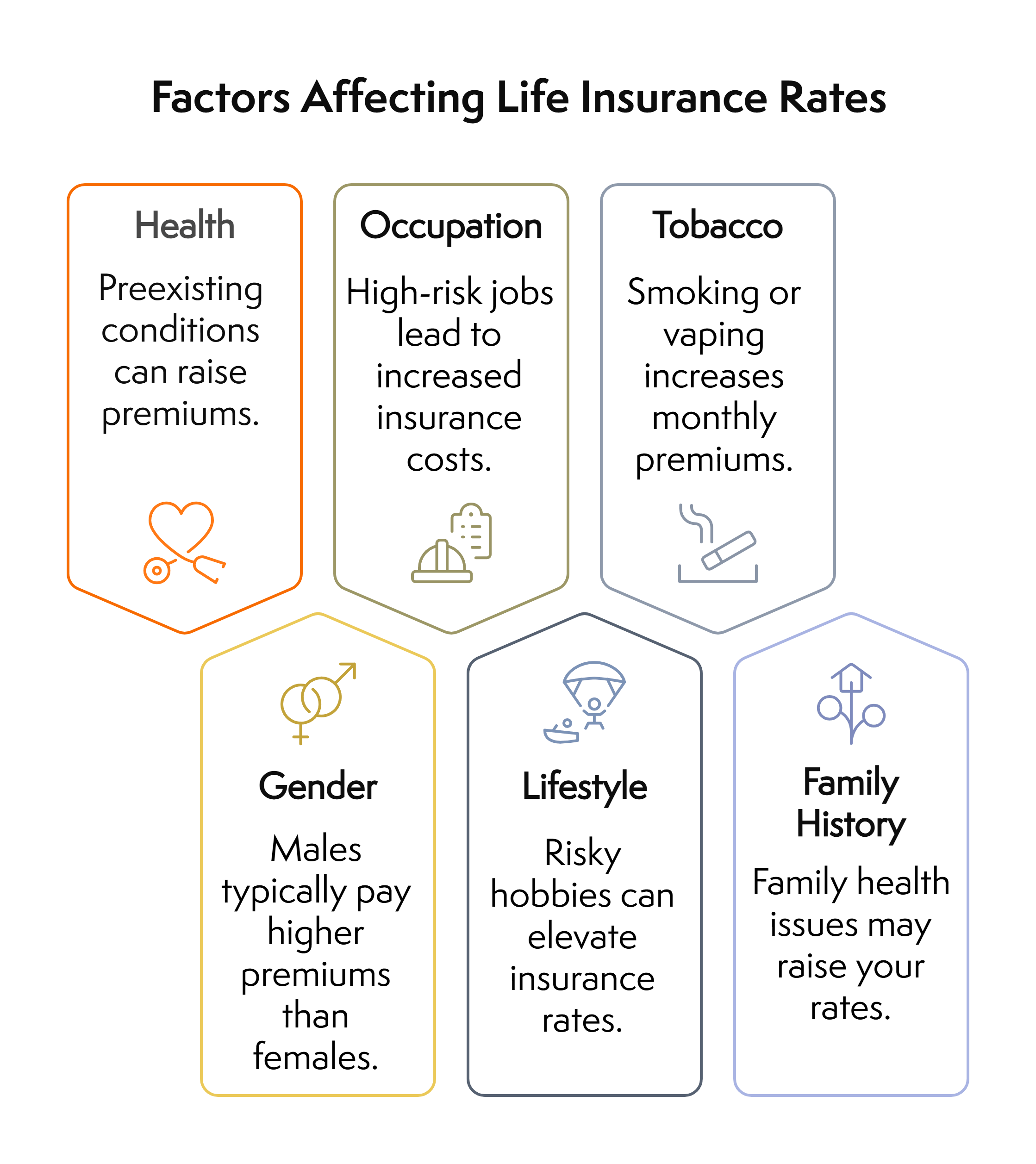
Your age sets the "baseline" for your premium, but your underwriting class determines the final price. Insurance companies in 2026 use a combination of medical exams and "accelerated underwriting" (data from prescription databases and motor vehicle records) to place you in a category.
- Preferred Plus (or Super Preferred): Reserved for those in exceptional health with no tobacco use and a clean family medical history. These individuals receive the rates shown in the lowest tiers of pricing tables.
- Preferred: Excellent health, but perhaps one minor issue, such as controlled high cholesterol or a family history of late-onset illness.
- Standard Plus: Better than average health, but carrying slightly more weight (BMI) or having a history of treated hypertension.
- Standard: Average health and life expectancy. Most people fall into this or the "Standard Plus" category.
- Substandard (Table Ratings): For individuals with chronic conditions like diabetes or heart disease. These rates are calculated by adding a percentage (e.g., +25% or +50%) to the Standard rate.
Smoker vs. Non-Smoker: It is important to note that tobacco use can double or even triple the rates for any given age. In 2026, most insurers also include vaping and certain nicotine replacement therapies in their "smoker" definitions, though some boutique carriers offer specific "marijuana-user" or "occasional cigar" classifications that are more lenient than traditional cigarette-smoker rates.
The Cost of Delay: A Quantitative Analysis
One of the most common mistakes in financial planning is waiting "until next year" to buy life insurance. Because life insurance is priced based on your attained age, every birthday moves you into a higher bracket.
Consider a healthy 35-year-old male looking for $1,000,000 in coverage for 20 years. In 2026, his monthly premium might be $45. If he waits until he is 40, that same policy could cost $72 per month.
- Cost at age 35: $45 x 240 months = $10,800 total over the life of the policy.
- Cost at age 40: $72 x 240 months = $17,280 total over the life of the policy.
By waiting five years, the individual pays $6,480 more for the exact same amount of coverage. Furthermore, waiting increases the "health risk." If the individual develops a chronic condition at age 38, they may no longer qualify for the Preferred rates at age 40, potentially doubling the cost again or making them uninsurable.
2026 Trends in Life Insurance Underwriting
As of 2026, the process of securing 20-year term rates has shifted toward Fluidless Underwriting. Historically, every applicant had to undergo a "paramedical exam" involving blood draws and urine samples. Today, many top-tier carriers use sophisticated AI algorithms to analyze electronic health records (EHRs) and credit-based mortality scores to approve applicants in real-time.
For younger applicants (ages 18–45), it is now common to receive a "Best Class" rating within minutes without ever seeing a nurse. This has made 20-year term insurance more accessible, though it places a higher premium on having a clean digital health footprint. According to the National Association of Insurance Commissioners (NAIC), these technological shifts have streamlined the industry but require consumers to be more diligent about the accuracy of their medical records.
Factors Beyond Age That Influence Your Rate
While age is the primary driver, other technical factors influence the "for each age" calculation:
- Gender: Statistically, women have a longer life expectancy than men. Consequently, female rates for a 20-year term are generally 15% to 25% lower than male rates for the same age.
- Policy Size (Band Pricing): Insurance companies use "bands" for pricing. A $500,000 policy often has a lower cost per thousand dollars of coverage than a $100,000 policy. This is because the administrative costs of maintaining the policy are fixed, regardless of the death benefit size.
- Payment Frequency: Paying annually instead of monthly typically saves the policyholder 3% to 5% per year, as it reduces the insurer’s processing costs and improves their cash flow.
- Riders: Adding features like a Waiver of Premium (which pays your premiums if you become disabled) or a Child Term Rider will increase the base rate for your age.
Frequently Asked Questions
Can I get a 20-year term policy if I am over 65?
While it is possible, it is significantly more difficult. Most insurers cap 20-year term offerings at age 60 or 65 because the policy would extend into the policyholder's 80s, where the probability of a claim is extremely high. For those over 65, a 10-year term or a guaranteed universal life policy is often a more viable and cost-effective solution.
What happens to my rates after the 20 years are up?
Once the 20-year level premium period ends, the policy usually enters a "yearly renewable" phase. The rates will skyrocket—often increasing by 800% to 1,000% in a single year—because the insurer is now covering you on a year-to-year basis at an older age without new medical evidence. Most people choose to let the policy lapse or convert it to permanent coverage before this happens.
Is a 20-year term better than a 30-year term?
It depends on your financial "finish line." A 20-year term is cheaper than a 30-year term because the insurer is taking on less risk. If your children will be independent and your mortgage paid off in 18 years, a 20-year term is the more efficient choice. If you have a brand-new 30-year mortgage, the longer term may be worth the extra premium to avoid being uninsured in your later years.
Do 20-year term rates change if I start smoking after I buy the policy?
No. One of the primary benefits of term life insurance is that your rates are locked in based on your status at the time of application. if you were a non-smoker when the policy was issued, your rates will not increase if you take up smoking later. However, if you let the policy lapse and try to reinstate it, you will likely be re-evaluated at smoker rates.
Are 20-year term life insurance rates regulated?
Rates are not strictly "set" by the government, but insurance companies must file their rate tables with state insurance departments (such as the California Department of Insurance). These regulators ensure that the rates are actuarially sound and not unfairly discriminatory, providing a level of consumer protection across the industry.
Final Recommendation
When shopping for 20-year term life insurance in 2026, the most effective strategy is to apply as early as possible to lock in your age and current health status. Use the 20-year window to cover specific, declining liabilities like a mortgage or tuition. If you are in your 40s or 50s, prioritize carriers that offer "accelerated underwriting" to potentially bypass the medical exam, but be prepared for the natural price escalations that come with age. Always compare quotes from at least three different highly-rated carriers to ensure you are receiving the best price for your specific health profile.