An internship is functionally and legally a job, though it serves a distinct dual purpose of providing professional labor while facilitating experiential learning. While traditional roles focus primarily on production, an internship is a formal engagement where an individual provides services to an employer in exchange for compensation, professional development, and industry-specific experience.
Defining the Relationship: The Legal Status of Internships
When determining whether an internship is a job, the first hurdle is legal classification. In 2026, labor laws across most developed economies have tightened to ensure that interns are not used as a source of free, unregulated labor. In the United States, the Department of Labor (DOL) uses the Primary Beneficiary Test under the Fair Labor Standards Act (FLSA) to determine whether an intern is legally an employee.
The core of this legal distinction rests on who benefits more from the arrangement. If the employer is the primary beneficiary of the intern’s work (i.e., the intern is performing the duties of a regular employee and the company is profiting from that work without providing significant training), the intern is legally an employee and must be paid at least the minimum wage.
The Seven Factors of the Primary Beneficiary Test
The legal system examines the economic reality of the relationship through several lenses:
- Expectation of Compensation: Any promise of compensation, express or implied, suggests an employment relationship.
- Training Similarity: The extent to which the internship provides training that would be given in an educational environment.
- Academic Integration: The extent to which the internship is tied to the intern’s formal education program through integrated coursework or the receipt of academic credit.
- Academic Calendar Alignment: Whether the internship accommodates the student’s academic commitments by following the school calendar.
- Duration of the Internship: The period during which the internship provides the intern with beneficial learning.
- Displacement of Regular Employees: The extent to which the intern’s work complements, rather than replaces, the work of paid employees.
- Expectation of a Permanent Job: The understanding that the internship is conducted without an entitlement to a paid job at the conclusion of the program.
By 2026 standards, the "unpaid internship" has become increasingly rare in the private sector. Most corporate entities have transitioned to paid models to mitigate legal risks and attract diverse talent who cannot afford to work for free. When an intern is paid, they are typically classified as W-2 employees, meaning they are subject to payroll taxes and covered by various workplace protections, further cementing the fact that an internship is, indeed, a job.
Professional Perception: Why Internships Count as Work Experience
From a career development perspective, the question of whether an internship is a job is answered by how it appears on a resume and how it is viewed by recruiters. In the modern labor market, internships are the primary filter for entry-level hiring.
Resume and Background Checks
When you list an internship on your resume, it should be categorized under "Work Experience" or "Professional Experience." It is not merely an "extracurricular activity." During background checks, most third-party verification services and HR departments treat internships as professional tenures. They verify start and end dates, job titles, and sometimes the nature of the duties performed.
Skill Acquisition and Accountability
An internship is a job because it requires the same level of professional accountability as any other role. Interns are expected to:
- Adhere to company policies and codes of conduct.
- Meet deadlines and deliverable requirements.
- Communicate professionally with stakeholders.
- Manage workplace technology and proprietary systems.
The skills acquired during an internship—whether technical, such as software proficiency, or soft, such as conflict resolution—are the same skills required for "permanent" roles. Therefore, the professional world treats the internship as the foundational "Job 1" in a candidate's career trajectory.
Comparing Internships to Traditional Employment
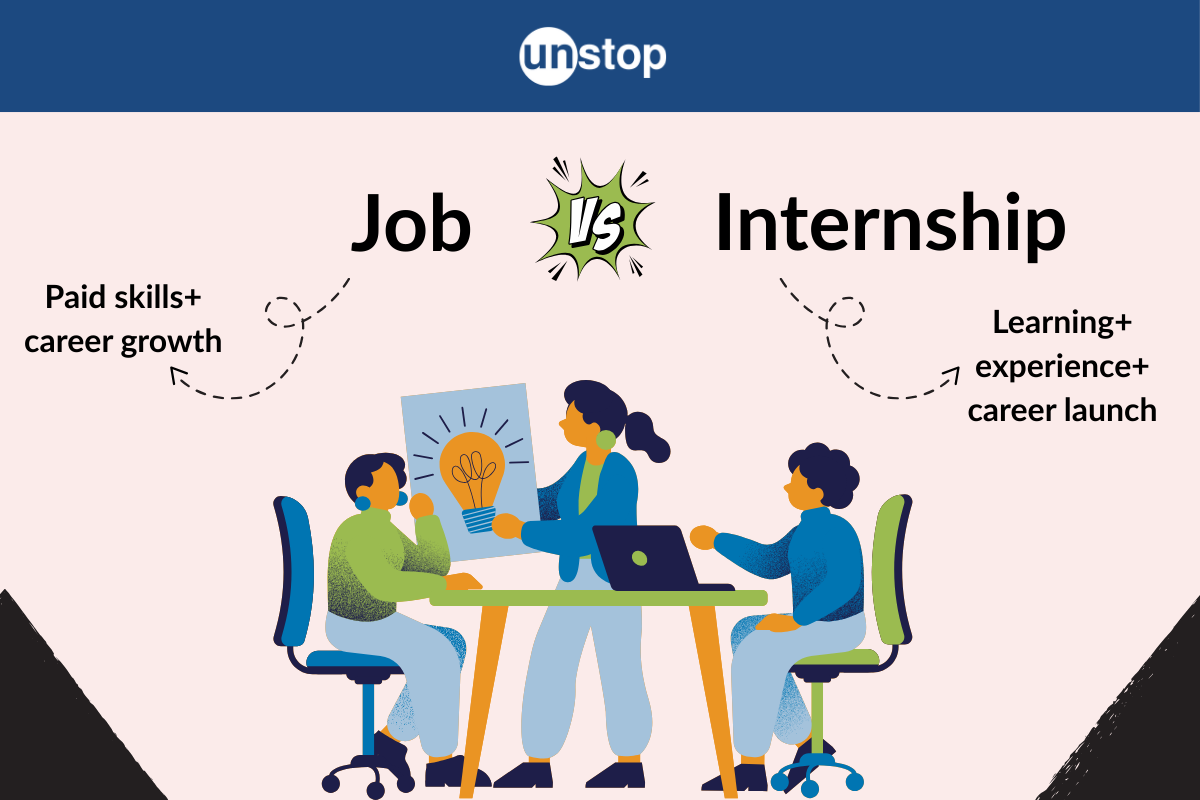
While an internship is a job, it is not identical to a full-time, permanent position. Understanding these nuances helps interns navigate their expectations and negotiate their terms.
| Feature | Internship | Entry-Level Job |
|---|---|---|
| Primary Goal | Learning and professional exposure. | Production and operational output. |
| Duration | Temporary (usually 3–6 months). | Indefinite (permanent). |
| Compensation | Hourly wage or stipend (often no benefits). | Salary + comprehensive benefits (401k, health). |
| Mentorship | High; often assigned a dedicated mentor. | Moderate; focuses on onboarding and tasks. |
| Legal Status | Often at-will; may have academic ties. | At-will; standard employment contract. |
| Onboarding | Explains the industry and the role. | Explains the role and company specifics. |
As shown in the table, the main differentiator is the temporal nature and the educational focus. In 2026, many companies have structured their internship programs to be "feeder" systems. The internship serves as a prolonged interview process, where the "job" is to prove one's fit for a permanent position.
Tax Implications and Financial Reality
If you are receiving a paycheck for your internship, the government considers your income taxable. This is one of the most concrete proofs that an internship is a job. In the United States, internal revenue guidelines require employers to withhold Social Security and Medicare taxes (FICA) for most paid interns.
W-2 vs. 1099 Classification
Most interns should be classified as W-2 employees. If a company attempts to classify an intern as a 1099 independent contractor, it is often a red flag. Independent contractors generally have high levels of autonomy and provide their own equipment—qualities that do not align with the supervised, educational nature of an internship. Misclassification can lead to tax complications for the intern and legal penalties for the employer.
Benefits and Perks
While interns are employees, they often do not qualify for full benefit packages like health insurance or retirement matching due to their temporary status and the number of hours worked. However, by 2026, many "Best Places to Work" have started offering prorated benefits or mental health stipends to interns to maintain competitive hiring advantages.
The Shift to Remote and Hybrid Internships in 2026
The definition of a job has evolved significantly over the last decade, and internships have followed suit. In 2026, a "job" is no longer defined by a physical desk but by digital contribution. Remote internships are now standard practice, particularly in tech, finance, and creative industries.
A remote internship is still a job because it involves:
- Synchronous Collaboration: Attending virtual meetings via platforms like Zoom or Microsoft Teams.
- Digital Deliverables: Submitting code, reports, or designs via cloud-based project management tools.
- Time Tracking: Using software to log hours and manage productivity.
The shift to remote work has actually reinforced the idea that an internship is a job. Without the "office culture" fluff, the relationship is distilled down to the work produced and the professional communication maintained, mirroring the reality of the modern global workforce.
Rights and Protections for Interns
Because an internship is a job, interns are entitled to workplace protections. These protections are not just "guidelines"; they are legal requirements.
Harassment and Discrimination
Interns are protected under civil rights laws (such as Title VII in the U.S.) from workplace harassment and discrimination. Whether an intern is paid or unpaid, they have the right to a safe work environment free from hostility based on race, gender, religion, or disability.
Workplace Safety
The Occupational Safety and Health Administration (OSHA) and similar international bodies require employers to provide a safe working environment for all staff, including interns. If an internship involves physical labor or hazardous materials, the intern must receive the same safety training and protective equipment as a permanent employee.
Intellectual Property
One area where an internship feels very much like a "job" is in the ownership of work. Most internship agreements include clauses stating that any work produced during the internship is a "work made for hire," meaning the intellectual property belongs to the employer, not the intern.
How to Transition from Intern to Permanent Employee
Since an internship is a job, the transition to a permanent role is essentially a promotion. In 2026, the "return offer" is the gold standard of internship success. To navigate this transition, an intern must treat every day as an on-the-job evaluation.
- Set Success Metrics Early: Within the first two weeks, ask your supervisor what "success" looks like for your role. This shifts the perception from "student learner" to "contributing team member."
- Document Your Impact: Keep a log of every project you complete, every problem you solve, and every dollar you save or earn for the company. This data is vital for your final review.
- Network Horizontally and Vertically: Do not just talk to your boss. Build relationships with peers and executives in other departments. This proves you are an asset to the company culture, not just a temporary helper.
- Express Intent: Many interns fail to get a job offer simply because they never explicitly stated they wanted one. Around the mid-point of the internship, have a career conversation with your manager.
Common Mistakes: Treating an Internship Like School
The most common reason people struggle with the "is an internship a job" distinction is a mindset issue. Those who treat an internship like a classroom often fail to make a professional impact.
- Waiting for Assignments: In school, you wait for a syllabus. In a job, you look for problems to solve. Proactivity is the hallmark of a professional.
- Ignoring the "Small" Tasks: Every job has administrative or repetitive tasks. Treating these with the same rigor as high-level projects shows professional maturity.
- Failing to Communicate Absences: In college, skipping a lecture might only affect your grade. In a job, missing a meeting without notice affects your team's workflow and your professional reputation.
Frequently Asked Questions
Does an internship count as work experience for a background check?
Yes. Professional background check companies like HireRight or Sterling typically verify internships as part of an individual's employment history. They will confirm your title, dates of employment, and your status as an employee or intern.
Is an unpaid internship still considered a "job"?
Legally, it is a specialized training arrangement, but professionally, it is still listed as a job on your resume. However, under the 2026 legal framework, if an unpaid intern is performing the same work as a paid employee without receiving academic credit or significant training, it may be a violation of labor laws.
Should I put my internship under "Education" or "Experience" on my resume?
It should almost always go under "Experience" or "Professional History." Placing it under "Education" can diminish the perceived value of the work you performed and may cause recruiters to overlook your practical skills.
Are interns entitled to unemployment benefits?
In most jurisdictions, no. Because internships are defined as temporary and have a predetermined end date, they typically do not qualify for unemployment insurance once the term expires. However, if an intern is fired before the end date without cause, rules vary by state and country.
Can an internship be considered "at-will" employment?
Yes. Most paid internships are classified as at-will employment, meaning either the intern or the employer can terminate the relationship at any time, for any legal reason, unless a specific contract states otherwise.
Final Recommendation
If you are currently in an internship or considering one, treat it as a job from day one. This means adhering to professional standards of dress (or digital etiquette), punctuality, and output. Ensure that your compensation and duties are clearly defined in a written agreement, and familiarize yourself with your rights under the U.S. Department of Labor guidelines or your local regulatory body. By viewing your internship as the first chapter of your professional career rather than the last chapter of your education, you position yourself for long-term career growth and financial stability.