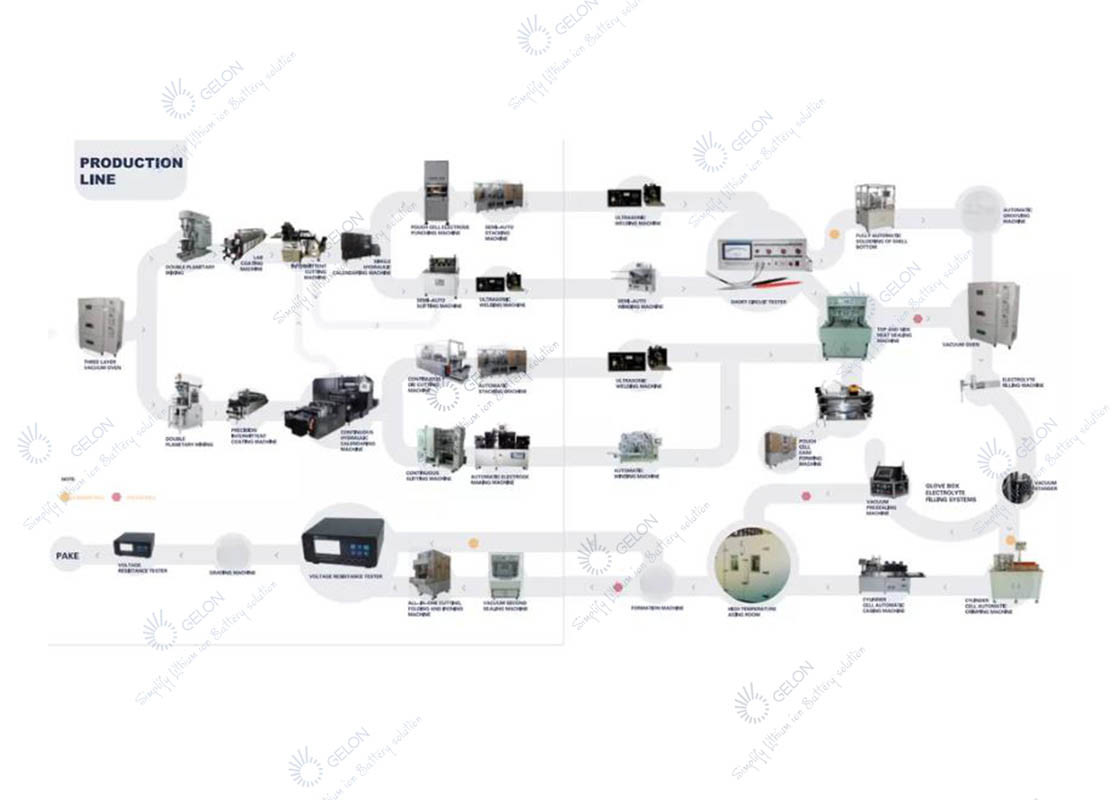
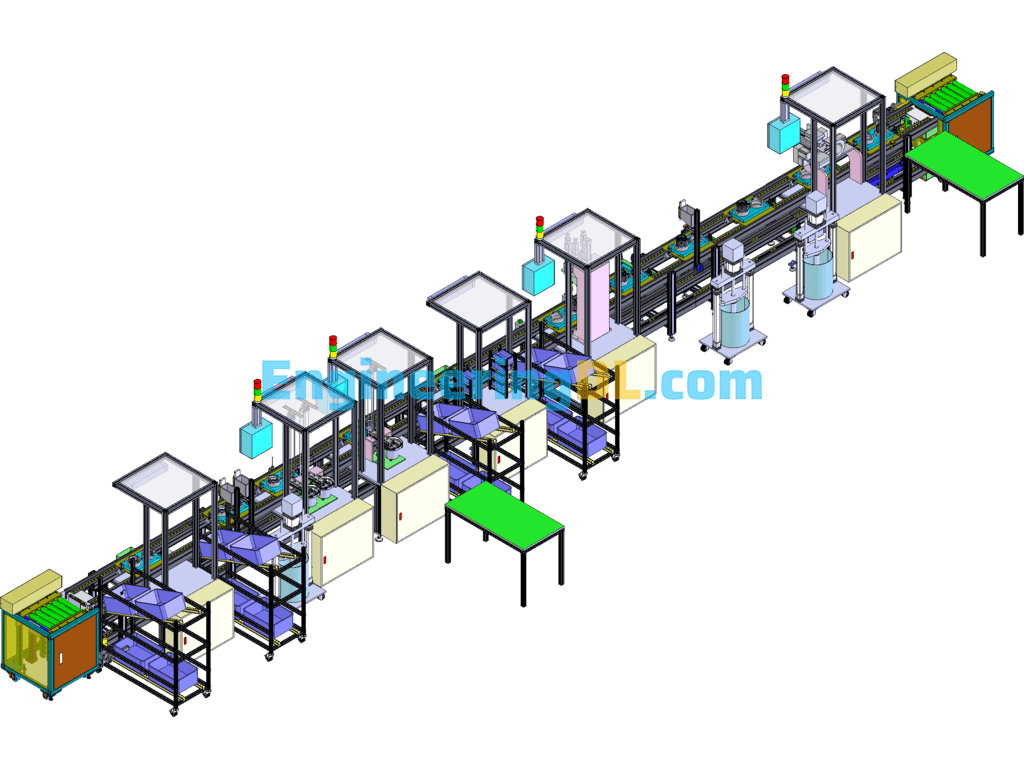
An assembly line is a sequential manufacturing process in which interchangeable parts are added to a product in a specific order at various workstations. This method allows for high-volume production by moving the semi-finished assembly along a fixed path, ensuring standardized quality and significantly reducing the time and labor required for final construction.
The Fundamental Mechanics of an Assembly Line
At its core, the assembly line is designed to optimize efficiency through the division of labor. Instead of a single skilled craftsman building an entire product from start to finish, the task is broken down into minute, repeatable steps. Each worker—or increasingly, each robotic unit—specializes in one specific action. This specialization reduces the "learning curve" for each station and eliminates the time lost when a worker must switch tools or move to a different part of the factory floor.
The process relies on three primary pillars: standardization, interchangeability, and linear flow. In 2026, these pillars have been augmented by digital twins and real-time data analytics, but the underlying logic remains the same. Standardization ensures that every component produced meets exact specifications, while interchangeability allows any part from a bin to fit any unit on the line. The linear flow ensures that the product moves toward completion without backtracking, which is the hallmark of lean manufacturing.
Division of Labor and Specialization
In a clear assembly line description, one must emphasize that the "line" is as much a psychological and organizational construct as it is a mechanical one. By isolating tasks, manufacturers can hire and train staff more quickly. In a complex assembly, such as an electric vehicle or a high-end server, a single person attempting to master the entire build would take months to reach proficiency. On an assembly line, a technician can be trained to perfectly install a battery cooling manifold or a circuit board rack in a matter of days. This specialization leads to "muscle memory" or robotic precision, which drives down the defect rate.
Interchangeable Parts: The Bedrock of Mass Production
Before the advent of the modern assembly line, parts were often "hand-fitted." If a screw didn't fit a hole, the craftsman would file it down or drill a new one. The assembly line eliminated this inefficiency. For a line to function, parts must be manufactured to such tight tolerances that they are perfectly interchangeable. This requires high-precision machining and rigorous quality control at the sub-component level. If a part arriving at a workstation does not fit perfectly, the entire line may grind to a halt, making precision the most critical prerequisite for assembly line success.
How an Assembly Line Operates: A Step-by-Step Breakdown
The lifecycle of a product on an assembly line follows a strictly choreographed sequence. While specific steps vary by industry, the general progression remains consistent across most manufacturing sectors.
- Preparation and Kitting: Before the assembly begins, all necessary components are organized into "kits" or delivered to workstations via automated guided vehicles (AGVs). This prevents workers from having to leave their stations to hunt for parts.
- The Base Frame or Chassis: The process usually starts with a base structure. For a computer, this is the case; for a car, the chassis. This base is secured to a conveyor system or a pallet that moves it through the line.
- Sequential Addition: As the product moves, each workstation adds a specific sub-assembly. This might involve mechanical fastening (screws, bolts), thermal joining (welding, soldering), or chemical bonding (adhesives).
- In-Line Inspection: Modern lines do not wait until the end to check for quality. Sensors and machine vision cameras at each station verify that the previous step was completed correctly. If a bolt is missing or a wire is loose, the system flags it immediately.
- Testing and Calibration: Once the physical assembly is complete, the product often undergoes "functional testing." For electronics, this means powering on and running diagnostics. For mechanical goods, it involves stress testing moving parts.
- Final Finishing and Packaging: The last stations handle aesthetic touches, such as painting or labeling, followed by protective packaging for shipping.
Major Types of Assembly Lines in 2026
The choice of assembly line type depends on the product’s complexity, the required volume, and the necessary level of customization.
Classic Moving Assembly Lines
Popularized by Henry Ford, these are characterized by a continuous conveyor belt. They are best suited for high-volume, low-variety products. In 2026, these lines are still the gold standard for consumer goods where the goal is to drive the unit cost as low as possible through sheer scale.
Automated and Robotic Lines
In these environments, human intervention is minimal. Robots equipped with sophisticated end-effectors handle the assembly. These are common in the semiconductor and automotive industries, where precision and speed requirements exceed human capability. They offer high repeatability and can operate 24/7 without fatigue.
Modular or Cellular Manufacturing
Unlike a single straight line, modular assembly uses "cells." A product may move to one cell for electronics, another for upholstery, and a third for final assembly. This is more flexible than a traditional line, allowing manufacturers to produce different models on the same floor by simply routing products to different cells. It is the preferred method for high-end, customizable goods.
Comparative Analysis of Assembly Line Models
The following table compares the three most common assembly line configurations used in modern industry.
| Feature | Classic (Manual/Semi) | Fully Automated | Modular/Cellular |
|---|---|---|---|
| Initial Investment | Moderate | Very High | High |
| Throughput Speed | High | Extreme | Moderate |
| Flexibility | Low | Low to Moderate | Very High |
| Skill Requirement | Low (Specialized) | Very High (Maintenance) | Moderate to High |
| Ideal For | Simple Consumer Goods | Vehicles, Electronics | Custom/Luxury Items |
| Error Rate | Moderate | Very Low | Low |
Key Concepts: Takt Time, Cycle Time, and Lead Time
To manage an assembly line effectively, engineers rely on specific metrics to measure performance and identify bottlenecks.
- Takt Time: Derived from the German word for "pulse," this is the rate at which a finished product must be completed to meet customer demand. If a factory needs to produce 100 units in an 8-hour shift, the Takt time is 4.8 minutes. Every station on the line must complete its task within this window.
- Cycle Time: This is the actual time it takes for a worker or machine to complete a task at a specific workstation. If the cycle time at any station exceeds the Takt time, that station becomes a bottleneck, causing the entire line to back up.
- Lead Time: This is the total time it takes for a single unit to travel from the first workstation to the final packaging. Reducing lead time is a primary goal of "Lean" manufacturing, as it allows companies to respond more quickly to market changes.
Implementation Requirements and Prerequisites
Transitioning to an assembly line or optimizing an existing one requires significant preparation. It is not merely about buying a conveyor belt; it is about total systems integration.
Floor Plan and Logistics
The physical layout of the factory (the "plant layout") must be designed to minimize the distance parts travel. Engineers use "spaghetti diagrams" to map out the movement of materials, aiming to eliminate any unnecessary steps. In 2026, most facilities utilize an I-shaped, L-shaped, or U-shaped flow to maximize floor space and improve worker communication.
Workstation Ergonomics
For lines that involve human labor, ergonomics is vital. If a worker has to reach too high or bend too low, their cycle time will increase, and they will be prone to injury. Modern assembly lines use height-adjustable platforms and "cobots" (collaborative robots) that assist humans with heavy lifting or repetitive motions, maintaining the health of the workforce while keeping the line moving.
Information Technology Infrastructure
An assembly line in 2026 is driven by software. Manufacturing Execution Systems (MES) track every unit as it passes through the line. This allows for "traceability," which is essential for regulated industries like medical devices or aerospace. If a faulty batch of bolts is discovered, the MES can identify exactly which units on the assembly line received those bolts, allowing for targeted recalls rather than broad shutdowns.
Common Challenges and Troubleshooting
Even the most well-designed assembly line faces operational hurdles. Identifying these early is key to maintaining "uptime."
- Bottlenecks: When one station is slower than the rest, it creates a "work-in-progress" (WIP) pile-up. Troubleshooting involves either "balancing the line"—redistributing tasks to other stations—or adding a second parallel station to handle the overflow.
- Downtime: A mechanical failure at one point can stop the entire line. To mitigate this, factories implement "Total Productive Maintenance" (TPM), where machines are serviced based on predictive data before they actually break.
- Quality Drift: Over time, tools can wear down and sensors can lose calibration. Continuous monitoring and "Poka-Yoke" (mistake-proofing) devices are used to ensure that the line stops automatically if a defect is detected, preventing a "run" of bad products.
The Future: AI and Human-Robot Collaboration
As we look at the state of assembly lines in 2026, the biggest shift is the integration of Artificial Intelligence (AI). AI no longer just monitors the line; it optimizes it in real-time. If a shipment of raw materials is delayed, the AI can automatically reconfigure the line's Takt time and worker assignments to maintain efficiency without over-stressing the system.
Furthermore, the rise of "Industry 5.0" emphasizes the return of the human touch to the assembly line, but in a highly tech-augmented way. Workers use Augmented Reality (AR) headsets that overlay assembly instructions directly onto the physical parts, reducing errors in complex, low-volume assembly tasks. This hybrid approach combines the speed of automation with the problem-solving capabilities of the human mind.
FAQs
What is the difference between a production line and an assembly line?
While the terms are often used interchangeably, a production line is a broader category that includes the processing of raw materials (like refining ore or baking bread). An assembly line specifically refers to the stage where pre-made components are put together to form a finished product.
How do assembly lines impact product cost?
Assembly lines significantly lower the cost per unit. By increasing the speed of production and reducing the need for highly paid multi-skilled craftsmen, companies can achieve economies of scale. The high initial cost of the machinery is spread across millions of units, making products more affordable for the general public.
Can small businesses use assembly lines?
Yes. While "mass production" suggests giant factories, small businesses use "micro-assembly lines" or modular cells. Even a small craft brewery or an electronics startup can use basic conveyor systems and standardized workstations to improve consistency and output without needing a multi-million dollar investment.
What is "balancing" an assembly line?
Balancing is the process of ensuring that every workstation takes roughly the same amount of time. If Station A takes 2 minutes and Station B takes 4 minutes, Station A will be idle half the time. Engineers balance the line by splitting Station B’s tasks or combining Station A with another short task to maximize worker and machine utility.
Are assembly lines bad for worker morale?
Historically, the repetitive nature of assembly lines was criticized for being monotonous. However, modern 2026 workplace standards focus on "job rotation," where workers move between different stations to reduce boredom and repetitive strain. The introduction of collaborative robots has also removed many of the most grueling and dangerous tasks from human hands.
Practical Recommendation for Manufacturers
For organizations looking to implement or upgrade an assembly line in 2026, the first step is a comprehensive Value Stream Mapping (VSM) exercise. Before investing in hardware, you must map every movement and touchpoint of your current process to identify waste. Prioritize the automation of "dull, dirty, or dangerous" tasks first, as these provide the highest return on investment in terms of both safety and throughput. Finally, ensure your IT infrastructure is capable of handling real-time data from the line; a "smart" assembly line that cannot communicate its status is simply an expensive conveyor belt.