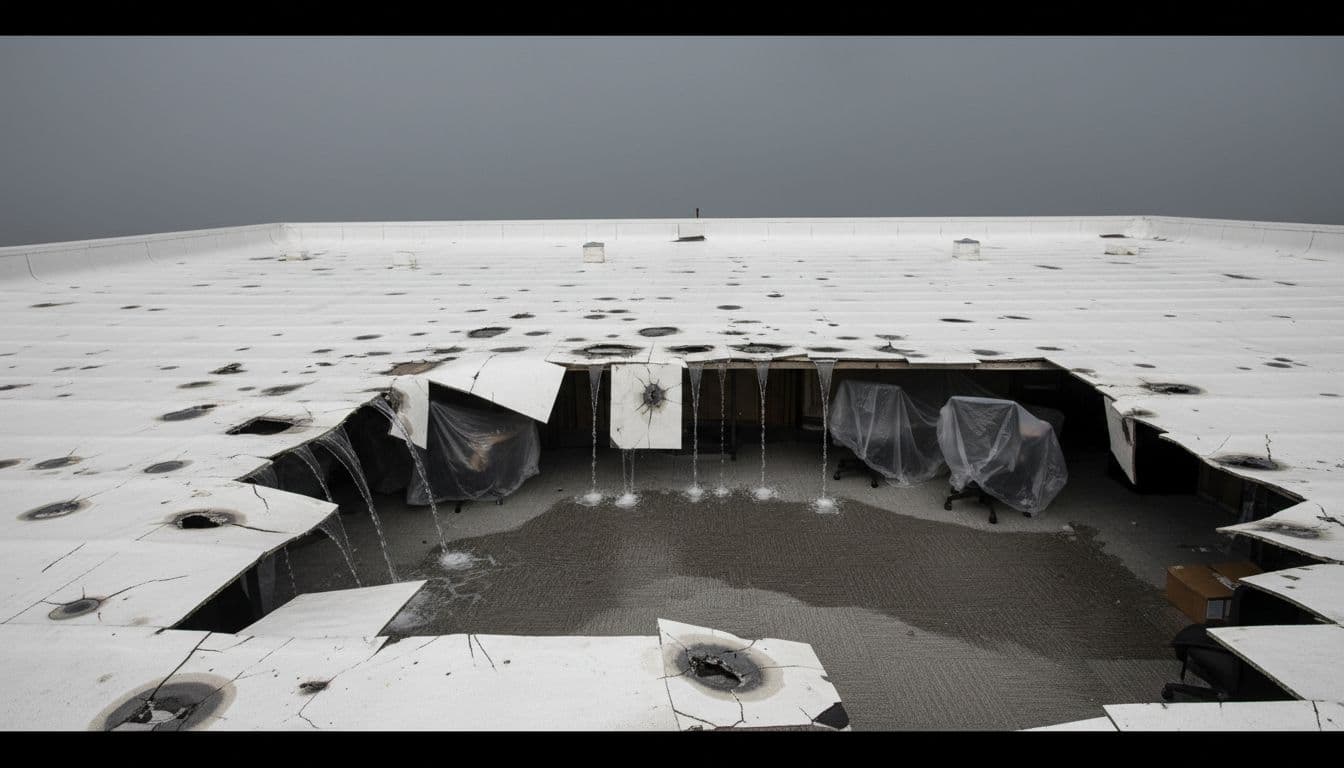
Assessing hail damage to a Thermoplastic Polyolefin (TPO) roof involves identifying physical breaches in the membrane, such as punctures or fractures, and detecting underlying insulation damage known as "crushing." Professionals utilize visual inspections, tactile probing for soft spots, and thermal imaging to determine if the roof's structural integrity or waterproofing capability is compromised.
Thermoplastic Polyolefin (TPO) has become the dominant choice for commercial low-slope roofing due to its energy efficiency and cost-effectiveness. However, as the massive number of TPO installations from the early 2010s reach their mid-life stages in 2026, understanding how these aged membranes respond to hail impact is critical for facility managers and insurance adjusters alike. Unlike asphalt-based systems that lose granules, or metal roofs that dent visibly, TPO responds to hail in a way that is often subtle but functionally devastating.
Understanding TPO Membrane Vulnerability to Hail
To accurately assess damage, one must first understand the composition of the material. TPO is a single-ply membrane consisting of three layers: a TPO-based top ply, a polyester-reinforced scrim (the fabric "backbone"), and a TPO-based bottom ply.
The resistance of TPO to hail is governed by its "mil thickness" (typically 45, 60, or 80 mil) and its age. As of 2026, research continues to show that UV exposure and thermal cycling lead to the gradual depletion of antioxidants and UV stabilizers within the membrane. This process makes the TPO increasingly brittle over time. While a new 60-mil TPO roof might withstand 1.5-inch hail with only minor aesthetic bruising, a 15-year-old membrane may suffer catastrophic "shattering" or star-shaped fractures from the same sized stones.
The reinforcement scrim is the roof's last line of defense. If the hail impact is strong enough to break the top weathering layer but the scrim remains intact, the roof may still be watertight temporarily, but the membrane's lifespan is drastically reduced. If the scrim is severed, a leak is inevitable and often immediate.
Immediate Post-Storm Safety and Logistics
Before stepping onto a roof to assess damage, safety protocols must be established. Following a significant hailstorm, TPO roofs can be deceptively dangerous.
- Slip Hazards: TPO is notoriously slippery when wet. Even if the rain has stopped, "micro-ponding" in small hail-induced depressions can lead to falls.
- Structural Integrity: If the hailstorm was accompanied by heavy rain or clogged drains, the weight of the water—combined with the physical impact of the hail—may have stressed the roof deck.
- Documentation Timing: Assessments should ideally occur within 24 to 48 hours of the event to capture "fresh" damage before dirt, foot traffic, or environmental debris obscures the impact marks.
In 2026, commercial property owners are increasingly using "pre-storm" baseline scans. Comparing a 2025 high-resolution drone map to a post-storm 2026 scan is the most effective way to prove that damage is new and storm-related rather than the result of long-term weathering.
The Professional Assessment Process: Step-by-Step
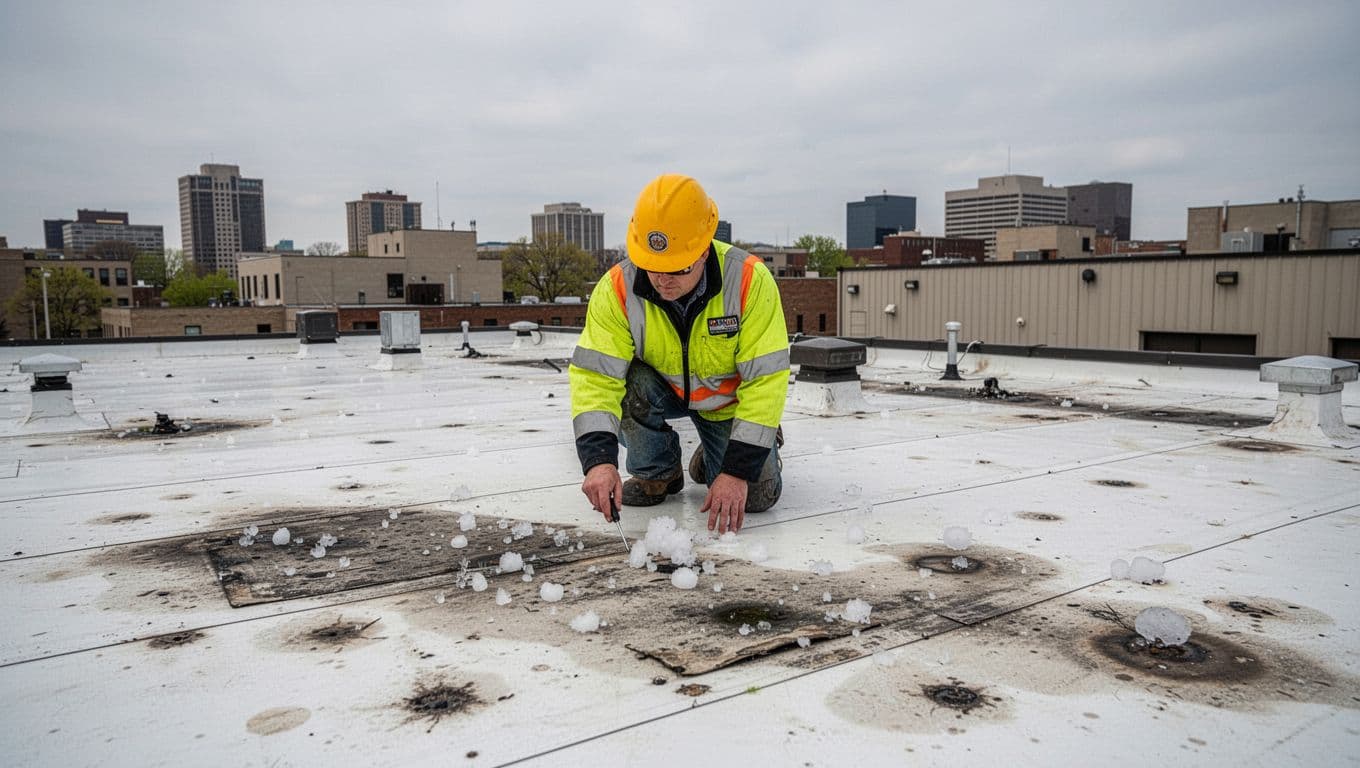
A comprehensive assessment is not merely a visual walk-through; it is a systematic forensic investigation.
1. The Visual Search for "Collateral Damage"
Assessors should start by looking at softer materials on or around the roof. This provides a "footprint" of the storm’s intensity. If heavy-gauge steel HVAC cabinets are dented, or if aluminum downspouts are severely pitted, it is highly probable that the TPO membrane has sustained functional damage. Common collateral indicators include:
- Dented exhaust fan housings and gravity vents.
- Pitted lead or plastic plumbing stacks.
- Damaged peripheral components like gutters, edge metal, and satellite dishes.
2. Identifying Membrane Fractures
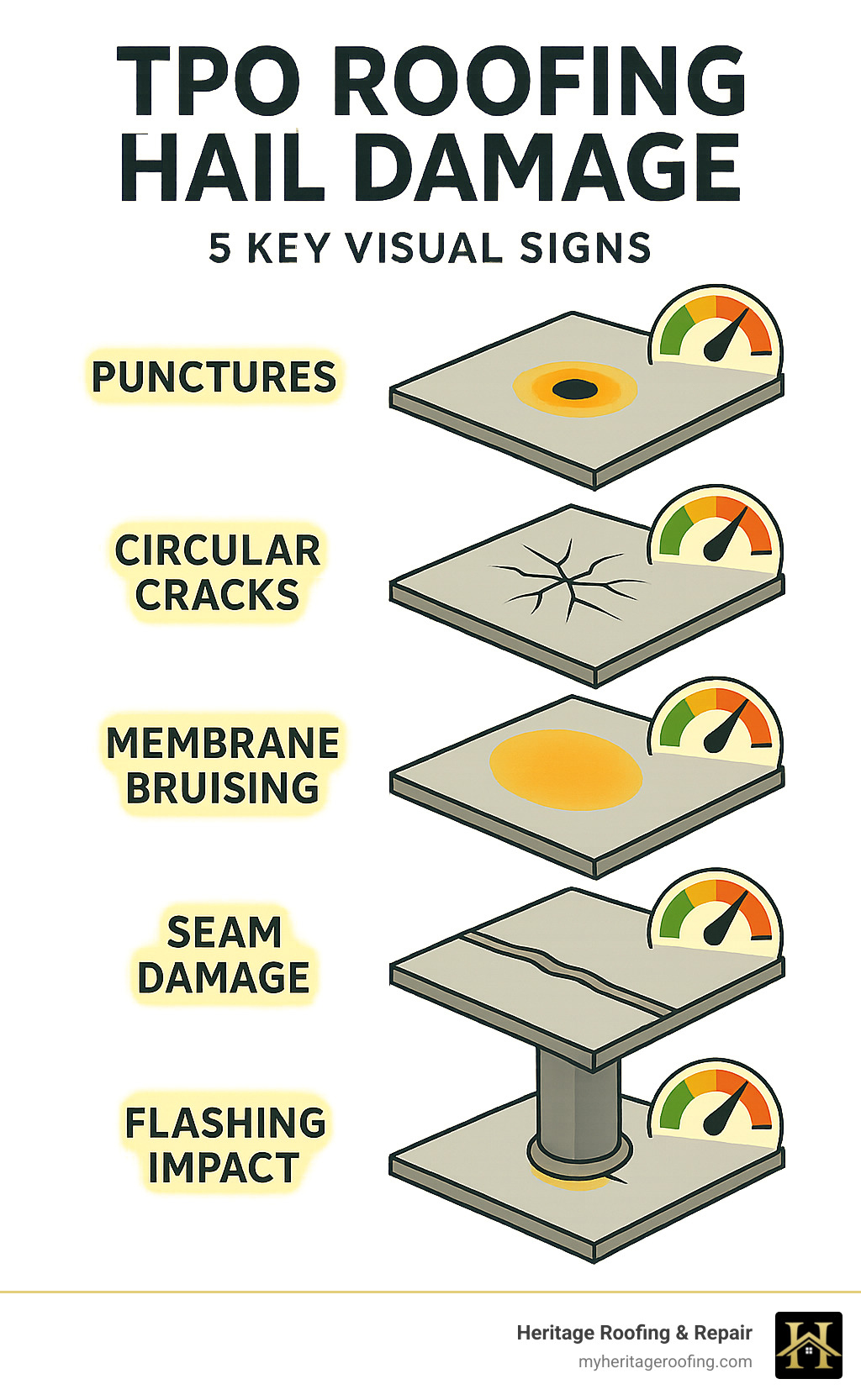
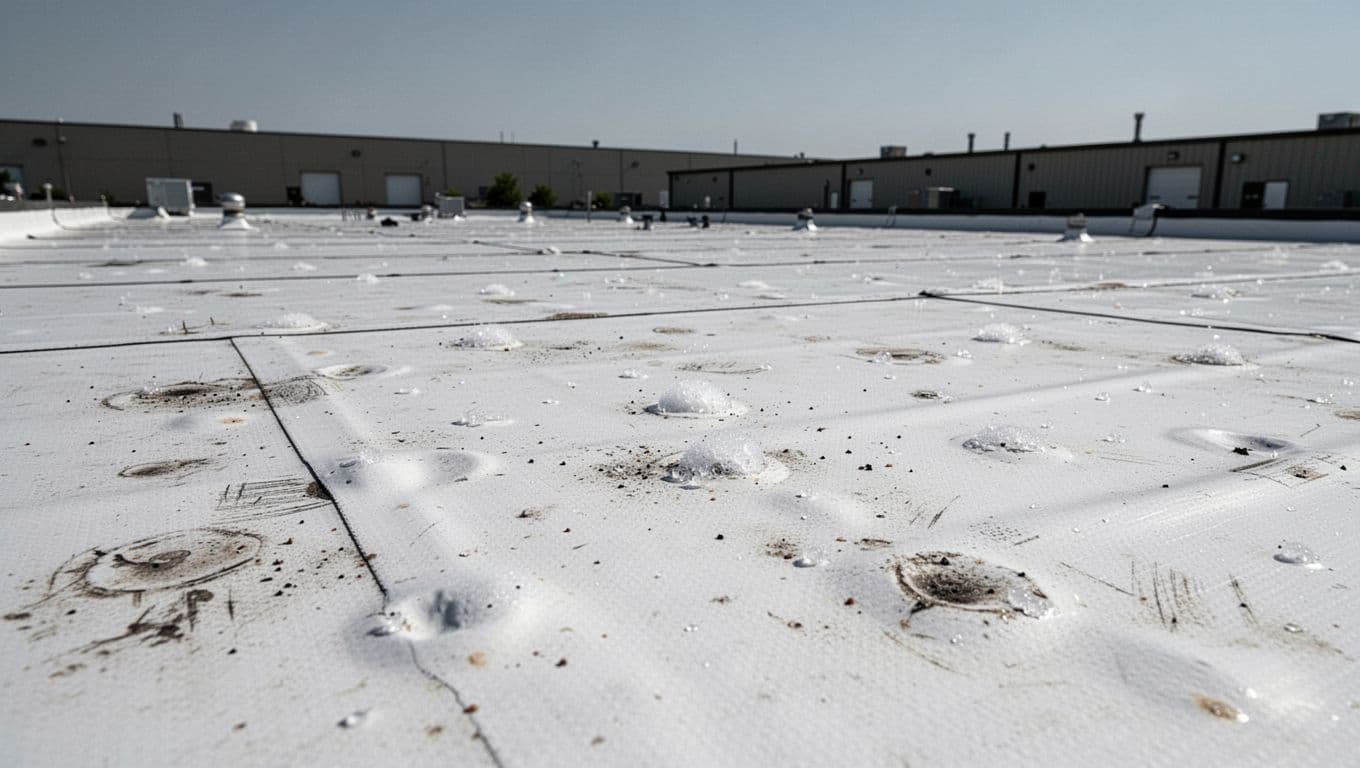
On a TPO surface, hail damage often manifests as a "circular crack" or a "star fracture." This occurs when the impact compresses the membrane against the hard substrate (insulation or cover board) underneath.
- Star Fractures: These look like small radiating lines from a central point. They often indicate that the top layer of the TPO has been breached.
- Circular Cracks: These indicate a complete "bottoming out" of the membrane against the fastener or a hard spot in the deck.
3. Tactile Inspection (The "Feel" Test)
A critical part of the 2026 assessment protocol is feeling the membrane. Even if the TPO isn't visibly cracked, the insulation board beneath it may have been crushed. When an inspector walks the roof or presses down with their thumb and feels a "soft spot" or a permanent indentation, the insulation has lost its compressive strength. This creates a "sump" where water can collect, leading to accelerated membrane degradation.
4. Fastener and Plate Analysis
TPO roofs are typically mechanically attached using metal plates and screws. Hail striking directly over a fastener plate is significantly more likely to puncture the membrane because the plate acts as an anvil. Inspectors must specifically check the areas around fastener rows.
Advanced Diagnostic Tools for 2026
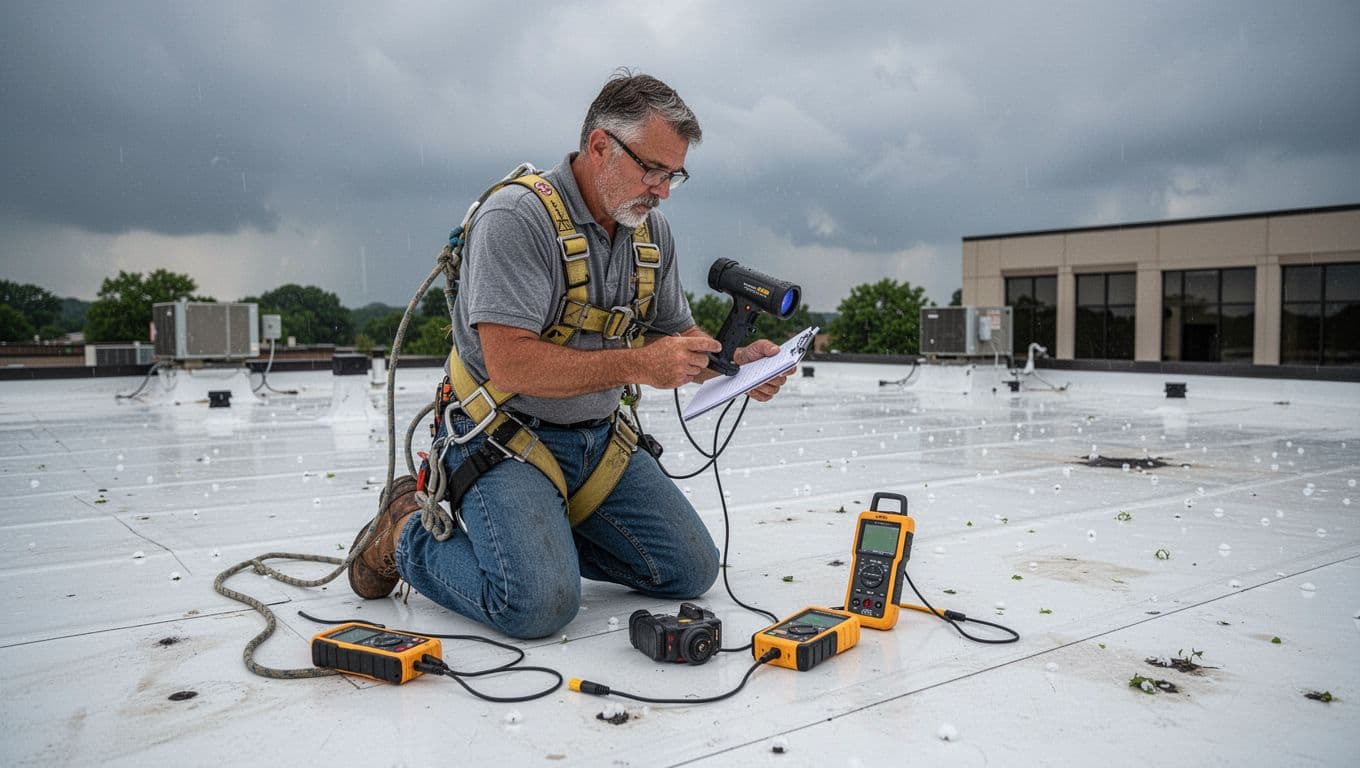
The industry has moved beyond the simple magnifying glass and chalk. Modern assessments utilize technology to ensure no damage is missed.
- Infrared (IR) Thermography: If a hailstorm has punctured the membrane, water will begin to seep into the insulation. An IR scan performed at night can detect "thermal anomalies" where wet insulation retains heat longer than dry insulation. This is the gold standard for proving moisture intrusion.
- High-Resolution Drone Imagery: Using AI-assisted damage recognition, drones can map an entire 100,000-square-foot TPO roof in minutes, identifying every impact point with GPS coordinates.
- Moisture Probes: If a soft spot is detected, a non-destructive moisture meter can be used to confirm if the core of the roof system is compromised.
Hail Size vs. Expected TPO Damage
The following table outlines the general relationship between hail size and the type of damage typically observed on TPO roofing systems.
| Hail Diameter | Impact Description | Functional Risk | Typical Action Required |
|---|---|---|---|
| < 1.0 Inch | Minor surface scuffing; possible dents in soft metal. | Low; usually aesthetic unless TPO is >15 years old. | Document for baseline; monitor during annual inspections. |
| 1.0 – 1.5 Inches | Visible "bruising"; potential crushing of polyiso insulation. | Moderate; potential for microscopic fractures in the top ply. | Professional inspection; tactile test of all soft spots. |
| 1.5 – 2.0 Inches | Clear fractures (star or circular); punctures over fastener plates. | High; waterproofing layer is likely compromised. | Immediate repairs or localized "patching" of impact zones. |
| > 2.0 Inches | Widespread shattering; insulation facer delamination. | Critical; total system failure likely. | Full roof replacement or comprehensive recovery. |
Distinguishing Between Damage and Wear
A common point of contention in insurance claims is distinguishing between hail damage and "checking" or "crazing."
- Crazing: This is a series of fine, shallow cracks on the surface caused by UV degradation. It usually appears as a web-like pattern across large areas.
- Hail Damage: This is localized to a specific point of impact. It will usually have a "crush" zone underneath it and will be accompanied by collateral damage on nearby metal surfaces.
Adjusters in 2026 are increasingly looking for "fractures to the scrim." If the internal reinforcement isn't broken, they may argue the damage is cosmetic. However, the National Roofing Contractors Association (NRCA) generally maintains that any breach of the weathering layer constitutes functional damage, as it exposes the scrim to moisture wicking.
Repair Protocols and Standards
When hail damage is confirmed, the repair strategy depends on the density of the impacts.
Spot Repair (Patching)
If the hail was "scattered" and impacts are fewer than 10-15 per square (100 sq. ft.), heat-welded patches are the standard solution.
- Preparation is Key: TPO is a thermoplastic, meaning it can be re-welded. However, an aged roof is covered in dirt and oxidation. The surface must be scrubbed with a weathered membrane cleaner until the original color returns, or the new patch will not bond.
- Compatibility: The patch material must be of the same TPO formulation as the existing roof.
Full Replacement
If the hail was large (2+ inches) and the impacts are frequent (more than 10 per square), the labor cost of patching usually exceeds the cost of a full replacement. In 2026, building owners are also considering the "energy penalty" of hail. If the insulation is crushed, the roof's R-value (thermal resistance) drops, leading to higher cooling costs—a significant factor in modern ESG (Environmental, Social, and Governance) reporting.
Insurance Claims and Documentation Requirements
To ensure a successful claim for hail damage to a TPO roof, the documentation must be airtight.
- Weather Reports: Secure a certified hail report (such as from CoreLogic or similar services) that confirms hail of a damaging size fell at the specific GPS coordinates of the building.
- The "Test Square": Professionals typically mark out a 10' x 10' square in the most affected area. They circle every hail hit within that square. If the number of hits exceeds the insurance carrier's threshold, it typically triggers a total replacement.
- Core Samples: In some cases, a small "core" of the roof is cut out to show the cross-section of the damage, proving that the insulation is crushed or the membrane is fractured from the underside.
Frequently Asked Questions
How old does TPO have to be before it becomes highly susceptible to hail?
Generally, TPO begins to lose its initial flexibility after 8 to 10 years. By year 12-15, the membrane often becomes brittle enough that even 1-inch hail can cause fractures. High-temperature TPO formulations may last slightly longer before reaching this "brittle point."
Does hail damage on TPO always cause an immediate leak?
No. Hail often causes "latent damage." This means the top layer is fractured, but the roof remains watertight for several months. However, as water enters the fracture, it wicks into the scrim and expands/contracts during freeze-thaw cycles, eventually causing the membrane to delaminate and leak.
Can you patch a TPO roof that is 20 years old?
It is difficult. By 20 years, the TPO has often undergone so much chemical change that it no longer "melts" and fuses with new material. In these cases, a primer and adhesive-backed (peel-and-stick) TPO patch may be used as a temporary measure, but a full replacement is usually necessary.
What is "collateral damage" in a roofing context?
Collateral damage refers to hail impacts on non-roofing components such as air conditioning fins, metal chimney caps, or window casings. While these don't cause leaks, they serve as "proxies" or proof that hail of a certain size and velocity hit the property.
Does insurance cover "cosmetic" hail damage to TPO?
Most commercial policies have shifted toward "functional damage" requirements. If the hail only scuffed the surface but didn't break the waterproofing layer or crush the insulation, the claim may be denied. However, defining "functional" often requires a professional engineer or a senior roof consultant.
Final Recommendation
If you suspect hail damage to your TPO roof, do not wait for a leak to appear. Because TPO damage is often microscopic or sub-surface (insulation crushing), a leak may not manifest until the underlying system is already saturated. Engage a certified roof consultant to perform a moisture scan and a tactile inspection. Early detection allows for localized heat-welded repairs, which can extend the roof's life by years and save hundreds of thousands of dollars in premature replacement costs.