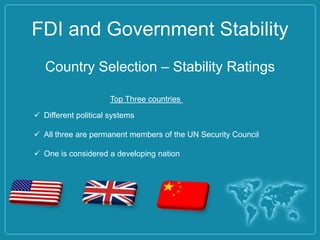
Assessing government stability involves a multi-dimensional analysis of a nation’s institutional resilience, social cohesion, and economic viability. By weighing factors such as executive constraints, the legitimacy of leadership succession, and the state’s capacity to manage internal dissent, analysts can determine the likelihood of regime continuity or abrupt political transformation during periods of crisis.
Understanding the Fundamentals of Political Stability
In the context of 2026, government stability is no longer defined merely by the absence of civil war or coups d’état. Instead, it is viewed as the capacity of a political system to maintain its fundamental structures and functions despite internal pressures and external shocks. Stability is a spectrum, ranging from "rigid" (often found in authoritarian regimes that appear stable until they suddenly collapse) to "resilient" (found in flexible democracies that can bend without breaking).
The primary goal of any stability assessment is to identify the "breaking point" of a regime. This requires distinguishing between incumbent stability—whether the current leader stays in power—and regime stability, which refers to whether the underlying rules of the political game (such as the constitution or the method of selection) remain intact. For investors, diplomats, and international organizations, understanding these nuances is critical for long-term strategic planning and risk mitigation.
The Four Pillars of Stability Assessment
To conduct a professional-grade assessment, one must evaluate four core pillars: institutional integrity, economic performance, social cohesion, and external geopolitical influences. Each pillar contains specific indicators that, when aggregated, provide a heat map of political risk.
1. Institutional Integrity and Governance
The strength of a government lies in its institutions, not its individuals. Robust institutions provide a predictable environment for both citizens and businesses.
- Executive Constraints: A government where the leader has unchecked power is often more volatile in the long term. Assessing the strength of the legislature and the independence of the judiciary is essential. If a leader can unilaterally change the constitution to extend their term, stability is likely compromised.
- Bureaucratic Quality: The "deep state" or the civil service is the engine of the country. A professional, meritocratic bureaucracy can keep a country running even during a leadership vacuum. Conversely, a bureaucracy riddled with patronage and corruption creates a fragile state.
- Succession Predictability: This is perhaps the single most important factor in assessing stability. Is there a clear, legal, and accepted process for the transfer of power? In 2026, many nations face "succession cliffs" where aging leaders have no clear heirs, creating a high risk of power struggles.
2. Economic Resilience and Resource Management
Political stability is deeply intertwined with economic health. A government that cannot provide basic services or maintain a stable currency will eventually lose legitimacy.
- Fiscal Health and Debt-to-GDP: High levels of sovereign debt limit a government’s ability to respond to crises. In 2026, as global interest rates remain structurally higher than in previous decades, the cost of servicing debt has become a primary driver of political unrest.
- Inflation and the Cost of Living: Persistent inflation acts as a tax on the poor and middle class, often serving as the primary catalyst for mass protests. Analysts look at the "Misery Index" (inflation + unemployment) as a leading indicator of instability.
- Resource Dependency: Countries that rely heavily on a single export (e.g., oil or minerals) are vulnerable to global commodity price swings. This "resource curse" often leads to authoritarianism and heightened risk when prices drop.
3. Social Cohesion and Demographic Pressures
Social stability is the foundation upon which political and economic structures are built. If the social fabric is torn, the government cannot govern effectively.
- The "Youth Bulge": A large population of young people without job prospects is a classic recipe for revolution. Countries with high youth unemployment are statistically more likely to experience civil unrest.
- Inequality and Polarization: It is not just poverty that causes instability, but the gap between the rich and the poor (the Gini coefficient). Furthermore, ideological or ethnic polarization can paralyze the legislative process, leading to "democratic backsliding."
- Digital Sentiment and Information Integrity: In 2026, the role of social media and AI-generated disinformation in mobilizing (or suppressing) populations is a core metric. The speed at which a protest can scale globally via digital platforms has shortened the reaction time for governments.
4. External Pressures and Geopolitical Context
No state exists in a vacuum. External actors can either bolster a fragile regime or accelerate its downfall.
- Regional Security: Proximity to conflict zones increases the risk of refugee inflows, arms trafficking, and "spillover" violence.
- Sanctions and International Isolation: Being cut off from global financial systems (like SWIFT) or facing trade embargoes puts immense pressure on a regime’s survival.
- Foreign Intervention: The influence of major powers (e.g., the US, EU, China) through aid, military support, or "soft power" can be a stabilizing or destabilizing force depending on the local context.
Quantitative vs. Qualitative Methodologies
Professional analysts use a blend of two main approaches to reach a final stability rating. Relying on just one can lead to "blind spots."
The Quantitative Approach (Data-Driven)
This method involves analyzing historical data and current statistics to predict future outcomes.
- Worldwide Governance Indicators (WGI): Produced by the World Bank, these indicators measure six dimensions of governance, including political stability and absence of violence.
- Fragile States Index (FSI): Managed by the Fund for Peace, this index uses thousands of data points to rank countries based on their vulnerability to collapse.
- Corruption Perceptions Index (CPI): Transparency International’s annual report serves as a proxy for institutional health and public trust.
The Qualitative Approach (Expert Analysis)
Data doesn't always capture the "vibe" or the nuance of a political situation. Qualitative analysis involves:
- Expert Interviews: Talking to local journalists, academics, and business leaders to understand the "unspoken rules" of power.
- Scenario Planning: Developing "Best Case," "Worst Case," and "Most Likely" scenarios based on current trends.
- The Delphi Method: Using a panel of experts who provide independent assessments and then refine their views after seeing the group’s collective response.
Comparative Stability Metrics for 2026
The following table categorizes different levels of government stability and the typical indicators associated with each.
| Stability Category | Institutional Characteristic | Economic Health | Social Condition | Example Indicators |
|---|---|---|---|---|
| Resilient | Strong separation of powers; independent courts. | Diversified economy; low debt-to-GDP; low inflation. | High social trust; low polarization; strong safety nets. | High WGI score; Credit Rating: AAA to A. |
| Fragile | Weak institutions; centralized power; corruption. | Commodity dependent; high debt; fluctuating currency. | Ethnic/religious tensions; significant youth bulge. | Mid-range FSI score; high CPI rank (more corrupt). |
| Critical | Institutional collapse; rule by decree; coup risk. | Hyperinflation; default; mass unemployment. | Active civil war or mass riots; humanitarian crisis. | Rank in bottom 10% of global governance indices. |
| Artificial | Authoritarian control; strict state surveillance. | State-controlled economy; high hidden debt. | Suppressed dissent; apparent calm masking high tension. | Low political rights; high military spending. |
Practical Steps for Assessing Stability
If you are tasked with evaluating a country’s stability for a business expansion or a policy paper, follow these sequential steps:
- Define the Time Horizon: Are you looking at stability over the next six months (tactical) or the next ten years (strategic)? Short-term stability is often driven by security; long-term stability is driven by demographics and institutions.
- Identify the "Veto Players": Who has the power to block change or initiate it? This includes the military, religious leaders, labor unions, and oligarchs. If the government loses the support of these groups, its days are numbered.
- Analyze the Opposition: Is there a credible, unified opposition, or is the dissent fragmented? Fragmented opposition often allows a weak government to stay in power longer through "divide and conquer" tactics.
- Evaluate the "Trigger Events": What could set off a crisis? Look for upcoming elections, budget announcements, or the health of an aging leader.
- Calculate the "Buffer Capacity": Does the state have the financial reserves (Foreign Exchange Reserves) or international allies to weather a short-term shock?
Common Pitfalls in Stability Analysis
One of the most frequent mistakes is confusing order with stability. An authoritarian regime may keep the streets quiet through fear, but this "rigid stability" is brittle. When it fails, it usually fails catastrophically because there are no safety valves (like free elections) to release social pressure.
Another error is ignoring the "Sub-national" level. A country might appear stable at the federal level while specific provinces are in a state of insurgency or economic collapse. Regional instability can eventually migrate to the capital, as seen in numerous historical contexts.
Finally, do not over-rely on current GDP growth. While growth is positive, "unequal growth" can actually increase instability by making the disenfranchised feel even more left behind. The IMF’s Global Debt Monitor is a more accurate predictor of future stability than a single year’s GDP figure.
Frequently Asked Questions
Does a democracy always mean a country is more stable?
Not necessarily. In the short term, transitions to democracy can be highly volatile. However, in the long term, established democracies are generally more stable because they provide peaceful mechanisms for power transition and grievance redress. "Hybrid regimes"—those that are neither fully democratic nor fully autocratic—are statistically the most unstable.
How does climate change impact government stability in 2026?
Climate change acts as a "threat multiplier." It can lead to food insecurity, water scarcity, and mass migration. Governments that fail to manage these resource shocks often face increased civil unrest. Stability assessments now routinely include "Environmental Risk" as a core metric for any nation in the Global South.
What is the "Resource Curse" and how does it affect stability?
The resource curse refers to the paradox that countries with an abundance of natural resources (like oil) tend to have less economic growth and worse development outcomes. Politically, these resources allow a government to fund a large security apparatus and avoid taxing citizens, which reduces accountability and makes the regime more prone to corruption and sudden collapse when commodity prices fall.
Can technology prevent a government from collapsing?
While modern surveillance technology and AI can help a government monitor and suppress dissent, technology also empowers the opposition. Encryption, decentralized communication, and the ability to broadcast state abuses to a global audience in real-time can accelerate the delegitimization of a regime. Technology is a tool, not a guarantee of stability.
What is the most reliable leading indicator of a coup?
The most reliable indicators are a history of previous coups, a sudden economic downturn, and signs of friction between the political leadership and the senior military brass. When the military refuses to intervene against protesters, it is usually a sign that the government's stability has reached a terminal point.
Final Recommendation
To accurately assess government stability, move beyond the headlines. Focus on the structural integrity of institutions and the predictability of power transitions. A state that allows for peaceful dissent and possesses a professional, non-partisan bureaucracy is far more likely to remain stable than one that relies on the charisma or strength of a single individual. For practitioners, the key is to remain "data-informed but expert-led," using quantitative indices to flag risks while using qualitative analysis to understand the human and cultural drivers behind them.