The official record high temperature for the state of Arizona is 128°F (53.3°C), which was recorded in Lake Havasu City on June 29, 1994. This mark, verified by the National Oceanic and Atmospheric Administration (NOAA), remains the highest temperature ever reliably measured in the state, surpassing the previous record of 127°F set in Parker earlier that same year.
Arizona’s climate is synonymous with extreme heat, particularly during the "dry heat" window of June and early July. While the 128°F record represents the absolute peak, the state’s relationship with high temperatures is defined by its unique geography, atmospheric patterns, and the increasingly significant impact of urban development. Understanding how these records are set and maintained provides a glimpse into the meteorological mechanics of the American Southwest.
The History of Arizona’s 128°F Record
The record-setting day of June 29, 1994, was the culmination of an extraordinary heatwave that gripped the entire Southwestern United States. During this period, a massive high-pressure system—often referred to as a "heat dome"—settled over the region, trapping hot air and preventing cooler maritime air from the Pacific or the Gulf of California from entering the state.
Lake Havasu City, situated along the Colorado River at an elevation of only about 480 feet, is geographically predisposed to extreme temperatures. Low-elevation basins act as sinks for heat; as air descends from the surrounding mountains into the river valley, it undergoes adiabatic compression. This process causes the air to warm significantly as it sinks, leading to the staggering temperatures recorded at the surface.
Verification and Measurement Standards
Temperature records are not accepted lightly by the scientific community. To be officially recognized by the National Weather Service (NWS) and the World Meteorological Organization (WMO), the measurement must be taken using standardized equipment. In 1994, this meant a calibrated thermometer housed in a "Stevenson Screen"—a white, louvered box designed to shield the sensor from direct sunlight and ground radiation while allowing for natural airflow.
The 128°F reading in Lake Havasu City underwent rigorous review to ensure the equipment was functioning correctly and that the surrounding environment had not been artificially influenced (such as by proximity to an exhaust vent or a localized heat source). The record stood the test of scrutiny and remains the benchmark for Arizona’s thermal extremes as of 2026.
The Phoenix Record: 122°F and the "Grounding" of Aviation
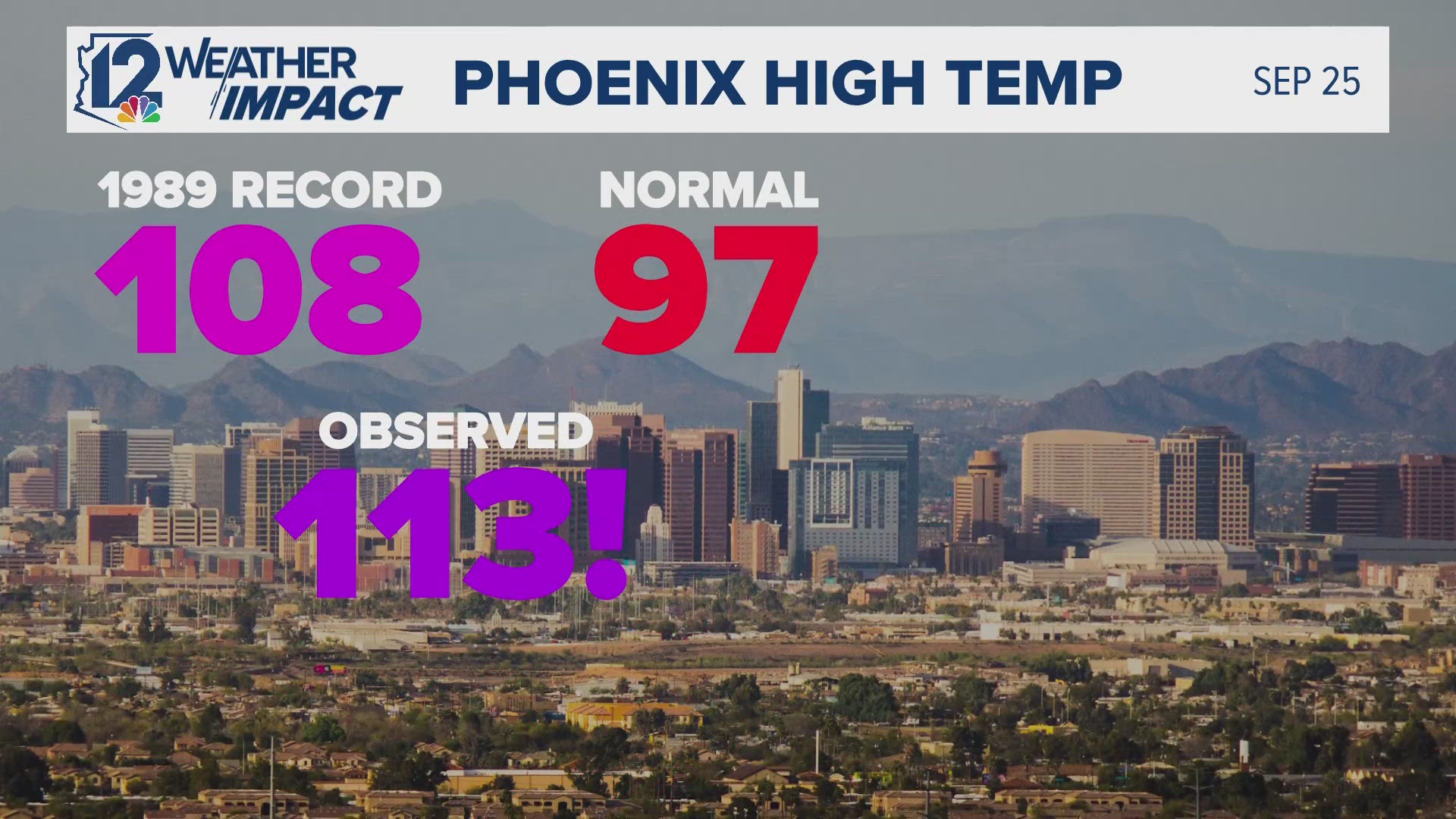
While Lake Havasu City holds the state title, the temperature record for Phoenix is perhaps more widely discussed due to its impact on a major metropolitan population. On June 26, 1990, the temperature at Phoenix Sky Harbor International Airport reached 122°F (50.0°C).
This event is historically significant not just for the number, but for the practical chaos it caused. Aviation provides a perfect example of how extreme heat affects physical infrastructure. Hot air is less dense than cool air, which reduces the "lift" generated by an airplane’s wings. In 1990, many commercial aircraft did not have performance charts that even included temperatures as high as 122°F. Without the data to calculate safe takeoff distances at that density altitude, airlines were forced to ground numerous flights, leaving thousands of passengers stranded.
Meteorological Drivers of Extreme Heat in Arizona
Arizona’s extreme temperatures are rarely the result of a single factor. Instead, they are the product of a "perfect storm" of atmospheric conditions and geographical positioning.
The Role of the Subtropical Ridge
During the summer months, the subtropical high-pressure ridge (often called the North Pacific High or the Bermuda High, depending on the coast) shifts northward. When a piece of this ridge breaks off and centers itself over the Four Corners region, it creates a "cap" on the atmosphere. This high pressure suppresses rising air currents (convection), meaning clouds cannot form. Without cloud cover, the desert sun beats down on the ground with maximum intensity for 14 or more hours a day.
Low Humidity and Thermal Capacity
The "dry heat" of June is a major contributor to record-breaking temperatures. Moisture in the air (humidity) has a high heat capacity; it takes a lot of energy to heat up water vapor. In the bone-dry air of the pre-monsoon Arizona desert, nearly 100% of the sun’s energy goes directly into heating the ground and the air. This is why Arizona’s highest records are almost always set in late June rather than August, even though August might feel more "oppressive" due to higher humidity during the monsoon season.
Topography and Adiabatic Heating
Arizona’s Basin and Range topography plays a crucial role. When air moves from the high plateaus of northern Arizona (elevation 7,000+ feet) down into the low deserts (elevation <1,000 feet), it is compressed by the weight of the atmosphere above it. For every 1,000 feet of descent, the air warms by roughly 5.5°F (the dry adiabatic lapse rate). This "downslope" warming can turn a warm day in the mountains into a record-shattering day in the valleys.
Comparing Arizona’s Regional Temperature Extremes
The diversity of Arizona's landscape means that "record heat" looks very different depending on where you are in the state. While the low deserts bake in the 120s, the high country offers a drastic contrast.
| Location | Record High (°F) | Date Recorded | Elevation (Approx. ft) |
|---|---|---|---|
| Lake Havasu City | 128°F | June 29, 1994 | 480 |
| Parker | 127°F | July 7, 1905 | 420 |
| Yuma | 124°F | July 28, 1995 | 140 |
| Phoenix | 122°F | June 26, 1990 | 1,135 |
| Tucson | 117°F | June 26, 1990 | 2,389 |
| Flagstaff | 97°F | July 5, 1973 | 6,909 |
| Grand Canyon (South Rim) | 105°F | June 26, 1970 | 6,804 |
Source: National Weather Service / NOAA Regional Climate Centers.
The Urban Heat Island (UHI) Effect and Modern Records
As we navigate through 2026, the discussion around Arizona's temperature records has shifted from absolute daytime highs to the rising floor of nighttime lows. This phenomenon is known as the Urban Heat Island (UHI) effect.
In metropolitan areas like Phoenix and Tucson, the natural desert landscape has been replaced by asphalt, concrete, and steel. These materials are excellent at absorbing solar radiation during the day and radiating it back out at night. Consequently, while the "all-time" record of 122°F in Phoenix hasn't been broken since 1990, the city is seeing a dramatic increase in the number of days above 110°F and nights that never drop below 90°F.
Impact on the Record Books
The UHI effect creates a "heat dome" of its own over cities. This makes it increasingly difficult for urban centers to cool down, leading to a higher baseline temperature. While the state record of 128°F was set in a smaller city (Lake Havasu), the persistent, unrelenting heat of the major metros poses a different kind of record-breaking challenge: the record for the most consecutive days over a certain temperature threshold.
Consequences of Reaching Record Temperatures
When temperatures approach the 120°F mark, the physical world begins to behave differently. These are not merely uncomfortable conditions; they are hazardous to human health and infrastructure.
- Infrastructure Strain: Asphalt begins to soften at temperatures above 120°F, which can lead to "rutting" from heavy vehicles. Power lines can sag as the metal expands, and transformers are prone to failure as they struggle to dissipate heat while under the massive load of air conditioning demand.
- Biological Limits: The human body cools itself through the evaporation of sweat. While the dry air of Arizona aids this process, there is a limit. At 128°F, the "thermal gradient" between the body and the air is so steep that the body can absorb heat faster than it can shed it, leading rapidly to heatstroke.
- Environmental Stress: Record heat waves significantly increase the "Vapor Pressure Deficit" (VPD). Essentially, the hot air acts like a sponge, sucking every bit of moisture out of the soil and vegetation. This turns the desert landscape into a tinderbox, drastically increasing the risk of catastrophic wildfires.
Safety and Preparation for Extreme Heat Events
Living in or visiting Arizona requires a fundamental respect for these temperature extremes. The state government and health organizations have standardized protocols for "Excessive Heat Warnings," which are issued when the Heat Index is expected to reach dangerous levels.
- Hydration Science: It is recommended to drink at least one liter of water per hour when outdoors in extreme heat. By the time you feel thirsty, you are already clinically dehydrated.
- The "Sun-Down" Rule: During heatwaves, outdoor activity should be restricted to the hours before 8:00 AM. Even after the sun sets, the "thermal lag" means ground temperatures remain dangerously high for several hours.
- Vehicle Safety: Internal vehicle temperatures can reach 160°F+ within minutes when the outside temperature is 110°F. Never leave children or pets in a vehicle, even with the windows cracked.
Frequently Asked Questions
Has Arizona ever reached 130 degrees?
No, the highest officially recorded and verified temperature in Arizona is 128°F. While some localized or unofficial thermometers (such as those in cars or on asphalt) may show higher numbers, they do not meet the scientific standards for atmospheric temperature recording required by the National Weather Service.
Which is hotter: Phoenix or Lake Havasu City?
Statistically, Lake Havasu City is hotter. Because it sits at a significantly lower elevation than Phoenix (roughly 480 feet vs. 1,100 feet), it experiences more intense adiabatic heating. However, Phoenix often feels more oppressive to residents because of the Urban Heat Island effect, which keeps nighttime temperatures much higher than in the open desert.
Why was 1994 such a record-breaking year?
The summer of 1994 featured a particularly stagnant and powerful high-pressure system that remained locked over the Southwest for weeks. This prevented any "venting" of the heat and allowed surface temperatures to climb higher than in years where weather systems move through more quickly. Both the 128°F record in Lake Havasu and several other local records were set during this specific June/July window.
Does the Grand Canyon get as hot as Phoenix?
It depends on where you are in the canyon. The South Rim, at 7,000 feet, is usually 20-30 degrees cooler than Phoenix. However, the bottom of the Grand Canyon (Phantom Ranch) is at a much lower elevation and can easily exceed 115°F or 120°F, making it one of the hottest places in the state.
How do I know if a heat record is "official"?
Official records must be measured by the National Weather Service (NWS) or recognized cooperative observers using calibrated equipment in a standardized housing. These stations are away from artificial heat sources and are maintained to ensure data integrity over decades.
Summary of Action for Residents and Travelers
When Arizona approaches record temperatures, the best course of action is preemption. Monitor the NOAA National Water Prediction Service and local NWS offices for heat advisories. Ensure your HVAC systems are serviced before the June peak, and always carry more water than you think you need when traveling through the low desert basins.