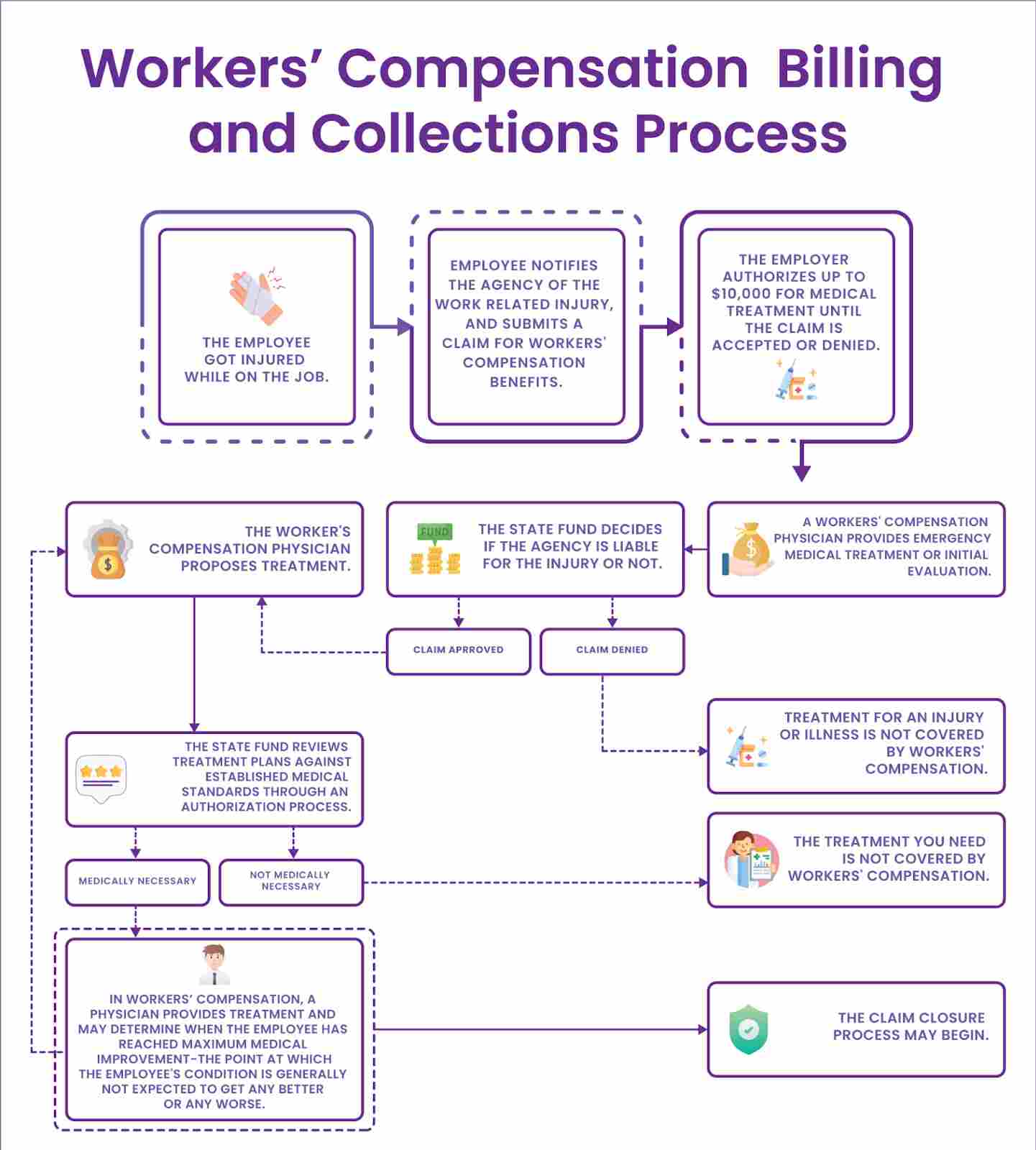
Arkansas law requires most employers with three or more employees to carry workers’ compensation insurance to provide medical benefits and wage replacement to workers injured on the job. This no-fault system protects employers from civil lawsuits while ensuring employees receive necessary care and financial support during recovery.
Understanding the Legal Framework in Arkansas
The Arkansas Workers’ Compensation Law, codified under A.C.A. § 11-9-101, establishes the rules for how workplace injuries are handled within the state. As of 2026, the primary objective of this legislation remains the timely delivery of benefits to injured workers at a reasonable cost to employers. The system is administered by the Arkansas Workers' Compensation Commission (AWCC), which oversees claims, enforces compliance, and facilitates dispute resolution.
For employers, the system functions as an "exclusive remedy." This means that in exchange for providing guaranteed benefits through insurance, the employer is generally immune from private negligence lawsuits related to workplace injuries. However, this immunity only applies if the employer maintains the required coverage. Failing to secure insurance can lead to severe financial penalties and leaves the business vulnerable to unlimited legal liability in civil court.
Coverage Requirements: Does Your Business Need Insurance?
Determining whether your business is legally mandated to carry workers' compensation in Arkansas depends on your industry and the number of individuals you employ.
The Three-Employee Threshold
In most sectors, the "Rule of Three" applies. If you have three or more employees, you must obtain workers' compensation insurance. It is crucial to note that "employees" include full-time, part-time, seasonal, and temporary workers. Even if those employees are family members, they generally count toward the total unless specific exclusions are met.
Exceptions for Construction and High-Risk Industries
The three-employee threshold does not apply to the construction industry. In Arkansas, any employer engaged in building or building repair work that employs one or more individuals must carry coverage. This stringent requirement exists due to the high physical risk associated with construction labor and ensures that even small contracting crews are protected.
Voluntary Coverage
Even if a business employs fewer than three people and is not in the construction sector, the employer may choose to provide voluntary coverage. This is often a strategic business decision to mitigate the risk of personal injury lawsuits, which can be far more expensive than annual insurance premiums.
Notable Exemptions
Certain classes of workers are specifically exempted from mandatory coverage under Arkansas law:
- Domestic servants: Individuals working in private homes.
- Agricultural farm labor: Generally exempt, though specific thresholds for large-scale operations may apply.
- Religious and non-profit organizations: Certain staff members of religious sects or charitable organizations may be excluded depending on their roles.
- Real estate agents: Often classified as independent contractors rather than employees for the purposes of workers' compensation.
Classifying Workers: Employees vs. Independent Contractors
A common point of confusion for Arkansas employers in 2026 involves the distinction between employees and independent contractors. Simply labeling a worker as a "1099 contractor" does not exempt an employer from workers' compensation requirements if the AWCC determines the worker is legally an employee.
The AWCC uses a "right to control" test to make this determination. If the employer controls how the work is performed, provides the tools, sets the hours, and dictates the process, the individual is likely an employee. Employers who misclassify workers to avoid insurance premiums face significant back-payments, interest, and administrative fines.
Sole Proprietors, Partners, and LLC Members
By default, sole proprietors and partners are not considered employees and are not covered under their own policies. However, they can elect to be included by filing specific forms with their insurance carrier. In contrast, corporate officers and members of an LLC are generally considered employees under Arkansas law but may have the option to exclude themselves from coverage if they meet ownership criteria.
Methods for Securing Coverage in Arkansas
Employers have three primary paths to securing workers' compensation insurance in the state.
1. The Voluntary Market (Private Insurance)
Most Arkansas employers purchase policies through private insurance carriers. The Arkansas Insurance Department regulates these carriers, but premiums are largely determined by the market. Prices are based on the business's industry classification code and its "experience rating," which reflects its history of workplace injuries.
2. The Assigned Risk Pool
Employers who are unable to find coverage in the voluntary market—often due to a high frequency of previous claims or being in a high-risk industry—can obtain insurance through the Arkansas Workers' Compensation Insurance Plan. This is known as the "assigned risk pool" or the market of last resort. While coverage is guaranteed, premiums in the assigned risk pool are typically higher than those in the voluntary market.
3. Self-Insurance
Large, financially stable employers may apply to the AWCC for the authority to self-insure. This allows the company to pay claims directly out of its own funds rather than paying premiums to an insurance company. To qualify, an employer must demonstrate significant net worth and post a surety bond or letter of credit to ensure that future claim obligations can be met. Many self-insured employers join "Self-Insurance Groups" to pool their risks with other similar businesses.
Essential Employer Procedures and Compliance
Maintaining a policy is only the first step. Arkansas law mandates specific actions that employers must take to remain in compliance and manage claims effectively.
Posting Requirements
Every covered employer must display Form P, the "Notice to Employer and Employee," in a conspicuous location where workers can easily see it. This poster provides employees with information on how to report an injury and the name of the company’s insurance carrier. Failure to post this notice can lead to fines and may extend the statute of limitations for an employee to file a claim.
Reporting Workplace Injuries
When an injury occurs, the employer’s primary responsibility is ensuring the worker receives medical attention. Following the incident, the employer must document the event:
- Form N: The employee should provide a written notice of injury (Form N) to the employer as soon as possible.
- Form 1 (First Report of Injury): If the injury results in medical costs or lost work time beyond the day of the incident, the employer must file Form 1 with their insurance carrier and the AWCC within 10 days of becoming aware of the injury.
Record Keeping
Employers must maintain accurate records of all workplace injuries, even those that do not result in lost time. These records are vital for insurance audits and for identifying safety trends that could be addressed to lower future premiums.
Understanding Premium Costs and the Experience Modifier
In 2026, workers' compensation premiums continue to be calculated using a standard formula:
(Payroll / 100) × Class Code Rate × Experience Modifier = Estimated Premium
Class Codes
Each job function within a company is assigned a four-digit classification code by the National Council on Compensation Insurance (NCCI). A clerical office worker has a much lower rate than a roofing contractor because the statistical risk of injury is significantly lower.
The Experience Rating Modifier (E-Mod)
The E-Mod is a multiplier that adjusts your premium based on your company's claims history compared to other businesses in the same industry. An E-Mod of 1.0 is average. If your business has fewer or less expensive accidents than average, your E-Mod might drop to 0.85, resulting in a 15% discount. Conversely, a poor safety record could push the E-Mod to 1.20, adding a 20% surcharge to your costs.
| Component | Definition | Impact on Employer |
|---|---|---|
| Payroll | Total remuneration paid to employees. | Higher payroll generally leads to higher premiums. |
| Class Code | Industry-specific risk category. | Rates vary wildly based on job danger. |
| E-Mod | Historical safety performance metric. | The only factor the employer can directly control through safety. |
| Discounts | Credits for drug-free workplace programs. | Can reduce premiums by up to 5% in Arkansas. |
Claims Management and Dispute Resolution
The Arkansas workers’ compensation system is designed to be self-executing, meaning most claims are handled between the employee and the insurance carrier without government intervention. However, disputes frequently arise regarding the extent of an injury or whether an injury is "compensable" (work-related).
Compensability Rules
For an injury to be covered in Arkansas, it must:
- Occur out of and in the course of employment.
- Be caused by a specific incident identifiable by time and place.
- Be supported by objective medical findings (pain alone is not enough).
The Role of Administrative Law Judges (ALJs)
If a claim is denied by the insurance carrier, the employee may request a hearing. These hearings are presided over by Administrative Law Judges at the AWCC. These judges act as the finders of fact. Their decisions can be appealed to the Full Commission and, ultimately, to the Arkansas Court of Appeals.
Fraud Prevention
Arkansas takes workers' compensation fraud seriously. The AWCC maintains a Fraud Investigation Unit. Employers who suspect an employee is faking an injury, or insurance carriers who suspect an employer is underreporting payroll to save on premiums, can report these activities for criminal investigation.
Practical Recommendations for Arkansas Employers
To minimize costs and ensure legal compliance in 2026, Arkansas employers should adopt a proactive approach to workers’ compensation management.
- Implement a Safety Program: Regular safety training and hazard assessments are the most effective ways to lower your E-Mod over time.
- Verify Subcontractors: If you hire subcontractors, always demand a Certificate of Insurance (COI). If they do not have coverage, their employees may be treated as your employees during a premium audit, leading to massive unexpected bills.
- Utilize Managed Care: Arkansas allows insurance carriers to use managed care organizations to oversee medical treatment. Ensure your employees know which doctors are in the network to streamline the recovery process.
- Maintain Open Communication: Keeping in touch with an injured worker helps prevent the "litigation mindset." When employees feel cared for, they are less likely to seek legal representation and more likely to return to work quickly.
- Audit Your Payroll Annually: Workers’ compensation policies are typically "estimated" at the start of the year. Accurate record-keeping ensures that you don't face a large "additional premium" bill following your year-end audit.
For further information or to verify the status of a specific policy, employers should contact the Arkansas Workers' Compensation Commission or visit their official website at awcc.state.ar.us.
Frequently Asked Questions
What happens if I don't have workers' compensation insurance in Arkansas?
Failing to carry required insurance is a violation of state law. The AWCC can issue a "Stop Work Order" and levy fines of up to $10,000. More importantly, if an employee is injured while you are uninsured, you are responsible for all medical bills and lost wages out of pocket, and the employee has the right to sue you in civil court for pain and suffering damages.
Can I fire an employee who files a workers' compensation claim?
No. Arkansas law prohibits employers from retaliating against employees for filing a legitimate claim. While Arkansas is an "at-will" employment state, terminating an employee specifically because they were injured or filed for benefits can lead to a "wrongful discharge" lawsuit, which is not covered by your workers' compensation policy.
Does workers’ compensation cover mental health issues or stress?
In Arkansas, mental-mental claims (stress causing mental illness) are generally not compensable unless they arise from a sudden, extraordinary, and unexpected physical stimulus. However, "physical-mental" claims, where a physical injury leads to a mental condition like depression or PTSD, may be covered under specific circumstances.
How long does an employee have to report an injury to me?
Employees are expected to report injuries immediately. Under A.C.A. § 11-9-701, failure to give notice can result in the denial of benefits for the period prior to the notice, unless the employer had actual knowledge of the injury. Generally, a claim must be filed within two years of the date of the injury.
Are "traveling employees" covered if they are in a car accident?
Generally, the "Coming and Going Rule" excludes injuries sustained during a normal commute. However, if the employee is traveling for work purposes (e.g., a salesperson visiting a client or a worker running a company errand), injuries sustained during that travel are typically compensable.
Does a drug-free workplace program provide a premium discount?
Yes. Arkansas employers who implement a certified drug-free workplace program in accordance with state standards are eligible for a 5% premium discount. This program requires written policies, drug testing in specific scenarios, and employee education.