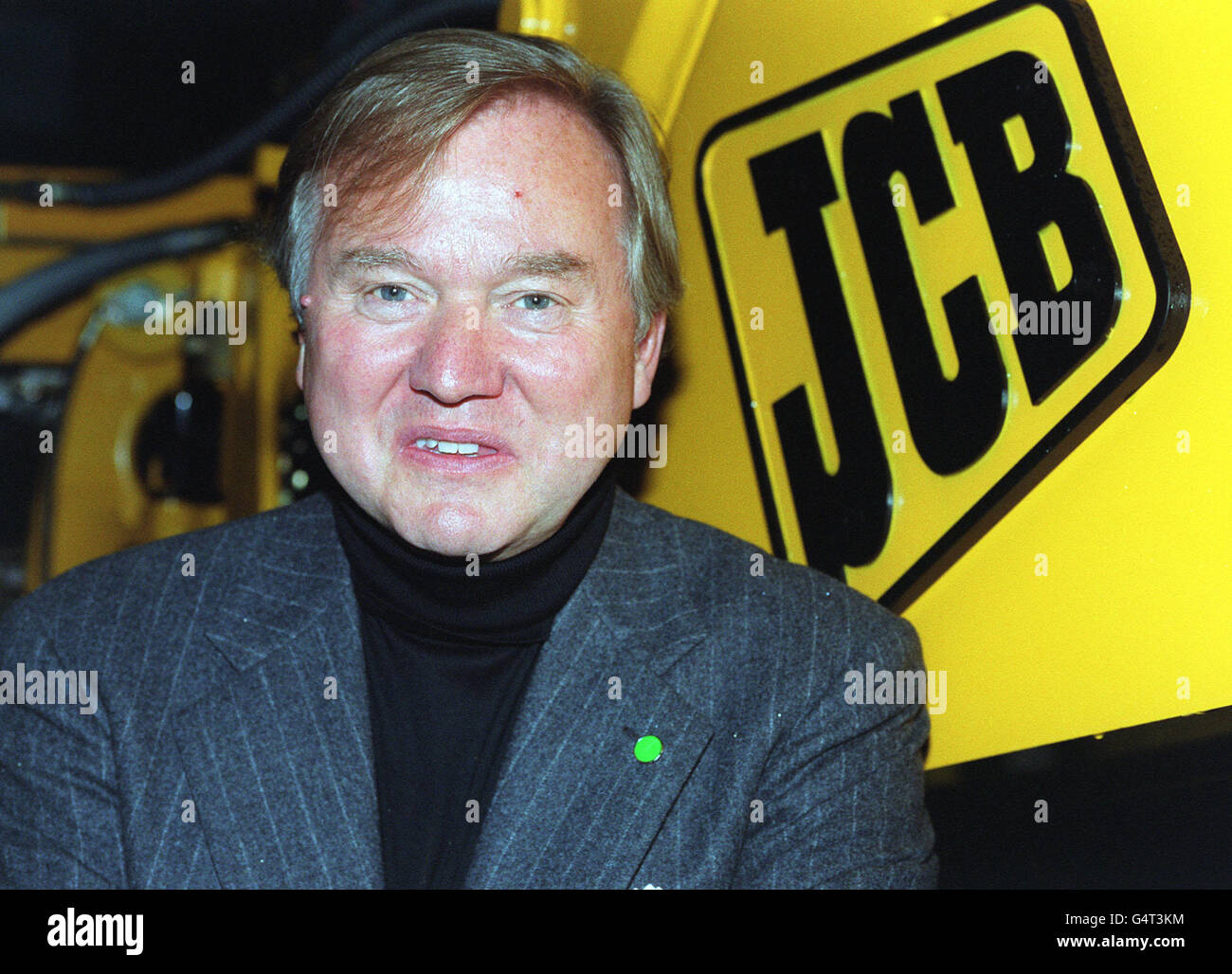
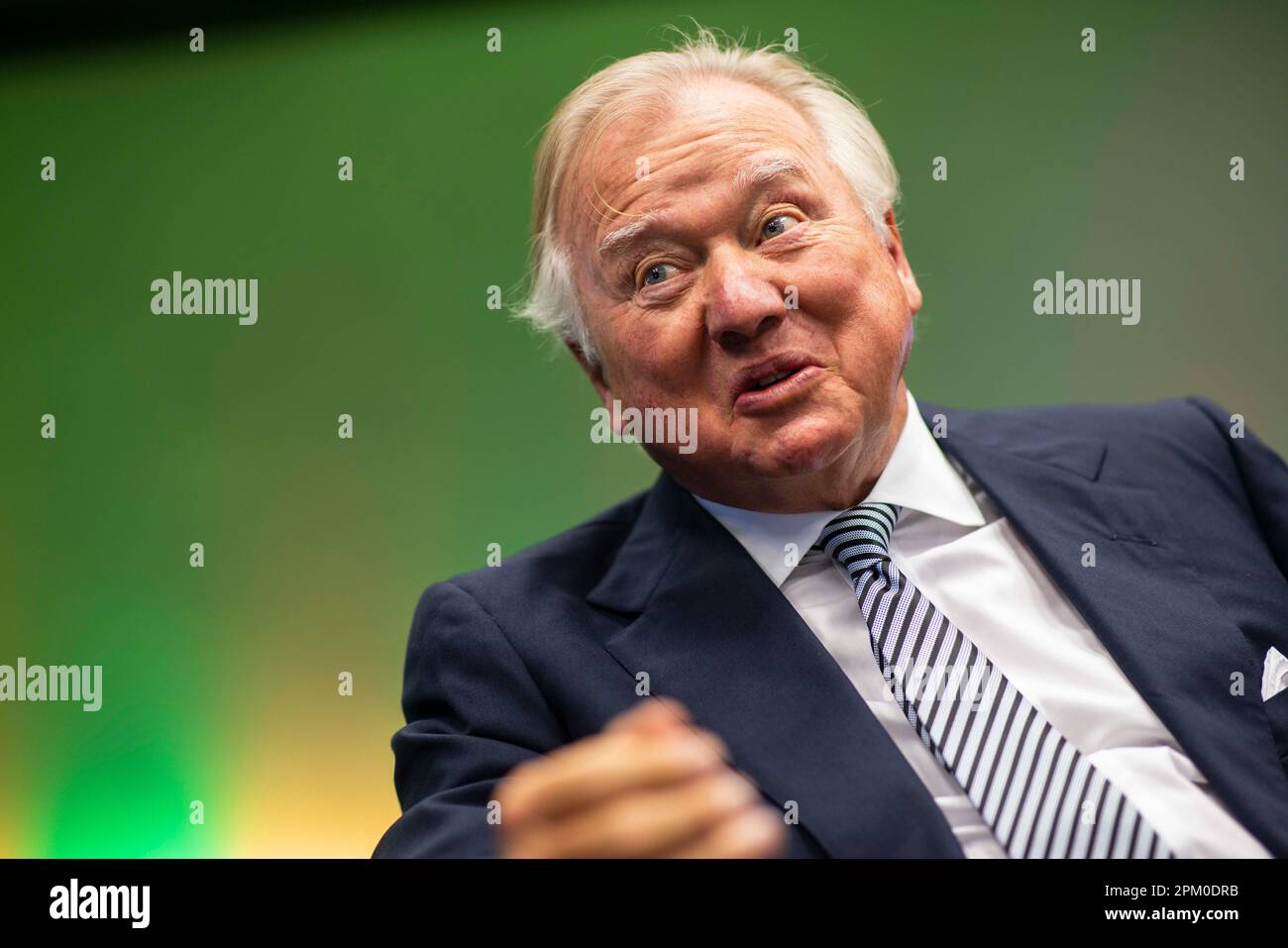
Lord Anthony Bamford has transformed J.C. Bamford Excavators Ltd (JCB) from a regional British manufacturer into a global industrial powerhouse. Since assuming the chairmanship in 1975, his leadership has expanded JCB’s market reach to over 150 countries, fueled by aggressive expansion in India, pioneering hydrogen combustion technology, and a vertically integrated manufacturing strategy that maintains 22 factories worldwide as of 2026.
The Leadership Transition and the Vision for Global Scale
When Anthony Bamford took over the leadership of JCB from his father, Joseph Cyril Bamford, in 1975, the company was already a successful British enterprise known for inventing the backhoe loader. However, the market reach was largely concentrated in the United Kingdom and Europe. Anthony Bamford recognized that for the company to survive the cyclical nature of the construction industry, it needed to become a truly global entity.
His initial strategy focused on "market-led" engineering. Rather than simply exporting British designs, Bamford insisted on understanding the specific topographical and economic requirements of different regions. This philosophy led to the establishment of manufacturing hubs far beyond the company’s headquarters in Rocester, Staffordshire. By 2026, this vision has matured into a decentralized yet highly coordinated production network that allows JCB to bypass many of the logistics and tariff barriers that hinder its competitors.
The expansion was not merely about selling machines; it was about establishing a permanent presence. Bamford’s approach involved significant capital investment in "bricks and mortar" in foreign territories. This commitment signaled to local governments and customers that JCB was a long-term partner, not a transitory importer. This trust-building exercise became the foundation for the company’s dominant market share in several key developing economies.
The Indian Market: The "Jewel in the Crown" of JCB Reach
No discussion of Anthony Bamford and JCB’s market reach is complete without analyzing the company’s extraordinary success in India. Under Bamford’s direction, JCB entered the Indian market in 1979 through a joint venture, eventually taking full control. Today, India is JCB’s largest market outside the UK, and the brand is so ubiquitous that "JCB" is often used as a generic verb for excavation.
The market reach in India was achieved through a multi-layered strategy:
- Localized Manufacturing: With massive plants in Ballabgarh, Pune, Jaipur, and Vadodara, JCB produces machines specifically tailored for the rugged Indian environment.
- Dealer Network Expansion: Bamford prioritized the development of an extensive dealer network, ensuring that even in rural provinces, a customer is never more than a few hours away from a service center or genuine parts.
- Product Adaptation: Recognizing that the Indian market required versatile, low-maintenance machines, JCB refined the backhoe loader to be the "Swiss Army Knife" of Indian infrastructure development.
By 2026, JCB India has not only served the domestic market but has also become a critical export hub, shipping machines to markets in the Middle East, Africa, and Southeast Asia. This "Make in India" approach, championed by Bamford decades before it became a government slogan, remains a primary driver of the company’s global volume.
Innovation as a Tool for Market Penetration: The Hydrogen Revolution
In the 2020s, Anthony Bamford steered the company toward its most significant technical shift: the rejection of a "one-size-fits-all" electric future in favor of hydrogen combustion. While many competitors focused exclusively on battery-electric vehicles (BEVs), Bamford argued that for heavy construction machinery, the power density and charging downtime of batteries were impractical.
Under his personal direction, JCB invested over £100 million in developing specialized hydrogen combustion engines. These engines represent a breakthrough in market reach because they allow contractors to maintain existing operational workflows—fast refueling and high power output—while achieving zero CO2 emissions at the point of use.
By 2026, the JCB hydrogen engine has become a cornerstone of the company’s strategy in regulated markets like the UK, EU, and North America. This technological lead has allowed JCB to capture "green" infrastructure contracts where zero-emission equipment is a prerequisite for bidding. This focus on internal combustion hydrogen technology, rather than more expensive fuel cells, has kept JCB machines at a price point that remains competitive for mid-sized contractors, further broadening their market accessibility.
Regional Analysis of JCB’s Market Presence (2026 Status)
The following table outlines the current market reach and primary product focuses across JCB’s major operating regions as of 2026.
| Region | Primary Manufacturing Hubs | Market Position | Key Product Focus |
|---|---|---|---|
| United Kingdom | Rocester, Uttoxeter, Cheadle | Market Leader | Backhoe Loaders, Loadall Telehandlers, Hydrogen Engines |
| India | Ballabgarh, Pune, Jaipur, Vadodara | Dominant Leader (>50% share) | Backhoe Loaders, Tracked Excavators, Compaction Equipment |
| North America | Savannah, Georgia | Top 5 Manufacturer | Skid Steer Loaders, Telescopic Handlers, Military Contracts |
| Brazil | Sorocaba | Major Regional Player | Excavators, Large Wheel Loaders (for Agriculture & Mining) |
| China | Pudong | Strategic Niche Player | Heavy Excavators for domestic and regional export |
Product Diversification: Beyond the Backhoe
While the backhoe loader is the machine that built the Bamford empire, Anthony Bamford’s tenure has seen a massive diversification of the product catalog. This diversification was essential to penetrate markets where the backhoe was less popular, such as the North American residential construction sector or the heavy mining industry in South America.
The Loadall (Telescopic Handler)
JCB’s Loadall has become the global benchmark for telescopic handlers. By 2026, it remains the world’s best-selling machine in its category. Bamford’s decision to focus on this product allowed JCB to dominate the agricultural and industrial handling markets, providing a revenue stream that is less dependent on the boom-and-bust cycles of commercial construction.
The Fastrac Tractor
Introduced in the early 1990s, the Fastrac was Bamford’s answer to the need for a high-speed, full-suspension tractor. It remains the world’s only high-speed tractor capable of safe road speeds up to 80 km/h. This product opened the door to the high-end agricultural markets in Western Europe and Australia, further insulating the company from regional downturns.
The X-Series Excavators
To compete with heavyweights like Caterpillar and Komatsu, Bamford pushed for the development of the X-Series—a range of heavy-tracked excavators designed for extreme durability. This move was critical for JCB's expansion into the quarrying and large-scale civil engineering sectors, markets where JCB had previously been viewed as a light-to-medium equipment specialist.
Supply Chain Sovereignty and JCB Power Systems
A key element of Anthony Bamford’s strategy to expand market reach was the decision to manufacture his own engines. In 2004, JCB Power Systems began production, ending the company's reliance on third-party engine suppliers like Perkins or Cummins.
This vertical integration has several advantages for global market reach:
- Emissions Compliance: JCB can tailor its engines to meet the different regulatory tiers of various countries (e.g., Stage V in Europe vs. Tier 4 in the US) without waiting for a third-party supplier to update their catalog.
- Cost Control: By producing the powertrain in-house, JCB can better manage the total cost of the machine, making it more competitive in price-sensitive markets like Africa and Southeast Asia.
- Serviceability: Having a unified engine platform across multiple machine types simplifies the spare parts logistics for the global dealer network.
The Role of JCB Finance and Customer Support
Market reach is not only determined by the quality of the iron but also by the accessibility of the capital required to buy it. Under Anthony Bamford, JCB Finance has become one of the UK's largest lenders in the construction and agricultural sectors. This model has been replicated in other major markets, providing bespoke leasing and hire-purchase options that allow smaller contractors to acquire JCB equipment.
Furthermore, the introduction of JCB LiveLink, a telematics system, has revolutionized how the company supports its global fleet. By 2026, LiveLink provides real-time data on machine health, fuel consumption, and location for hundreds of thousands of machines worldwide. This data allows JCB to offer predictive maintenance, reducing downtime and increasing the "uptime" value proposition that is critical for maintaining market share in competitive regions.
Challenges to Market Reach in a Post-2025 Landscape
Despite its successes, the reach of the Bamford-led organization faces ongoing challenges. The rise of Chinese manufacturers such as Sany and XCMG has introduced fierce price competition, particularly in the African and Middle Eastern markets. These competitors often benefit from state-subsidized financing, making it difficult for private entities like JCB to compete on price alone.
Additionally, the geopolitical landscape has required JCB to be agile. Sanctions, trade wars, and shifting alliances require constant recalibration of the supply chain. Anthony Bamford’s long-standing political engagement and advocacy for British manufacturing have often played a role in navigating these waters, but the increasing complexity of global trade remains a significant hurdle.
Lastly, while JCB has bet heavily on hydrogen, the global infrastructure for hydrogen refueling is still in its infancy compared to electric charging networks. The success of JCB's market reach in the next decade will depend heavily on whether governments and private energy providers invest in the "hydrogen economy" at the scale Bamford anticipates.
Frequently Asked Questions
What is Lord Anthony Bamford's current role at JCB?
As of 2026, Lord Anthony Bamford remains the Chairman of JCB. Having served in this capacity since 1975, he continues to oversee the company’s strategic direction, particularly focusing on the development of zero-emission technologies and global manufacturing expansion.
Why is India so important to JCB’s market reach?
India represents JCB’s largest market by volume. The company’s early entry in 1979, combined with high levels of localized manufacturing and a vast dealer network, has given JCB a dominant market share of over 50% in the Indian construction equipment sector.
How does JCB’s hydrogen engine differ from an electric battery?
Unlike battery-electric machines that require long charging times and have limited energy density for heavy tasks, JCB’s hydrogen engine is an internal combustion engine modified to run on hydrogen gas. This allows for rapid refueling (similar to diesel) and provides the high torque and power required for heavy-duty excavation and loading.
Does JCB manufacture its own engines?
Yes, through JCB Power Systems, the company manufactures its own range of diesel and hydrogen engines. This vertical integration allows for better quality control, tailored emissions compliance, and more efficient global parts support.
Is JCB a public or private company?
JCB remains a private, family-owned company. This status has allowed Anthony Bamford to make long-term investment decisions—such as the decade-long development of the hydrogen engine—without the pressure of quarterly earnings reports typical of publicly traded competitors.
Practical Recommendation for Industry Stakeholders
For contractors and fleet managers looking to align with JCB’s market trajectory in 2026, the focus should be on telematics integration and fuel flexibility. Utilizing the JCB LiveLink system is no longer optional; it is the primary tool for maximizing machine uptime and resale value. Additionally, as Lord Bamford’s push for hydrogen matures, stakeholders in regions with developing hydrogen infrastructure should begin evaluating hydrogen combustion machines for their low-carbon mandates, as these offer a more seamless operational transition than pure battery-electric alternatives for heavy-duty applications.