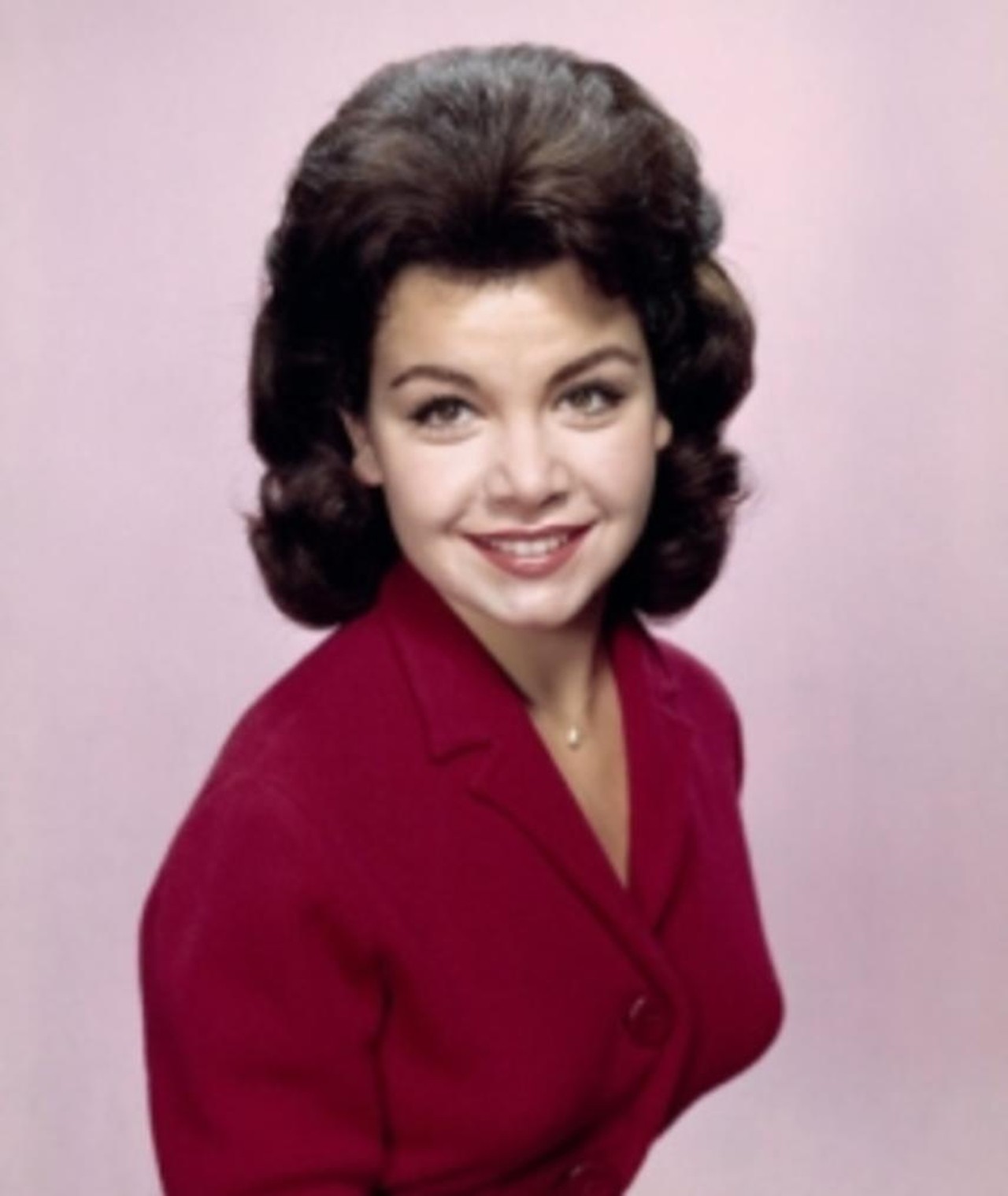
Annette Funicello was born on October 22, 1942, in Utica, New York. Rising to national fame in 1955 as the most popular Mouseketeer on Walt Disney’s The Mickey Mouse Club, she transitioned into a successful pop music recording artist, 1960s beach cinema icon, and courageous advocate for multiple sclerosis research before her passing in 2013.
Early Life and Discovery: From Utica to Southern California (1942–1955)
Annette Joanne Funicello was born into an Italian-American family in Utica, New York, to Joseph Funicello, an auto mechanic, and Virginia Funicello. When she was four years old, her parents relocated the family to Burbank, California, seeking better employment opportunities and a warmer climate. Early in her childhood, Funicello displayed a keen interest in the performing arts, taking lessons in music, dance, and acrobatics to build confidence and overcome childhood shyness.
Her path to international stardom began in the spring of 1955. At age 12, Funicello was performing in a local dance recital at the Starlight Bowl in Burbank, playing the lead role in the ballet Swan Lake. Sitting in the audience was entertainment pioneer Walt Disney, who was actively scouting talent for an ambitious new television project designed to anchor ABC’s daytime programming schedule: The Mickey Mouse Club.
Impressive in both technical skill and natural charm, Funicello immediately caught Disney's eye. Disney personally invited her to audition for the program, recognizing that her wholesome image and magnetic stage presence resonated with the post-World War II family demographic. She was hired as one of the original 24 Mouseketeers, setting into motion a career that would make her one of the defining teenage icons of mid-twentieth-century America.
The Mouseketeer Phenomenon: Star of The Mickey Mouse Club
When The Mickey Mouse Club premiered on October 3, 1955, it quickly became a cultural touchstone for millions of American children and teenagers. Among a cast of talented young performers, Annette—known simply by her first name on her customized ear-topped sweater—emerged as the undisputed fan favorite.
| The Mouseketeer Era at a Glance | Details |
|---|---|
| Premiere Date | October 3, 1955 |
| Peak Fan Mail Volume | Over 6,000 letters per week |
| Primary TV Serials | "Spin and Marty", "Annette" |
| Mentorship | Direct career oversight by Walt Disney |
By the end of the show’s first season, Funicello was receiving up to 6,000 fan letters per week—far more than any of her co-stars. Her popularity stemmed from her combination of talent, modesty, and accessible personality. Audiences viewed her as the quintessential girl-next-door, creating a blueprint for youth entertainment stars that entertainment companies continue to replicate.
Recognizing her vast commercial appeal, Walt Disney took a personal interest in managing her professional development:
- Exclusive Talent Contract: Funicello was the only Mouseketeer placed under a long-term studio contract by Walt Disney Productions after the original run of the show wrapped.
- Serials and Guest Roles: Disney cast her in popular multi-part television serials embedded within The Mickey Mouse Club, including The Adventures of Spin and Marty (1955) and her self-titled serial Annette (1958).
- Prime-Time Television: She transitioned smoothly to primetime network television, appearing on shows like Zorro (1959) and various Disney anthology specials, solidifying her status as Disney’s primary teen star.
The Pop Music Trailblazer and Beach Party Cinema Icon
As Funicello entered her late teens, Walt Disney sought to expand her talent into the music industry. Although she initially expressed modesty regarding her singing ability, Disney launched her recording career on the studio’s newly formed Buena Vista record label.
Annette Funicello Entertainment Evolution:
- Television (1955–1960)
- The Mickey Mouse Club
- "Spin and Marty"
- "Annette" Serial
- Pop Music (1959–1965)
- "Tall Paul" (#7 Billboard)
- "O Dio Mio"
- "Pineapple Princess"
- Beach Cinema (1963–1965)
- "Beach Party"
- "Muscle Beach Party"
- "Beach Blanket Bingo"
Music Success and Recording Innovations
In 1959, Funicello scored her first major commercial music hit with "Tall Paul," which reached number 7 on the Billboard Hot 100 chart. Written by the legendary songwriting duo Richard M. Sherman and Robert B. Sherman, the track helped establish the studio's pop music division.
Working with producer Tutti Camarata, Funicello's recordings utilized an innovative audio technique known as double-tracking—recording her vocal track twice and layering it to produce a fuller, richer sound. This technique later became a standard production method across the pop music industry. She followed up with a series of successful hit singles, including:
- "O Dio Mio" (1960): A popular track highlighting her Italian heritage and pop sensibility.
- "Pineapple Princess" (1960): A Hawaiian-themed track that embraced early 1960s pop culture trends.
- "Train of Love" (1960): Another charter that maintained her strong presence on top-40 radio broadcasts.
The AIP Beach Movie Era
In 1963, American International Pictures (AIP) approached Funicello to co-star alongside singer Frankie Avalon in a new film genre aimed directly at the emerging youth demographic: the beach party film. Walt Disney granted her permission to appear in the independent films, subject to strict contractual conditions intended to preserve her wholesome image. Principally, Disney requested that Funicello maintain modest costuming, ensuring her navel remained covered—a requirement that distinguished her swimwear choices from those of her co-stars.
The resulting film, Beach Party (1963), became a box-office hit and launched a popular film franchise. The dynamic between Avalon's outgoing persona and Funicello's grounded charm captured the lighthearted, carefree spirit of early 1960s youth culture.
The pair went on to star in a rapid series of successful sequels:
- Muscle Beach Party (1964)
- Bikini Beach (1964)
- Pajama Party (1964)
- Beach Blanket Bingo (1965)
- How to Stuff a Wild Bikini (1965)
These films created a cultural snapshot of Southern California surf lifestyle, combining pop tunes, comedic subplots, and vibrant technicolor visuals that influenced pop culture long after the genre peaked.
Career Transitions, Commercial Work, and Nostalgia
By the late 1960s, social tastes and the film industry were undergoing rapid changes. Funicello deliberately shifted her focus away from full-time acting to prioritize her family life after marrying talent agent Jack Gilardi in 1965, with whom she had three children: Gina, Jack Jr., and Jason.
| Commercial & Nostalgia Career Era | Details |
|---|---|
| 1970s–1980s | Long-running spokesperson for Skippy Peanut Butter |
| 1987 | Feature film reunion with Frankie Avalon in "Back to the Beach" |
| 1992 | Named an official Disney Legend by The Walt Disney Company |
| 1994 | Publication of her autobiography "A Dream Is a Wish Your Heart Makes" |
During the 1970s and 1980s, Funicello maintained a steady public profile through high-profile commercial endorsements. Her most notable television marketing campaign was as the long-running national spokesperson for Skippy Peanut Butter. Her trustworthy public image translated into high consumer engagement, proving that her connection with American audiences remained strong decades after her childhood debut.
In 1987, Funicello reunited with co-star Frankie Avalon for Back to the Beach, a self-referential comedy produced by Paramount Pictures. The film parodied their 1960s surf personas while updating their characters to middle-aged parents dealing with contemporary 1980s suburbia. The film was well received by critics and fans, generating a wave of retro nostalgia that reintroduced Funicello to a new generation of film audiences.
Battle with Multiple Sclerosis and Advocacy Work
During the filming of Back to the Beach in 1987, Funicello began experiencing troubling physical symptoms, including balance issues, muscle weakness, and unexplained dizziness. Medical evaluation confirmed a diagnosis of relapsing-remitting multiple sclerosis (MS), a chronic neurological condition that affects the central nervous system.
Funicello initially kept her health diagnosis private to protect her family and career. However, as her physical mobility deteriorated, tabloid rumors falsely speculated that her unsteadiness on set was caused by alcohol abuse. To clear up public misconceptions and bring attention to the disease, Funicello publicly announced her MS diagnosis in 1992.
Health Advocacy Impact:
- Public Transparency (1992)
- Disclosed MS diagnosis to dispel tabloid rumor.
- Educated public on chronic neurological conditions.
- Research Funding (1993+)
- Established the Annette Funicello Fund for Neurological Disorders to fund direct research.
Following her announcement, Funicello redirected her public presence toward healthcare advocacy:
- The Annette Funicello Research Fund for Neurological Disorders: Established in 1993, this organization raised millions of dollars to support peer-reviewed scientific research focused on the causes, treatments, and potential cures for MS and related neurological diseases.
- Autobiography: In 1994, she published her autobiography, A Dream Is a Wish Your Heart Makes: My Story, which detailed her early Hollywood years, her studio experience, and her daily life living with progressive physical impairment. The book was adapted into a successful made-for-television film in 1995.
- Public Awareness: Her openness altered public perception regarding chronic illness, normalizing conversations about mobility aids, long-term care, and neurological research funding.
In her later years, Funicello’s condition progressed to secondary progressive MS, eventually requiring full-time physical care. Her second husband, Glen Holt—whom she married in 1986—remained her devoted caregiver and advocate, championing research initiatives alongside her. Funicello passed away on April 8, 2013, at the age of 70, due to complications from multiple sclerosis.
Detailed Life and Career Timeline
The table below outlines key milestones in the life, career, and legacy of Annette Funicello, born in 1942.
| Year | Milestone / Event | Category | Historical Significance & Detail |
|---|---|---|---|
| 1942 | Born on October 22 in Utica, NY | Personal | Born to Joseph and Virginia Funicello; moved to California at age 4. |
| 1955 | Discovered by Walt Disney | Career Debut | Scouted during a ballet performance of Swan Lake at the Starlight Bowl. |
| 1955 | The Mickey Mouse Club Premiers | Television | Debuted on ABC; quickly became the standout favorite Mouseketeer. |
| 1958 | Stars in self-titled Annette serial | Television | Disney crafted custom television serials to capitalize on her stardom. |
| 1959 | Releases "Tall Paul" Billboard Hit | Music | Peak #7 pop single; pioneered double-tracking vocal recording methods. |
| 1959 | Co-stars in The Shaggy Dog | Film | Disney's hit live-action comedy, solidifying her feature film presence. |
| 1963 | Stars in AIP's Beach Party | Film | Co-starred with Frankie Avalon, creating the 1960s youth beach movie genre. |
| 1965 | Marries Jack Gilardi | Personal | Transitioned away from full-time filming to raise her three children. |
| 1979 | Begins Skippy Peanut Butter campaign | Commercial | Became the national brand ambassador for over a decade. |
| 1987 | Co-stars in Back to the Beach | Film | Reunion film with Frankie Avalon; first experienced early MS symptoms. |
| 1992 | Public Discloses MS Diagnosis | Health Advocacy | Dispelled public rumors and became a leading advocate for MS awareness. |
| 1992 | Inducted as a Disney Legend | Award | Recognized by The Walt Disney Company for lifetime achievement. |
| 1993 | Funicello Fund Established | Philanthropy | Launched dedicated foundation funding peer-reviewed neurological research. |
| 2013 | Passes Away on April 8 | Legacy | Passed away at age 70 in Bakersfield, CA due to MS complications. |
Cultural Impact and Historic Legacy
Annette Funicello holds a singular place in American entertainment history. As the original archetype of the Disney child star, her trajectory established a career template later followed by artists such as Justin Timberlake, Britney Spears, Christina Aguilera, and Miley Cyrus. However, unlike many child stars who struggled with early success, Funicello maintained a reputation for professional integrity, humility, and grace throughout her life.
Her contribution to American culture spans three distinct fields:
- Child Entertainment Architecture: She demonstrated that a child performer could build a sustainable, multi-platform brand spanning television, retail music sales, and feature films under studio stewardship.
- Pop Culture Iconography: Her work in the 1960s beach films created an enduring aesthetic vision of mid-century American youth culture—celebrating optimism, surf culture, and rock-and-roll music.
- Patient Advocacy and Philanthropy: By discussing her struggle with multiple sclerosis openly in an era when public figures rarely disclosed serious chronic illnesses, she reduced social stigma, educated the public on neurological disorders, and directed vital funding toward medical research.
Her legacy remains firmly intact across classic television networks, film archives, and health research organizations dedicated to eradicating neurological diseases.
Frequently Asked Questions
When was Annette Funicello born, and where?
Annette Funicello was born on October 22, 1942, in Utica, New York. Her family relocated to Burbank, California, when she was four years old, where she grew up prior to being discovered by Walt Disney.
How was Annette Funicello discovered by Walt Disney?
Walt Disney personally discovered 12-year-old Annette Funicello in the spring of 1955 while attending a dance recital at the Starlight Bowl in Burbank, California. She was performing the lead role in Swan Lake, and Disney selected her to join the original cast of The Mickey Mouse Club.
What were Annette Funicello’s most popular films and songs?
Funicello's most popular songs include "Tall Paul" (1959), "O Dio Mio" (1960), and "Pineapple Princess" (1960). Her most famous films include Disney’s The Shaggy Dog (1959) and the American International Pictures beach movie series co-starring Frankie Avalon, including Beach Party (1963) and Beach Blanket Bingo (1965).
When did Annette Funicello publicize her multiple sclerosis diagnosis?
Annette Funicello publicly announced her diagnosis of multiple sclerosis in 1992. She had been experiencing symptoms since 1987 while filming Back to the Beach, but decided to go public to correct media misperceptions and launch her advocacy efforts.
How did Annette Funicello contribute to multiple sclerosis research?
Following her 1992 announcement, she established the Annette Funicello Research Fund for Neurological Disorders in 1993. The fund raised millions of dollars to directly support scientific studies into the causes and treatments of MS and related neurological conditions.
Recommended Next Steps for Film and TV Historians
For researchers, classic television enthusiasts, and film historians seeking to explore Annette Funicello’s legacy further, the following steps offer direct avenues for deeper study:
- Examine Primary Studio Archives: Review historical production documentation, press books, and audio masters maintained in the Disney Studio Archives to understand how youth television programming was developed during the mid-1950s.
- Explore Medical Philanthropy Impact: Review published medical literature funded by the Annette Funicello Research Fund for Neurological Disorders through scientific databases like PubMed to track how celebrity advocacy contributed to MS research developments.
- Analyze 1960s Independent Film Trends: Compare American International Pictures' Beach Party franchise with mainstream studio films of the era to evaluate how independent studios successfully targeted the post-war teenage demographic.